The Loneliest Star Is Reclaiming Its Solitude As Saturn Finally Moves Away
As Saturn shifts, the mysterious debris rings of Fomalhaut reclaim the spotlight. Discover why this lonely autumn star continues to fascinate astronomers.
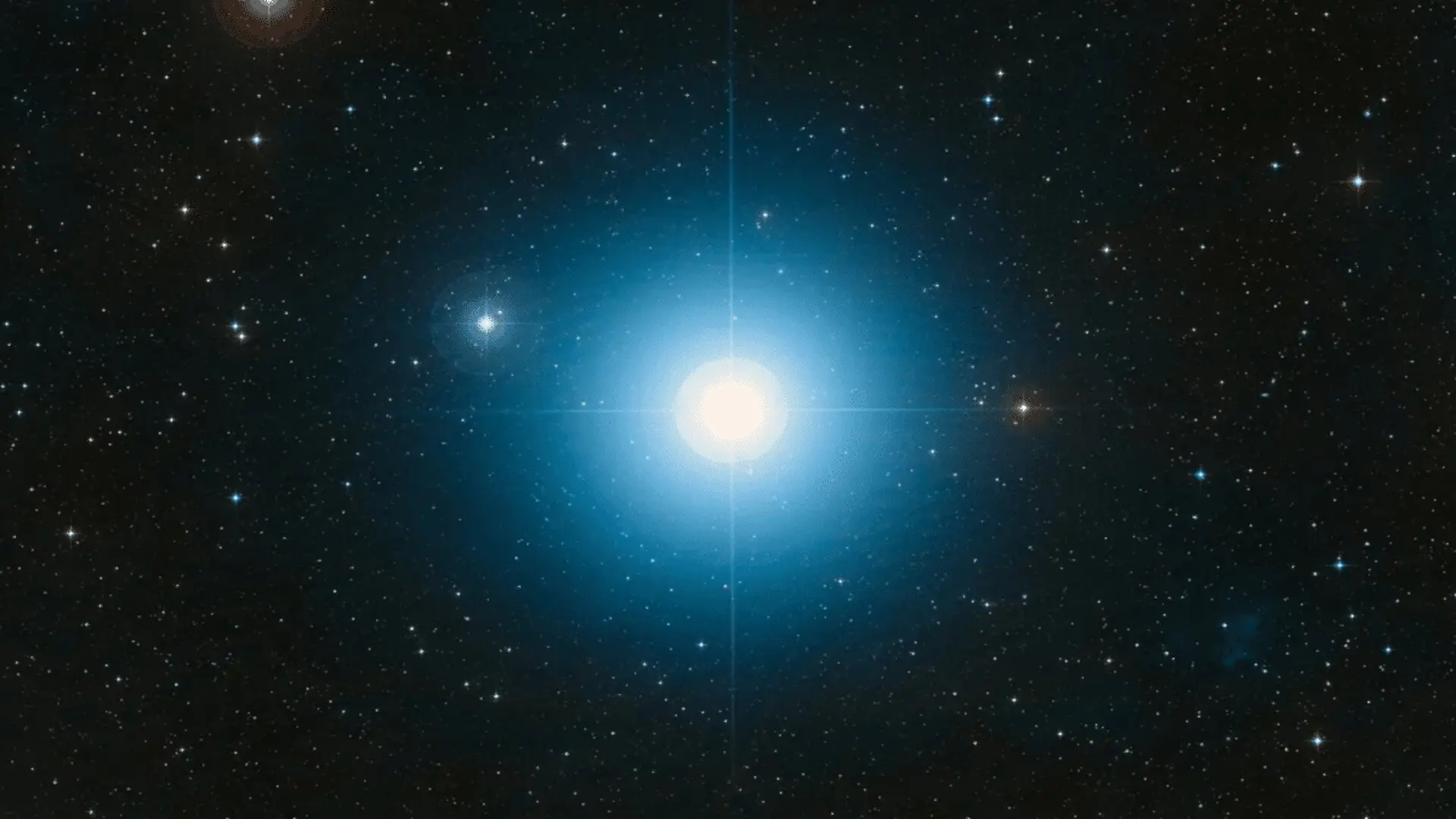
The night sky is currently undergoing a subtle realignment as a familiar celestial pairing begins to drift apart. Fomalhaut, a prominent beacon located approximately 25 light-years away, is slowly reclaiming its status as the “Loneliest Star” as Saturn continues its steady trek along its orbit, moving further away from the star’s vicinity.
The Return of a Solitary Sentinel
For generations of observers in the Northern Hemisphere, Fomalhaut has served as a standout landmark in the constellation Piscis Austrinus, or the Southern Fish. Its reputation for isolation is well-earned, as it sits in a relatively barren stretch of the sky where few other luminous bodies compete for prominence. Ranking as the 18th brightest star visible from Earth, it has long acted as a navigational guide for those looking toward the southern horizon.
This sense of solitude was briefly interrupted by the passage of Saturn. As the gas giant orbited the Sun, it transited through the same region of the sky, creating a temporary, bright duo that drew the eye of many amateur astronomers. However, as of September 2026, the two have drifted to a separation of roughly 43 degrees—a distance spanning about four fists held at arm’s length. According to EarthSky, this gap will only continue to widen as Saturn proceeds on its 30-year journey around the Sun.
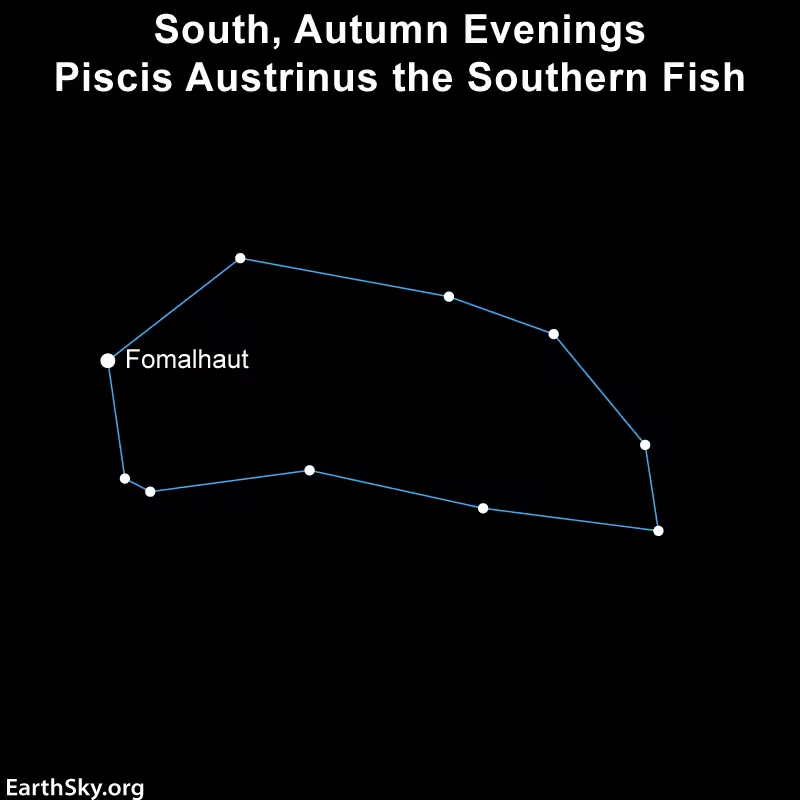
Observing the Shift in Real Time
The apparent change in the sky is a result of the vast difference in scale between planetary and stellar motion. While Fomalhaut remains effectively stationary from a human perspective, Saturn’s orbital speed ensures that its position relative to the background stars changes noticeably over time. Because Saturn lacks the characteristic twinkle of a star—appearing instead as a steady, golden light—observers can easily distinguish it from the distant Fomalhaut, which may appear to shimmer due to atmospheric turbulence.
Unlocking the Secrets of a Dusty System
Beyond its reputation as a solitary star, Fomalhaut is a subject of intense scientific scrutiny. At just 440 million years old, it is a youthful celestial body with nearly double the mass of our Sun and significantly higher energy output. Advanced observatories, including the Hubble Space Telescope, the Atacama Large Millimeter/submillimeter Array (ALMA), and the James Webb Space Telescope, have mapped a complex series of nested debris belts around the star. These structures, which mirror our own solar system’s Kuiper Belt, exhibit distinct gaps and irregularities that suggest the presence of gravitational influences from hidden, orbiting planets.
The search for these planets has been marked by mystery. In 2008, an object dubbed Fomalhaut b was identified, initially sparking hope that a planet had been directly imaged. Subsequent study revealed a different reality: the object likely represented an expanding cloud of debris resulting from a massive collision between icy bodies rather than a planet itself. While the existence of a definitive planet around Fomalhaut remains unconfirmed, the architecture of its surrounding dust continues to provide researchers with vital data on how planetary systems evolve.
How to Spot Fomalhaut This Season
For those interested in viewing Fomalhaut during the coming months, the star is best observed during autumn evenings. In the Northern Hemisphere, it appears low in the southern sky. By mid-October, it reaches its highest point around 10:30 p.m. local time. While the star is bright enough to be seen with the naked eye under dark conditions, finding it is easier when the sky is free of light pollution. As Saturn continues its eastward migration, the backdrop of the Southern Fish will return to its classic, solitary configuration, serving as a reminder of the dynamic, ever-changing nature of our celestial view.
This article has been fact checked for accuracy, with information verified against reputable sources. Learn more about us and our editorial process.
Last reviewed on .
Article history
- Latest version
Reference(s)
- Sessions, Larry. “Fomalhaut is the Loneliest Star once again.”, September 2, 2026 EarthSky <https://earthsky.org/brightest-stars/solitary-fomalhaut-guards-the-southern-sky/>.
Cite this page:
- Posted by Aisha Ahmed