Astronomers Reveal the Hidden Real Sky That May Have Inspired Van Gogh’s The Starry Night
Astronomers have linked the celestial bodies in Van Gogh’s The Starry Night to a July 1889 dawn, challenging the painting’s established completion date.
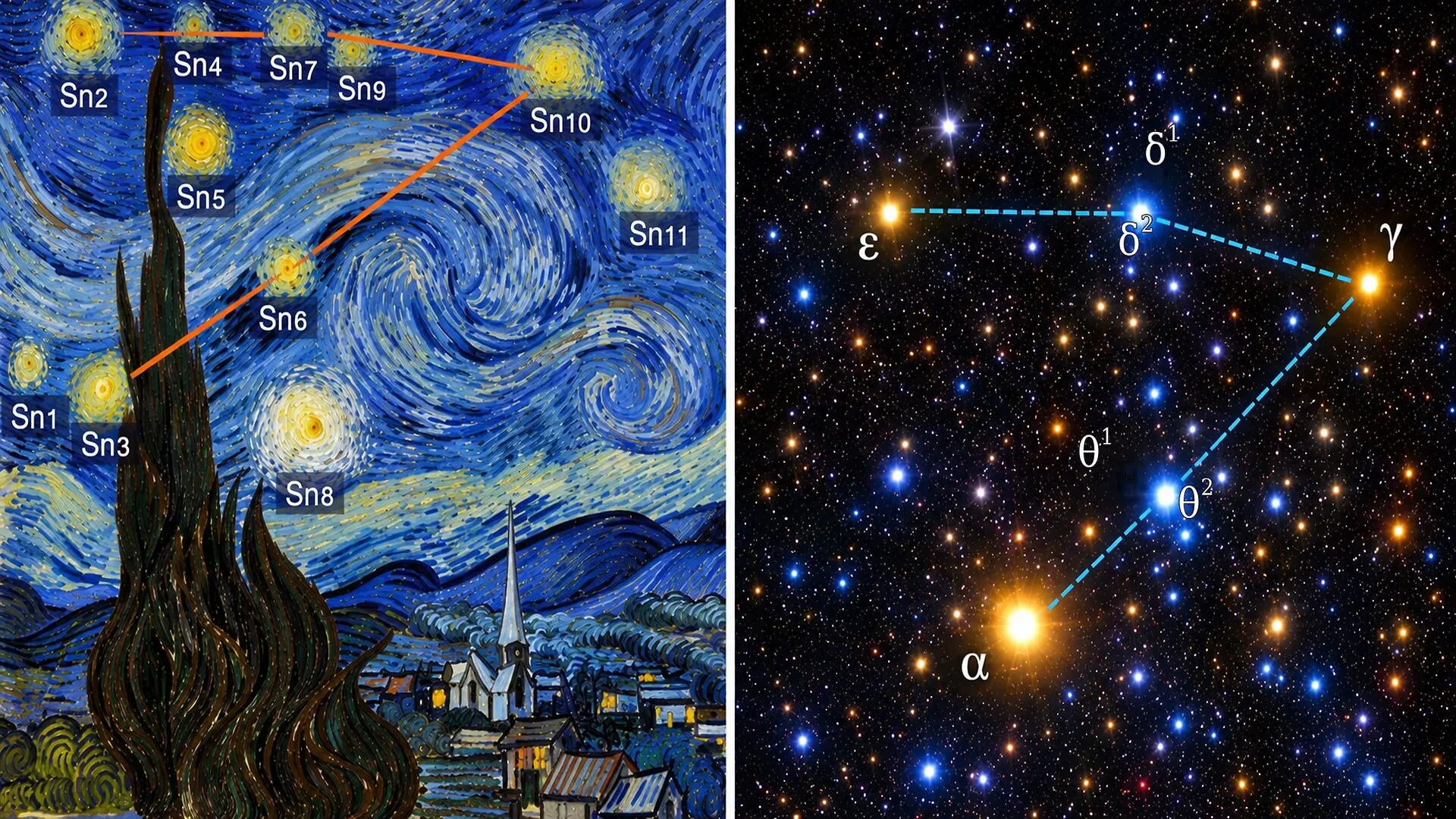
The swirling, dreamlike heavens of Vincent van Gogh’s The Starry Night may be rooted in more than just the artist’s imagination. A new interdisciplinary study suggests that the painting’s celestial arrangement—specifically its crescent Moon, bright Venus, and central star formation—bears a striking resemblance to the sky as it appeared over Saint-Rémy-de-Provence in the early morning hours of July 22, 1889.
While the Museum of Modern Art (MoMA) continues to catalog the masterpiece with its traditional date of June 1889, researchers behind the new findings published in Scientific Reports argue that the canvas may reflect observations made later in the summer. The team, led by Elijah Jeong-hyun Kim of SLLAB and Kyung Hee University, suggests that rather than serving as a static date stamp, the painting likely synthesizes various observations and artistic modifications.
A New Geometric Lens on a Masterpiece
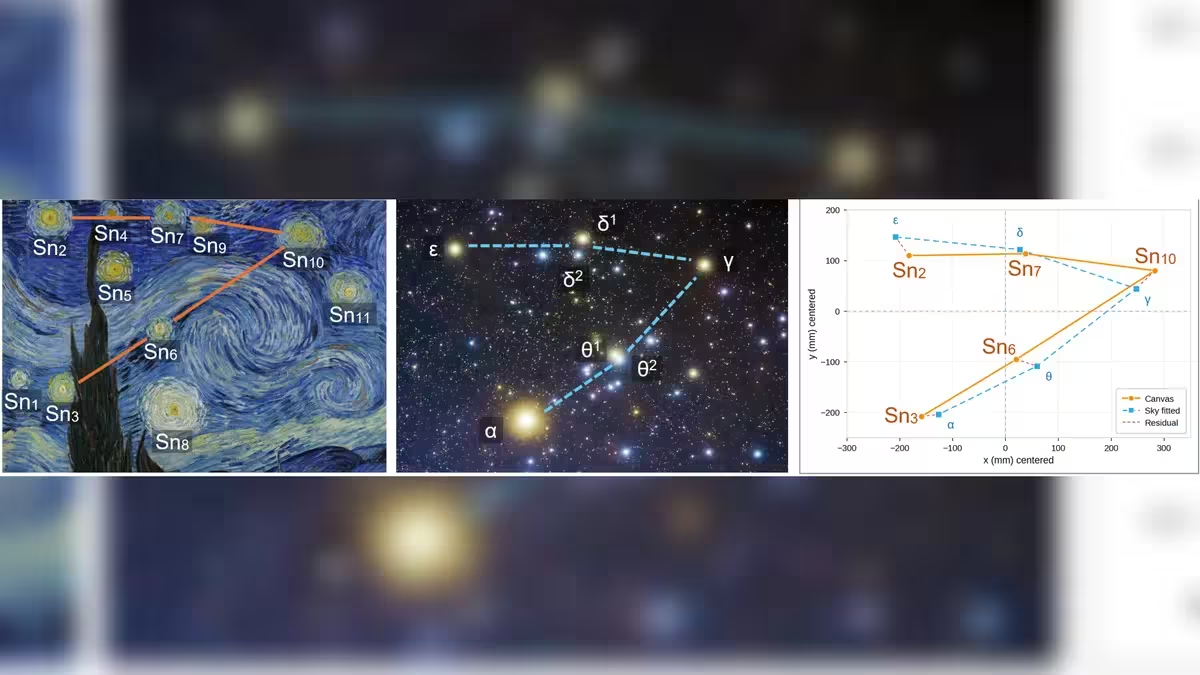
To investigate the potential astronomical source, the team utilized a combination of digital sky simulations, site surveys, and geometric analysis. By reconstructing the precise nocturnal environment of 1889, researchers were able to simulate what Van Gogh might have witnessed from his surroundings at the Saint-Paul-de-Mausole asylum.
The study employed Procrustes analysis, a statistical technique used to compare the shape of objects by adjusting for scale, rotation, and translation. This allowed the team to map the arrangement of stars in the painting against known clusters, finding a significant geometric alignment with the Hyades cluster in the constellation Taurus. The researchers noted that while no single star placement is a carbon copy of reality, the statistical “discrepancy” between the painted sky and the July 22 simulation was remarkably low.
The Moon as a Celestial Timekeeper
The phase of the Moon proved to be a critical variable in the researchers’ timeline. A June 1889 date, which has long been the standard for the painting’s creation, would have featured a significantly fuller, more illuminated Moon. In contrast, the simulated sky for July 22, 1889, displays a thin, waning crescent—a visual match for the sliver depicted in Van Gogh’s work.
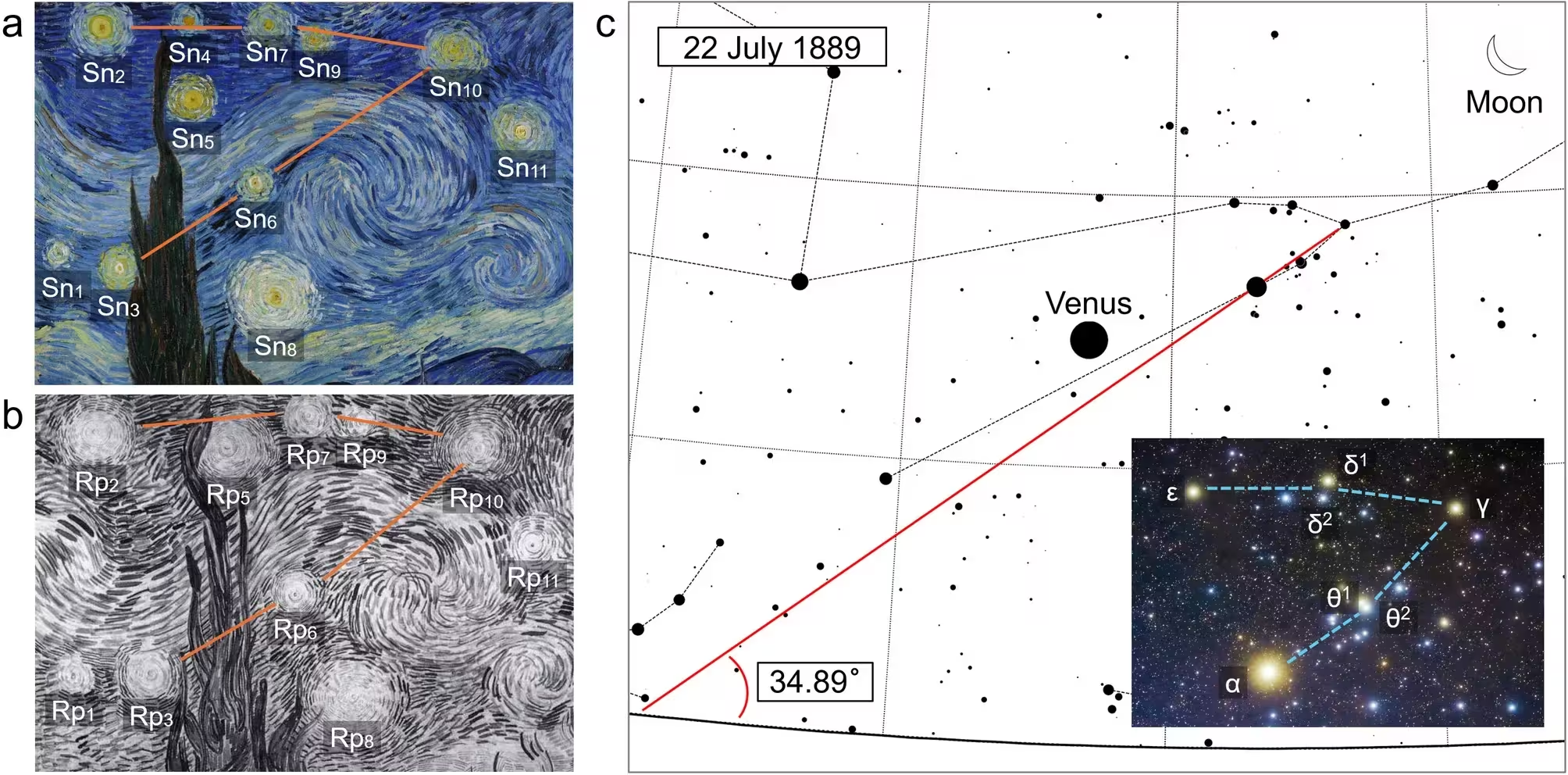
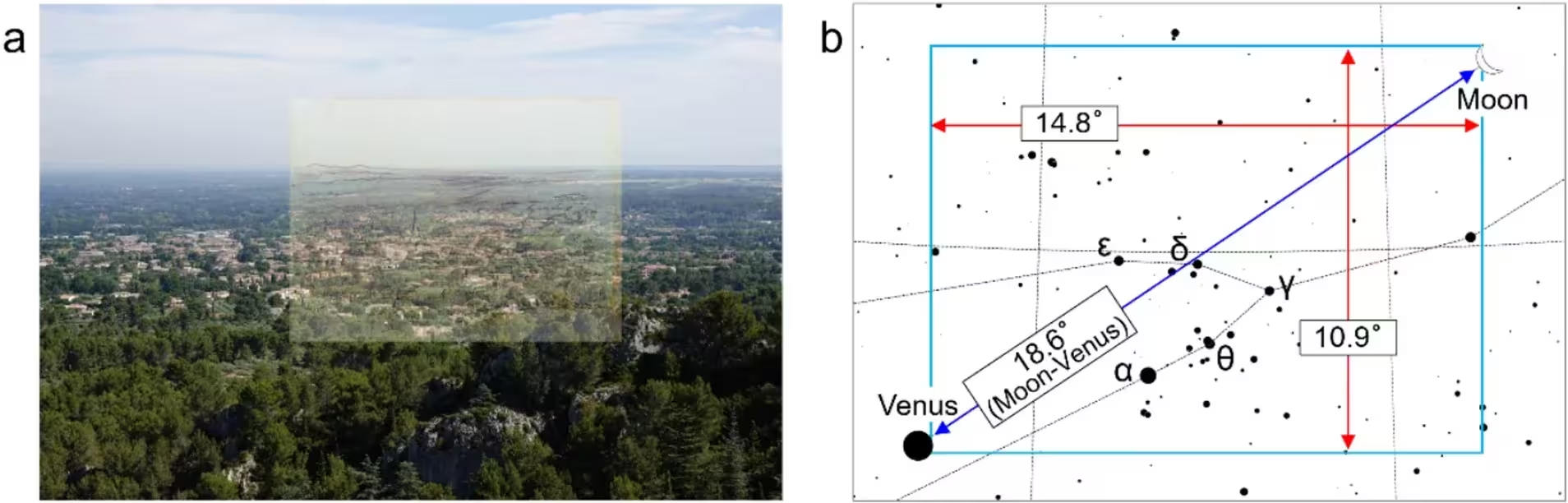
By factoring in the local mean time at 3 a.m. in late July, the team observed that both Venus and the crescent Moon would have occupied positions relative to each other that mirror the composition of the painting, with the Hyades cluster situated in the central frame. However, the researchers are careful to clarify that this does not necessarily refute the June origins of the work; rather, it suggests that Van Gogh may have returned to the canvas to refine it after his initial June efforts.
Bridging Observation and Artistic Vision
Despite the compelling astronomical alignment, the study acknowledges the limitations of using science to date historical art. Art historians have long recognized that The Starry Night is a composite work, blending observations of the French countryside with elements from Van Gogh’s memory and imagination. The village depicted, for instance, does not match the actual view from the artist’s window, and the prominent cypress tree was a deliberate artistic addition.
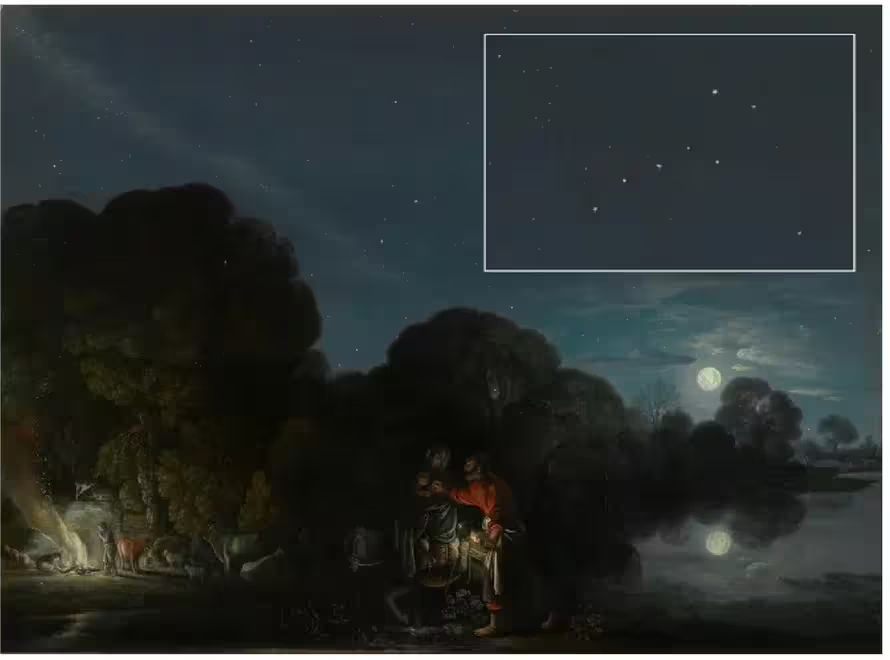
The research team emphasizes that finding an astronomical correspondence does not imply that Van Gogh was painting a photographically accurate record. “I think further research in art history and conservation science could shed more light on this question,” Kim noted. As it stands, the discovery adds a fascinating layer of complexity to one of the world’s most scrutinized paintings, suggesting that the “starry night” captured on canvas may have been illuminated by the real-world movements of planets and stars witnessed by the artist during his stay in Saint-Rémy.
Further Resources
This article has been fact checked for accuracy, with information verified against reputable sources. Learn more about us and our editorial process.
Last reviewed on .
Article history
- Latest version
Reference(s)
- Kim, Elijah. “The actual sky of Van Gogh’s Starry Night: a multidisciplinary reconstruction - Scientific Reports.”, vol. 16, no. 1, October 22, 2026, pp. 31109 Nature, doi: 10.1038/s41598-026-73025-5. <https://www.nature.com/articles/s41598-026-73025-5>.
- “에스엘랩 | SLLAB, INC..” <https://sllab.co.kr/>.
- “경희대학교.” <https://www.khu.ac.kr/eng/user/main/view.do>.
Cite this page:
- Posted by Aisha Ahmed