Astronomers Detect Two Giant Black Holes About to Collide in a Rare Cosmic Dance
Astronomers have detected an unusual event in a distant galaxy that could finally reveal what happens when two black holes collide.
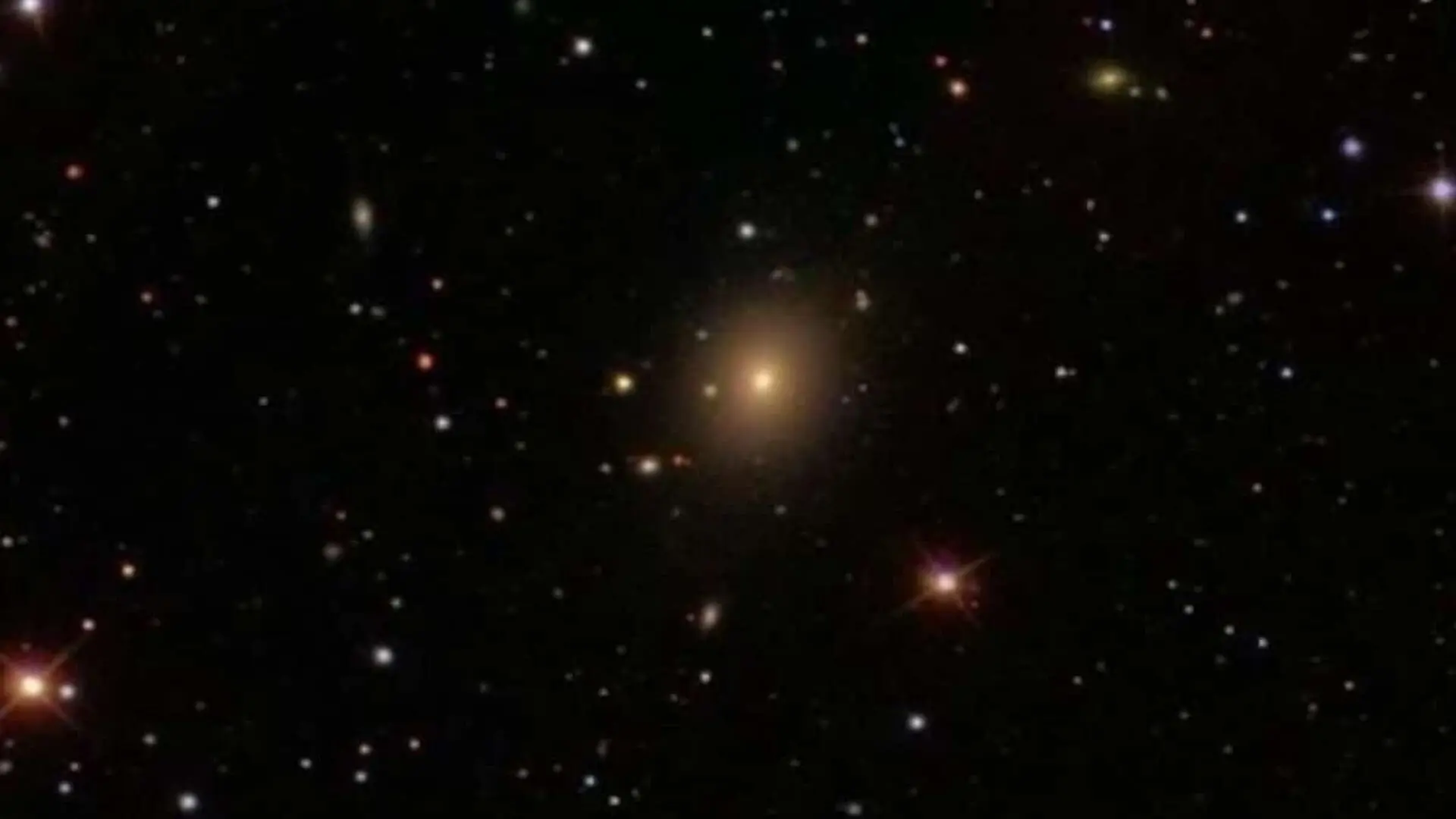
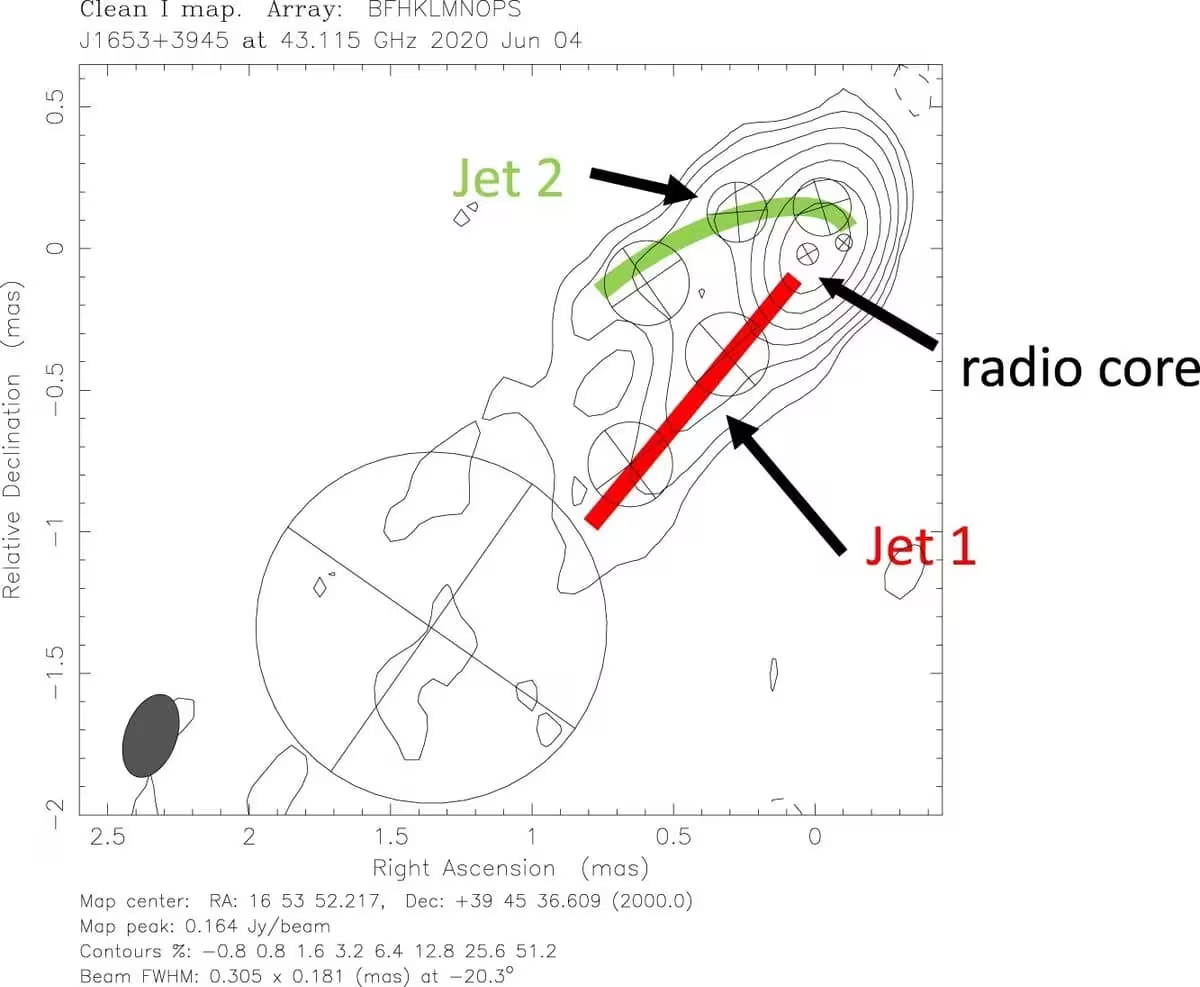
Astronomers have uncovered evidence of a rare cosmic spectacle unfolding at the heart of the galaxy Mrk 501: a potential binary system of supermassive black holes locked in a rapid, death-spiral dance. By analyzing over two decades of radio observation data, researchers identified a second, previously undetected particle jet, suggesting that the galaxy’s core may harbor two massive, orbiting black holes.
The discovery, led by Silke Britzen of the Max Planck Institute for Radio Astronomy, challenges our understanding of how these gargantuan objects evolve. While supermassive black holes are common in the centers of large galaxies, observing them in the final stages of a merger is exceptionally difficult. In this case, the jets provide a vital, if indirect, glimpse into the mechanics of their interaction.
Evidence of a Cosmic Waltz
The research, published in Monthly Notices of the Royal Astronomical Society, details how the team tracked the movement of the jets across roughly 23 years of data. While the primary jet is oriented nearly directly toward Earth, the second jet behaves differently, exhibiting a counterclockwise shift as it emerges from behind the central mass.
“We searched for it for so long, and then it came as a complete surprise that we could not only see a second jet, but even track its movement,” Britzen said.
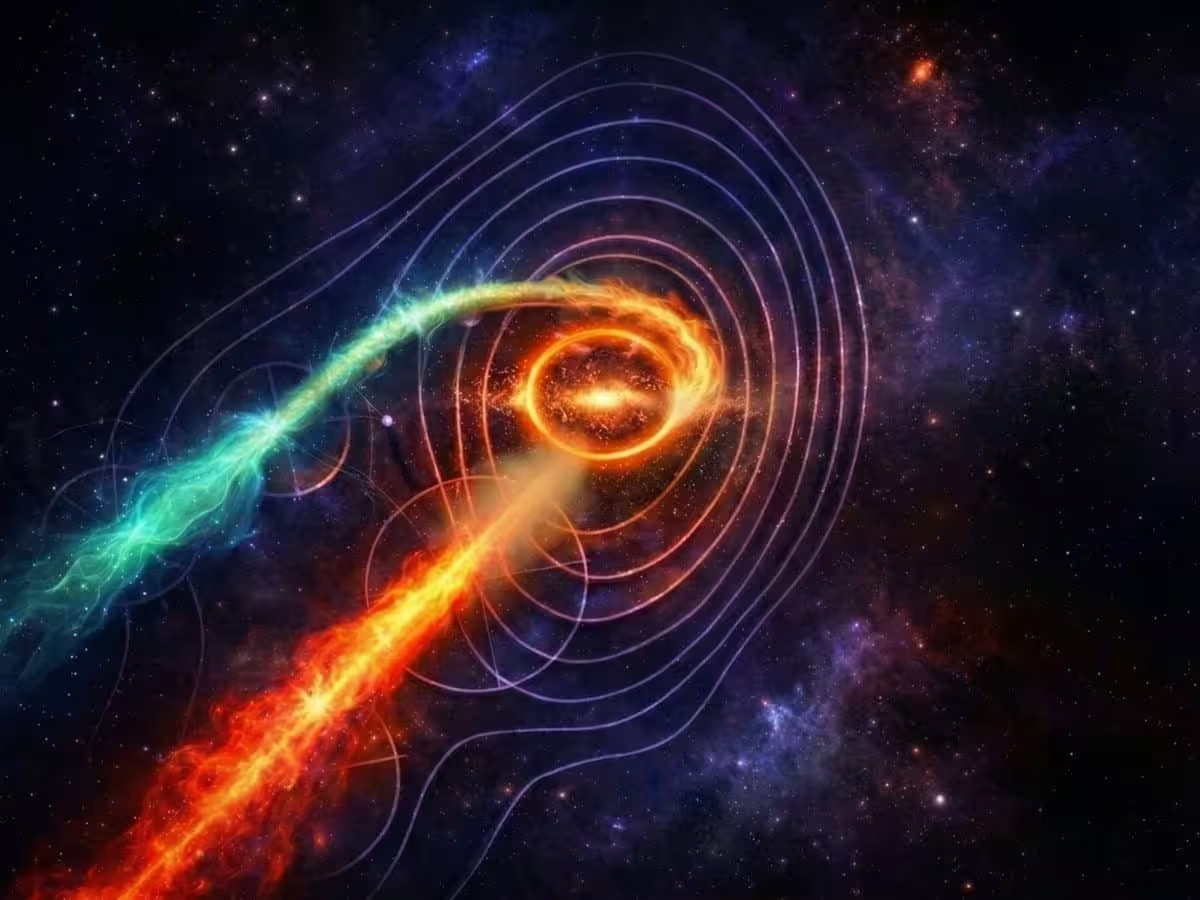
The team calculated that the two objects are orbiting one another every 121 days. Despite the massive scale of the black holes—estimated between 100 million and one billion solar masses—they are separated by a relatively tight distance of 250 to 540 astronomical units. For such colossal entities, this proximity is remarkably close, suggesting they are in the closing phase of their gravitational interaction.
An Impending Merger
The study also highlighted a peculiar event in June 2022, where radiation from the core appeared to form a ring structure. Researchers believe this may be a case of gravitational lensing, where one black hole passed in front of the other, bending light into an Einstein ring. Britzen describes the entire system as a swaying orbital plane, akin to the movement of a ship at sea.
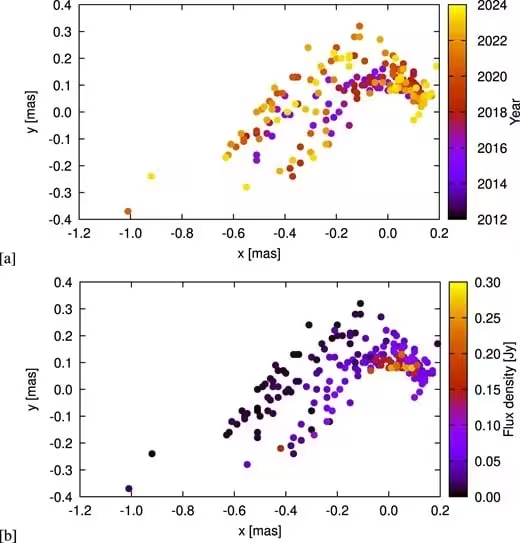
Given the current trajectory and separation, the researchers estimate that the pair could collide within a century, an incredibly brief window on the cosmic timescale. Because Mrk 501 is too distant for current direct imaging to resolve individual components, scientists are looking toward alternative methods to confirm the merger.
Gravitational waves, the ripples in spacetime generated by such massive orbital movements, offer the most promising path forward. Pulsar timing arrays—which monitor the pulses of distant neutron stars for minute timing variations—are already being used to detect the gravitational wave background. Future observations of Mrk 501 could provide a front-row seat to one of the most violent and powerful events in the universe.
“If gravitational waves are detected, we may even see their frequency steadily rise as the two giants spiral toward collision, offering a rare chance to watch a supermassive black hole merger unfold,” said co-author Héctor Olivares.
This article has been fact checked for accuracy, with information verified against reputable sources. Learn more about us and our editorial process.
Last reviewed on .
Article history
- Latest version
Reference(s)
- <https://academic.oup.com/mnras/article/548/4/stag291/8551337>.
- “Einstein ring explained.” <https://www.esa.int/ESA_Multimedia/Images/2025/02/Einstein_ring_explained>.
- “Hector Olivares | Gr@v.”, November 4, 2026 <http://gravitation.web.ua.pt/node/4540>.
Cite this page:
- Posted by Aisha Ahmed