New Study Solves the Mystery of How Earth Got Its Water and Heavy Hydrogen
Quantum chemical models show that gas grain interactions in the early solar system naturally enriched planetary water with deuterium.
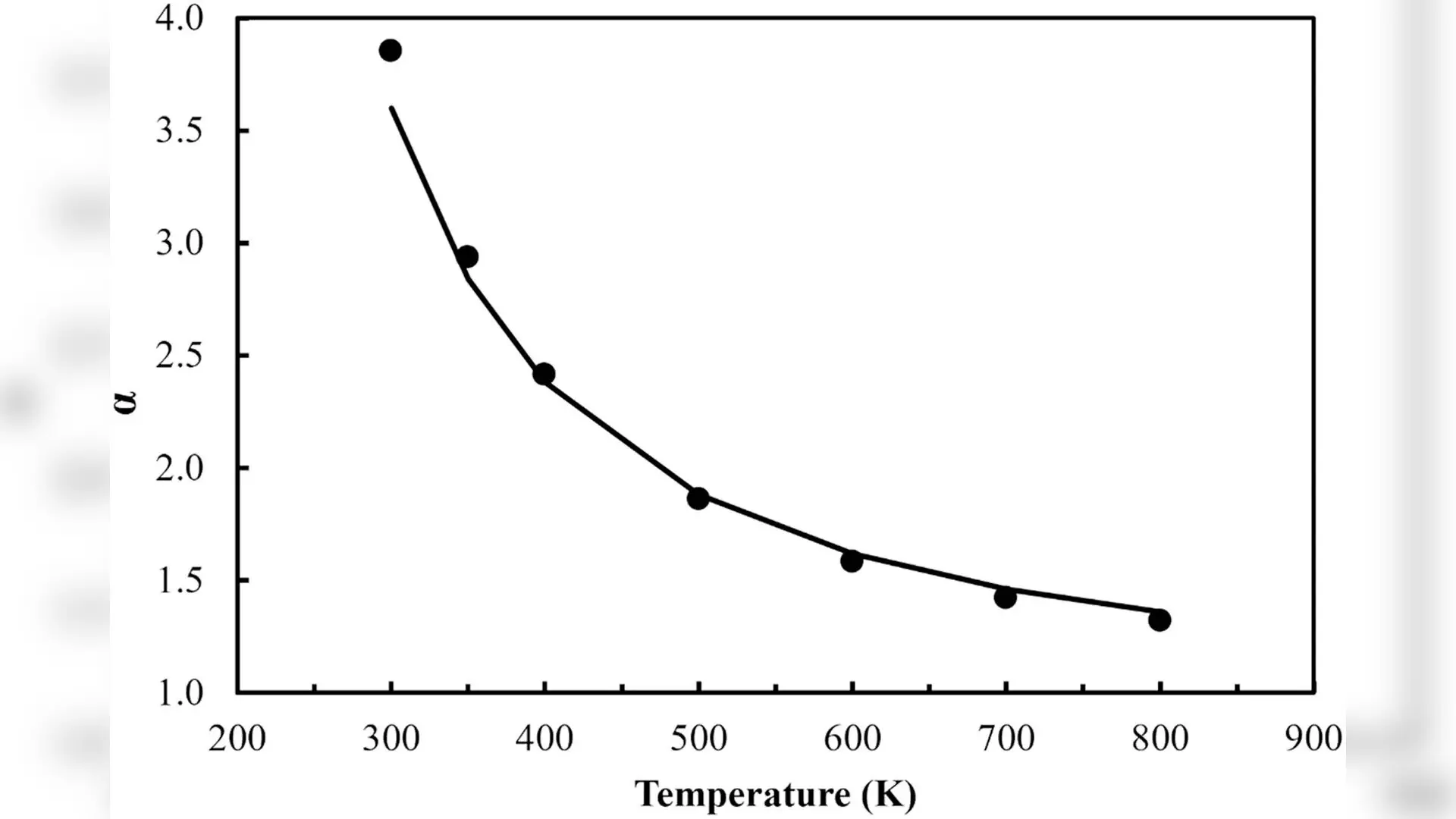
The origin of our planet’s oceans remains one of the most fundamental unresolved problems in planetary science. Any viable explanation must account for both the sheer abundance of water and its distinct isotopic composition, particularly the elevated ratio of deuterium to hydrogen relative to the primordial solar nebula. Earth mantle water features a deuterium to hydrogen ratio enriched by a factor of roughly four to six compared to solar values, while ocean water exhibits an even higher enrichment of seven to eight times. For decades, the prevailing consensus pointed toward external delivery by volatile rich bodies like carbonaceous chondrites, yet this framework struggles to explain how those parent bodies originally acquired water with such closely matched isotopic fingerprints.
Revisiting Adsorption and Nebular Mechanics
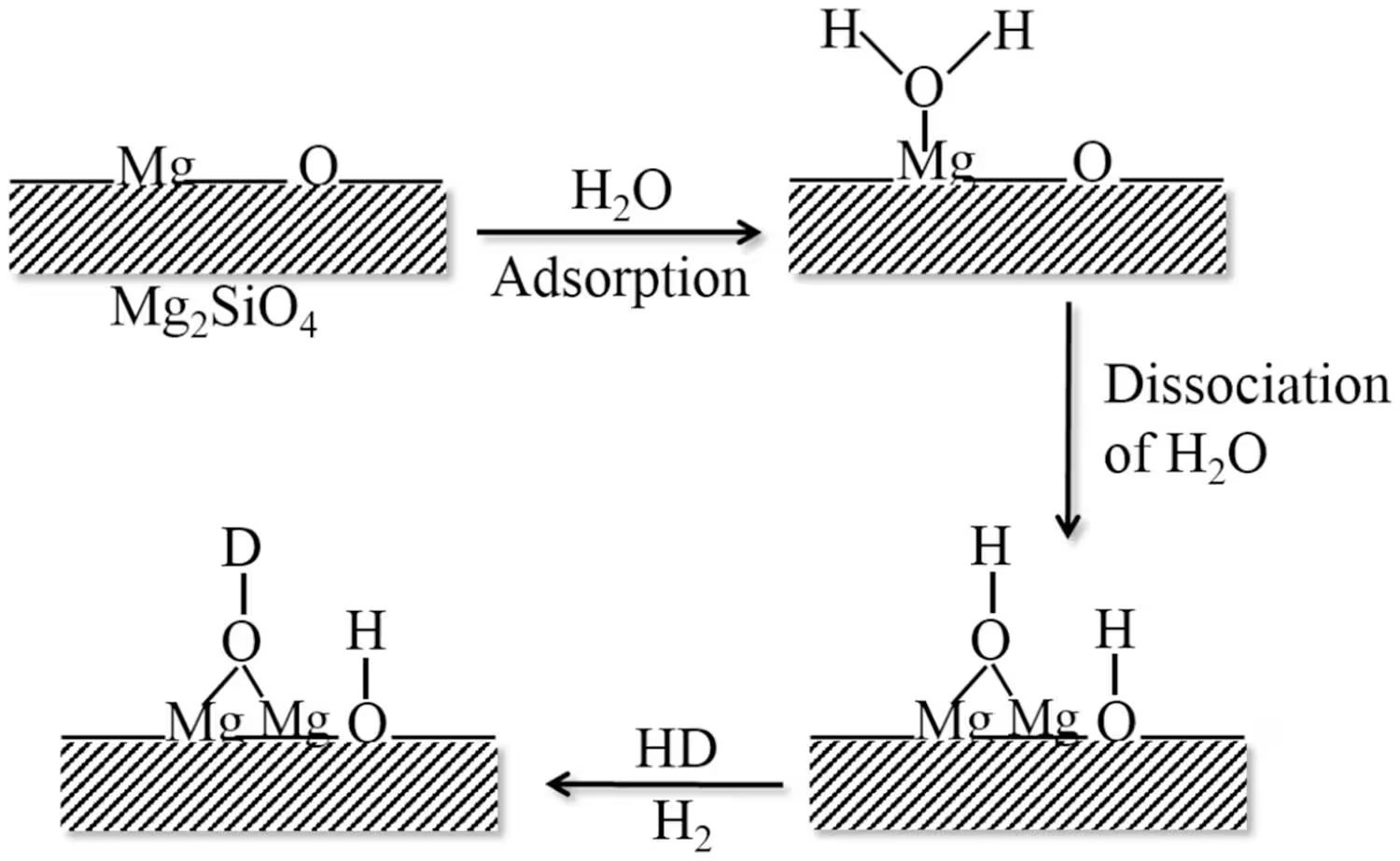
An alternative framework proposes that planetary building blocks directly incorporated water through surface adsorption during early accretion. Previous theoretical work demonstrated that water molecules can dissociatively chemisorb onto exposed magnesium oxide sites on olivine mineral surfaces. When combined with subsequent hydrogen diffusion into the grain interior, this mechanism could easily supply multiple ocean equivalents of water to a growing terrestrial world without requiring massive transport from distant reaches of the protoplanetary disk.
Despite successfully accounting for water abundance, this adsorption model faced sharp criticism over isotopic constraints. Water drawn directly from the hydrogen rich solar nebula ought to retain a near solar, low deuterium signature. However, new research bridges this gap by demonstrating that equilibrium isotope fractionation between gas and mineral surfaces can dramatically alter these ratios. As temperatures fall, physical chemistry dictates that deuterium atoms will preferentially partition into condensed solid phases rather than remaining in the surrounding gas.
Quantum Chemistry and Thermodynamic Modeling
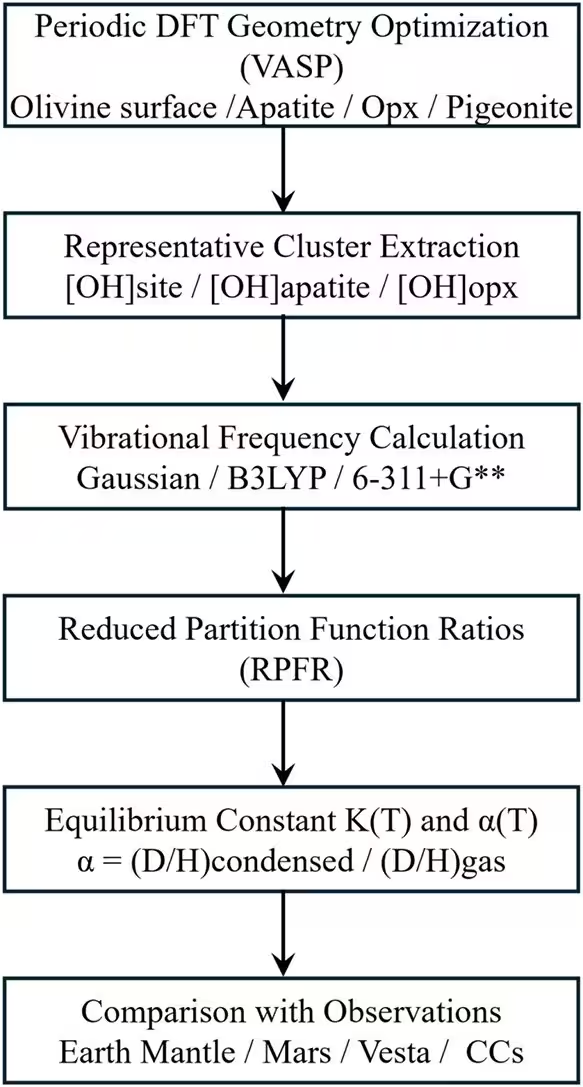
To quantify this effect, the study examined isotopic exchange reactions using a combination of density functional theory calculations and statistical thermodynamics. The researcher modeled hydroxyl groups chemisorbed onto olivine surfaces, structural hydroxyls embedded within silicate minerals like apatite and pyroxenes, and specific hydrocarbon structures representing meteoritic organic matter. By determining vibrational frequencies and partition functions, the investigation established precise temperature dependent enrichment curves.
The calculations reveal a systematic trend where deuterium enrichment increases uniformly as temperatures decrease. This behavior stems from the lower zero energy states of oxygen deuterium bonds compared to ordinary oxygen hydrogen bonds, which stabilizes deuterium bearing molecules within crystal lattices at lower temperatures. Across diverse chemical environments, the fractionation behavior remains remarkably consistent, pointing to a universal physical driver rooted in fundamental vibrational properties rather than unique mineral chemistries.
Implications for Earth, Mars, and Beyond
When evaluated at temperatures between 175 and 300 Kelvin, the theoretical enrichment factors align remarkably well with observed values across the inner solar system. For Earth, chemisorbed hydroxyl groups on olivine surfaces reach deuterium enrichment values near 3.5 to 3.6 at 300 Kelvin, perfectly matching terrestrial mantle water. Kinetic evaluations examining hydrogen interdiffusion depths over millions of years further confirm that isotopic equilibrium could be reached within the lifetime of the protoplanetary disk.
This convergence suggests that the similar water compositions found on Earth, Mars, asteroid Vesta, and carbonaceous chondrites do not necessitate complex delivery scenarios from specialized outer solar system reservoirs. Instead, they reflect a common thermodynamic gas grain fractionation process operating across similar temperature ranges during the dawn of the solar system.
The research was published in ACS earth & space chemistry on October 15, 2026.
This article has been fact checked for accuracy, with information verified against reputable sources. Learn more about us and our editorial process.
Last reviewed on .
Article history
- Latest version
Reference(s)
- Asaduzzaman, Abu. “Hydrogen Isotopic Fractionation in the Solar Nebula and Implications for Water in Earth and Inner Solar System Bodies.” ACS Earth and Space Chemistry, vol. 10, no. 10, September 24, 2026, pp. 2326-2334. American Chemical Society (ACS), doi: 10.1021/acsearthspacechem.6c00183. <https://doi.org/10.1021/acsearthspacechem.6c00183>.
Cite this page:
- Posted by John Williams