Astronomers Detect Einstein’s Spacetime Warping Inside A Massive Cosmic Explosion
Astronomers have detected rare evidence of Einstein’s relativity in a supernova, where a hidden magnetar’s rhythm reveals intense cosmic gas interactions.
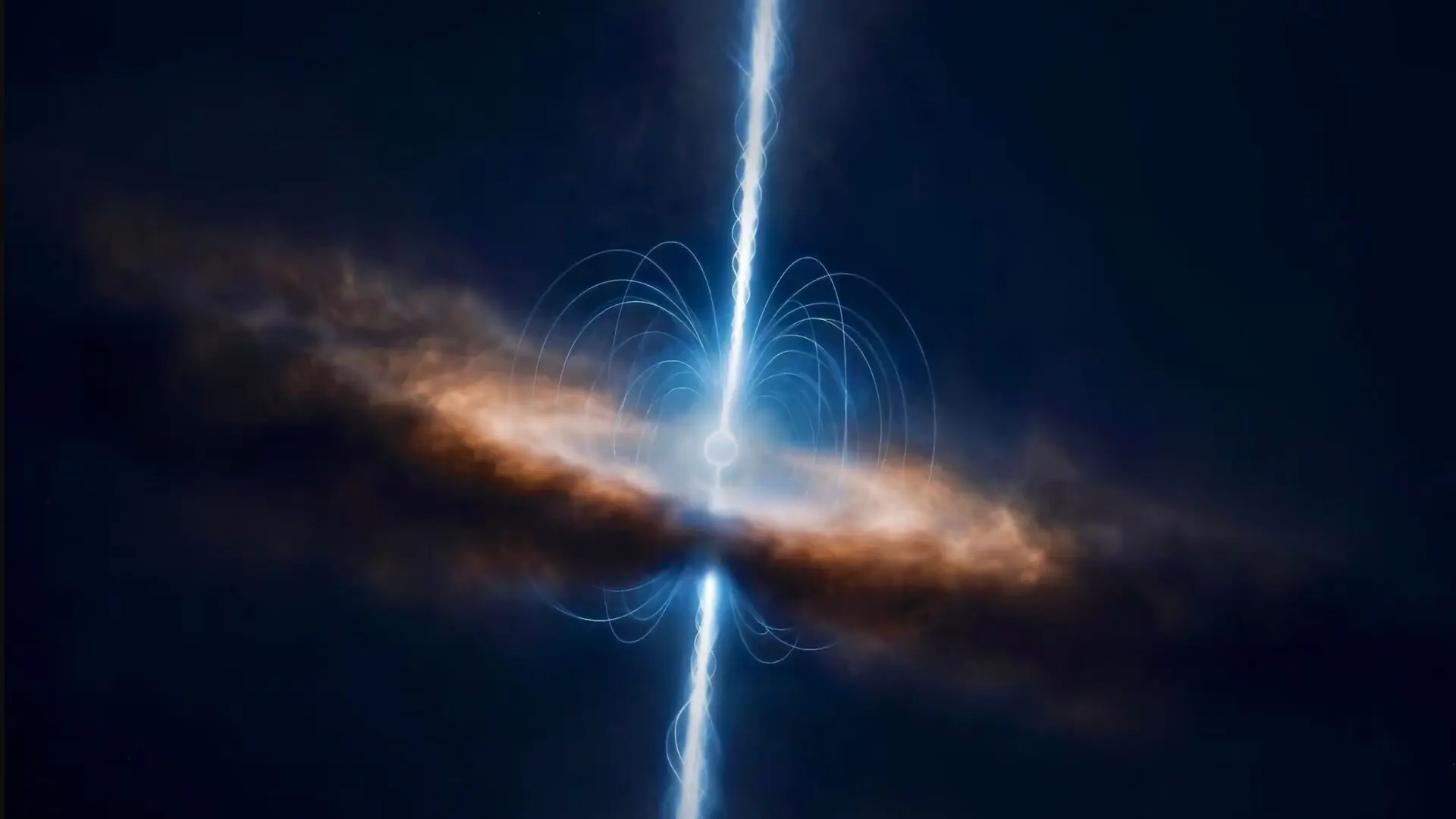
Astronomers have uncovered a rhythmic pattern in the fading light of a distant stellar explosion, suggesting the presence of a hidden engine shaped by the laws of general relativity. SN 2024afav, a superluminous supernova detected over a billion light-years away, exhibited a series of brightness fluctuations that accelerated over time—a phenomenon researchers are calling a “chirp.”
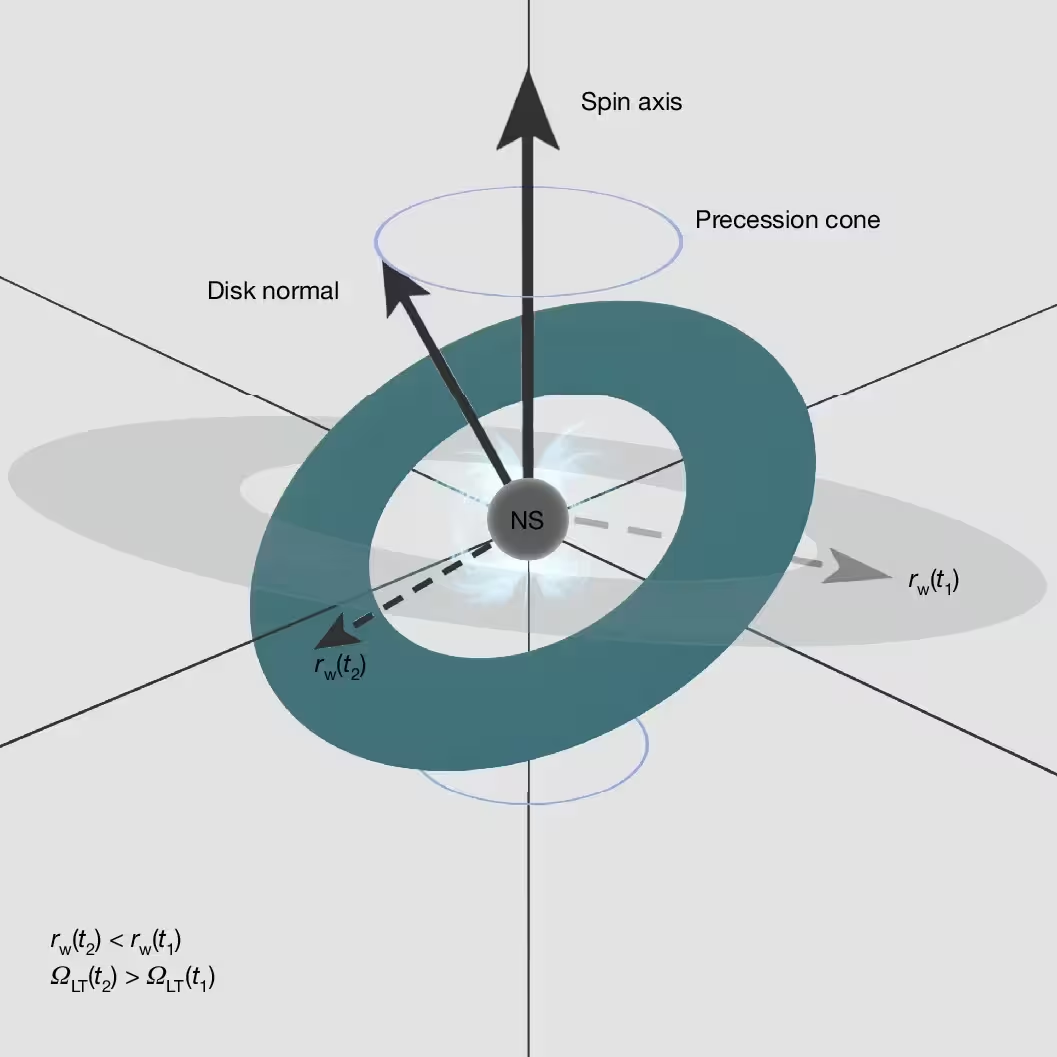
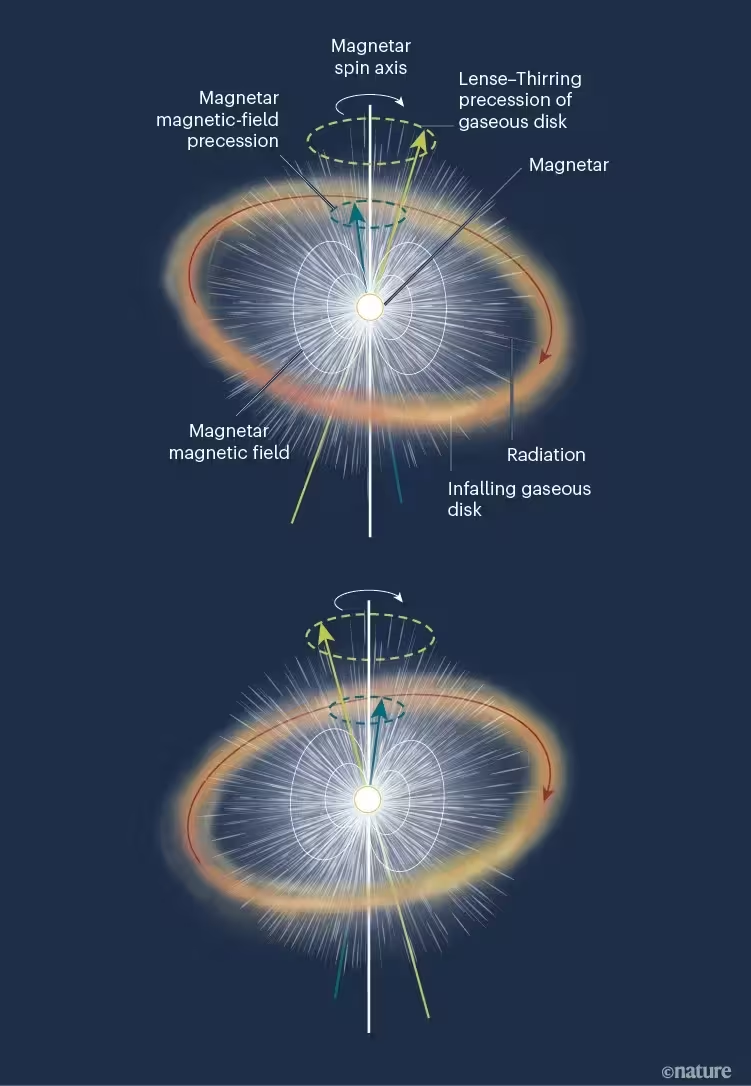
The study, published in Nature, suggests that the event is driven by a newborn magnetar—a highly magnetized, rapidly rotating neutron star—surrounded by a tilted accretion disk. According to the research team, led by Joseph Farah of UC Santa Barbara and the Las Cumbres Observatory, the accelerating pulses result from Lense–Thirring precession, a relativistic effect where the rotating magnetar drags the fabric of spacetime, causing the surrounding disk to wobble like a spinning top.
Decoding the Cosmic Chirp
Superluminous supernovae are among the most energetic events in the universe, radiating significantly more light than standard supernovae. SN 2024afav was first spotted on December 12, 2024, by the Gravitational-wave Optical Transient Observer. Over the subsequent 200 days, global networks including the Las Cumbres Observatory tracked the object’s evolution, revealing four distinct pulses of light. The diminishing intervals between these peaks indicated an evolving physical process within the debris cloud rather than random variations.
This timing is key to the magnetar hypothesis. While models have long suggested that a spinning magnetar’s rotational energy could power an exceptionally bright supernova, the standard theory typically predicts a steady decline in light. By incorporating a wobbling, misaligned accretion disk, researchers can explain the periodic “chirps” as the disk shifts its orientation, periodically redirecting energy through the expanding stellar material.
Probing the Engine’s Properties
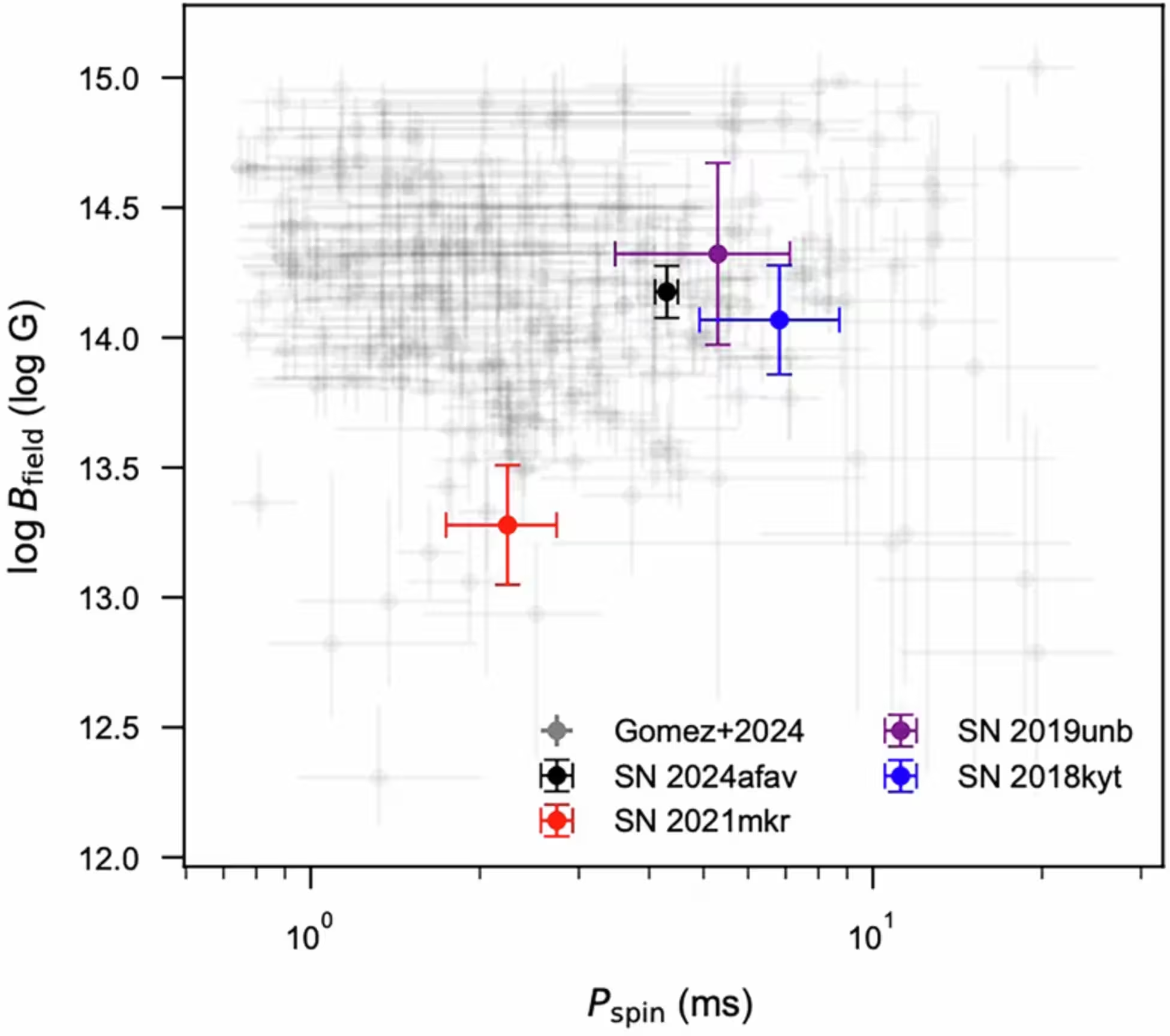
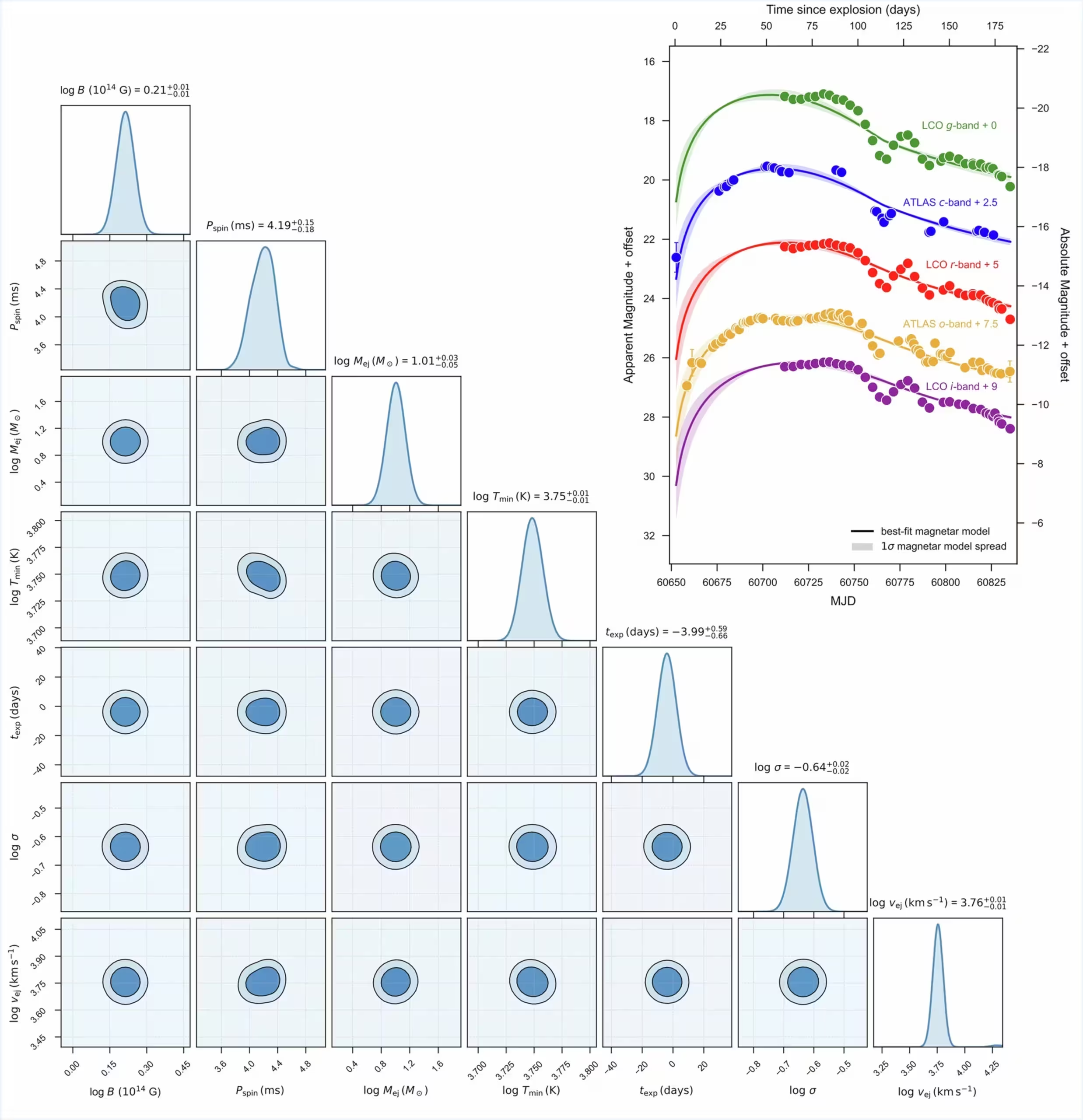
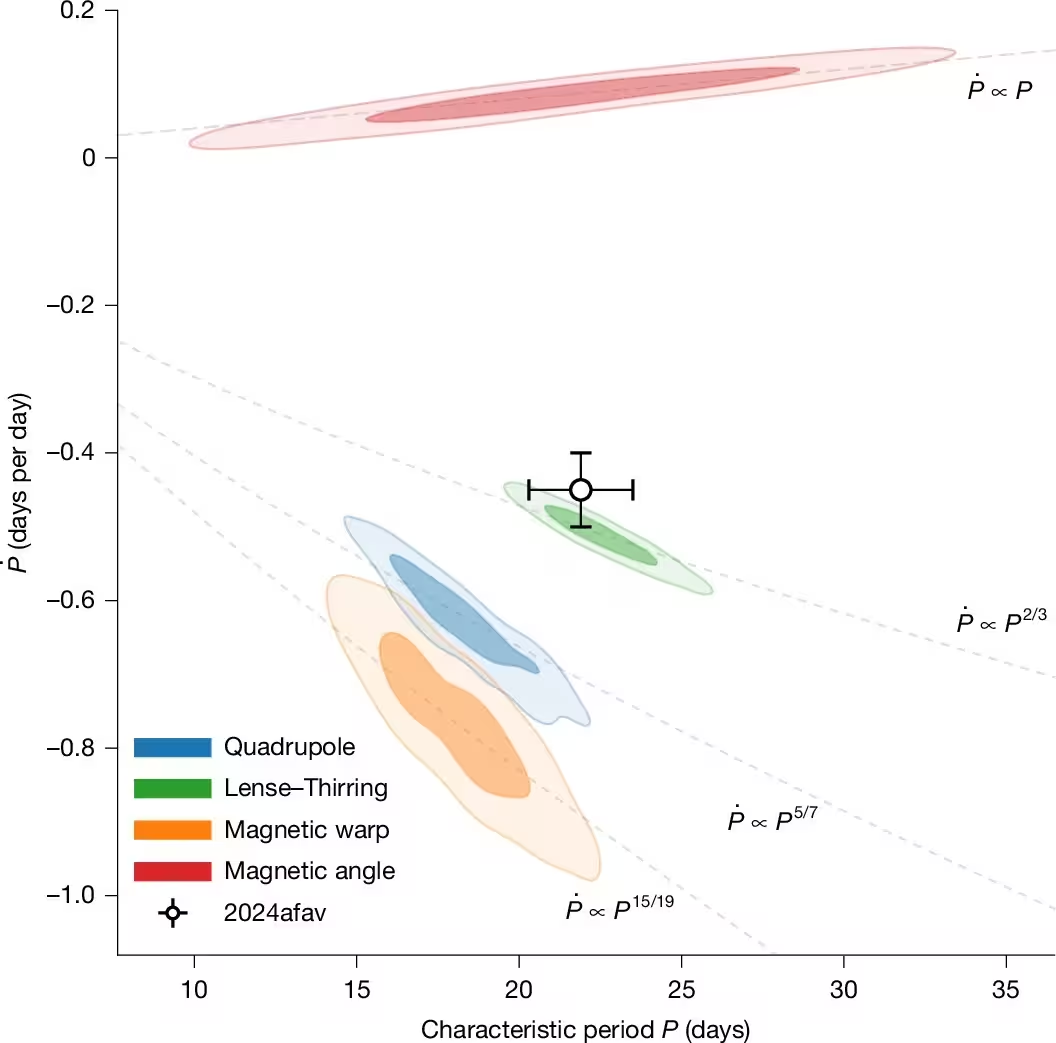
The mathematical model applied by the team points to a magnetar spinning at a rate of roughly 240 rotations per second, with a magnetic field strength estimated at 1.6 × 10¹⁴ gauss. While these values are derived from light-curve modeling rather than direct imaging, they provide a consistent framework that fits the observational data better than alternative theories involving magnetic effects or simple collision-driven brightness.
“Only Lense-Thirring precession matched the timing perfectly,” Farah noted, emphasizing that the relativistic framework accounts for both the broad energy release and the specific, faster-frequency modulations observed by the team.
Interaction with Circumstellar Material
While the central engine provides a compelling explanation for the core dynamics, it is not the only factor at play. A separate study, led by Harsh Kumar and published in The Astrophysical Journal Letters, analyzed the spectroscopic signatures of SN 2024afav. The data revealed the presence of hydrogen, helium, and oxygen, which likely stem from the collision between the supernova ejecta and gas shed by the star before it exploded.
This dual approach suggests that while the magnetar likely powers the extreme luminosity of the event, interactions with surrounding gas likely modulate the light in other ways. By combining spectroscopic data with light-curve analysis, astronomers are beginning to map the complex interplay between the birth of a compact object and the violent aftermath of a stellar death. The team hopes that future surveys will capture more of these events, allowing for a broader comparison of how these powerful cosmic engines function in the final moments of massive stars.
Further Research and Citations
- SN 2024afav: A Superluminous Supernova with Multiple Light-curve Bumps and Spectroscopic Signatures of Circumstellar Interaction: (The Astrophysical Journal Letters, 2026)
- Superluminous supernovae: an explosive decade: (Astronomy & Geophysics, 2021)
- Super-Luminous Type Ic Supernovae: Catching a Magnetar by the Tail: (The Astrophysical Journal, 2013)
- Supernova Light Curves Powered by Young Magnetars: (The Astrophysical Journal, 2010)
- Bright Supernovae from Magnetar Birth: (The Astrophysical Journal Letters, 2010)
This article has been fact checked for accuracy, with information verified against reputable sources. Learn more about us and our editorial process.
Last reviewed on .
Article history
- Latest version
Reference(s)
- Farah, Joseph. “Lense–Thirring precessing magnetar engine drives a superluminous supernova - Nature.”, vol. 651, no. 8105, pp. 321-325. Nature, doi: 10.1038/s41586-026-10151-0. <https://www.nature.com/articles/s41586-026-10151-0>.
- Kumar, Harsh., et al. “SN 2024afav: A Superluminous Supernova with Multiple Light-curve Bumps and Spectroscopic Signatures of Circumstellar Interaction.” The Astrophysical Journal Letters, vol. 998, no. 1, February 2, 2026, pp. L3 American Astronomical Society, doi: 10.3847/2041-8213/ae3749. <https://doi.org/10.3847/2041-8213/ae3749>.
- Nicholl, Matt. “Superluminous supernovae: an explosive decade.” Astronomy & Geophysics, vol. 62, no. 5, October 1, 2021, pp. 5.34-5.42. Oxford University Press (OUP), doi: 10.1093/astrogeo/atab092. <https://doi.org/10.1093/astrogeo/atab092>.
- Inserra, C.., et al. “SUPER-LUMINOUS TYPE Ic SUPERNOVAE: CATCHING A MAGNETAR BY THE TAIL.” The Astrophysical Journal, vol. 770, no. 2, June 4, 2013, pp. 128 American Astronomical Society, doi: 10.1088/0004-637X/770/2/128. <https://doi.org/10.1088/0004-637X/770/2/128>.
- Kasen, Daniel., et al. “SUPERNOVA LIGHT CURVES POWERED BY YOUNG MAGNETARS.” The Astrophysical Journal, vol. 717, no. 1, June 10, 2010, pp. 245-249. American Astronomical Society, doi: 10.1088/0004-637X/717/1/245. <https://doi.org/10.1088/0004-637X/717/1/245>.
- Woosley, S. E.. “BRIGHT SUPERNOVAE FROM MAGNETAR BIRTH.” The Astrophysical Journal, vol. 719, no. 2, August 4, 2010, pp. L204-L207. American Astronomical Society, doi: 10.1088/2041-8205/719/2/L204. <https://doi.org/10.1088/2041-8205/719/2/L204>.
Cite this page:
- Posted by Aisha Ahmed