Astronomers Discover New Cosmic Fingerprint to Unlock the History of the Universe
Hundreds of newly predicted manganese signals offer a breakthrough in tracing cosmic chemistry and understanding how the universe forged its elements.
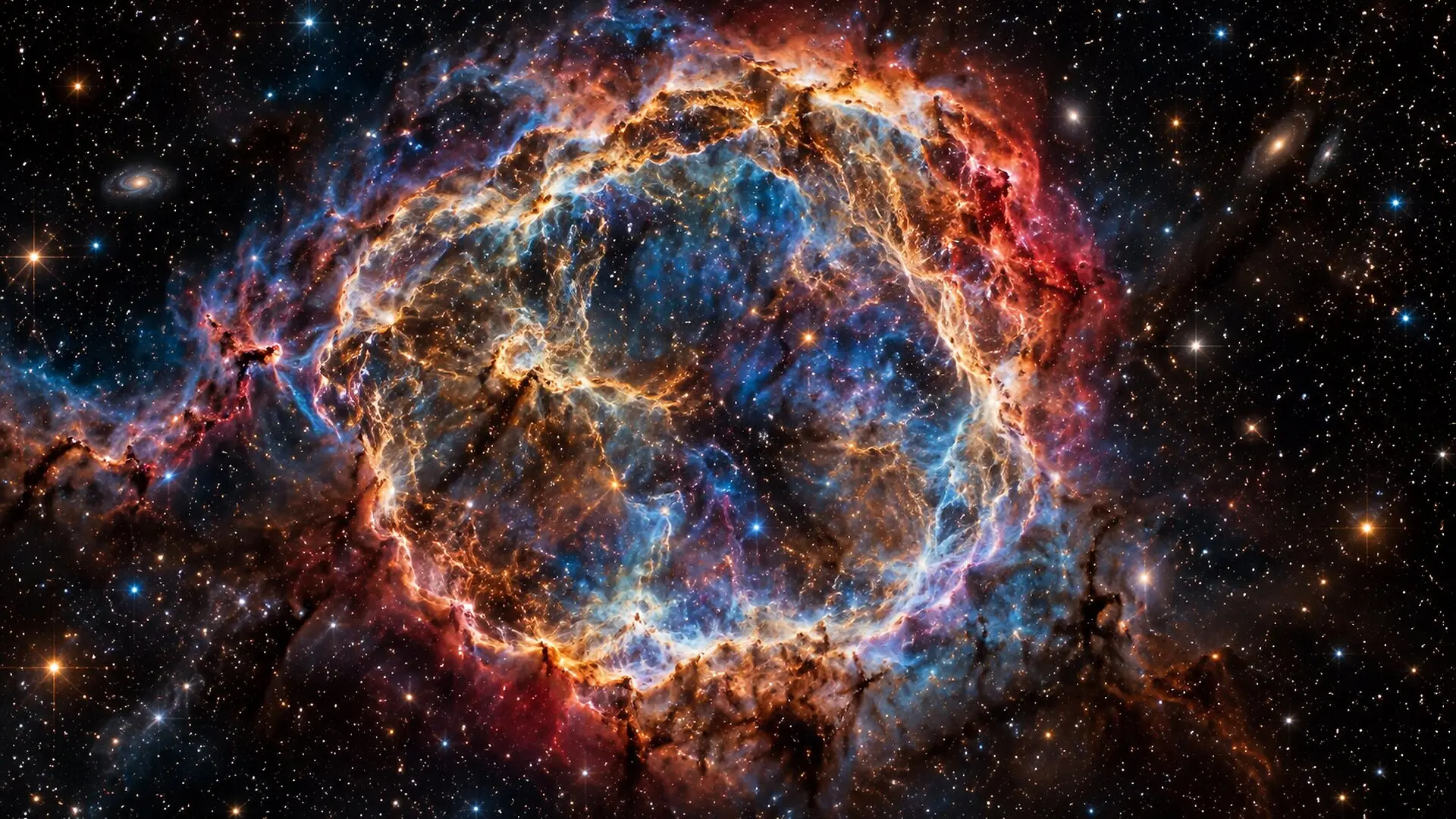
Astronomers have unveiled a new diagnostic tool for mapping the chemical history of the cosmos, centered on the elusive signatures of doubly ionized manganese. By calculating the precise atomic behaviors of Mn III, researchers hope to utilize these faint spectral signals to track the enrichment of galaxies across billions of years of stellar activity.
The study, published in Monthly Notices of the Royal Astronomical Society, provides a comprehensive theoretical framework for identifying manganese in complex environments like supernova remnants and ionized nebulae. By bridging atomic physics and plasma modeling, the team has mapped out 703 forbidden emission transitions, offering a roadmap for future observations using high-sensitivity instruments like the James Webb Space Telescope (JWST).
![The ground state electron configuration of ground state gaseous neutral manganese is [Ar].3d5.4s2 and the term symbol is 6S5/2.](https://www.bioscience.com.pk/images/0a402959ab.avif)
A Celestial Clockwork Based on Manganese
Manganese serves as a unique indicator of galactic maturation because its production is tied to different types of supernovae that occur on vastly different timescales. While massive stars undergo rapid core-collapse explosions, Type Ia supernovae—which originate from white dwarfs—take significantly longer to contribute to the chemical inventory of a galaxy.
Because Type Ia supernovae are efficient producers of manganese under neutron-rich conditions, the ratio of manganese to iron acts as a reliable gauge of a galaxy’s age and evolutionary phase. “If we understand the chemical composition of galaxies, we can learn more about the chemistry of stars and their elements,” explains co-author Anil Pradhan of The Ohio State University. “That will eventually lead to understanding the evolution of the universe and the composition of everything within it.”
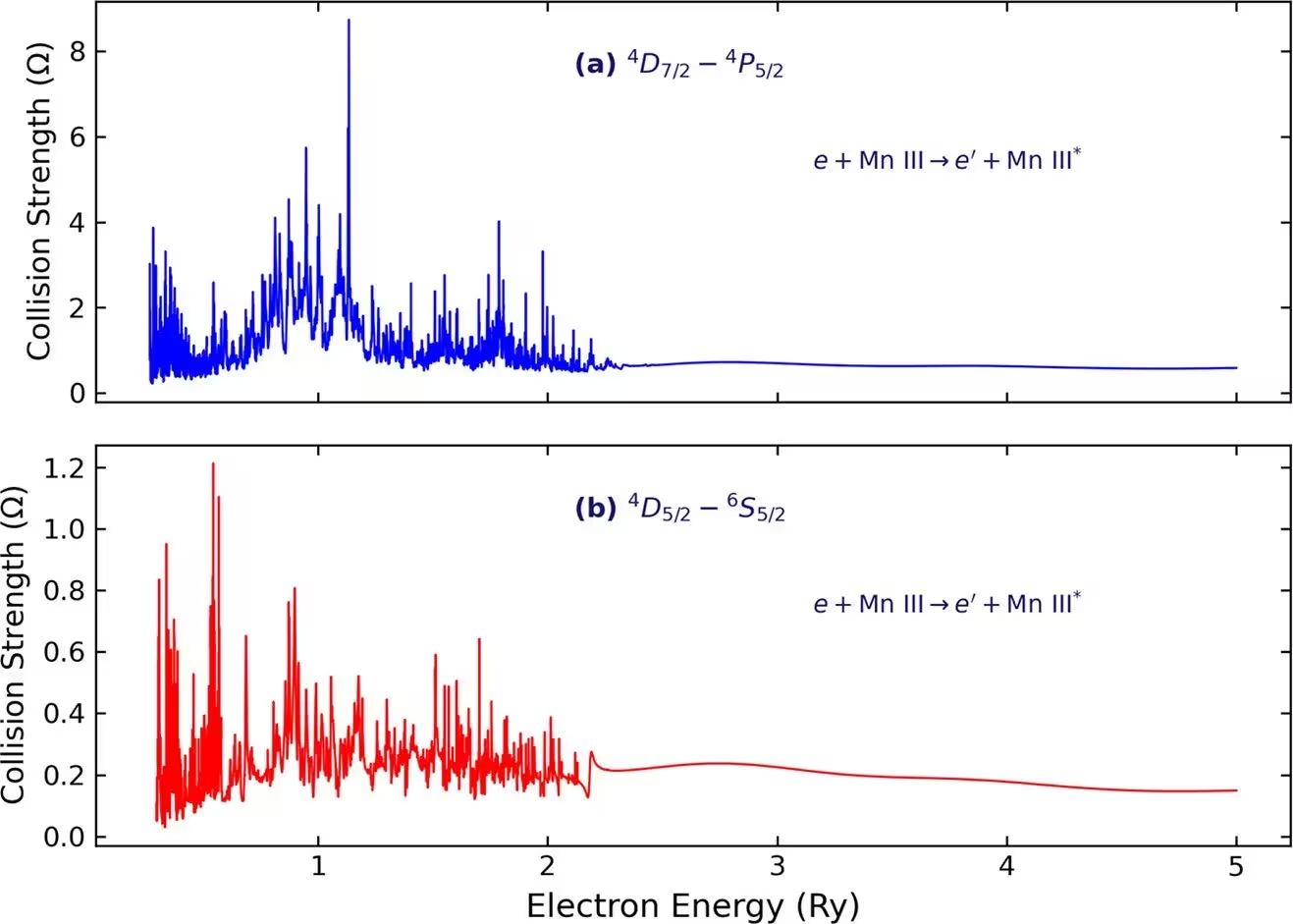
Decoding Plasma Conditions Through Spectral Lines
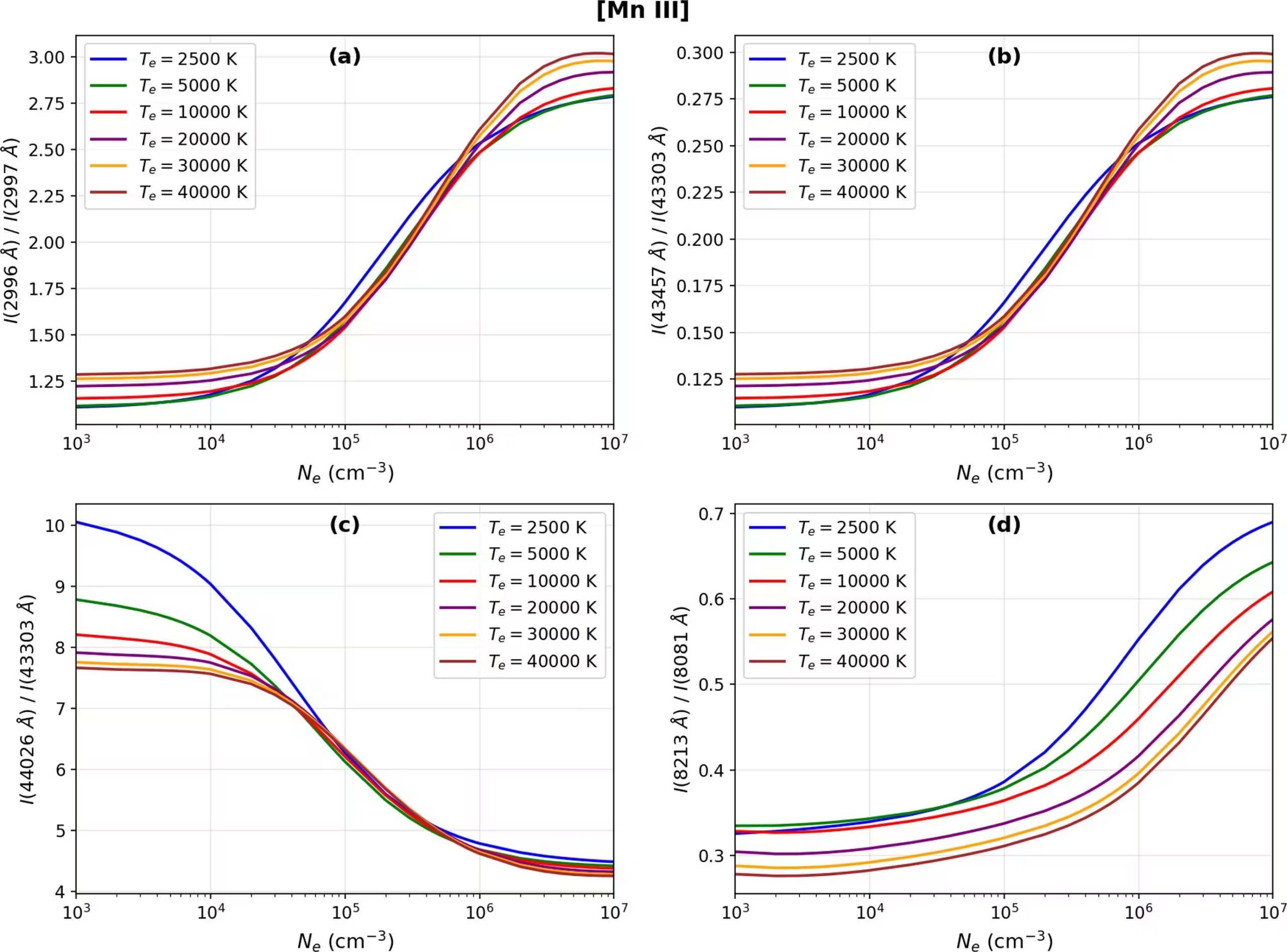
Detecting manganese has historically been difficult due to its low abundance compared to iron. To overcome this, the research team focused on Mn III, which is expected to exist in the later, nebular phases of stellar remnants. By performing detailed electron-ion scattering calculations on the lowest 38 energy levels of Mn III, the researchers modeled how these ions interact within hot, ionized gas at temperatures ranging from 2,500 to 40,000 kelvins.
The resulting data allows for the identification of specific emission-line ratios that function as physical probes. Some of these ratios are uniquely sensitive to electron density, while others fluctuate based on temperature. By cross-referencing these measurements, astronomers can disentangle the physical properties of the gas surrounding distant stars.
New Frontiers for Observational Astronomy
The theoretical model highlights several mid-infrared and ultraviolet lines that are prime candidates for observation. For instance, certain ultraviolet lines are positioned close enough together that they are affected similarly by interstellar dust, providing a cleaner, more robust measurement of electron density. Furthermore, the redshift of light from the early universe could push these signatures into favorable wavelengths for the James Webb Space Telescope to capture.
While the study is currently computational, it provides the fundamental atomic data required to interpret incoming data from current and future deep-space observatories. By integrating these manganese findings with established data on elements like oxygen and sulfur, researchers hope to construct a more granular timeline of how the universe seeded itself with the building blocks of life. As Pradhan noted, the team is now working to match these predictions with real-world observations, marking a significant step forward in the study of galactic chemical evolution.
Recommended Reading on Cosmic Evolution
For further context on how researchers analyze stellar yields and the chemical maturation of galaxies, consult these recent peer-reviewed studies:
- Constraining SN Ia progenitors from the observed Fe-peak elemental abundances in the Milky Way dwarf galaxy satellites
- Observational constraints on the origin of the elements. IX. 3D NLTE abundances of metals in the context of Galactic Chemical Evolution models and 4MOST
- Chemical evolution models: the role of type Ia supernovae in the α-elements over iron relative abundances and their variations in time and space
- Assessing stellar yields in Galaxy chemical evolution: Observational stellar abundance patterns
- Chemical separation of stellar populations: analytic solutions for chemical evolution models with metallicity-dependent yields
This article has been fact checked for accuracy, with information verified against reputable sources. Learn more about us and our editorial process.
Last reviewed on .
Article history
- Latest version
Reference(s)
- <https://academic.oup.com/mnras/article/550/4/stag1304/8748211>.
- “Home | The Ohio State University.” <https://www.osu.edu/>.
- <https://academic.oup.com/mnras/article/538/2/1127/8043273>.
- <https://academic.oup.com/mnras/article/538/4/3284/8090516>.
- <https://academic.oup.com/mnras/article/532/2/2331/7704445>.
- <https://academic.oup.com/mnras/article/522/1/863/7110425>.
- <https://academic.oup.com/mnras/article/544/4/4590/8314135>.
Cite this page:
- Posted by Aisha Ahmed