Lost Manuscript Pages Finally Reunited After Being Separated for Centuries
Rare medieval manuscript pages discovered in a collection linked to Sir John Gage reveal how he secretly preserved Catholic texts during the English Reformation.
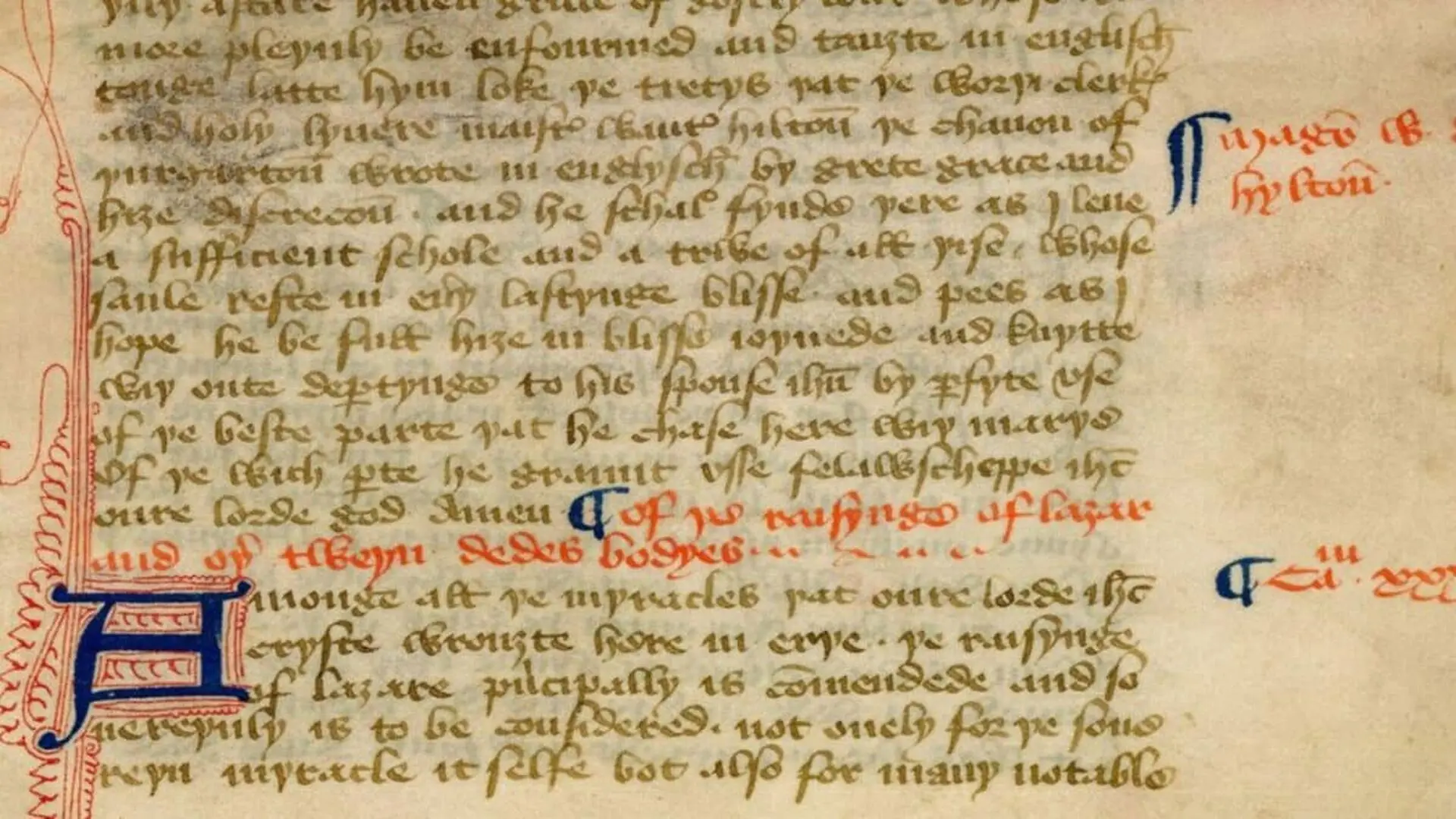
A centuries-old literary puzzle has finally been solved, reuniting two long-separated fragments of a medieval manuscript currently sitting thousands of miles apart. Researchers have confirmed that a set of six parchment pages housed in an English archive is the missing link to a substantial volume held at Yale University, offering a rare glimpse into the survival of religious texts during the tumultuous English Reformation.
The discovery, detailed in a study published this September in Notes and Queries, centers on The Mirror of the Blessed Life of Jesus Christ, a 15th-century work by Nicholas Love. Originally composed around 1409, the text was designed as an orthodox English adaptation of Latin religious narratives, intended to counteract the influence of the Lollards, a movement that sought to democratize access to the Bible in English.
Bridging the Archive Gap
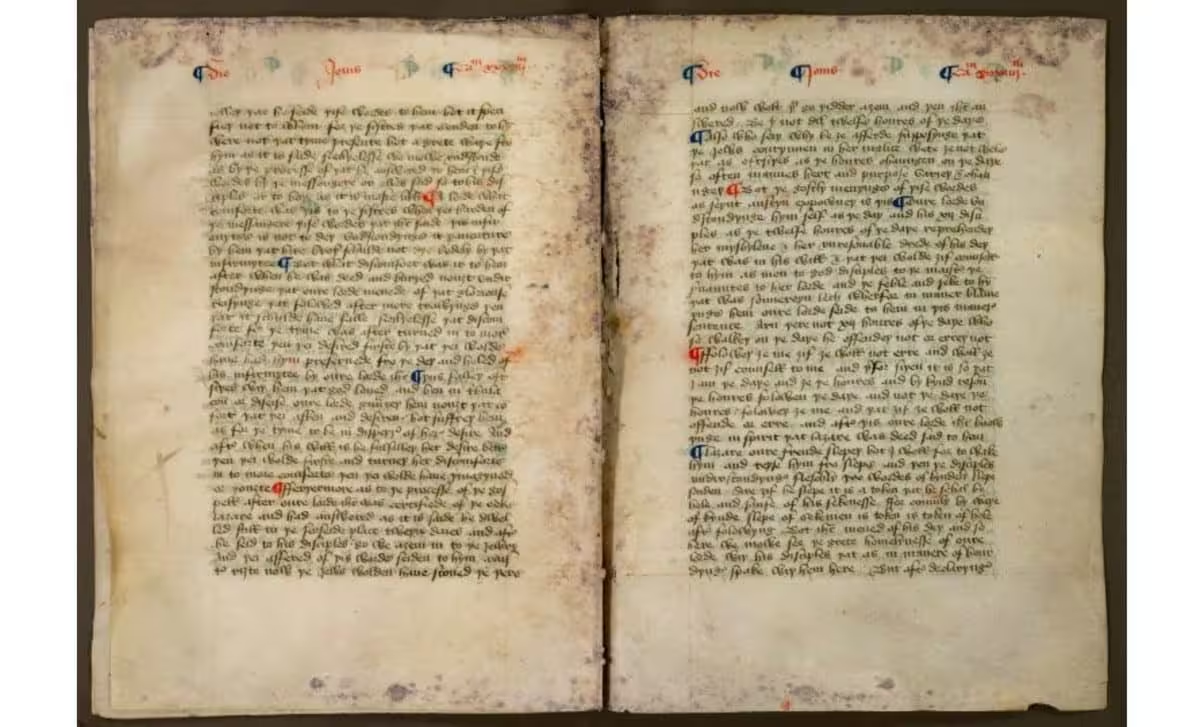
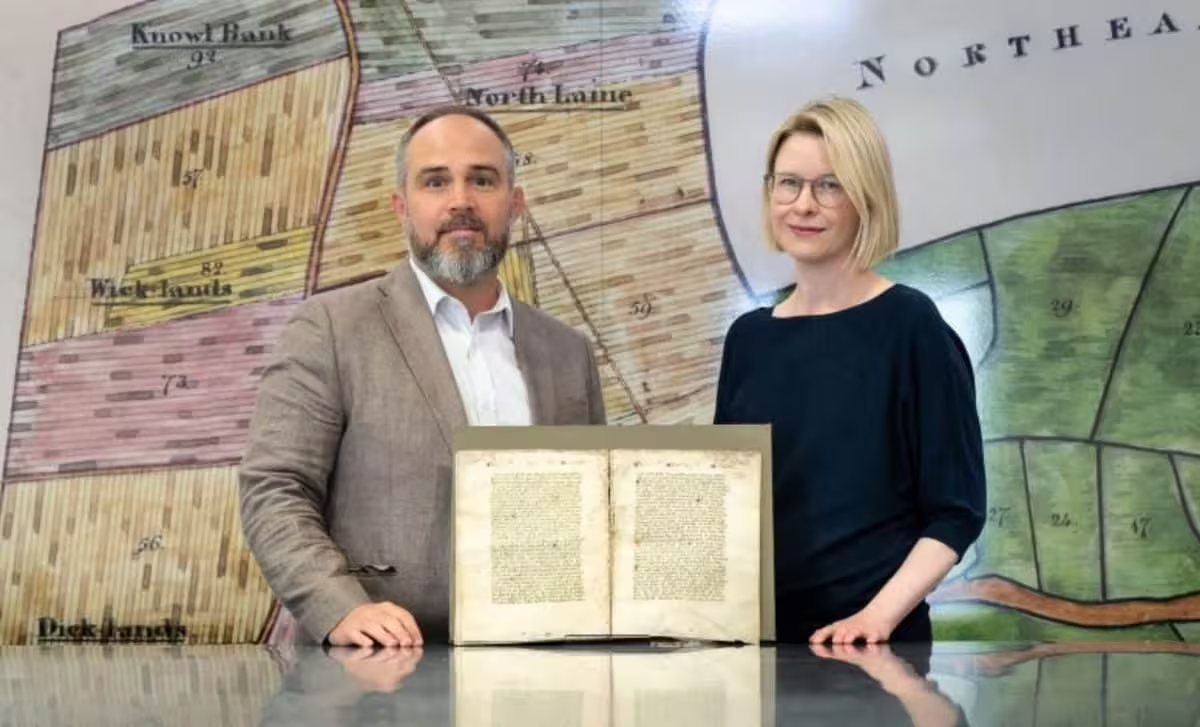
The investigation was led by Dr. Katie Walter of the University of Sussex and Dr. James Wade of the University of Cambridge. Their breakthrough began with the identification of six loose parchment pages residing at The Keep, an archive in Brighton. These documents had remained largely anonymous within a collection deposited by the Gage family in 1929 until researchers recognized their structural and thematic connection to the Yale volume, officially cataloged as Takamiya MS 20 at the Beinecke Rare Book and Manuscript Library.
By comparing handwriting, parchment dimensions, and textual content, the team confirmed that the Brighton fragment contains the conclusion of Chapter 33 and the majority of Chapter 34 of Love’s work, specifically detailing the raising of Lazarus. The findings provide a physical link between the two collections, confirming that the fragments share the same scribal origins and decorative lineage.
An Ironic Custodian of Catholic History
The manuscript’s journey through history is punctuated by an intriguing paradox. The Yale volume bears the signature of Sir John Gage, a prominent court official under Henry VIII who held significant power during the dissolution of the monasteries. As a member of the Privy Council and Constable of the Tower, Gage was instrumental in the state-sanctioned seizure of Catholic property during the 1530s.
Yet, despite his role in dismantling the traditional Church, Gage remained a devout Catholic and a collector of monastic materials. His home, Firle Place, famously incorporated stone salvaged from the ruins of Lewes Priory following its 1537 closure. The presence of The Mirror in his personal library suggests that, even as the Reformation tore through England’s religious landscape, certain individuals navigated the shift by quietly preserving the very texts that the new regime sought to suppress.
While it remains unclear exactly when the six pages were separated from the main volume—likely occurring sometime between Gage’s ownership and a 19th-century rebinding—the discovery highlights the resilience of medieval literature. It offers historians a rare, tangible artifact of the private, sometimes clandestine, preservation of Catholic tradition in a rapidly changing England.
This article has been fact checked for accuracy, with information verified against reputable sources. Learn more about us and our editorial process.
Last reviewed on .
Article history
- Latest version
Cite this page:
- Posted by Zara Tariq