Scientists Discover Seafloor Rocks That Spontaneously Burst Into Flames Upon Reaching Surface
Scientists studying deep-sea rocks made an unexpected discovery when samples from the ocean floor began exhibiting surprising, unpredicted behavior in the lab.
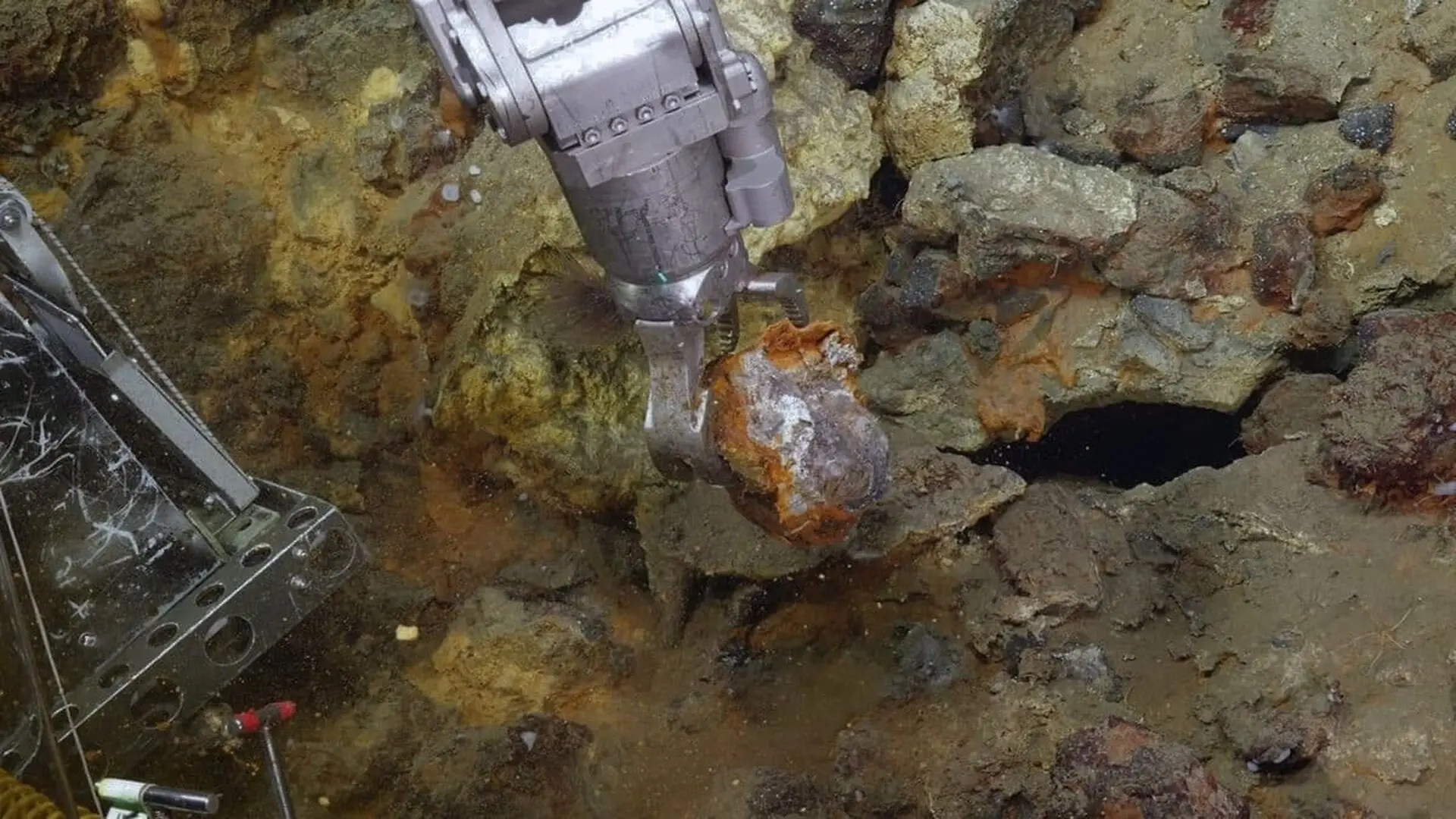
Researchers exploring the potential for deep-sea mining have identified a volatile new risk: certain mineral-rich rocks found on the ocean floor can spontaneously ignite when brought to the surface. During a 2022 expedition, scientists observed seafloor samples reaching temperatures exceeding 100 °C as they rapidly oxidized, a discovery that suggests significant safety hurdles for future subsea resource extraction.
The findings, detailed in a study published in Scientific Reports by a team from the United States Geological Survey (USGS), highlight an overlooked hazard associated with massive sulfide deposits. These formations are highly prized by industry for their concentrations of copper, zinc, iron, gold, and silver, but their reactive nature could complicate plans for commercial exploitation on the ocean floor.
An Unexpected Flashpoint in the Lab
The rocks were retrieved from the Escanaba Trough, located within the U.S. Exclusive Economic Zone off the coast of the Pacific Northwest. The collection effort was a joint operation involving the USGS, the Bureau of Ocean Energy Management (BOEM), and the National Oceanic and Atmospheric Administration (NOAA).

Using a remotely operated vehicle, the team gathered 57 samples from the seabed. The instability was discovered during post-collection processing; when researchers attempted to freeze-dry and crush the materials, two of the samples spontaneously combusted. Analysis revealed that these particular rocks were composed primarily of nanocrystalline marcasite, a highly unstable form of iron sulfide that reacts violently when exposed to oxygen. The mechanical energy from grinding, combined with the presence of air, triggered an exothermic reaction.
Implications for Future Deep-Sea Operations
The International Seabed Authority has already issued exploration contracts for sulfide mineral deposits along the Mid-Atlantic and Southwest Indian ridges. However, the USGS warns that the conditions encountered during industrial-scale mining—where large volumes of material are hauled to the surface, crushed, and processed—could create environments vastly different from the high-pressure, oxygen-poor depths where these minerals formed.
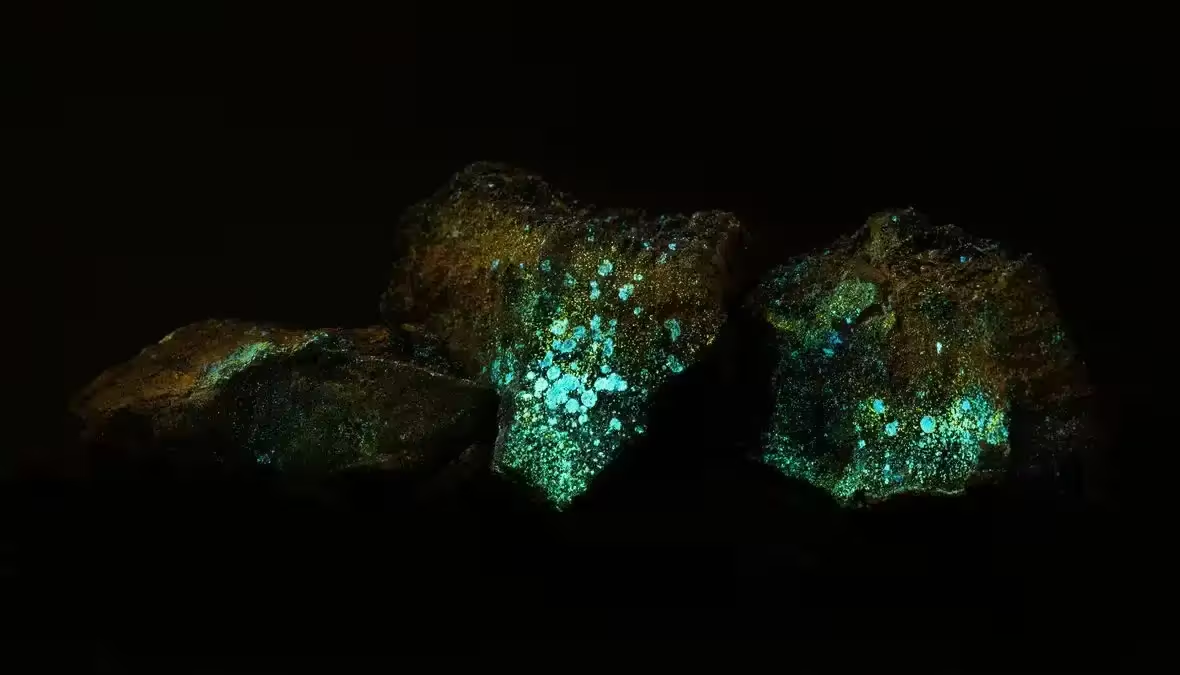
The risk of fire on board extraction vessels is a tangible concern that regulators may need to address. The USGS report explicitly suggests that these minerals possess chemical properties that deviate significantly from terrestrial counterparts, potentially requiring specialized handling and storage protocols to prevent accidents during transport.

While not every ocean floor sample is guaranteed to combust, the identification of this exothermic potential adds another layer of complexity to an already controversial industry. As stakeholders debate the merits of deep-sea mining, the possibility of self-heating ores introduces both an operational danger for workers and an additional ecological factor for fragile marine ecosystems already under pressure.
This article has been fact checked for accuracy, with information verified against reputable sources. Learn more about us and our editorial process.
Last reviewed on .
Article history
- Latest version
Reference(s)
- Gartman, Amy. “Spontaneous combustion of metal sulfide minerals and implications for seafloor massive sulfide mining - Scientific Reports.”, September 28, 2026 Nature, doi: 10.1038/s41598-026-70438-0. <https://www.nature.com/articles/s41598-026-70438-0>.
Cite this page:
- Posted by Karan Das