New York City Is Sinking Under the Massive Weight of Its Own Buildings
New York City’s massive skyline is slowly sinking, but ancient geological forces from the last ice age may be the surprising culprit behind the subsidence.

New York City is not entirely grounded in solid rock. A significant portion of its five boroughs, including areas of Lower Manhattan, Brooklyn, and Queens, rests atop layers of sand, silt, and soft clay deposited by ancient lakes, along with artificial fill used historically to expand the coastline. With over 1.08 million buildings occupying this varied terrain, researchers have begun to quantify the structural pressure these millions of tons of concrete and steel exert on the Earth beneath them.
In 2023, a study led by geophysicist Tom Parsons of the US Geological Survey (USGS) sought to calculate the total cumulative load of the city’s built environment. Excluding infrastructure like bridges, rail lines, and roads, the team estimated the weight of New York’s buildings and their contents at approximately 1.68 trillion pounds (762 billion kilograms). When modeled against the composition of the underlying soil, the findings revealed that in the most vulnerable, soft-soil areas, the sheer mass of these structures could trigger ground compression of up to 600 millimeters, or roughly 24 inches.
Geological Foundations and Compression Risks
The research, published in Earth’s Future, highlights a stark disparity in how different sections of the city respond to this weight. Where buildings are anchored directly into bedrock—common among the dense skyscrapers of Midtown Manhattan—modeled settlement remains negligible. Conversely, areas composed of clay-rich deposits or artificial landfill show significantly higher potential for displacement. The study indicates that in these looser soil types, settlement values could range from 75 to 600 millimeters, with a median of 294 millimeters.
The Persistent Legacy of the Ice Age
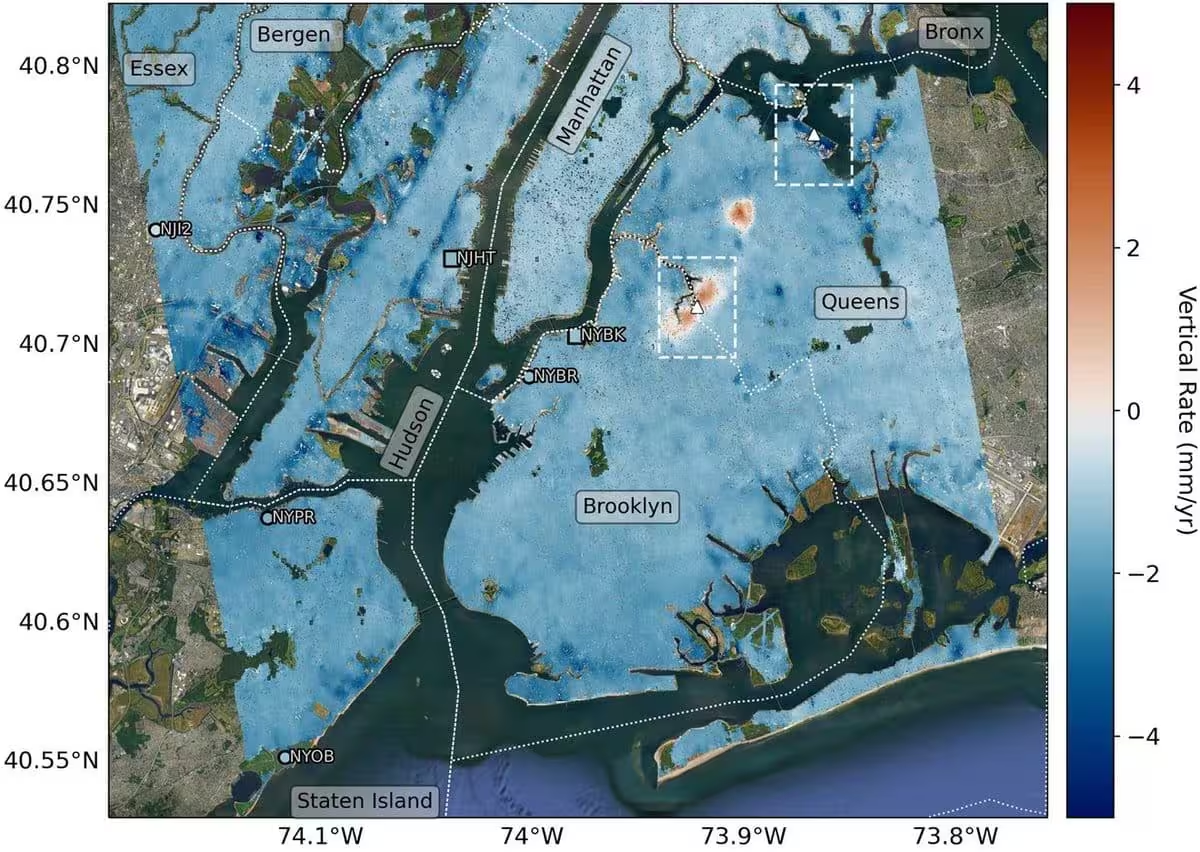
While human construction impacts local soil levels, the city’s broader movement is driven by deep-time geological processes. Researchers from NASA’s Jet Propulsion Laboratory (JPL) and Rutgers University utilized satellite radar and GPS to monitor subsidence—the gradual sinking of the land. They found the metropolitan area is sinking by an average of 1.6 millimeters per year, a phenomenon largely attributed to the post-glacial rebound following the last ice age. Approximately 24,000 years ago, a massive ice sheet pushed down the land in New England while forcing the earth upward in surrounding regions, including New York. As the ice melted, the mantle began a slow, centuries-long readjustment, causing the city to settle back down.

Hotspots of Subsidence
The satellite data, gathered by the European Space Agency’s Sentinel-1 missions, confirms that artificial fill areas are the most susceptible to rapid movement. Lead author Brett Buzzanga noted that the most significant sinking occurs on reclaimed land. For instance, Runway 13/31 at LaGuardia Airport is subsiding at approximately 3.7 millimeters per year. Other locations built on fill, such as Rikers Island, Coney Island, and parts of Governors Island, exhibit similar trends.
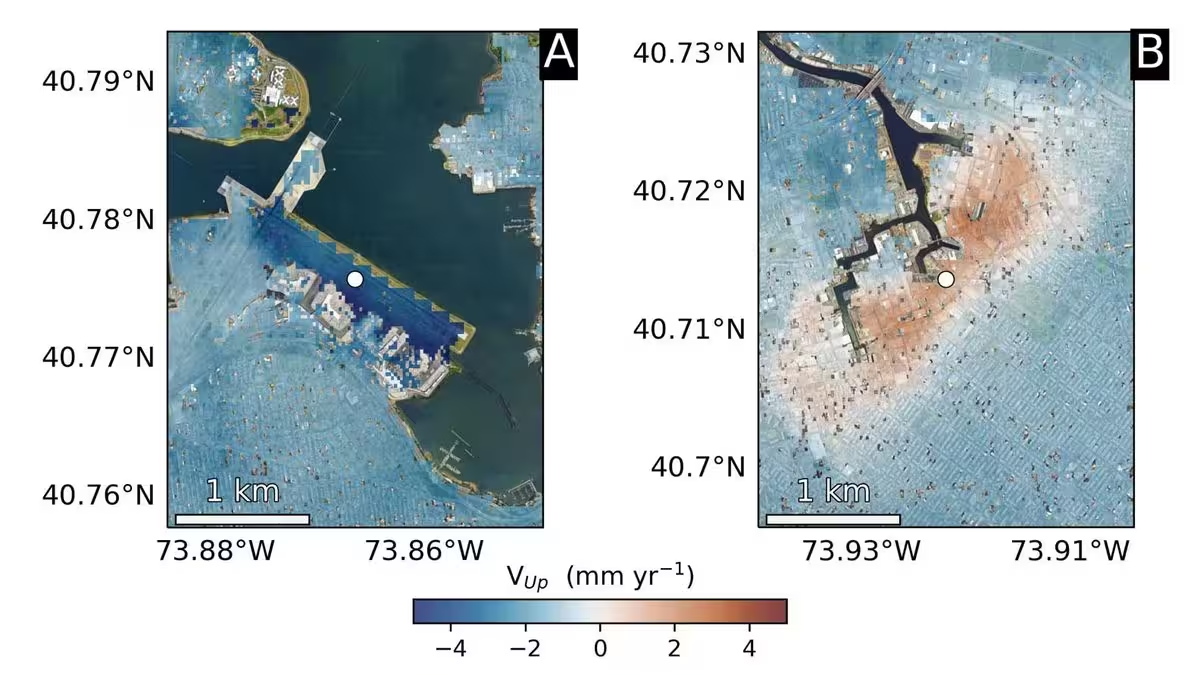
Conversely, some areas show unexpected vertical shifts. Parts of East Williamsburg have been rising at 1.6 millimeters per year, while Woodside, Queens, experienced a brief period of rapid uplift before stabilizing. Researchers, including co-author Robert Kopp, suggest that groundwater management and industrial pumping activities may contribute to these local anomalies, though further investigation is required.
As sea levels continue to rise, the combination of natural subsidence and building-induced compression presents a long-term challenge for urban planning. With the increased flood risk underscored by events like Superstorm Sandy and Hurricane Ida, the weight of future development in vulnerable areas remains a focal point for city officials. Proactive engineering is already in play; for instance, the renovation of Arthur Ashe Stadium—which faces significant subsidence—included the installation of a lightweight roof specifically designed to minimize the structural burden on the underlying ground.
This article has been fact checked for accuracy, with information verified against reputable sources. Learn more about us and our editorial process.
Last reviewed on .
Article history
- Latest version
Reference(s)
- “New York City is sinking, new geological study finds.”, May 18, 2023 ABC7 New York <https://abc7ny.com/nyc-sinking-study-flooding/13265769/>.
Cite this page:
- Posted by Karan Das