Decades Old Soviet Satellite Shatters in Orbit Amid Rising Fears Over Space Debris
A recent Soviet-era satellite breakup has sparked renewed concerns regarding the escalating threat of orbital debris to active spacecraft in Earth’s orbit.

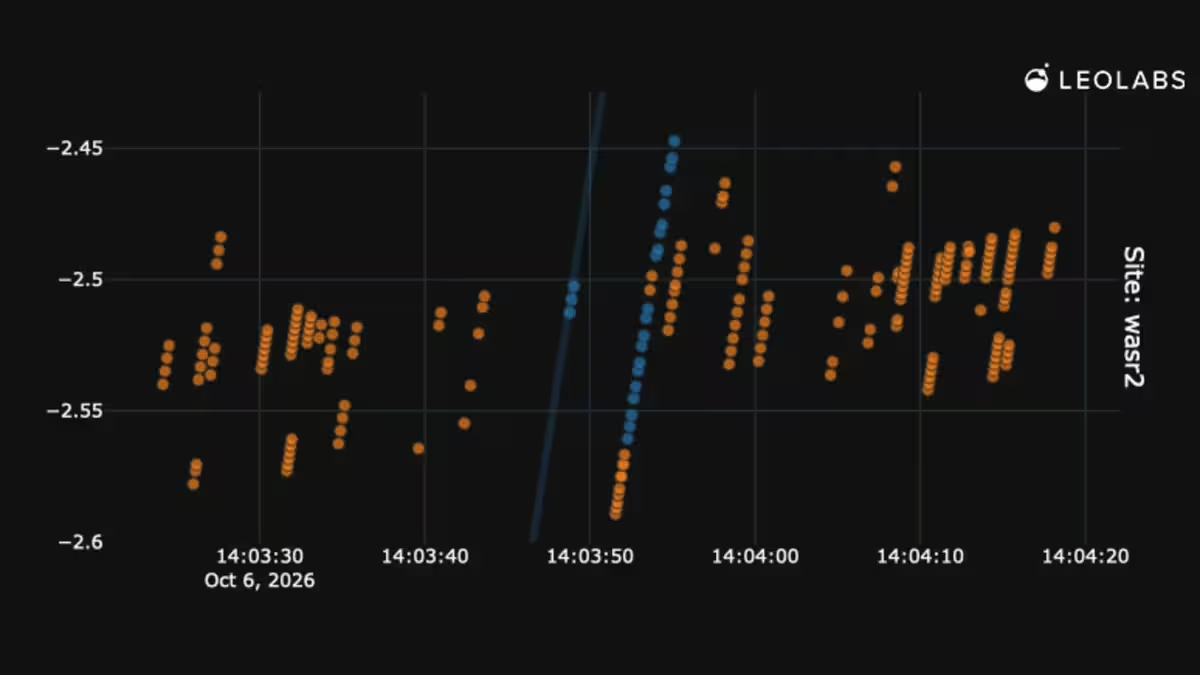
A dormant relic of the Soviet space program has shattered in orbit, scattering dozens of new pieces of debris into a path already congested with active satellites. The disintegration of the Meteor 2-7 weather satellite, originally launched in 1981, marks the second time the aging craft has fractured while circling the planet, further intensifying concerns about the safety of low Earth orbit.
Repeat Fragmentation of Aging Hardware
The breakup was identified by space-tracking firm LeoLabs as the satellite passed over its radar installations in Western Australia. Radar data confirmed the creation of a fresh cloud of orbital debris located approximately 530 miles (855 kilometers) above the surface of the Earth. While the exact trigger for this latest structural failure remains unknown, experts suggest that either a collision with existing space junk or a mechanical failure within the decommissioned satellite’s aging internal components could be responsible.
Meteor 2-7 is no stranger to such instability; the satellite previously broke apart in 2004. This latest event, however, arrives amid a wave of similar incidents that have left orbital analysts on high alert.
An Unsettling Pattern of Orbital Instability
The incident is far from an isolated occurrence. Throughout 2026, a variety of defunct hardware and operational spacecraft have experienced unexplained breakups. From the fragmentation of a Cold War-era American reconnaissance satellite (USA 32) in September to the disintegration of a Russian inspector satellite in the geostationary belt earlier this year, the frequency of these events is climbing.
According to reporting by Space.com, LeoLabs has highlighted these events as a significant shift in the orbital landscape. The firm emphasized that the consistent pace of these breakups over the last six months signals a pressing need for more robust, persistent monitoring of the space environment to protect essential infrastructure.
LeoLabs has detected another debris-generating event in orbit. This is the latest in a series of events we’ve seen over the last 6 months. Together, they point to a worrying trend for space safety and security, and underscore the critical need for persistent sensing.
— LeoLabs (@LeoLabs_Space) October 7, 2026
The Growing Threat of Collision Cascades
The accumulation of debris presents a grave challenge to modern space flight, as even the smallest fragments travel at hypervelocity speeds, carrying enough energy to catastrophically damage functioning satellites. Data from the European Space Agency underscores the rapid deterioration of the orbital environment: the number of tracked objects has surged from approximately 16,000 in 2005 to more than 44,000 by 2026.
This escalating density brings the industry closer to the feared Kessler syndrome, a scenario where the sheer volume of debris leads to a self-sustaining cycle of collisions, creating further fragments that put all remaining assets at risk. While the breakup of Meteor 2-7 is not evidence that such a chain reaction has begun, it serves as a stark reminder that orbital regions are becoming increasingly hazardous, turning collision avoidance into a standard, daily requirement for satellite operators worldwide.
This article has been fact checked for accuracy, with information verified against reputable sources. Learn more about us and our editorial process.
Last reviewed on .
Article history
- Latest version
Reference(s)
- “Low Earth Orbit Chaos In Just 72 Hours.” <https://dailygallery.com/2026/04/low-earth-orbit-chaos-in-just-72-hours/>.
- Tingley, Brett. “A dead Soviet satellite just broke apart in orbit (again). Experts say it's part of 'a worrying trend'.”, October 8, 2026 Space <https://www.space.com/space-exploration/satellites/a-dead-soviet-satellite-just-broke-apart-in-orbit-again-experts-say-its-part-of-a-worrying-trend>.
Cite this page:
- Posted by Karan Das