NASA Just Dropped 800GB of Artemis II Moon Data Including Mysterious Impact Flashes
NASA’s new Artemis II archive offers unprecedented lunar imagery, crew observations, and insights into the mysterious flashes spotted above the Moon.

NASA has officially released an expansive archive of scientific data gathered during the Artemis II mission, providing the global research community with over 800 gigabytes of lunar observations. Unveiled on October 7, 2026, the collection represents the most significant accumulation of human-piloted lunar data since the conclusion of the Apollo program, featuring more than 11,000 high-resolution images, hours of audio commentary, and detailed photographic annotations.
A New Era of Human-Led Lunar Observation
For more than half a century, our understanding of the Moon has relied heavily on robotic platforms. Artemis II shifts this paradigm by placing human observers back in the vicinity of the lunar surface. The mission, which carried a four-person crew on a transit around the Moon and back, allowed for a nuanced, real-time assessment of lunar terrain that automated cameras cannot replicate. The data is now available to the public via NASA’s Planetary Data System (PDS), the agency’s primary repository for planetary exploration records.
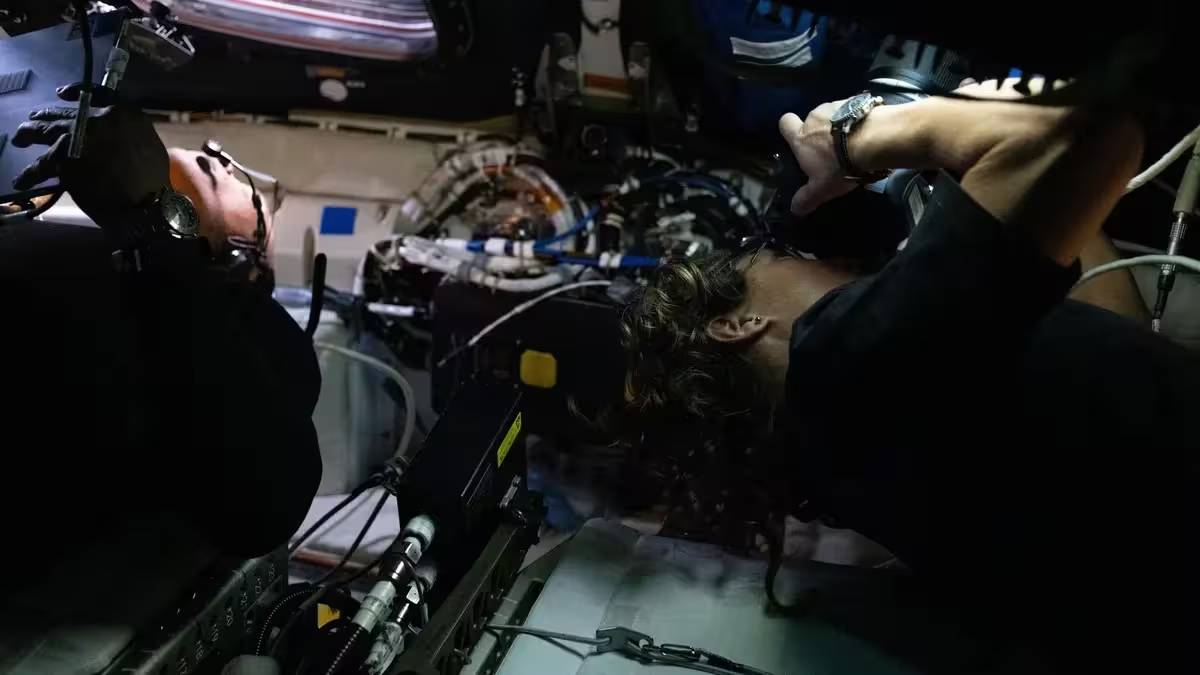
The archive includes approximately 8.5 hours of audio in which the crew documents their scientific observations, offering critical context for the accompanying imagery. As noted by David Hollibaugh Baker, a member of the Artemis II Lunar Science Team, the release is designed to empower the scientific community to conduct extensive analysis, potentially uncovering subtle details that were not immediately identified during the mission itself.
Documenting Spontaneous Lunar Impact Events
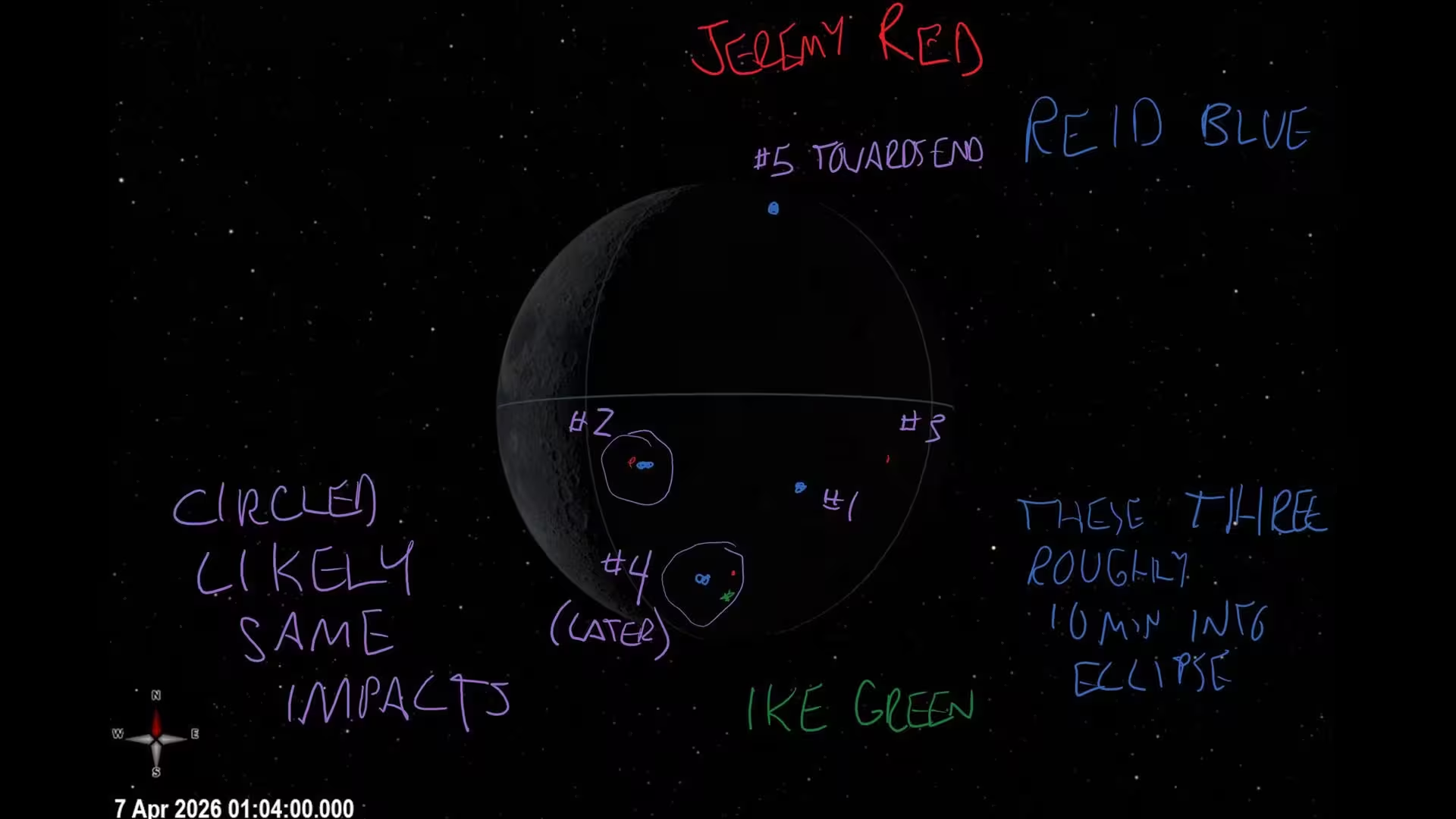
Among the most notable findings in the dataset are reports of three distinct light flashes observed on the Moon’s surface. These events, reported directly by mission commander Reid Wiseman to ground control, are consistent with meteoroid impacts—high-energy collisions that generate visible light despite the Moon’s near-vacuum environment. Unlike Earth-based telescope observations, the crew’s proximity provided a unique vantage point to confirm these were genuine surface phenomena rather than optical artifacts or reflections from spacecraft hardware.
The excitement at NASA’s Johnson Space Center was palpable, with reports indicating that the Science Evaluation Room (SER) team reacted immediately to the news. Analyzing these flashes is more than a matter of academic interest; it provides essential data on the frequency and distribution of meteoroids, which is a key factor in assessing long-term safety for future surface habitats and equipment.
Unveiling Lunar Terrain Under Unique Illumination
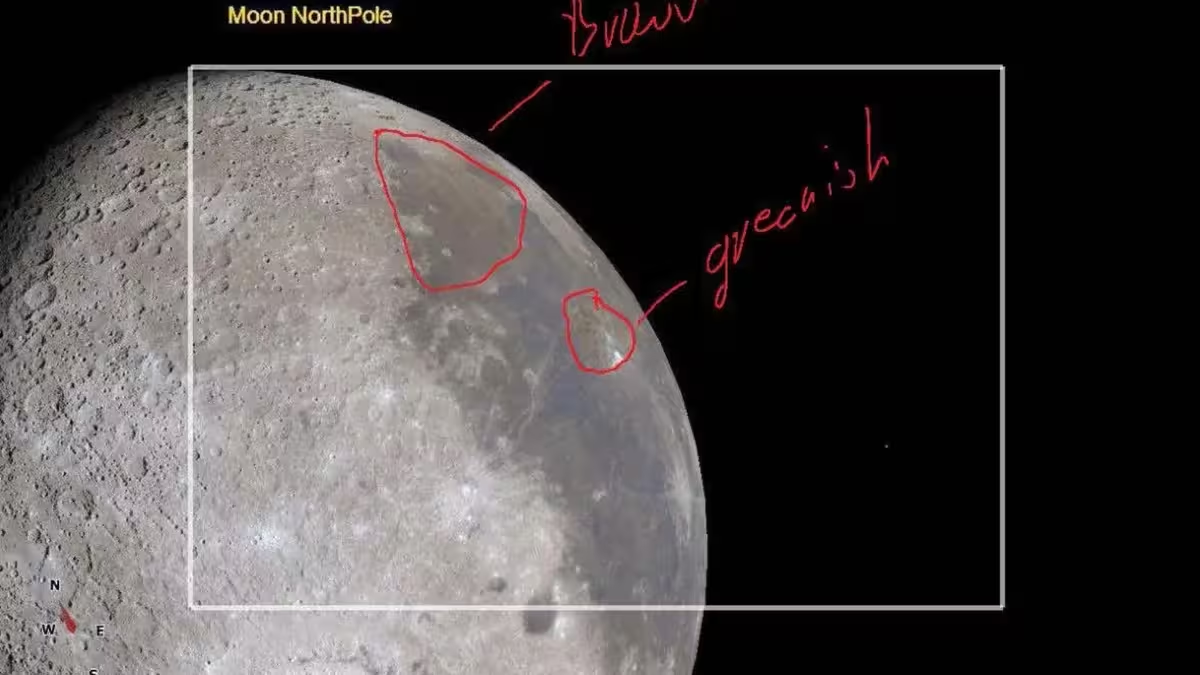
The Artemis II trajectory offered the crew perspectives of the lunar surface under specific solar lighting angles that had never been witnessed by human eyes. By capturing craters and geological features under low-angle sunlight, the astronauts exposed topographical details—such as shadow-defined relief and subtle surface textures—that often remain hidden or flattened under direct overhead lighting.
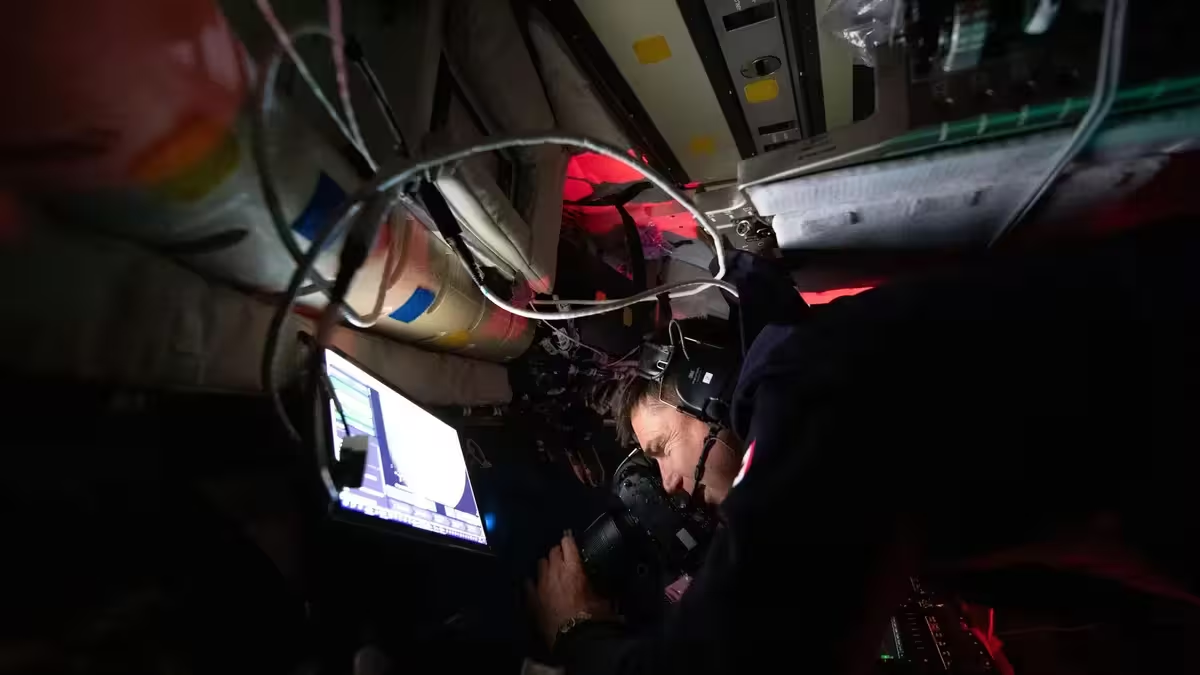
Alex Stoken, representing the Crew Lunar Observations team, emphasized that while robotic orbiters have mapped these regions, the human element adds a layer of interpretative value. Through rigorous pre-flight training in geology and observational techniques, astronauts Reid Wiseman, Victor Glover, Christina Koch, and Jeremy Hansen were able to identify and prioritize features of high scientific interest, bridging the gap between raw data collection and human perception.
Synthesizing a Modern Lunar Record
The release is accompanied by comprehensive documentation, including the Artemis II Preliminary Lunar Science Report, which provides the necessary framework for researchers to utilize the data effectively. By pairing photographs with audio logs and crew-made annotations, scientists can now triangulate observations to examine lunar morphology and geological history with unprecedented clarity.
This initiative ensures that the findings of Artemis II serve as a cornerstone for future lunar exploration, allowing independent research teams to conduct comparative studies against both Apollo-era records and modern robotic datasets. As the scientific community begins its analysis, this massive repository stands as a testament to the enduring value of human-assisted space exploration.
This article has been fact checked for accuracy, with information verified against reputable sources. Learn more about us and our editorial process.
Last reviewed on .
Article history
- Latest version
Reference(s)
- Barry, Rachel. “Artemis II Preliminary Lunar Science Report - NASA Science.”, October 7, 2026 NASA <https://science.nasa.gov/feature/artemis-ii-preliminary-lunar-science-report/>.
Cite this page:
- Posted by Karan Das