Stargazing Retreats Offer New Hope for Mental Health Support in South Africa
Researchers find that guided night sky observation may help reduce stress and foster community connection in under-resourced regions.
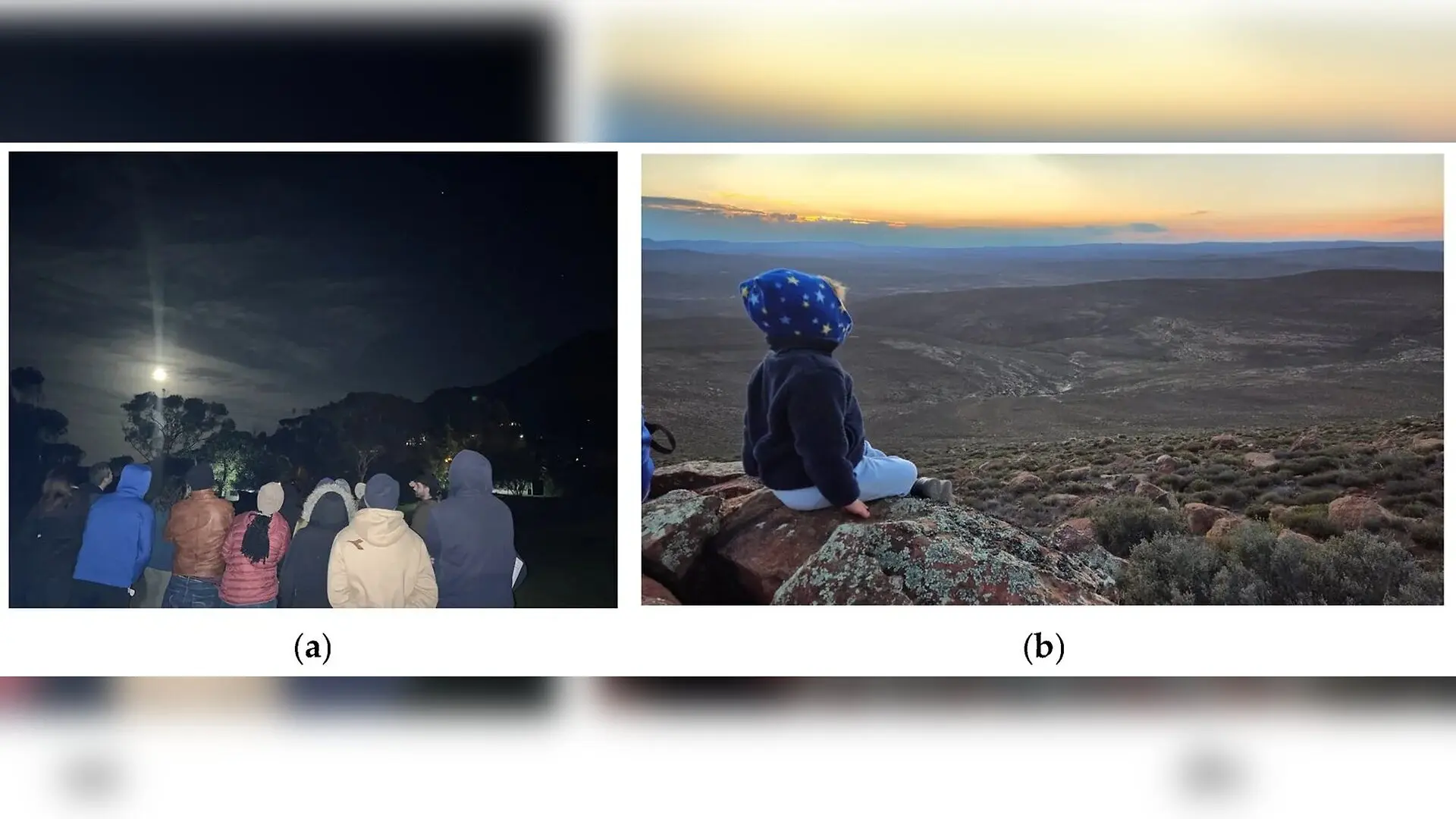
As global mental health challenges continue to mount, researchers are increasingly looking toward non-traditional, nature-based interventions to bridge the gap in clinical care. In South Africa, where a staggering 91 percent of the population faces a mental health treatment deficit, a novel approach is emerging from an unlikely source: the night sky. A recent exploratory pilot study, published in the International journal of environmental research and public health, suggests that structured stargazing retreats could serve as a powerful, low-cost tool to improve psychological well-being.
The Science of Stargazing
The research is grounded in two established psychological frameworks: Attention Restoration Theory (ART) and the study of awe. ART posits that natural environments provide a form of effortless engagement known as soft fascination, which allows the brain to recover from the fatigue of daily life. The vast, quiet expanse of the night sky is uniquely suited to this, offering a sense of perspective that can quiet the inner critic and reduce self-focus.
The study, led by a multidisciplinary team, conducted two pilot retreats to test the feasibility and acceptability of this concept. The first, a peer-based camp in Glencairn, focused on individual reflection. The second, held in the remote, arid landscape of Sutherland, centered on family dynamics and the intersection of personal experience with South Africa’s scientific heritage, including the Southern African Large Telescope (SALT).
Findings from the Field
Quantitative data from the Glencairn cohort revealed a promising trend. Participants showed lower mean scores for depression, anxiety, and stress immediately following the retreat compared to their baseline measurements at intake. While the study emphasizes that these are descriptive, cohort-level patterns rather than proof of long-term clinical change, the results provide a compelling signal for future research.
Qualitative feedback from both retreats painted a vivid picture of the participants’ experiences. Many described a profound sense of calm and a release from the relentless demands of their daily routines. One participant noted that the experience helped them step off the metaphorical hamster wheel, while others spoke of the awe-inspiring realization of their own smallness in the face of the universe, which helped put their personal problems into a more manageable perspective.
Cultural Resonance and Community
A key finding of the research was the importance of cultural context. In many African communities, well-being is understood through the philosophy of Ubuntu, which emphasizes that an individual’s health is inseparable from the collective. Participants spontaneously linked their stargazing experiences to indigenous knowledge systems, such as identifying specific stars with cultural significance. This suggests that the night sky can function as a culturally resonant space, rather than just a scientific one.
However, the study also highlighted that the benefits of such interventions are not automatic. The Sutherland retreat, while successful in fostering family connection, also demonstrated that overly dense scheduling or logistical challenges can introduce new stressors. The researchers identified three critical design principles for future programs:
- Cognitive Spaciousness: Ensuring adequate, unscheduled time for reflection and integration.
- Contextual Onboarding: Providing transparent preparation for the environmental and social realities participants might encounter.
- Relational Anchoring: Utilizing skilled facilitation to ensure that group dynamics remain a source of safety and support.
Looking Ahead
While this pilot study is preliminary, it opens a new door for public health innovation in resource-constrained settings. By leveraging existing astronomical assets and mobile outreach programs, these interventions could provide scalable pathways for community-based mental health support. The research team stresses that while these findings are encouraging, they should be viewed as a foundation for more rigorous, controlled trials rather than an established clinical protocol.
As urbanization and light pollution continue to threaten our access to dark skies, this study serves as a timely reminder that the night sky is more than just a subject for scientific inquiry. It is a natural, restorative resource that, when approached with care and cultural sensitivity, may hold the key to helping people look up, and in doing so, find a way to look within.
The research was published in International journal of environmental research and public health on August 4, 2026.
This article has been fact checked for accuracy, with information verified against reputable sources. Learn more about us and our editorial process.
Last reviewed on .
Article history
- Latest version
Reference(s)
- Vertue, Dominic Gregory., et al. “Looking up to Look Within: Preliminary Findings of the Restorative Effects of Astronomical Retreats in South Africa.” International Journal of Environmental Research and Public Health, vol. 23, no. 8, August 4, 2026, pp. 1016 MDPI AG, doi: 10.3390/ijerph23081016. <https://doi.org/10.3390/ijerph23081016>.
- <https://pubmed.ncbi.nlm.nih.gov/42652331/>.
Cite this page:
- Posted by Aisha Ahmed