Astronomers Reveal Stunning New Details of a Rare 850 Year Old Zombie Star Explosion
New Gemini North observations reveal enormous, pearl-like gas knots surrounding the rare star at the heart of the Pa 30 supernova remnant.
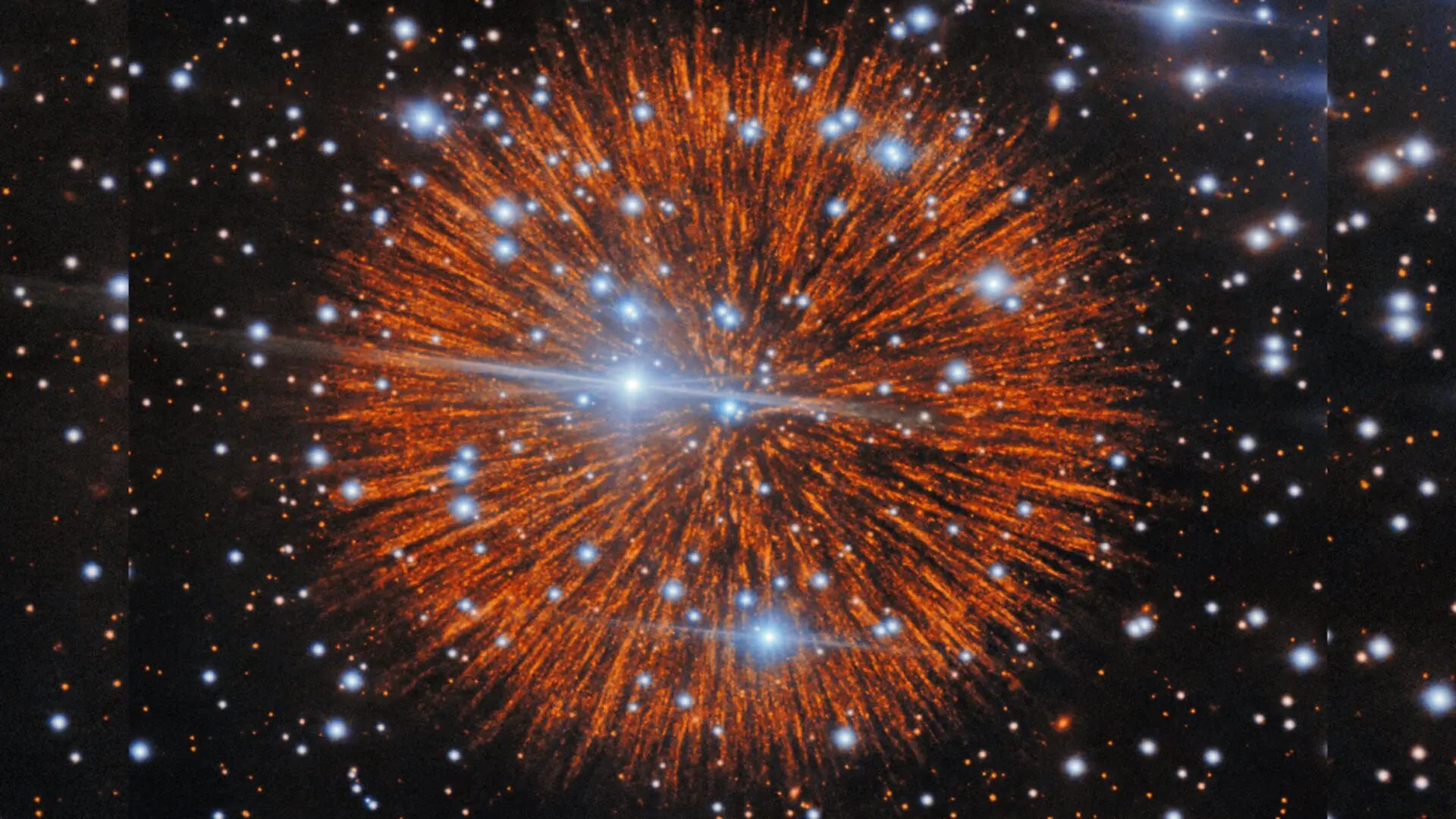
Astronomers have captured an unprecedented, high-resolution glimpse into the heart of Pa 30, the Milky Way’s only known remnant of its specific supernova classification. New findings published in The Astrophysical Journal reveal that the cloud of debris left by an explosion first recorded by observers on Earth nearly 850 years ago is not the chaotic mess previously imagined, but rather a remarkably organized structure composed of uniform chains of gas knots.
An Astronomical Oddity in Our Own Backyard
Situated roughly 7,500 light-years away, Pa 30 has long baffled researchers. Unlike standard supernova remnants that expand into diffuse clouds, this object features a radial, flower-like pattern of filaments extending from a central star that somehow survived the cataclysmic event. This rare behavior identifies it as a Type Iax supernova, a thermonuclear blast that may leave a portion of the progenitor star intact.
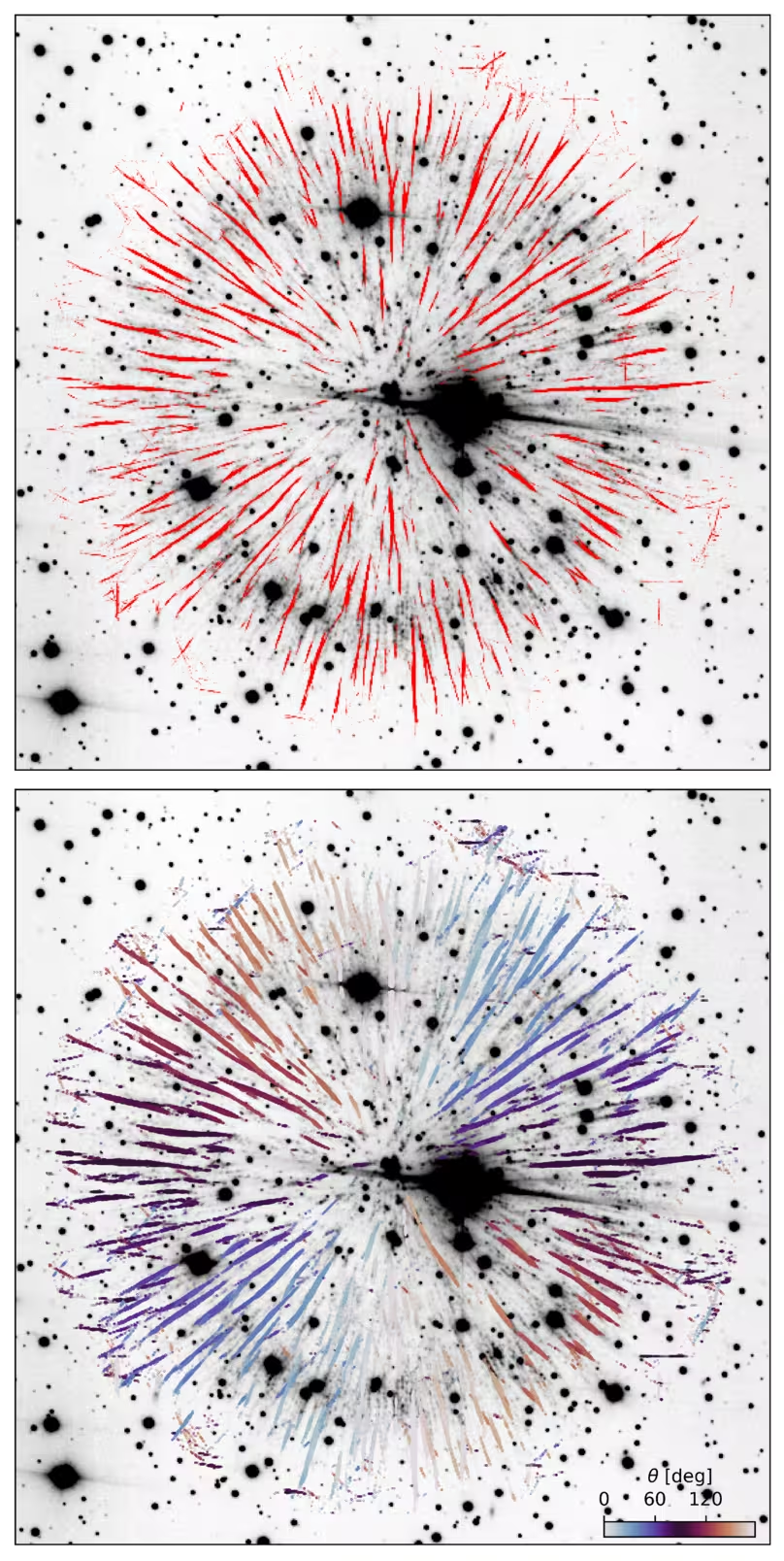
The latest imaging, captured by the Gemini North telescope on Mauna Kea, reveals that what once appeared to be simple, smooth streaks are actually complex, structured filaments. According to study co-leads Ilaria Caiazzo of the Institute of Science and Technology Austria and Tim Cunningham of the University of Warwick, these filaments are comprised of dense, repeating clumps that resemble pearls on a string. The clarity of these structures is afforded by the object’s relative proximity to Earth, allowing scientists to analyze the spatial evolution of stellar debris in a way that is impossible with more distant, extragalactic explosions.
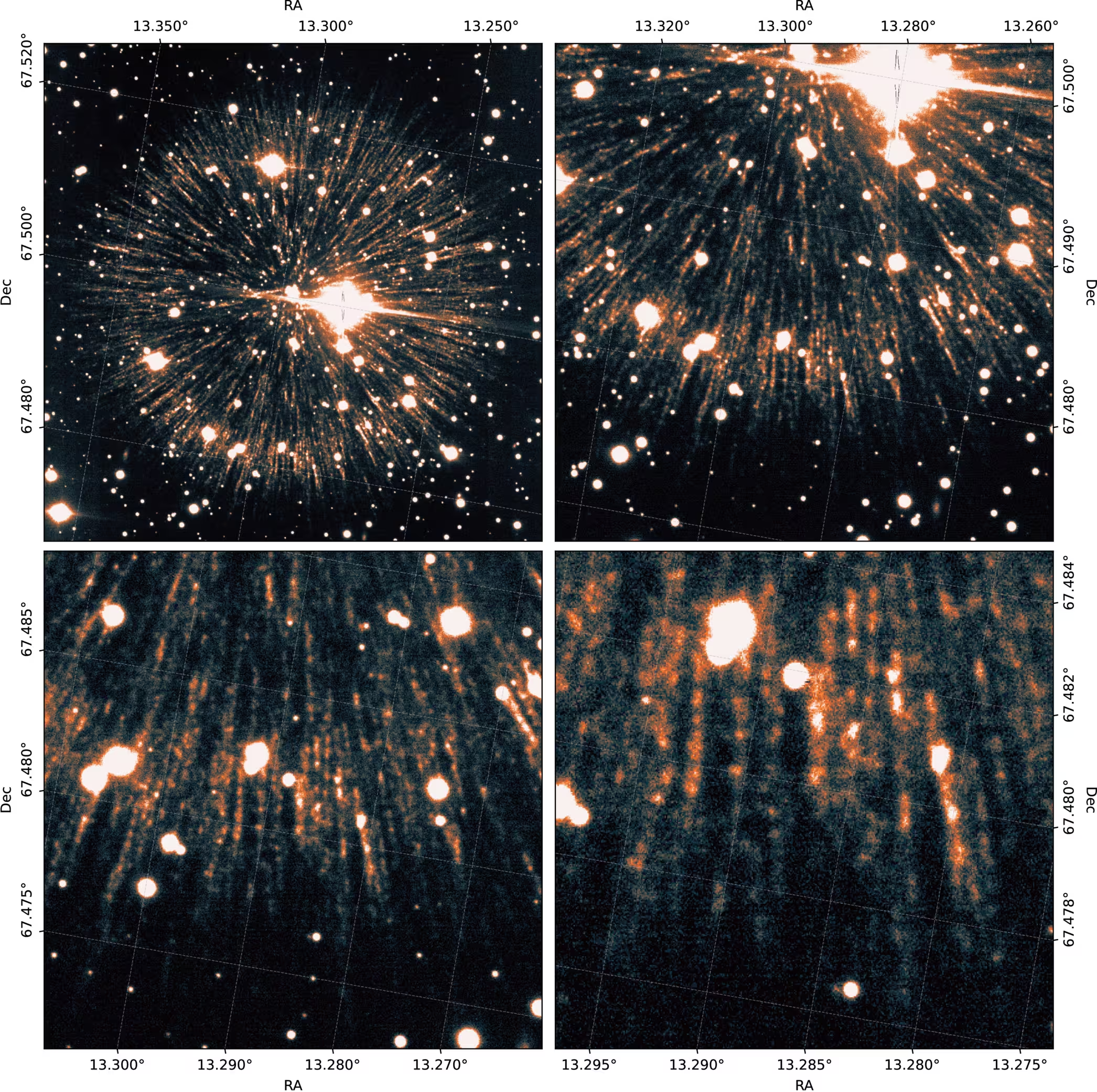
“We can see this much detail because of Pa 30’s proximity to Earth,” says Caiazzo. “This proximity makes Pa 30 uniquely valuable for study.”
Deceptively Large Structures
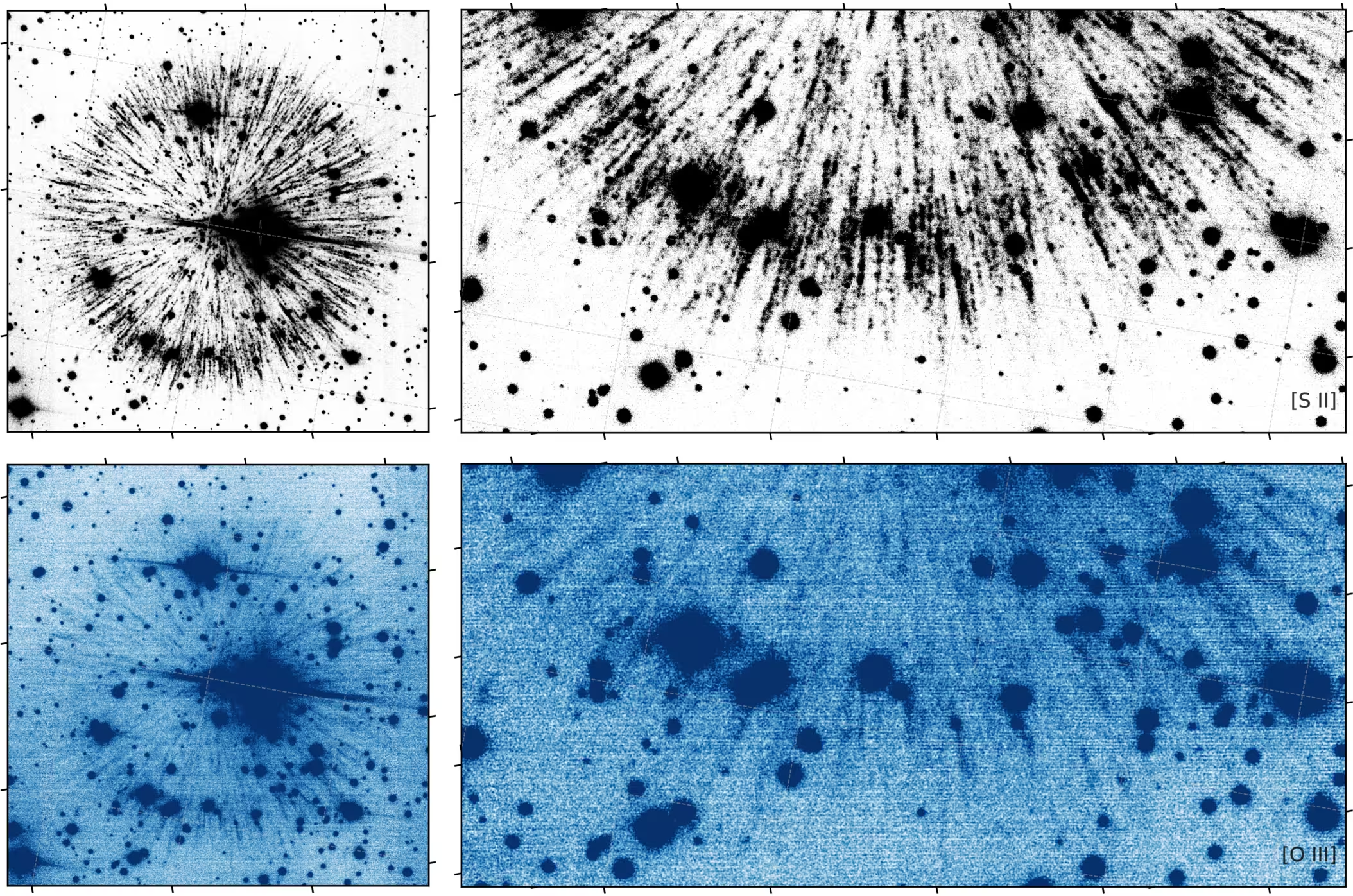
While the filaments appear delicate in telescopic imagery, they are gargantuan in scale. By analyzing ionized sulfur and oxygen emissions, the research team discovered that the density of these structures is significantly higher than earlier studies suggested. The knots themselves are immense; each one could contain our solar system’s planetary region ten times over. The striking uniformity of these knots suggests they were formed by a consistent physical mechanism—such as shock interactions or specific cooling instabilities—rather than random turbulence.
A Historical Anchor for Modern Science
The uniqueness of Pa 30 is bolstered by its connection to history. In 1181, observers in China, Japan, and the Arabic-speaking world documented a “guest star” that remained visible for months. For centuries, this event had no known modern counterpart, but Pa 30’s age and position finally linked it to this historical record. This timeline acts as an essential “anchor,” allowing astronomers to constrain their models of how the nebula has evolved since the 12th century.
Cunningham points out that this discovery highlights the gaps in our knowledge of the galaxy’s history. Because historical records of such events only span about a millennium, there are likely many more similar remnants currently hidden in our galactic neighborhood, waiting to be found.
The Mystery of the Stationary Survivor
At the center of the nebula sits the “zombie star,” a survivor that has remained eerily still since the explosion. Typically, a supernova would impart a significant “kick” to any surviving core due to the asymmetry of the blast. However, the data show the remnant has barely moved from the geometric center of the nebula, suggesting the 1181 explosion was surprisingly symmetrical. This finding challenges existing models of Type Iax events and provides a new puzzle for physicists to solve.
A Blueprint for Future Discoveries
The research team is hopeful that Pa 30 will serve as a template for identifying similar objects. As astronomy moves into an era of massive, automated data sets, the distinctive “fingerprints” of Pa 30—its specific knot morphology, radial filaments, and central star—could be used by algorithms to scan millions of potential candidates.
“Astronomy has entered the big data era,” says Cunningham. “Our findings will help us screen through the enormous datasets.”
By refining the search criteria for Type Iax remnants, astronomers hope to determine just how common these events truly are. As Caiazzo notes, the goal is to leverage the unique, high-detail view of Pa 30 to broaden our understanding of the diverse ways stars can perish—and occasionally survive—within the Milky Way.
This article has been fact checked for accuracy, with information verified against reputable sources. Learn more about us and our editorial process.
Last reviewed on .
Article history
- Latest version
Cite this page:
- Posted by Aisha Ahmed