Simple Chemical Sugar Treatment Can Alter Immune Cell Surface Markers
Unnatural sugar analogs reshape macrophage surface markers and metabolic activity through post-transcriptional regulation rather than direct genetic repolarization.
A simple chemical treatment using modified sugar molecules can reshape the surface markers, metabolism, and behavior of immune cells known as macrophages without triggering unwanted inflammation, a new study reveals. Macrophages play a critical role in the body by fighting infections, clearing cellular debris, and helping tissues heal through distinct states of activation, ranging from inflammatory defense modes to tissue-repair modes. Controlling these states holds significant promise for treating autoimmune disorders, metabolic diseases, and cancer, but conventional reprogramming methods often involve complex, multi-step protocols with high batch-to-batch variability.
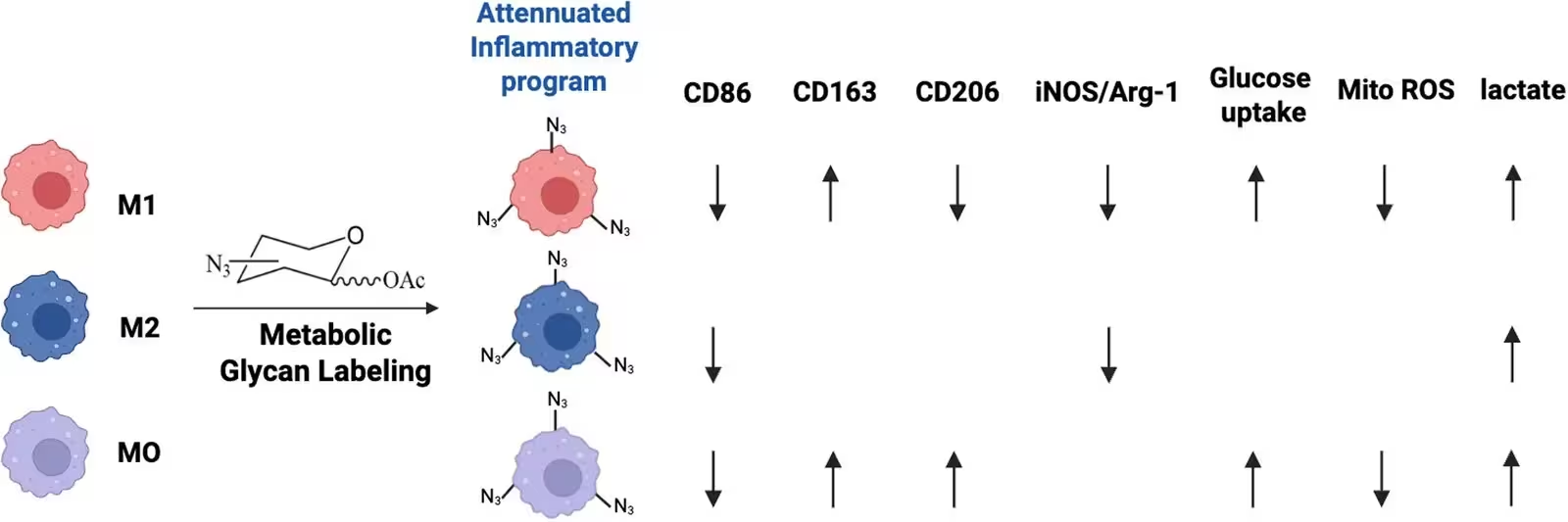
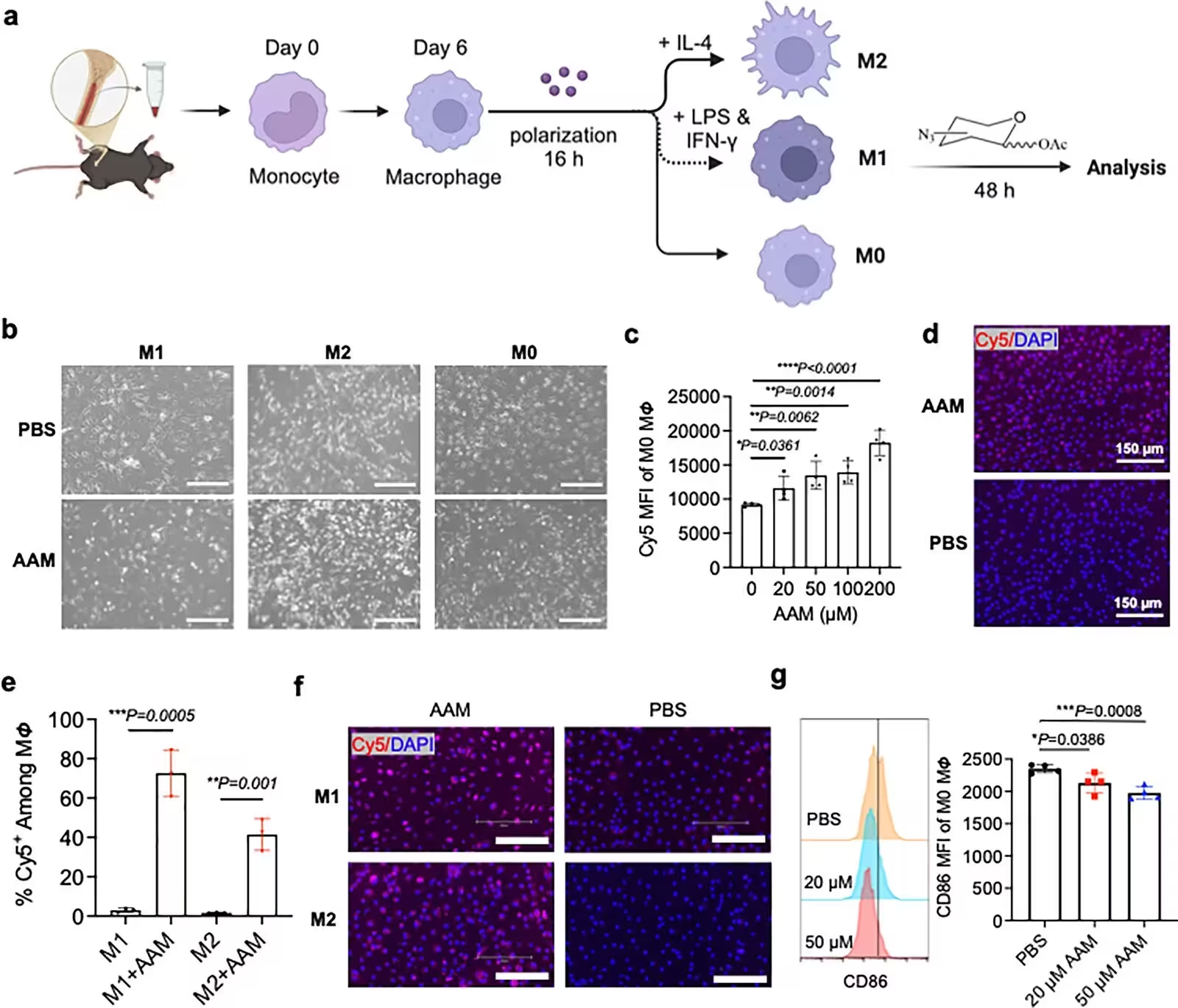
To address this challenge, researchers investigated whether a technique called metabolic glycan labeling could alter macrophage function more predictably. By introducing chemical tags onto cell-surface sugars using unnatural molecules, the team discovered that a simple sugar analog named tetraacetyl N-azidoacetylmannosamine, or AAM, can actively tune macrophage properties. The detailed findings were published in the Journal of materials chemistry. B (DOI: 10.1039/d6tb01831a). The study shows that exposing both resting and pre-polarized murine bone marrow-derived macrophages to AAM significantly reduces the surface abundance of the pro-inflammatory activation marker CD86 while selectively modulating other receptors such as CD163 and CD206.
How Azido Sugars Alter Macrophage Surface Markers and Identity
The research team evaluated macrophage behavior across three distinct polarization states, including resting cells, pro-inflammatory cells, and anti-inflammatory cells. After incubating the cells with 50 micromolar concentrations of AAM for 48 hours, flow cytometry analyses confirmed successful metabolic labeling via click-chemistry probes while maintaining cell viability above ninety percent. Remarkably, AAM treatment consistently lowered CD86 expression across different populations, reducing inflammatory marker levels in active cells down to values comparable to resting cells.
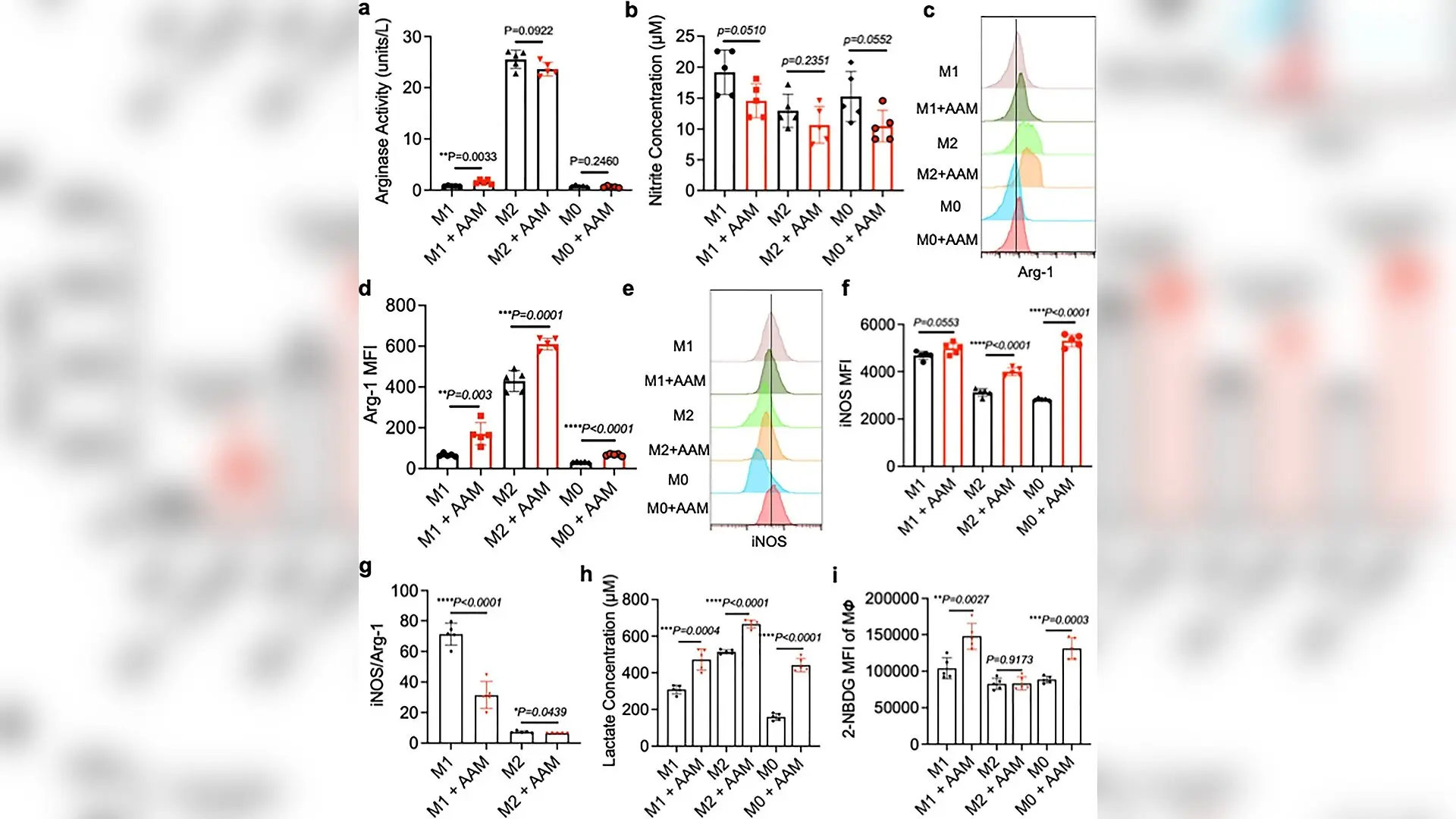
Further analysis using structurally matched control molecules lacking the azido group demonstrated that the chemical tag itself drives these modifications rather than general toxicity from the sugar exposure. When researchers removed AAM from the culture media, the downregulated CD86 expression persisted for up to 24 hours before gradually returning to baseline levels after 48 hours. Accompanying these surface changes, intracellular enzyme expression also shifted, marked by elevated levels of arginase-1 and increased lactate accumulation in the culture media, pointing toward a metabolic reprogramming event.
Transcriptomic Profiling Reveals Post-Transcriptional Adjustments
To understand the genetic mechanisms behind these changes, the authors performed RNA sequencing on treated macrophages. The transcriptomic data indicated that AAM exposure does not force cells into a wholesale repolarization state. Instead, it prompts state-dependent transcriptional adjustments that support metabolic adaptation and restrained immune activation.
In inflammatory cells, AAM treatment suppressed genes associated with antigen presentation and inflammatory signaling, including tumor necrosis factor transcripts. In anti-inflammatory cells, the treatment induced stress-adaptive transcriptional programs linked to protein quality control and the unfolded-protein response while preserving core lineage markers. In resting cells, interferon signaling transcripts were broadly suppressed, whereas genes involved in antioxidant defense and oxidative metabolism were upregulated.
Interestingly, the transcriptional data revealed a disconnect between mRNA abundance and surface protein levels for several key markers. This finding indicates that AAM alters macrophage phenotypes largely through post-transcriptional mechanisms, such as changes in protein glycosylation, receptor stability, or intracellular trafficking, rather than direct modifications of gene expression.
Limitations and Future Research Directions
While the study demonstrates that metabolic glycan labeling offers a scalable way to modulate immune cell metabolism and surface phenotypes, several important limitations remain. All experiments were conducted using murine bone marrow-derived cells from female mice, meaning validation in human monocyte models is essential before considering clinical applications. Furthermore, the current study measured surface markers, metabolic readouts, and transcriptional profiles without directly testing functional outcomes such as antigen presentation, phagocytosis, or microbial killing.
The authors emphasize that peracetylated azido-sugar reagents should be treated as active experimental variables in future glycoengineering studies, requiring matched non-azido controls to isolate labeling-specific effects. These insights provide a foundational framework for understanding how glycan composition influences immune cell plasticity and metabolic regulation.
The research was published in Journal of materials chemistry. B on November 13, 2026.
This article has been fact checked for accuracy, with information verified against reputable sources. Learn more about us and our editorial process.
Last reviewed on .
Article history
- Latest version
Reference(s)
- Wang, Yueji., et al. “Metabolic glycan labeling induces state-dependent remodeling of macrophage phenotype and metabolism.” Journal of Materials Chemistry B, January 1, 2026 Royal Society of Chemistry (RSC), doi: 10.1039/d6tb01831a. <https://doi.org/10.1039/d6tb01831a>.
Cite this page:
- Posted by Robert Brown