Astronomers Have Found a Mysterious Infrared Object That Could Finally Be Planet Nine
After 23 years of infrared sky surveys, astronomers have identified a compelling new candidate in the ongoing hunt for the elusive Planet Nine.
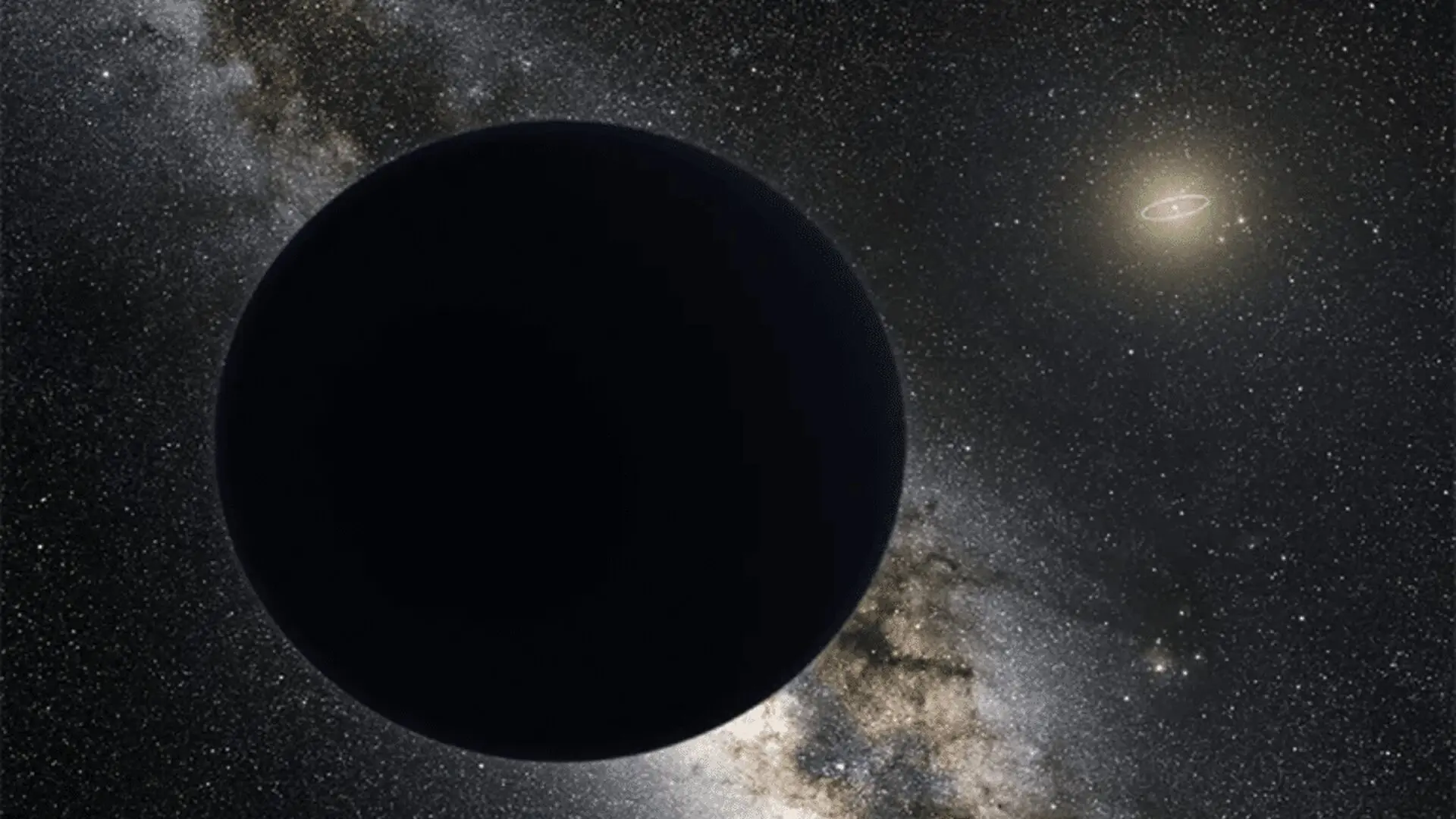
Astronomers pursuing the long-theorized Planet Nine have unveiled a potential breakthrough, identifying a faint, drifting object in infrared data that aligns with predictions for a massive world lurking in the outer reaches of our solar system. The candidate was revealed after a meticulous multi-decadal analysis of sky surveys, according to a study recently published in the Publications of the Astronomical Society of Australia. While the object’s motion and infrared profile are consistent with a distant planetary body, researchers caution that further data is required to confirm its identity.
Deciphering Two Decades of Infrared Archives
The hunt for this elusive world was spearheaded by Terry Long Phan of National Tsing Hua University in Taiwan. Rather than focusing on short-term observational windows, Phan and his team adopted a long-view strategy, comparing infrared sky maps captured 23 years apart. The research utilized the 1983 records from the Infrared Astronomical Satellite (IRAS) and paired them with data collected by Japan’s AKARI spacecraft during 2006 and 2007.
This massive time gap provided the necessary baseline to track objects moving at a glacial pace across the night sky, a hallmark of planets orbiting hundreds of astronomical units (AU) from the Sun. By filtering over a million sources for characteristics fitting a world between 7 and 17 Earth masses, the team systematically narrowed their search. After rigorous verification, they were left with a single, compelling candidate that had shifted 47.46 arcminutes—roughly one and a half times the diameter of a full Moon—across the intervening years.

The Power of Thermal Detection
The decision to utilize infrared over visible light is driven by the physical limitations of observing the outer solar system. At distances of 500 to 700 AU, even a massive planet reflects negligible sunlight, making it virtually invisible to conventional telescopes. Infrared surveys, however, capture the thermal radiation naturally emitted by a planet’s own internal heat, offering a path to detection that bypasses the need for reflected illumination.
The temporal distance between the IRAS and AKARI missions proved to be the project’s greatest asset. A celestial body located in the deep outer reaches of the solar system moves so slowly that short-term shifts are indistinguishable from background noise. By looking at the cumulative displacement over 23 years, the team could distinguish a potentially moving object from fixed stars and distant galaxies.

The Hurdle of Orbital Mechanics
Despite the promise of the infrared signature, the researchers emphasize that this is a candidate, not a confirmation. The Planet Nine hypothesis was born from the need to explain the clustered and oddly inclined orbits of various objects in the Kuiper Belt, suggesting a massive gravitational influence. For a new discovery to validate this model, it must demonstrate an orbit that matches the gravitational patterns observed in the outer solar system.
Currently, the data provides limited positional constraints. Establishing a full orbital trajectory requires more than two points of data separated by decades. The team is now looking toward follow-up observations to track the object’s movement and determine if it is truly bound to our Sun.

If subsequent studies recover the object at the predicted coordinates, it would provide the most significant lead in the search for the solar system’s hidden giant to date. If it fails to appear or displays erratic behavior, it will likely be cataloged alongside other historical anomalies, serving as a reminder of the extreme difficulty inherent in searching the cosmic shadows.
This article has been fact checked for accuracy, with information verified against reputable sources. Learn more about us and our editorial process.
Last reviewed on .
Article history
- Latest version
Reference(s)
- Phan, Terry. “A search for Planet Nine with IRAS and AKARI data | Publications of the Astronomical Society of Australia | Cambridge Core.”, vol. 42, pp. e064 Cambridge Core, doi: 10.1017/pasa.2025.10024. <https://www.cambridge.org/core/journals/publications-of-the-astronomical-society-of-australia/article/search-for-planet-nine-with-iras-and-akari-data/4AC94D8DED041495F85F518C286D5284>.
Cite this page:
- Posted by Aisha Ahmed