Watch Spica Shine Brightly Beside The Moon In A Spectacular Display Tonight!
Moon and Spica dazzle together tonight in the southern sky, a stunning celestial show to witness.
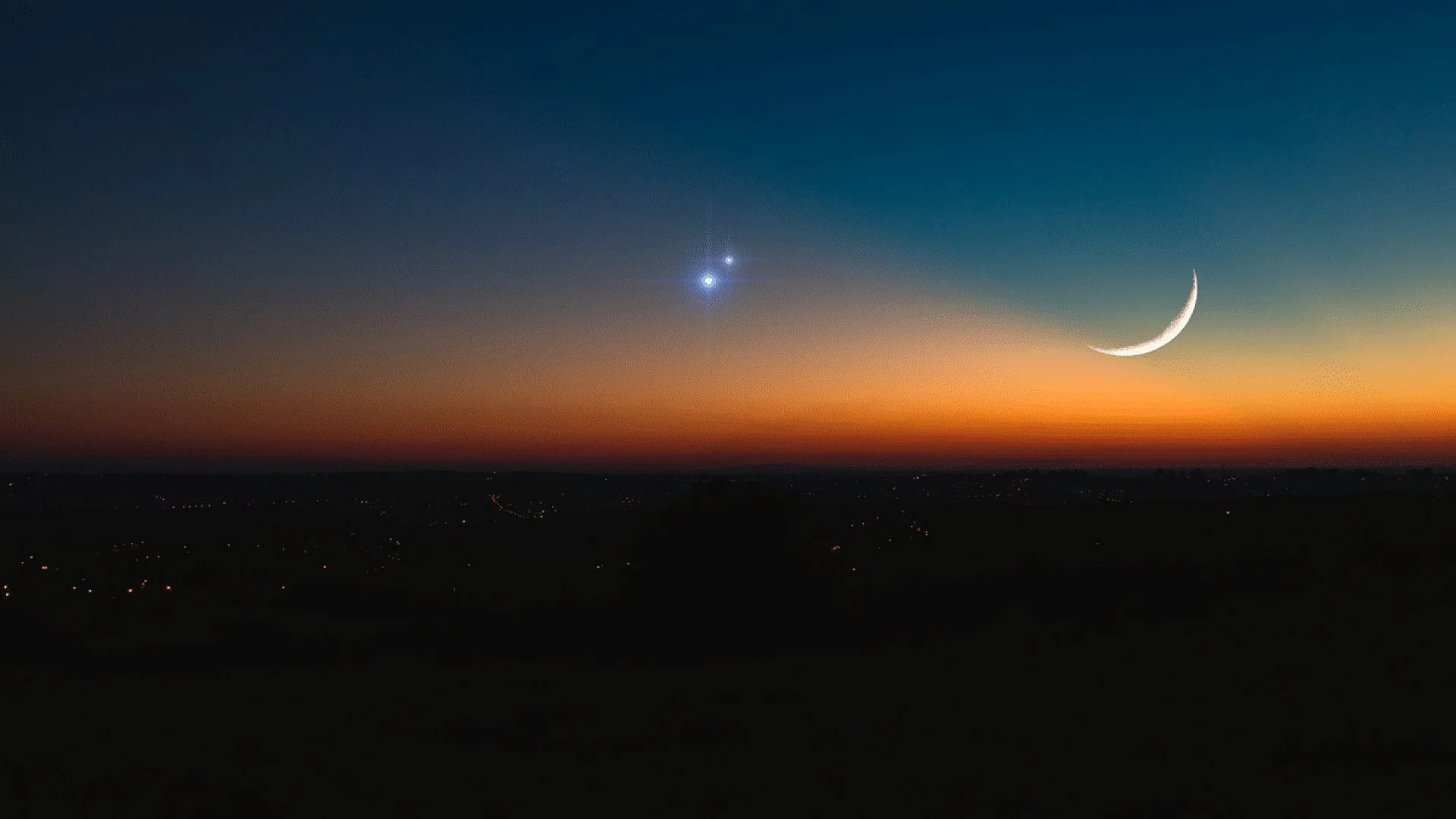
Tonight’s sky over the southern United States showcases a striking conjunction: a bright waxing gibbous moon will sit just a short distance from the vivid blue‑white star Spica, offering a memorable sight for anyone who steps outside after dark.
Spica: The Brilliant Binary at Virgo’s Heart
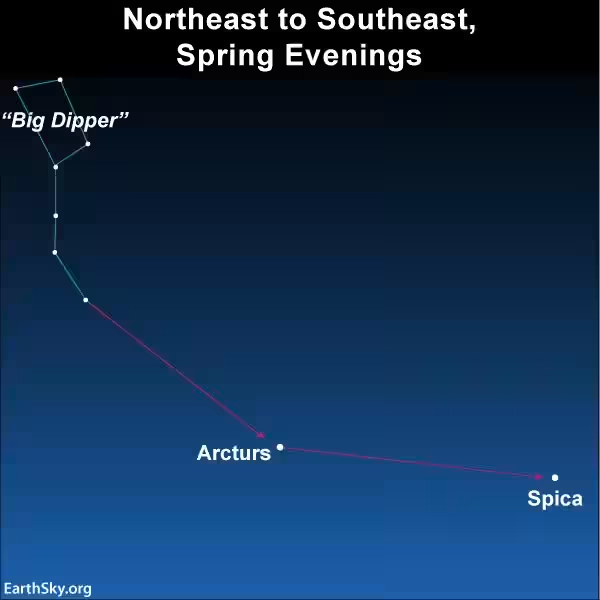
Spica, the most luminous point in the Virgo constellation, is actually a pair of massive stars locked in a four‑day orbit. EarthSky notes that together they shine with the combined power of more than 12,000 suns, producing a sharp blue‑white hue that can rival the moon’s glow. At the same time, the moon is about 83 % illuminated and will be positioned roughly 40 degrees above the southern horizon, creating an ideal backdrop for the star.
Spotting Lunar Features With Binoculars
Using a modest telescope or a pair of binoculars, observers can trace the lunar terminator—the dividing line between night and day on the Moon—and watch sunlight strike the Montes Jura range along the north‑western edge of Mare Imbrium. The expansive Copernicus crater, about 58 miles (93 kilometers) across, becomes evident with its bright ejecta rays fanning outward. Further south, the lunar south pole can be approximated, a region under review for NASA’s Artemis 4 mission slated for 2028, as reported by Space.com. These details turn a simple moon‑and‑star glimpse into a miniature lunar tour.
How the Moon’s Path Shifts Over the Next Days
As the night progresses, the Moon will appear to glide gradually closer to Spica before both descend toward the western horizon in the early hours of May 27. In the days that follow, the lunar trajectory carries it toward Antares, the red supergiant marking Scorpius, just in time for the rare Blue Moon on May 31. The full sequence is highlighted in a feature on the upcoming Blue Moon, offering multiple moments for photographers and hobby astronomers to document the Moon’s movement against well‑known stellar landmarks.
Cultural Roots of the Virgo Star
Beyond its brilliance, Spica’s position within Virgo carries a rich heritage. Astronomers have long examined its spectroscopic signatures and rapid orbital rhythm to gain insight into the life cycles of massive stars. Historically, societies worldwide used Spica as a seasonal indicator, shaping agricultural calendars and guiding navigation across seas. Tonight’s alignment serves as a reminder that the same point of light continues to inspire both scientific inquiry and poetic reflection.
Tips for a Clear Viewing Experience
For the best results, choose a dark site away from city lights and let your eyes adjust for several minutes. Handheld binoculars or a small telescope will sharpen both lunar surface features and the subtle color contrast of Spica. Mobile star‑mapping apps or printed charts can help track the Moon’s drift and the relative positions of nearby stars, turning a casual glance into a more detailed exploration.
Why This Alignment Matters to Astronomers
Experts cited by Space.com point out that such close approaches are more than aesthetic events; they provide practical opportunities for observational work. Amateur skywatchers can practice basic astrometry by noting the Moon’s position relative to Spica, while seasoned observers may monitor slight brightness changes in the binary system. These activities deepen public engagement with astronomy and reinforce an appreciation for the mechanics governing our celestial neighborhood.
Upcoming Blue Moon and Further Star Encounters
Later in May, the second full Moon of the month—commonly called the Blue Moon—will deliver another striking nocturnal display. After the Spica‑Moon pairing, the lunar journey toward Antares culminates in this rare full Moon, highlighting the steady rhythm of planetary and stellar motions. The series of events underscores how the night sky’s choreography offers both scientific value and moments of wonder for anyone who looks up.
This article has been fact checked for accuracy, with information verified against reputable sources. Learn more about us and our editorial process.
Last reviewed on .
Article history
- Latest version
Reference(s)
- Byrd, Deborah. “Spica, the bright beacon of Virgo, is 2 stars.”, May 26, 2026 EarthSky <https://earthsky.org/brightest-stars/speed-on-to-spica-the-15th-brightest-star/>.
- Wood, Anthony. “What is the blue-white star next to the moon tonight?.”, May 25, 2026 Space <https://www.space.com/stargazing/what-is-the-blue-white-star-next-to-the-moon-tonight>.
Cite this page:
- Posted by Aisha Ahmed