“Whatever Russia Is Testing, It’s Sophisticated”: A 3-Meter Close Pass That Could Have Scattered Wreckage for Decades
A cluster of four spacecraft maintaining precise alignment. A narrow three-meter separation. Absolute precision demanded at every moment.
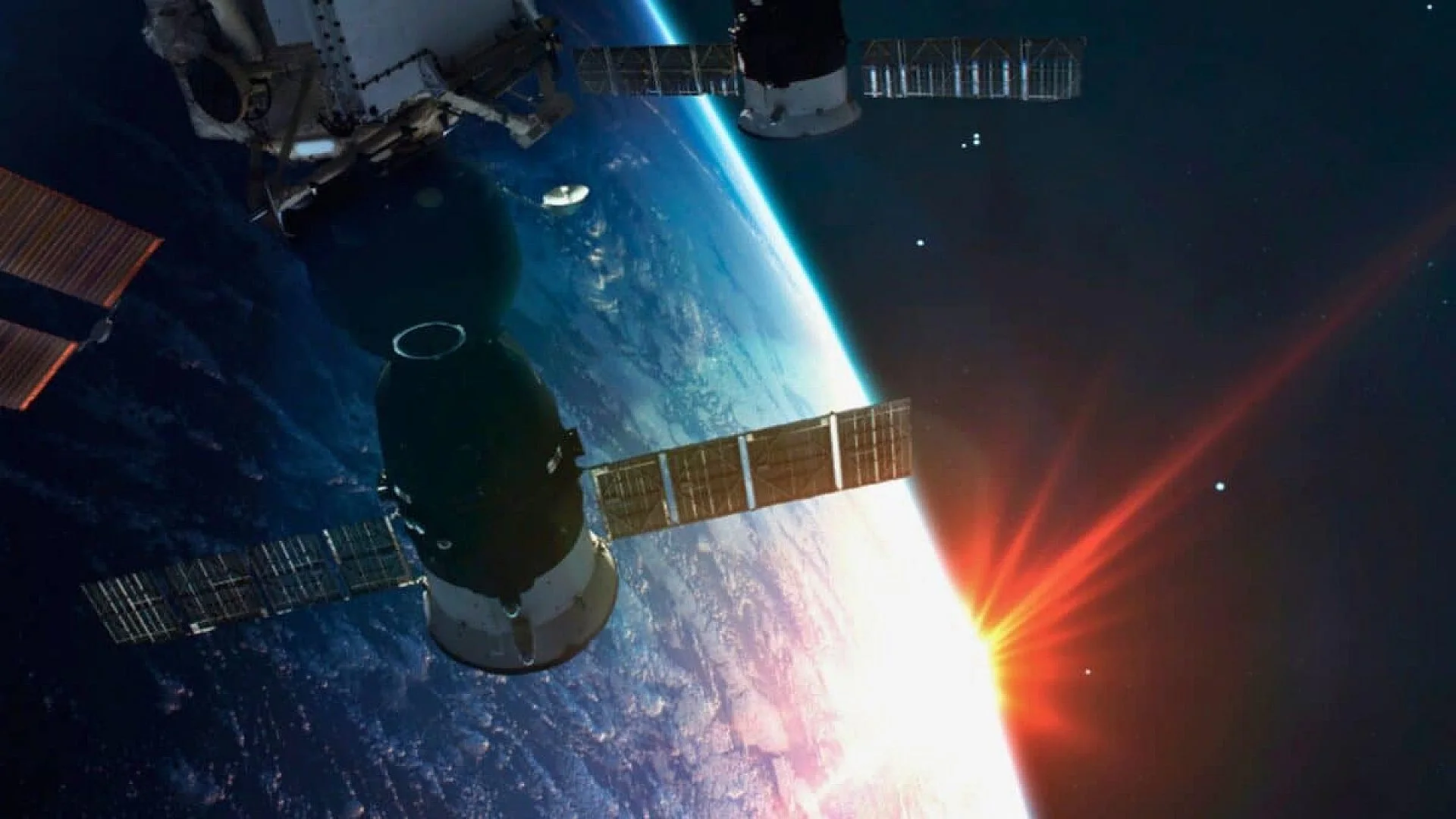
Two Russian military satellites made a daring maneuver, coming within 10 feet of each other in low Earth orbit, a move that space tracking analysts deemed a sophisticated operation with potentially catastrophic consequences. The close approach occurred on April 28, involving the COSMOS 2581 and COSMOS 2583 spacecraft, which were orbiting roughly 585 kilometers above Earth.
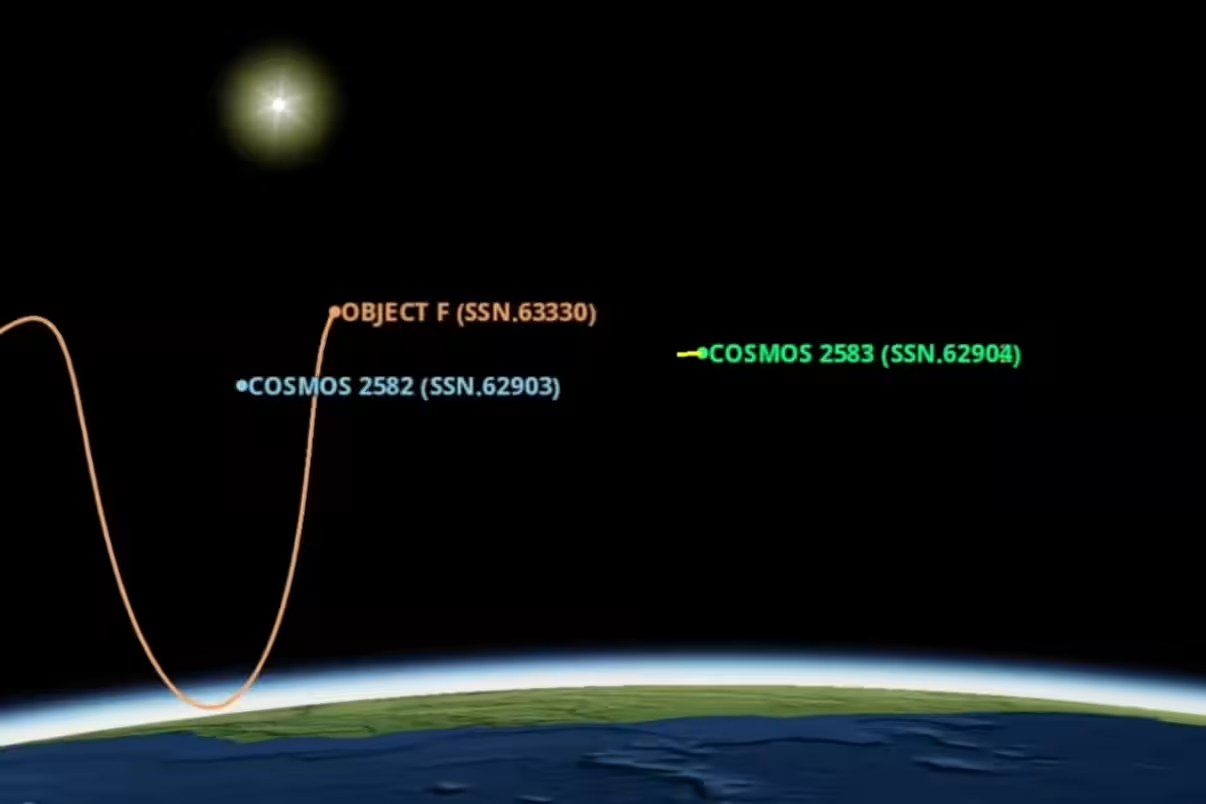
According to tracking data processed by COMSPOC, a Pennsylvania-based space situational awareness firm, COSMOS 2583 fired its thrusters multiple times to maintain the narrow formation. COMSPOC published its analysis on May 1 on X, alongside a radar animation of the encounter. “Whatever Russia is testing, it’s sophisticated,” the company noted, adding that the two spacecraft achieved a closest approach of roughly 3 meters with almost zero relative velocity.
A third satellite, COSMOS 2582, trailed behind the main pair at a distance of under 100 kilometers, according to Space.com. Object F, a smaller subsatellite COSMOS 2583 released earlier, drifted past COSMOS 2582 at 15 kilometers and COSMOS 2581 at 10 kilometers without independent maneuvering. None of these spacecraft carried docking hardware.
A Sustained Inspector Satellite Campaign
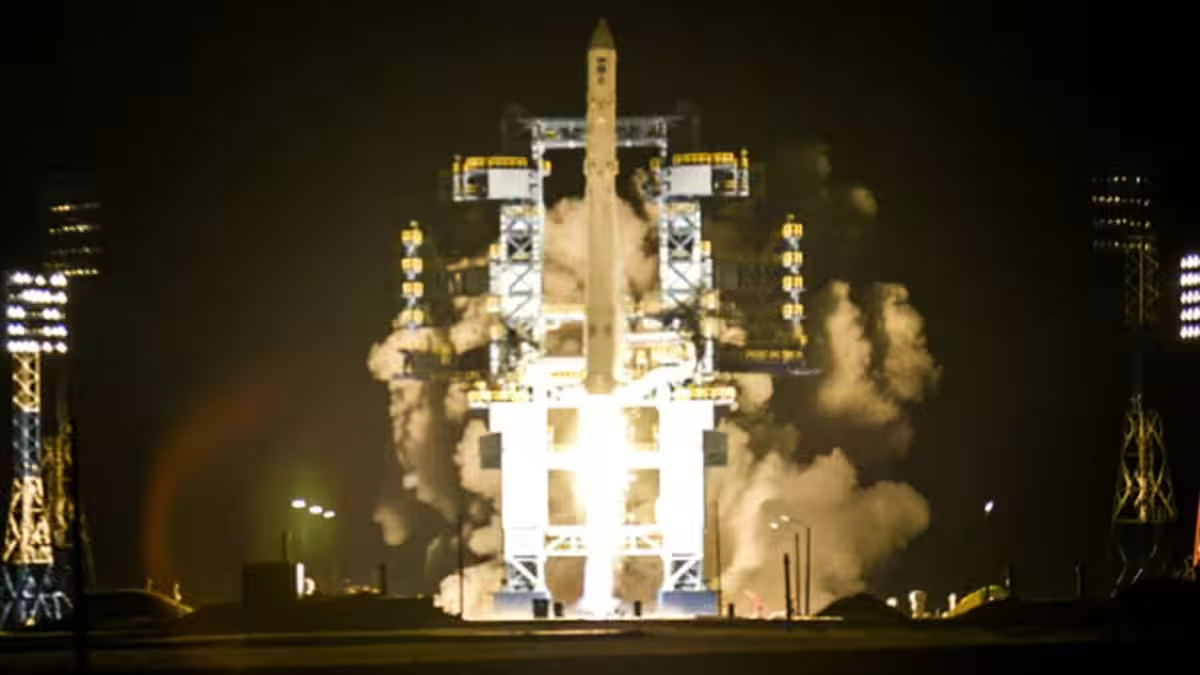
All three COSMOS satellites launched in February 2025 on a single Soyuz rocket. Russia’s space agency Roscosmos has not explained their mission, but the flight profile fits a years-long pattern of inspector satellite activity that Western analysts closely monitor. COMSPOC has logged multi-object rendezvous and proximity operations by this same group since late 2025, suggesting a campaign rather than an isolated exercise.
This is not the first time Russian spacecraft have approached another nation’s satellite without warning. In 2020, COSMOS 2542 pulled near a U.S. spy satellite, prompting U.S. Space Command to label the incident consistent with inspector satellite testing. China and the United States have demonstrated the same capability and have conducted similar close examinations of foreign spacecraft.
What sets the April 28 event apart is the number of objects moving in coordination. Four spacecraft held a formation that required COSMOS 2583 to actively adjust while the others drifted passively. Nothing about the geometry suggests a docking rehearsal. The maneuvers appear aimed at testing how precisely one satellite can shadow another without colliding.
When Precision Becomes a Threat
Close orbital maneuvers happen routinely during space station operations, where cargo and crew vehicles use cooperative guidance and open communication. The COSMOS flyby lacked both. Two free-flying satellites closed to within a few meters without either party broadcasting positioning data publicly, leaving outside observers to reconstruct what happened from radar returns.
Dean Sladen, an aerospace engineer at Accu Components, told The Independent that low Earth orbit satellites travel at roughly 28,000 kilometers per hour. Onboard computers run thousands of trajectory calculations each second and command maneuvers autonomously inside tight decision windows. Sladen called the engineering precision extraordinary when the control loop functions correctly.
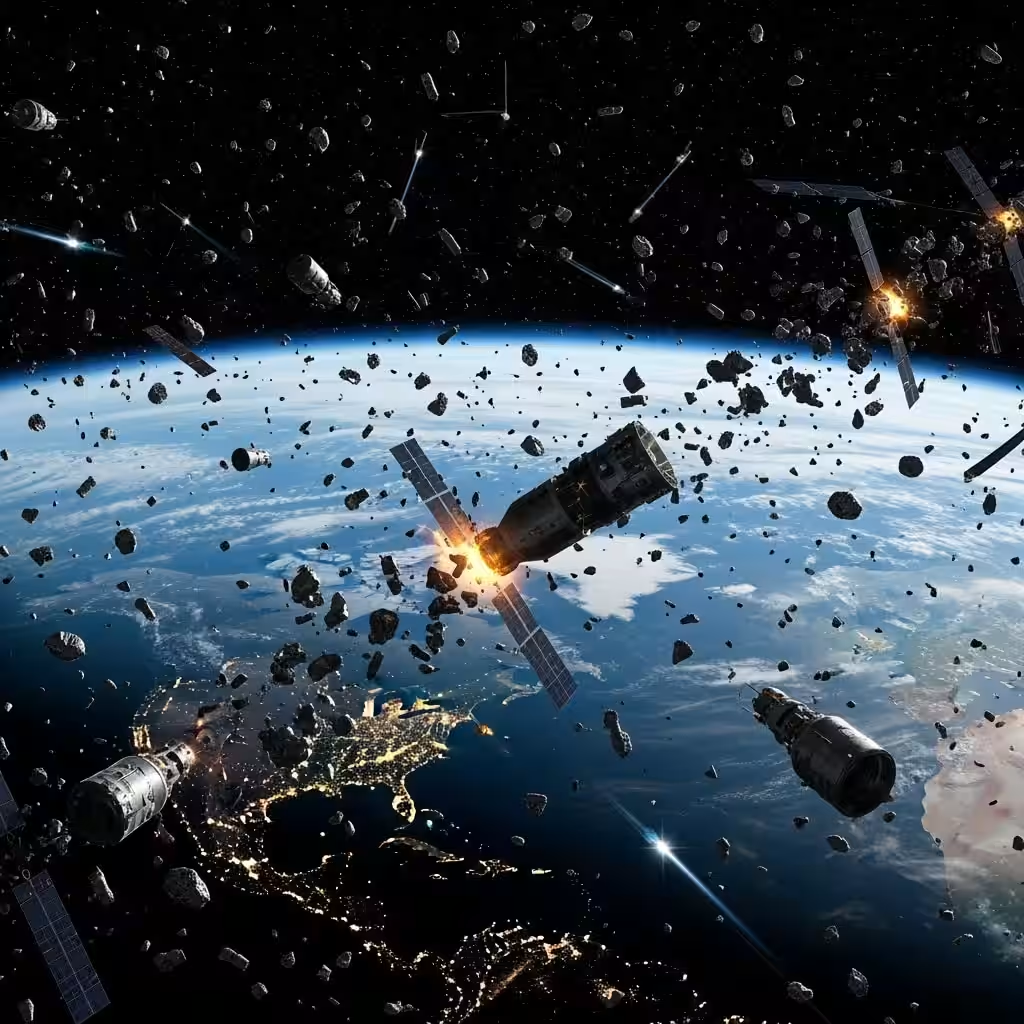
But a single processing error matters enormously at those speeds. “When it doesn’t, a single miscalculation can turn two intact spacecraft into thousands of high-velocity fragments capable of disabling anything they strike,” Sladen said. What begins as a surveillance test can end as a debris field intersecting the paths of working satellites, space stations, and crewed vehicles.
The Real Danger Is What a Collision Leaves Behind
The debris risk is not abstract. A recent report from Accu Components found that 47 percent of all tracked objects in orbit are already junk. The U.S. Space Surveillance Network catalogues 33,269 objects, of which 12,550 are uncontrolled fragments with no purpose or propulsion. These pieces remain aloft for years or decades, their paths shaped only by gravity and atmospheric drag.
A breakup at 585 kilometers would add to that count in an orbital band dense with operational satellites. The phenomenon has a name: Kessler Syndrome, after NASA scientist Donald Kessler, who described in 1978 how debris from one collision triggers further impacts until a shell of high-velocity fragments renders whole orbital zones unusable. Each close approach without a collision is a test that succeeds. A single failure creates a problem that no existing technology can clean up at scale.
The same Accu Components analysis traces almost all tracked debris, 96 percent, to three actors: China, the Commonwealth of Independent States, and the United States. China’s footprint exploded after a 2007 anti-satellite weapons test that generated thousands of fragments. The CIS total reflects decades of launches and defunct satellites. The American contribution includes debris from a 2009 collision when a dead Russian Kosmos satellite struck an active Iridium communications craft.
Where This Leaves Orbital Safety
COMSPOC continues to track the COSMOS satellites and their accompanying objects. No collision occurred, and no government has publicly protested the maneuver. Yet a 3-meter gap between satellites moving 8 kilometers per second is not a comfortable margin. It is a demonstration that the operator possesses fine control and accepts narrow risk windows.
The incident lands amid growing international pressure for transparency when satellites maneuver near another nation’s spacecraft. No binding treaty requires such disclosure, and the technical line between a surveillance pass and a threat is difficult to define from the ground. What radar can confirm is the distance. What it cannot confirm is the intent. The rest is a matter of trust, which remains in short supply among the major space powers.
This article has been fact checked for accuracy, with information verified against reputable sources. Learn more about us and our editorial process.
Last reviewed on .
Article history
- Latest version
Reference(s)
- Wall, Mike. “'Whatever Russia is testing, it's sophisticated': 2 Russian satellites get within 10 feet of each other in orbit.”, May 6, 2026 Space <https://www.space.com/space-exploration/launches-spacecraft/whatever-russia-is-testing-its-sophisticated-2-russian-satellites-get-within-10-feet-of-each-other-in-orbit>.
- Cuthbertson, Anthony. “‘Whatever Russia is testing, it’s sophisticated’: Satellites pass within 3 metres of each other.”, May 7, 2026 The Independent <https://www.independent.co.uk/space/russia-satellites-cosmos-space-debris-b2972380.html>.
- <https://www.accu.co.uk/p/525-the-space-debris-report>.
Cite this page:
- Posted by Aisha Ahmed