After 30 Years of Mystery, NASA’s Webb Telescope Captures Neptune’s Aurora for the First Time
For more than three decades, researchers have been intrigued by a specific characteristic of Neptune: its auroras. Currently, with the aid of advanced telescopes, the mystery has finally been unraveled.
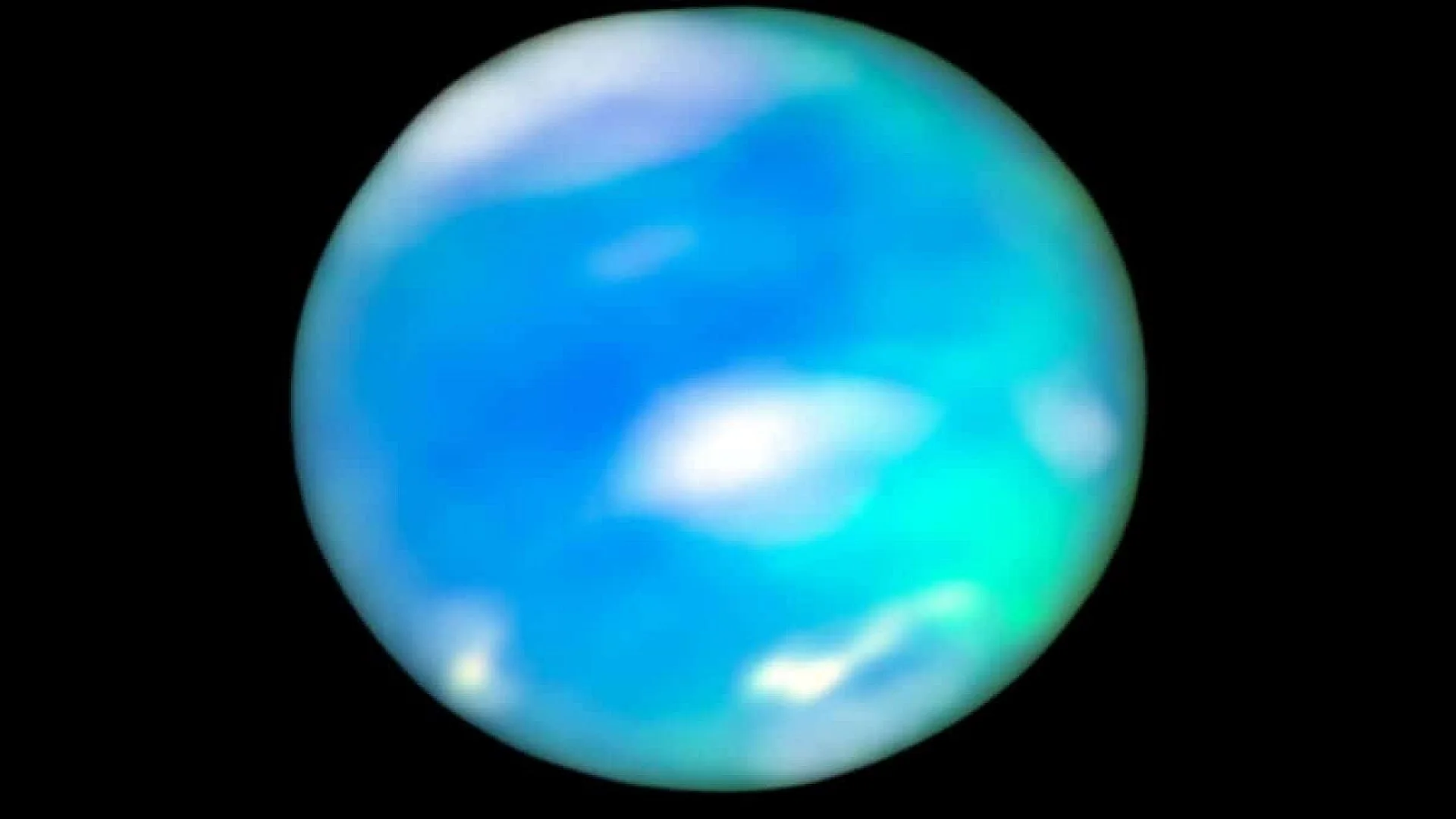
The long-awaited discovery of Neptune’s auroras has finally been made possible by NASA’s James Webb Space Telescope. This groundbreaking finding has solved a decades-long mystery, providing a detailed look at the planet’s atmosphere and magnetic field. The new data sheds light on a previously hidden aspect of our solar system, answering questions that have puzzled scientists for years.
For decades, scientists had suspected that Neptune experienced auroras similar to those seen on other gas giants. However, confirming their presence was no easy feat due to the elusive nature of these phenomena. The auroras, caused by solar particles interacting with Neptune’s magnetic field, had eluded detection until Webb’s advanced infrared capabilities provided the breakthrough astronomers had been waiting for.
Unlocking the Secrets of Neptune’s Auroras
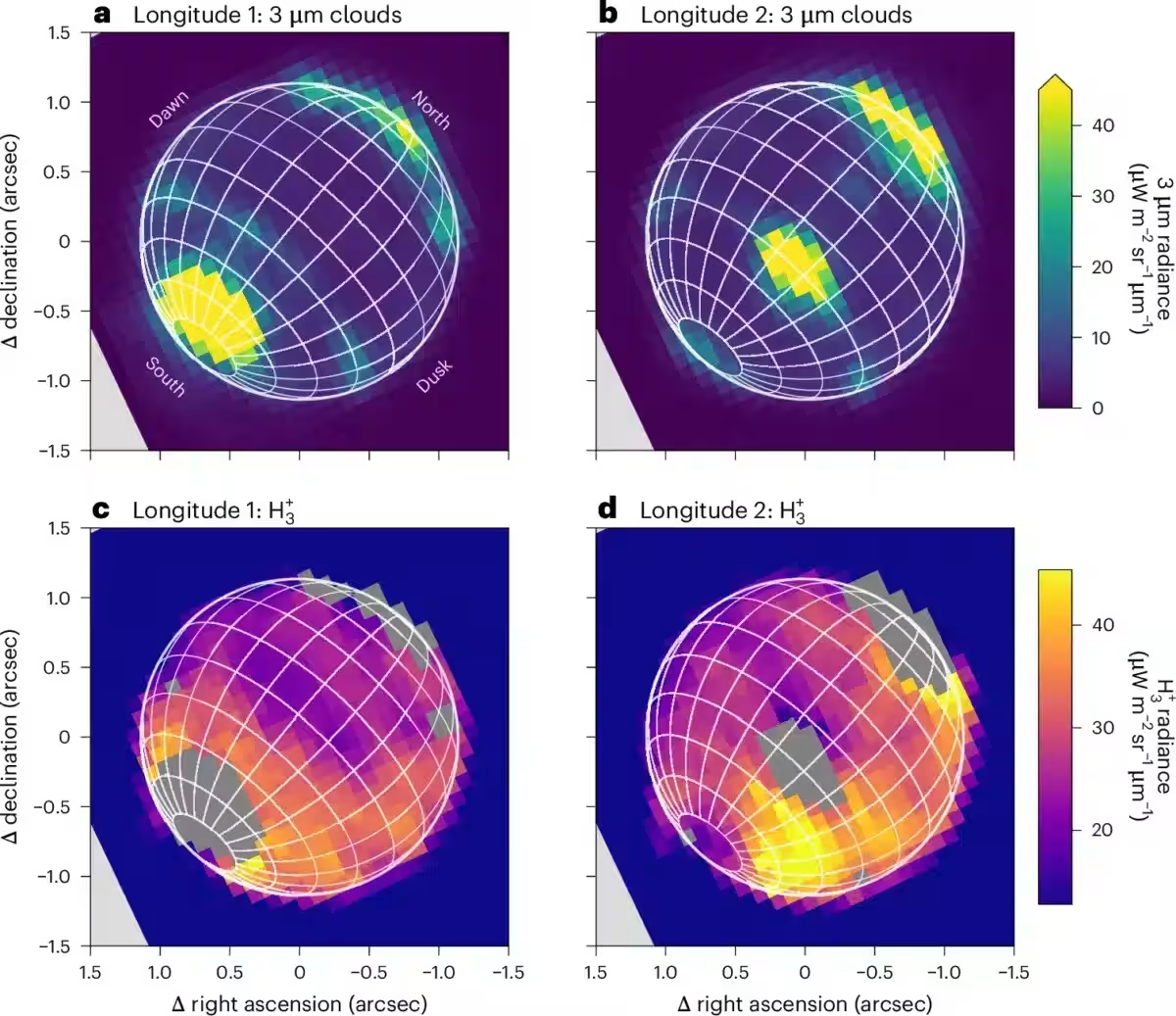
Auroras occur when charged particles from the Sun are captured by a planet’s magnetic field and collide with its atmosphere, creating bursts of light. On Earth, these stunning displays are typically seen near the poles, where the magnetic field lines converge. However, Neptune’s auroras are located at mid-latitudes, a characteristic that sets them apart from those on other planets.
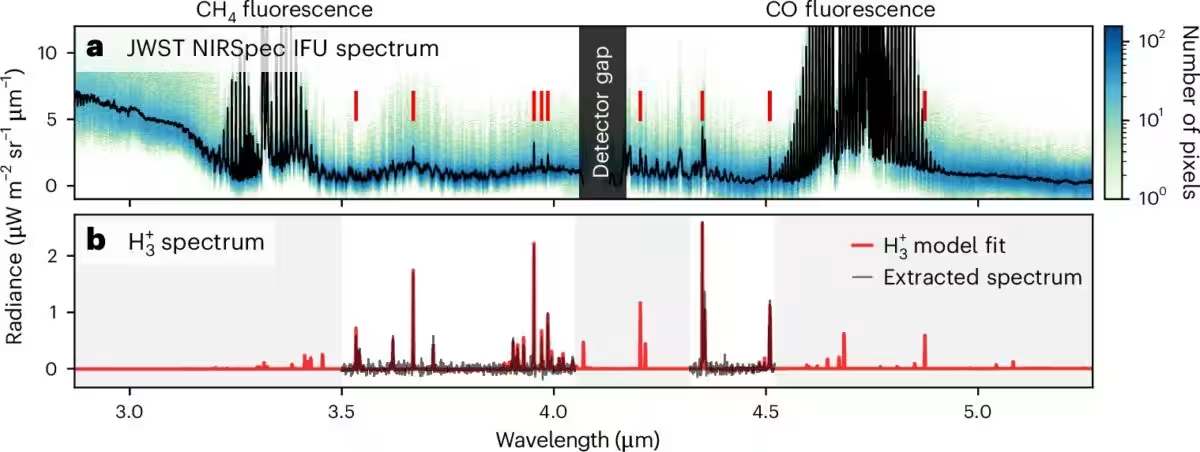
The discovery was made possible by Webb’s Near-Infrared Spectrograph, which captured the auroras in vivid detail. According to Henrik Melin, the lead researcher from Northumbria University, the clarity of the auroras came as a surprise.
“It was so stunning to not just see the auroras, but the detail and clarity of the signature really shocked me,” he said.
The discovery has opened up new avenues for studying Neptune’s magnetic field and its atmospheric conditions. The telescope’s ability to detect auroras in infrared wavelengths has given astronomers a clearer view of the planet’s magnetic field and its atmospheric conditions. As Webb continues its observations of Neptune over the next solar cycle, scientists hope to gather even more data that could reveal the origins of Neptune’s magnetic field and further explain the planet’s unique characteristics.
A Magnetic Field Like No Other
Neptune’s auroras are unusual in more ways than one. This is due to the planet’s tilted magnetic field, which was first observed during the Voyager 2 flyby. Unlike most planets, Neptune’s magnetic field is tilted by 47 degrees from the planet’s rotational axis, resulting in auroras that are far from the poles. Hammel explained the connection between the tilt and the location of the auroras.
“Since auroral activity is based where the magnetic fields converge into the planet’s atmosphere, Neptune’s auroras are far from its rotational poles,” said the U.S Space Agency.
A Cooling Atmosphere
Webb’s observations have also shed light on a significant change in the planet’s upper atmosphere. Data from Webb revealed that Neptune’s atmosphere has cooled substantially since Voyager 2’s flyby. The temperature of the eighth planet from the Sun’s upper atmosphere in 2023 was about half of what it was 30 years ago. This cooling could be one reason why Neptune’s auroras were so difficult to detect in the past.
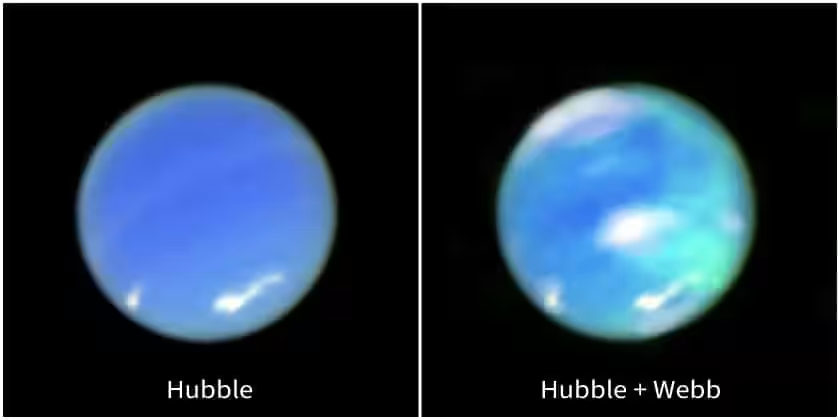
“A substantially colder temperature would result in much fainter aurorae,” the authors said. “This cold temperature is likely the reason that Neptune’s aurorae have remained undetected for so long.”
The drastic drop in temperature also suggests that the atmosphere can undergo significant changes despite its distance from the Sun, more than 30 times farther away than Earth. The findings from Webb have opened up new avenues for studying the planet. The telescope’s ability to detect auroras in infrared wavelengths has given astronomers a clearer view of the planet’s magnetic field and its atmospheric conditions.
As Webb continues its observations of Neptune over the next solar cycle, scientists hope to gather even more data that could reveal the origins of Neptune’s magnetic field and further explain the planet’s unique characteristics.
As we look ahead and dream of future missions to Uranus and Neptune, we now know how important it will be to have instruments tuned to the wavelengths of infrared light to continue to study the auroras,” concluded Leigh Fletcher of Leicester University, co-author on the paper. “This observatory has finally opened the window onto this last, previously hidden ionosphere of the giant planets.”
This article has been fact checked for accuracy, with information verified against reputable sources. Learn more about us and our editorial process.
Last reviewed on .
Article history
- Latest version
Reference(s)
- “Dr Henrik Melin.”, May 7, 2026 <https://www.northumbria.ac.uk/about-us/our-staff/m/henrik-melin/>.
- “Leigh Fletcher | University of Leicester.” University of Leicester <https://le.ac.uk/people/leigh-fletcher>.
Cite this page:
- Posted by Aisha Ahmed