NASA’s Roman Space Telescope Could Finally Solve the Mystery of Neutron Stars
NASA’s upcoming Nancy Grace Roman Space Telescope could soon reveal neutron stars, elusive remnants left behind by massive stars that are notoriously difficult to detect.
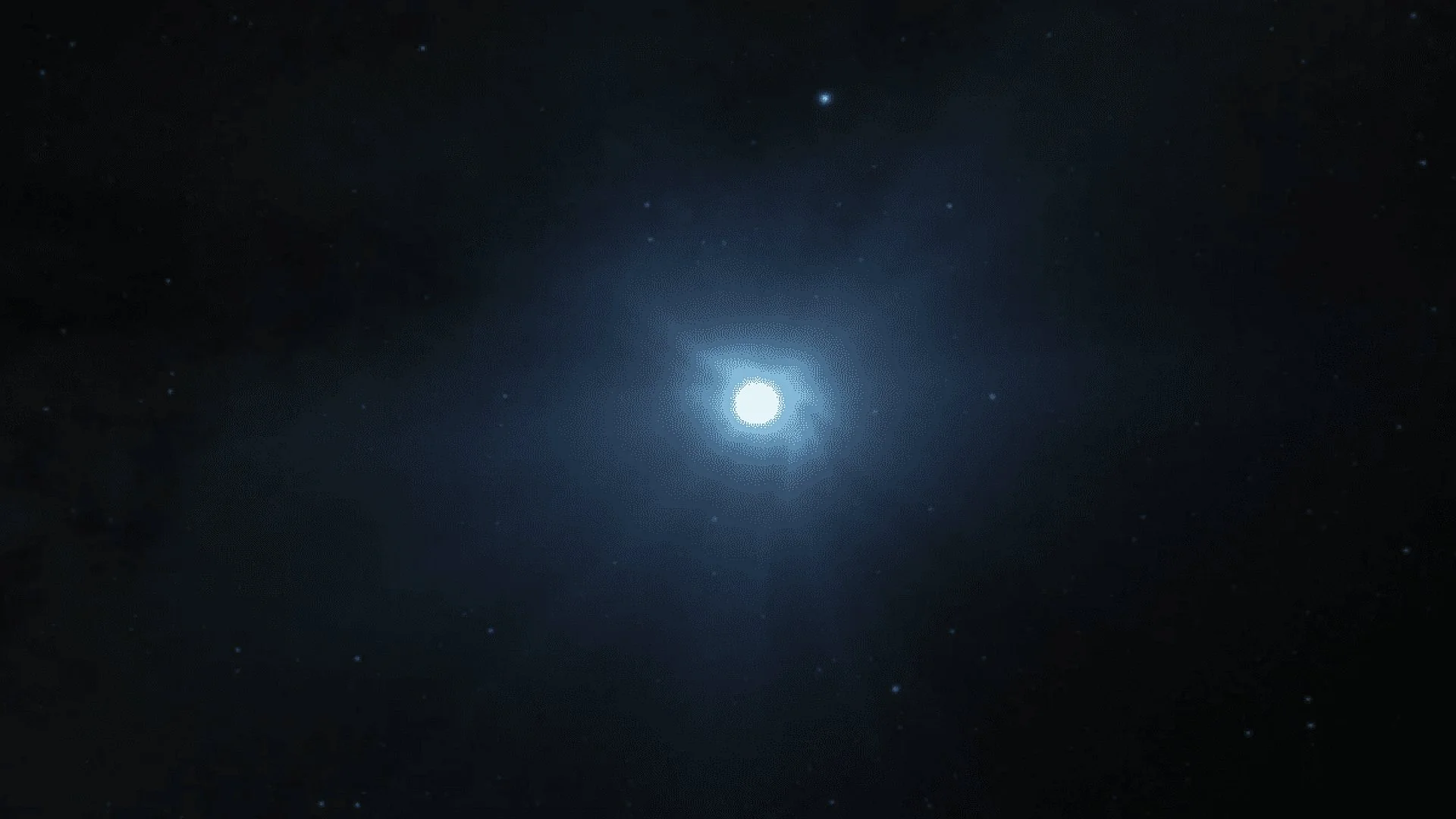
The cosmos is on the cusp of a groundbreaking revelation that could redefine our comprehension of the universe. A pioneering study suggests that the forthcoming Nancy Grace Roman Space Telescope from NASA may be capable of detecting elusive neutron stars, hidden remnants of massive stars that have exploded in a cataclysmic event. These enigmatic objects, typically invisible to most telescopes, could be unveiled using the power of gravitational microlensing, a phenomenon that Roman is uniquely equipped to study.
Unlocking the Secrets of Gravitational Microlensing
Neutron stars are incredibly dense remnants of stars that have undergone supernova explosions. They pack more mass than the Sun into a sphere no larger than a city, yet remain largely undetectable due to their dimness and isolation in the vastness of space. According to Zofia Kaczmarek, a researcher at Heidelberg University in Germany, who led the study, “Most neutron stars are relatively dim and on their own, making them incredibly hard to spot without some sort of help.”
However, the study, published in Astronomy and Astrophysics, proposes that NASA’s Nancy Grace Roman Space Telescope could change that. Roman’s innovative approach, known as gravitational microlensing, allows it to detect these faint objects by measuring how their intense gravity bends and brightens the light from distant stars behind them.
Gravitational microlensing occurs when a massive object, like a neutron star, moves between Earth and a distant star, warping the star’s light. This brief brightening allows astronomers to spot objects that would otherwise remain hidden. Roman’s advanced capabilities enable it to measure both the increase in brightness (photometry) and the subtle shift in the background star’s position (astrometry). The combination of these measurements provides a more precise way to identify and study neutron stars.
Unveiling the Mysteries of Stellar Remnants
The Roman Space Telescope’s ability to observe microlensing with unparalleled precision has the potential to not only detect neutron stars but also provide important data about their mass. According to NASA, this new method of mass measurement could help solve several long-standing mysteries in astrophysics. For example, scientists currently don’t know the mass distribution of neutron stars and black holes, nor where the boundary between the two objects lies.
According to Peter McGill, a co-author of the study from Lawrence Livermore National Laboratory, “What’s really cool about using microlensing is that you can get direct mass measurements. Photometry tells us that something passed in front of the star, but it’s the amount the star’s position shifts that tells us how massive that object is.”
The research team will take advantage of Roman’s Galactic Bulge Time Domain Survey, a massive observational project that will scan millions of stars across wide areas of the sky at high frequencies. The survey is primarily aimed at identifying exoplanets using photometric microlensing, but the newfound ability to measure astrometric microlensing opens up an entirely new frontier in astrophysical research.
The telescope’s capability to observe such a vast region of the sky makes it possible to detect isolated neutron stars that may be scattered across the Milky Way, a population that has been nearly impossible to study until now. According to Kaczmarek, “We’re seeing a small sample that’s not representative of the big picture. Even a single mass measurement would be very powerful. If we found just one isolated neutron star, it would already be incredibly stimulating to our research.”
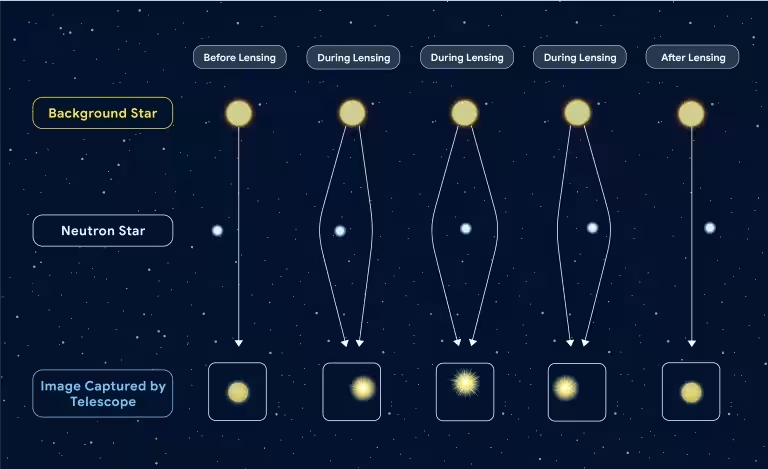
NASA, STScI, Joyce Kang (STScI)
A New Era in Microlensing and Cosmic Discovery
Roman’s unique blend of photometric and astrometric capabilities allows it to pursue not just one scientific goal, but many. According to McGill, “This wasn’t part of the original plan, but it turns out Roman’s astrometric capability is really good at detecting neutron stars and black holes, so we can add a whole new kind of science to Roman’s surveys.”
The anticipated discoveries could transform our understanding of the universe. By revealing previously hidden neutron stars, Roman will open a new chapter in the study of stellar remnants and the dynamics of our galaxy. With this technology, NASA is poised to uncover a long-lost population of objects that has eluded scientists for decades.
This article has been fact checked for accuracy, with information verified against reputable sources. Learn more about us and our editorial process.
Last reviewed on .
Article history
- Latest version
- Last updated by Dayyal Dungrela, MLT, BSc, BS
Reference(s)
- Balzer, Ashley. “NASA’s Roman Poised to Transform Hunt for Elusive Neutron Stars - NASA.”, May 6, 2026 NASA <https://www.nasa.gov/missions/roman-space-telescope/nasas-roman-poised-to-transform-hunt-for-elusive-neutron-stars/>.
Cite this page:
- Posted by Aisha Ahmed