This Galaxy Has Several Times More Stars Than the Milky Way, Formed 12 Billion Years Ago, and Does Not Rotate at All
JWST wasn’t anticipated to make this discovery. The image it took of a galaxy from 12 billion years ago doesn’t align with any of the models that astronomers have developed over many years.
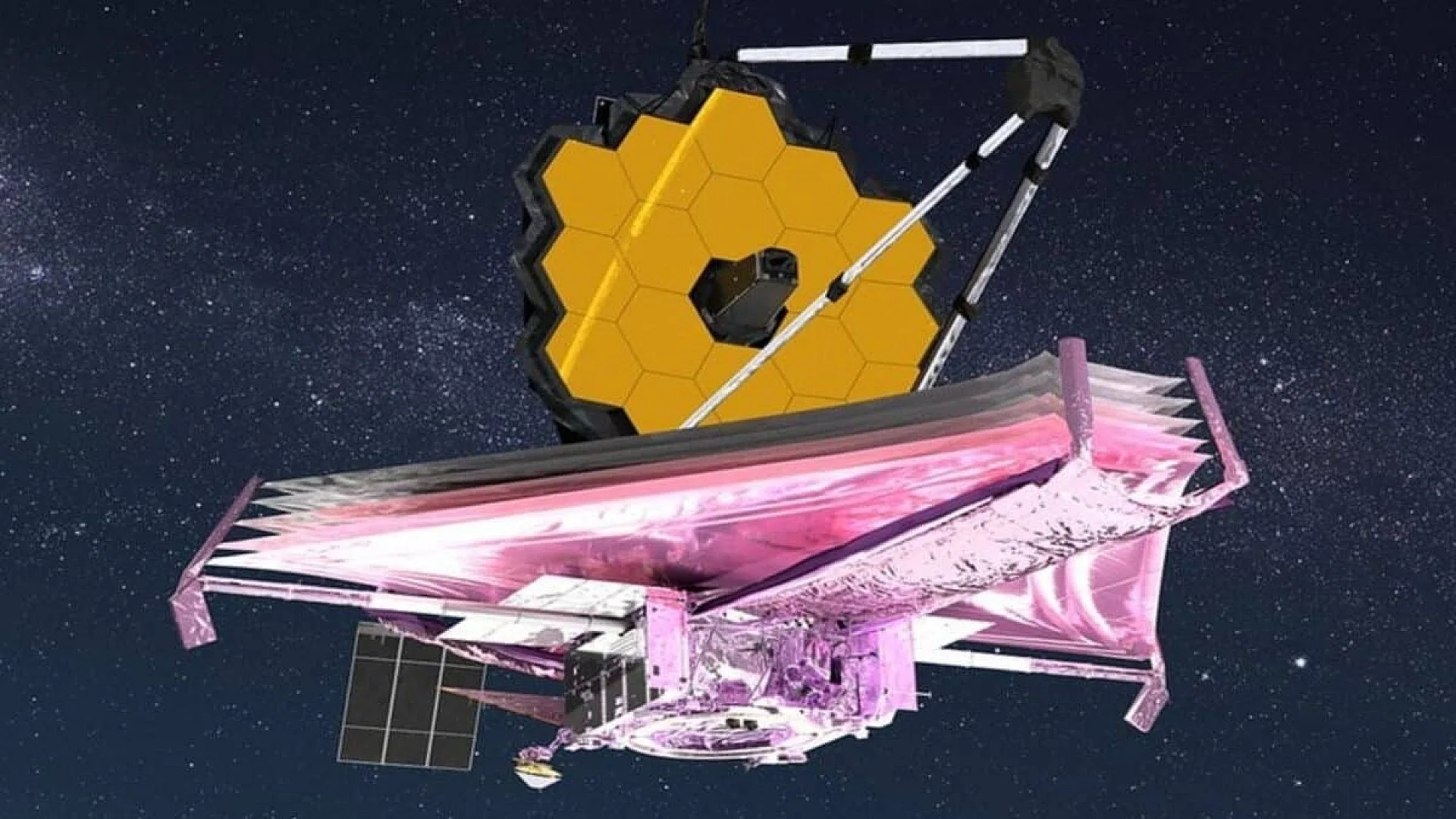
The James Webb Space Telescope (JWST) has unveiled a slow-rotating galaxy, XMM-VID1-2075, from the early universe, rewriting our understanding of galaxy evolution. This massive, ancient galaxy, located around 12 billion years ago, presents a unique case that could revolutionize how astronomers view the dynamics of galaxies in their formative stages.
For years, astronomers believed that galaxies in the early universe spun rapidly, gradually losing their rotation over time as they merged with others. However, the observation of XMM-VID1-2075 reveals a galaxy in an advanced state of evolution, yet without the typical rotational movement seen in other large galaxies today.
Rewriting the Rules of Galaxy Evolution
Today’s large galaxies are held together by organized rotation, but XMM-VID1-2075 defies this norm. The galaxy’s chaotic motion is a characteristic typically associated with older, more evolved galaxies. According to Dr. Ben Forrest, an astronomer at the University of California, Davis, this discovery challenges our understanding of galaxy evolution.
“That’s something only seen in the most massive, mature galaxies that are closer to us in space and time,” he said. “This one in particular did not show any evidence of rotation, which was surprising and very interesting.”
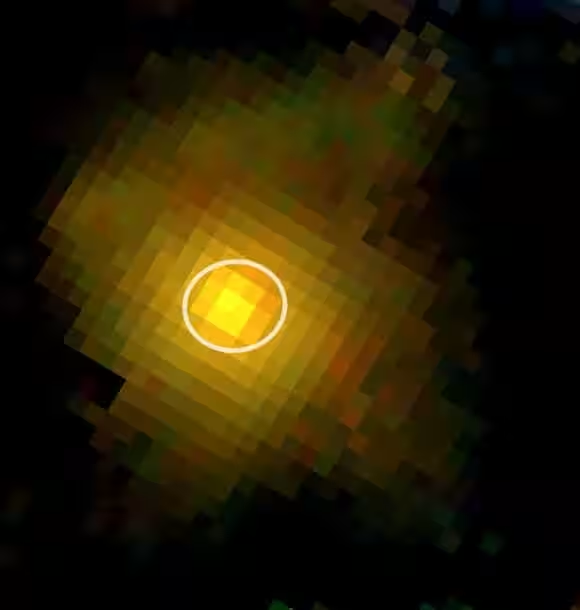
XMM-VID1-2075 is one of the most massive galaxies from the early universe, with several times the number of stars as our own Milky Way. However, what sets it apart is its lack of rotational movement, a characteristic typically associated with older, more evolved galaxies.
Unraveling the Mystery of XMM-VID1-2075
This discovery, published in Nature Astronomy, was made possible by the advanced capabilities of JWST, which utilizes infrared technology to observe the faintest and most distant objects in the universe. Due to the redshift, a phenomenon where light from distant objects shifts to longer, redder wavelengths as the universe expands, XMM-VID1-2075 is being observed as it appeared roughly 12 billion years ago, when the universe was still under 2 billion years old.
As explained by Dr. Forrest, this galaxy is particularly intriguing because, despite its massive size, it stopped forming new stars long ago, making it an ideal target for further study.
“Previous MAGAZ3NE observations had confirmed this was one of the most massive galaxies in the early Universe, with already several times as many stars as our Milky Way, and also confirmed that it was no longer forming new stars, making it a compelling target for follow-up observations.”
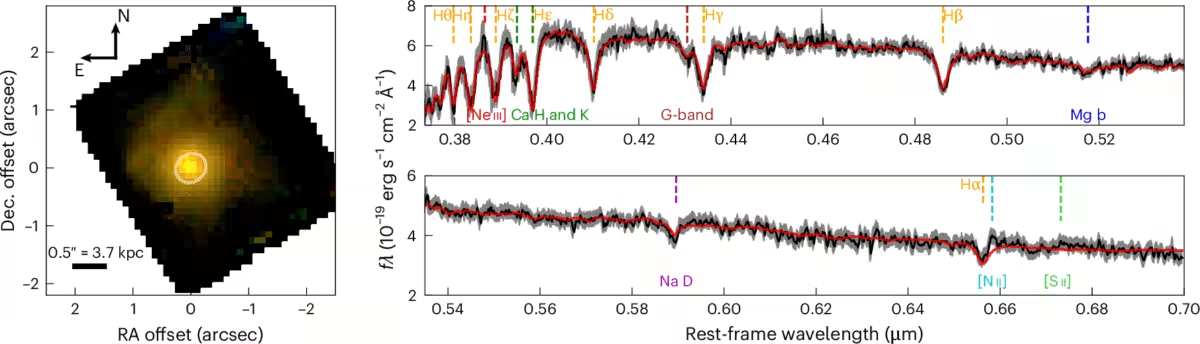
While today’s galaxies have nice, orderly movements, XMM-VID1-2075 is acting unusually, nothing like what scientists expect from a galaxy back in the early universe.
The Birth of a Slow Rotator
The key question raised by this discovery is how XMM-VID1-2075 became a slow rotator so early in the universe’s history. Slow rotators in the nearby universe are typically the result of galaxy mergers that disrupt their rotational motion. However, Dr. Forrest suggests that this galaxy’s chaotic motion might not be due to multiple mergers, but rather the result of a single, high-energy collision between two galaxies moving in opposite directions.
“For this particular galaxy, we see a large excess of light off to the side. And so that’s suggestive of some other object which has come in and is interacting with the system and potentially changing its dynamics,” Dr. Forrest said this in the UC Davis statement.
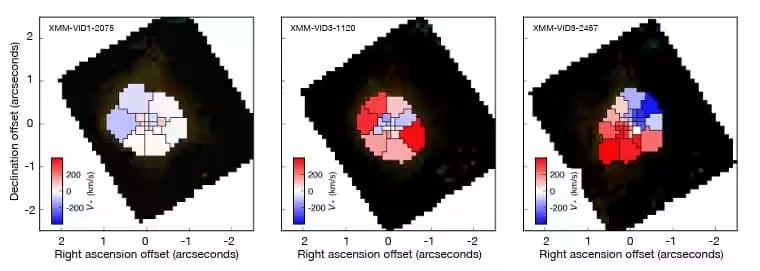
This interpretation is supported by the galaxy’s unusual light patterns, which suggest that an external perturbation is affecting its dynamical state. In contrast to a gradual succession of mergers, such an interaction might explain why the galaxy does not rotate. If confirmed, it changes how we think galaxies can evolve fast without following the usual merger path.
This discovery has far-reaching implications for our understanding of galaxy evolution and the role of mergers in shaping the universe. As scientists continue to study XMM-VID1-2075, they may uncover new insights into the mysteries of the early universe.
This article has been fact checked for accuracy, with information verified against reputable sources. Learn more about us and our editorial process.
Last reviewed on .
Article history
- Latest version
Reference(s)
- “Ben Forrest - Astronomer.” Ben Forrest - Astronomer <https://www.astroforrest.com/>.
- Forrest, Ben. “A massive and evolved slow-rotating galaxy in the early Universe - Nature Astronomy.”, May 4, 2026, pp. 1-9. Nature, doi: 10.1038/s41550-026-02855-0. <https://www.nature.com/articles/s41550-026-02855-0>.
- “Non-Rotating Early Galaxy Is a Surprise to Astronomers.”, May 4, 2026 UC Davis <https://www.ucdavis.edu/news/non-rotating-early-galaxy-surprise-astronomers>.
Cite this page:
- Posted by Aisha Ahmed