WWII Bomb-Laden Wreck Triggers 4.5 Magnitude Explosion Under English Channel
A WWII wreck loaded with munitions still rests under the Channel, decades after a salvage blast that rattled towns and reshaped the seabed.
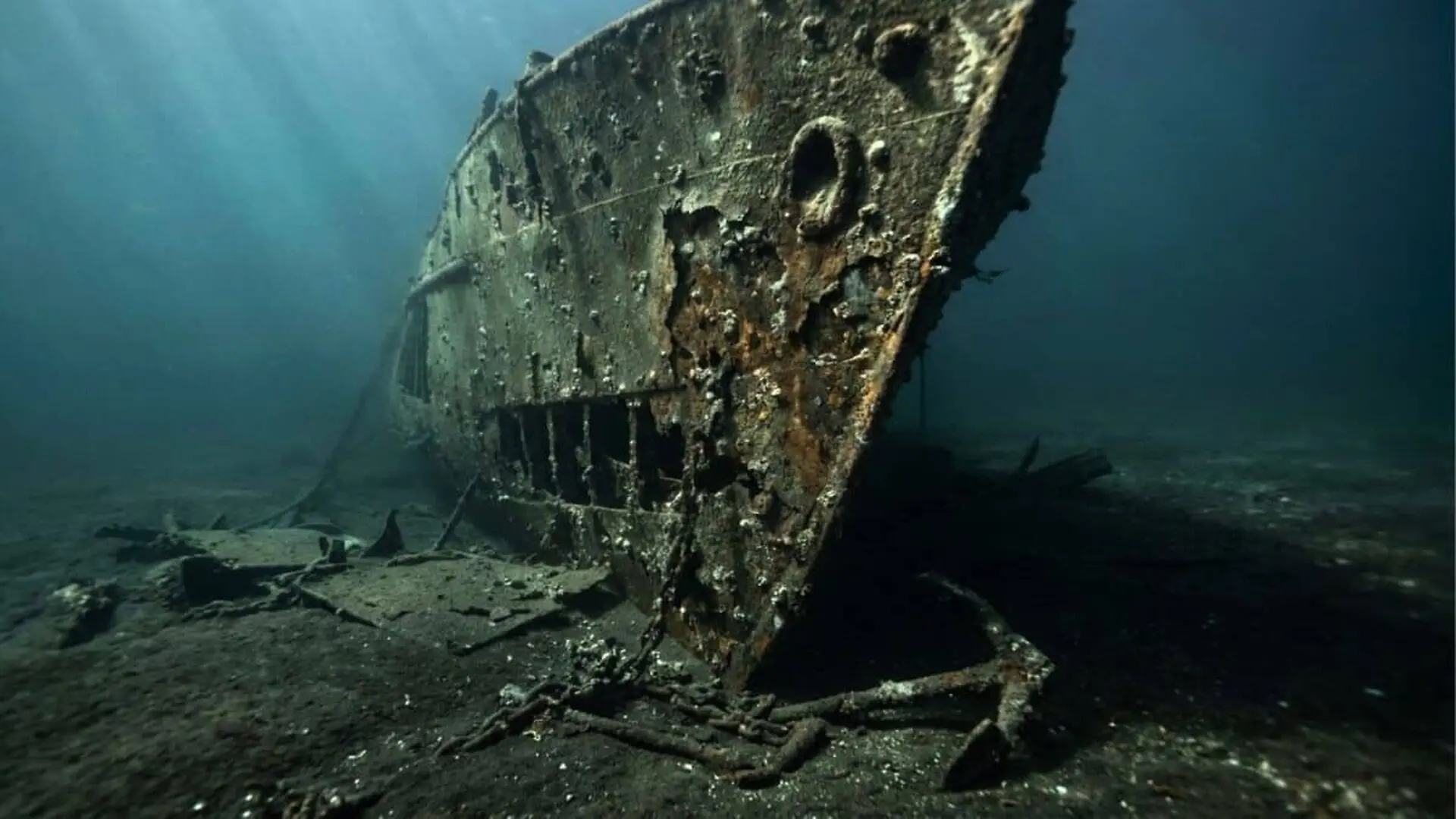
The remains of the SS Kielce have lain silent on the floor of the English Channel since a 1946 collision sank the cargo vessel while it was transporting bombs and ammunition. Although the crew escaped unharmed, the hidden explosives later turned a routine salvage attempt into a powerful underwater blast.
A wartime freighter turned post‑war cargo ship
Constructed in the United States in 1943 under the name Edgar Wakeman, the vessel was an oil‑fired Type N3 steam cargo ship. During World War II it was transferred to the Polish government‑in‑exile and joined Atlantic and coastal convoys before entering peacetime service. The ship was renamed after the Polish city of Kielce.
In early 1946 the ship departed Southampton for Bremerhaven on a charter for United States forces. While navigating the Channel it collided with the steamer Lombardy and sank a few miles off Folkestone in water roughly 27 meters deep. The other vessel rescued all crew members, and no fatalities were recorded.
A British government survey later described the ship as carrying a “full cargo of bombs and ammunition.” Because the original manifest has never been located, investigators cannot determine the exact quantity, type, or total weight of the ordnance that was aboard.
Initially listed without a confirmed identity, the wreck was eventually recognized during a clearance operation in the Channel. The Kent Historic Environment Record now notes large bombs among the cargo and records historic warnings to mariners about the site.
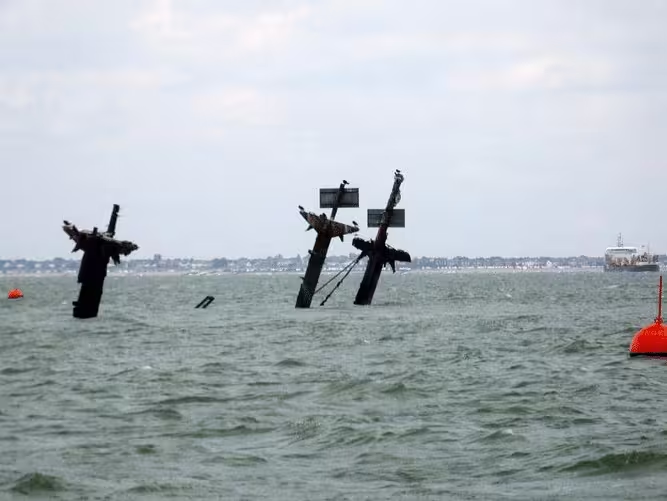
Salvage operation triggers a massive detonation
In 1966 the Folkestone Salvage Company secured a contract to clear the obstruction and deepen the navigable channel. The plan called for cutting away collapsed steel plating and dispersing the remaining explosives, a task that required breaching sections of the hull that concealed the munitions.
Two cutting charges were fired without incident, but at 11:59 a.m. on July 22, 1967 a third charge set off a far larger explosion within the wreck. The blast shattered nearby ceilings, damaged chimneys and dislodged roof slates in Folkestone, although official records indicate no injuries.
Two salvage workers in a small boat about 400 yards (approximately 370 meters) from the wreck reported seeing only “a small ripple and some spray,” according to the government investigation. Later calculations suggested the resulting surface wave rose no higher than about 0.6 meters. Most of the energy was transmitted through the seabed rather than the water or air, explaining the strong seismic signature despite the modest wave height.
At least 25 seismic stations across Europe and North America recorded the event, some located nearly 5,000 miles from Folkestone. Analysts assigned a magnitude of roughly 4.5 using earthquake‑measurement techniques. This figure reflects the seismic energy that reached the stations, not the total explosive yield of the cargo.
Underwater crater reveals the blast’s power
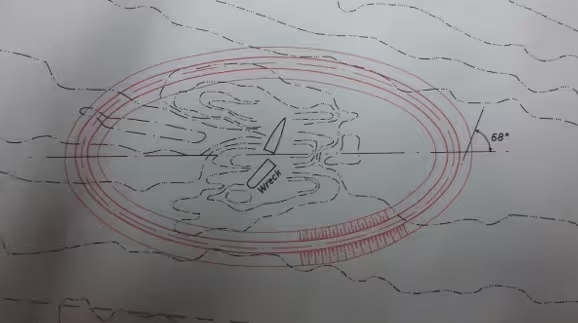
Subsequent surveys identified an elliptical depression on the seabed measuring about 47 meters long, 20 meters wide and 6 meters deep, with raised rims extending several meters above the surrounding floor. The wreck had been resting on silt at a depth of roughly 27 meters when the charge detonated.
Comparisons with experimental data on underwater explosions suggested that the observed crater size corresponded to a contained yield of approximately 2,000 tons of TNT. The report clarified that this estimate describes the energy transferred to the seabed and water, not a direct accounting of the ammunition that exploded.
A University College London study on maritime explosive risk discusses the Kielce incident alongside the better‑known SS Richard Montgomery wreck. The authors note that estimates of the Kielce blast vary widely, underscoring the difficulty of modeling underwater detonations when cargo records and physical evidence are incomplete.
Scattered remnants complicate assessment
The explosion scattered fragments of the ship across a broad area. A 1977 record described debris spread over roughly 120 by 80 meters, though the exact dimensions were uncertain because the wreckage was widely dispersed. Pieces of steel rise several meters above the surrounding seabed and appear to encircle the crater.
Because the original manifest is missing, the amount of ammunition that remains buried is unknown. While part of the cargo detonated in 1967, the rest may still lie concealed beneath sediment, corroded by decades of exposure. Rusting casings, deteriorating protective layers, and shifting wreckage can alter the condition of the explosives, but they do not provide a predictable timeline for when the material becomes safe to handle.
Although the site lacks a formal heritage protection status from Kent authorities, historical records label it a marine munitions hazard. The evidence points to a wreck that no longer exists as an intact vessel, yet its dispersed remains and unaccounted‑for explosives continue to pose challenges for any future investigation or clearance effort.
This article has been fact checked for accuracy, with information verified against reputable sources. Learn more about us and our editorial process.
Last reviewed on .
Article history
- Latest version
Reference(s)
- “1999 Survey Report Montgomery.” <https://assets.publishing.service.gov.uk/government/uploads/system/uploads/attachment_data/file/851520/1999_survey_report_montgomery.pdf>.
- “TR 23 SE 31 - SS Kielce - Historic Environment Record.” <https://heritage.kent.gov.uk/Monument/MKE13084>.
- “Alexander%20The%20Strange%20Case%20of%20the%20Richard%20Montgomery%20%28revised%20MS%29.” <https://discovery.ucl.ac.uk/id/eprint/10080218/3/Alexander%20The%20Strange%20Case%20of%20the%20Richard%20Montgomery%20%28revised%20MS%29.pdf>.
Cite this page:
- Posted by Vikram Desai