Ancient Chinese Board Game Liubo Boards Unearthed in Shaanxi Reveal Lost Secrets
New finds in northwest China revive Liubo, the Han‑era board game, adding unearthed boards that deepen clues about its mysterious rules.
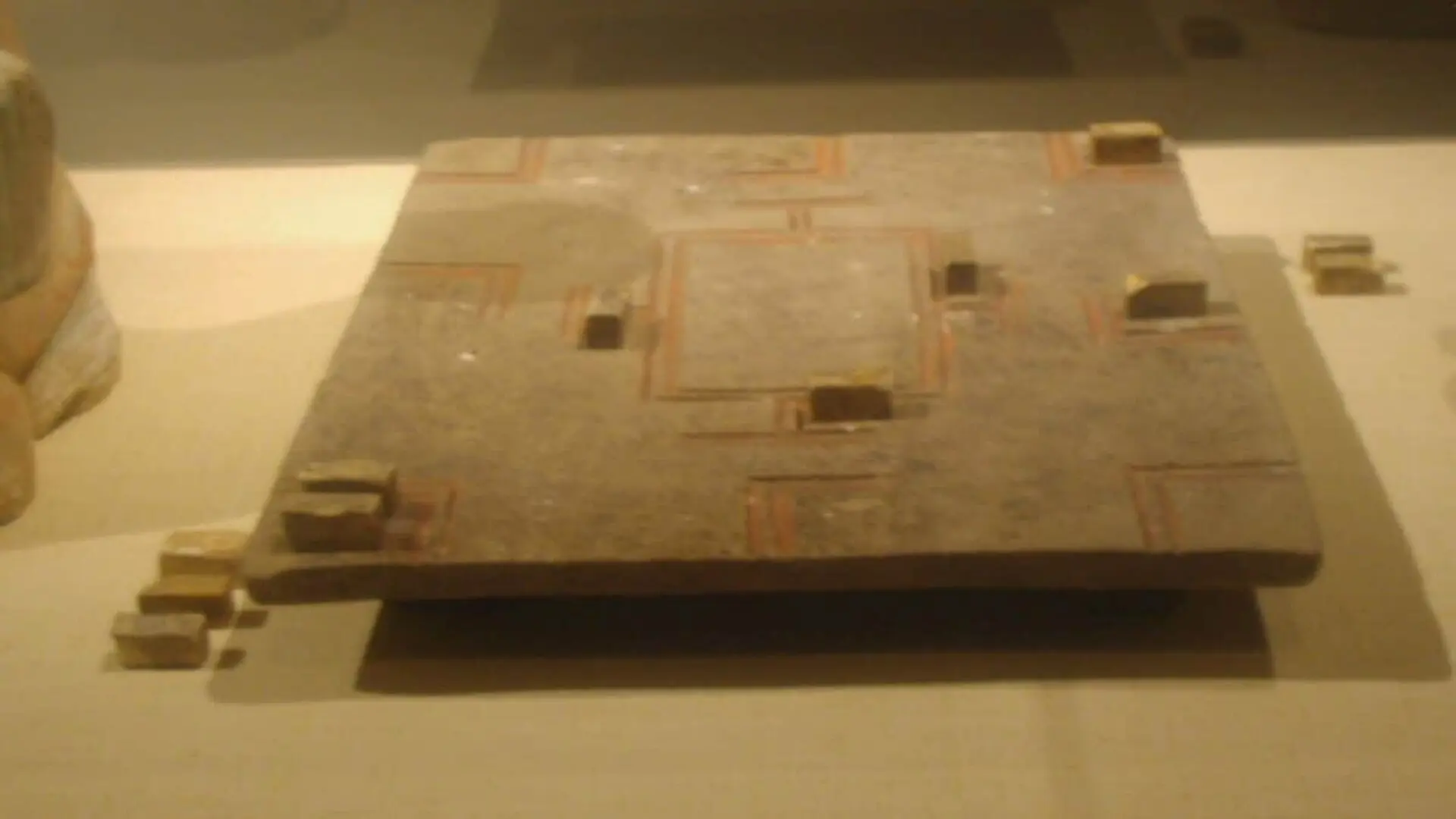
New excavations in Shaanxi have unearthed Han‑era tombs that contain Liuo game boards etched onto bricks, offering fresh material for scholars trying to piece together the rules of one of ancient China’s most popular board games. While dozens of artifacts survive, the details of how Liuo was played have largely been lost to history.
The Shaanxi Provincial Institute of Archaeology reports that the digs, carried out ahead of a dormitory project at Shaanxi Normal University’s Chang’an campus, revealed a cluster of 25 burial sites and two ash pits, with ten tombs remaining sufficiently intact for in‑depth analysis.
Among the 130 recovered objects—ranging from pottery to bronze and iron items—researchers identified two Liuo boards within tombs labelled M4 and M17. The boards are incised on both plain and patterned bricks, expanding the corpus of physical evidence for the game.
Fresh Brick‑Carved Boards Enrich the Liuo Record
The finds complement earlier discoveries that have yielded complete game sets, figurines of players, and elaborately decorated boards. Together, these pieces help map the social reach of Liuo, which historians say was enjoyed across classes during the Western Han dynasty.
Beyond the game boards, the excavation traced shifts in funerary assemblages between the late Western Han and late Eastern Han periods, noting variations in the types, numbers, and combinations of grave goods.
The Shaanxi team also announced parallel results from tombs dating to the Sixteen Kingdoms, Northern Zhou and Tang dynasties, including pottery figures, epitaphs and a joint burial identified through inscriptions and skeletal analysis.
From Royal Courts to Common Homes: Liuo’s Broad Appeal
Ancient texts describe Liuo as a two‑player contest using twelve pieces—six black and six white—paired with six throwing sticks that functioned like dice. The board featured twelve marked pathways surrounding a central zone known as the “water.”
Researchers at Carnegie Mellon University have suggested that the pieces may have represented birds circling the board, aiming to capture fish in the central pond and return them to designated nests for points. Nevertheless, many aspects of movement, regional rule variations and winning conditions remain speculative.
Visiting Hunan Museum:
— Tong Bingxue 仝冰雪 (@tongbingxue) September 17, 2023
An ancient Chinese board game set, LIUBO Chess Set, Western Han Dynasty(202 BC-25 AD), the most complete set of pieces for this game that has ever been excavated.
Two persons take turns to throw the dice to determine the moves of game pieces.
By me now. pic.twitter.com/JMY3aYYpmk
Although Liuo reached its zenith in the Western Han era, the earliest solid reference appears in a Warring States period royal speech. Traditional legends also tie the game to King Jie of the Xia dynasty, though the historicity of that dynasty is still debated.
Archaeological traces indicate a gradual decline: no Liuo artifacts have surfaced from post‑Jin periods, and textual sources suggest that the knowledge of its rules had already faded after the Tang dynasty.
A landmark find in 1973 uncovered a lacquered box at the Mawangdui tomb in Hunan, containing a complete Han‑period Liuo set—twelve pieces, six bamboo sticks and related accessories.
More recent work, reported by the South China Morning Post, examined over a thousand bamboo slips from the Marquis of Haihun’s tomb in Jiangxi. Scholars believe the slips may hold fragments of Liuo’s rulebook, though the fragile condition of the bamboo and the complexities of ancient script have delayed definitive conclusions, with results expected beyond 2026.
This article has been fact checked for accuracy, with information verified against reputable sources. Learn more about us and our editorial process.
Last reviewed on .
Article history
- Latest version
Reference(s)
- “https://twitter.com/tongbingxue/status/1703316942957035784/photo/1.” <https://t.co/JMY3aYYpmk>.
Cite this page:
- Posted by Vikram Desai