Vesuvius Ash Cloud May Have Turned a Roman Man’s Brain Into Glass
Archaeologists uncover a glass‑transformed brain of a young man trapped in the AD 79 Vesuvius eruption, a bizarre find that reshapes disaster studies.
Volcanic disasters usually erase the finer clues about how victims perished, but the 79 CE eruption of Vesuvius left an unusual forensic record. In the Roman cities of Pompeii and Herculaneum, ash and hot debris not only buried entire neighborhoods but also preserved fragments of human tissue that continue to challenge scientists two millennia later.
Among the most compelling finds is a skeleton uncovered in Herculaneum, lying face‑down on a wooden bed within the Collegium Augustalium. Inside the skull and spinal column of the individual, researchers identified a black, glass‑like material that they interpret as vitrified brain tissue. Deciphering how organic matter could transform into glass required a step‑by‑step reconstruction of the thermal environment inside the town at the moment of eruption.
How Extreme Heat Can Freeze Tissue Into Solid Glass
Creating glass from a liquid demands an abrupt temperature drop that prevents molecules from arranging into a crystalline lattice, yielding a solid that retains a disordered, liquid‑like structure. Natural obsidian exemplifies this process when molten rock meets a sudden cooling medium such as water. By contrast, subjecting biological tissue to comparable conditions has no clear precedent in the literature.
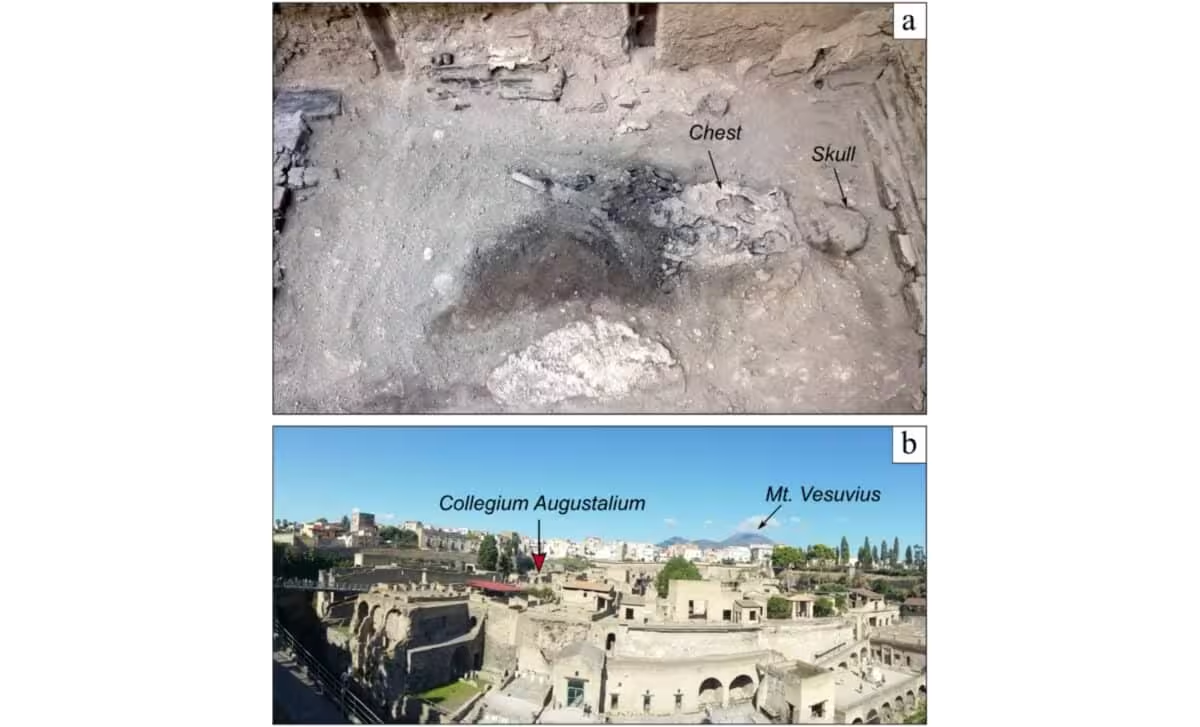
Volcanologist Guido Giordano of Roma Tre University and his collaborators argue that the man worked as a custodian in the Collegium Augustalium. Chemical analysis of the glassy particles recovered from the remains indicates that the tissue was heated to at least 510 °C (approximately 950 °F) before cooling rapidly enough to vitrify. Giordano emphasizes that the rapid cooling, rather than the heating itself, is the critical factor: “The transformation of any liquid into glass depends on swift cooling, not swift heating,” he explained, drawing a parallel to the formation of obsidian when lava meets water.
A Blistering Ash Surge Preceded the Pyroclastic Deluge
Traditional accounts attribute Herculaneum’s demise to dense pyroclastic flows that choked the city in hot gas and volcanic particles. Giordano’s study, published in Scientific Reports, finds that these flows peaked at around 465 °C—insufficient to liquefy brain matter and too gradual to produce glass. Instead, the researchers propose that a fleeting, superheated ash cloud swept across the settlement moments before the flows arrived. Such clouds travel through the air, dissipating within seconds, and their modeled temperature exceeds 510 °C, enough to cause immediate fatality.
The scenario aligns with a 2023 investigation that suggested Herculaneum experienced a two‑stage assault: an initial, extremely hot ash blast followed by the slower, cooler pyroclastic currents that ultimately sealed the city. Under this timeline, the lethal event was the brief, scorching surge that struck residents before they could react, while the subsequent flows merely encased the victims. The skull and vertebral column of the Herculaneum man appear to have shielded the brain enough to prevent complete decomposition, leaving behind the glassy fragments as a forensic snapshot of those final seconds.
Debate Continues Over Whether the Glass Is Actually Brain Tissue
Not all scholars accept the vitrified‑brain interpretation. Alexandra Morton‑Hayward, a forensic anthropologist at the University of Oxford, told CNN that the claim warrants caution because organic tissue is largely water, and turning water‑rich material into glass typically requires ultra‑rapid cooling to cryogenic temperatures—conditions that differ from the high‑heat environment described by Giordano’s team.
Several other experts echo this sentiment, urging independent replication of the analyses to bolster confidence in the findings. As it stands, the identification of the glass as brain tissue remains contested, albeit compelling.
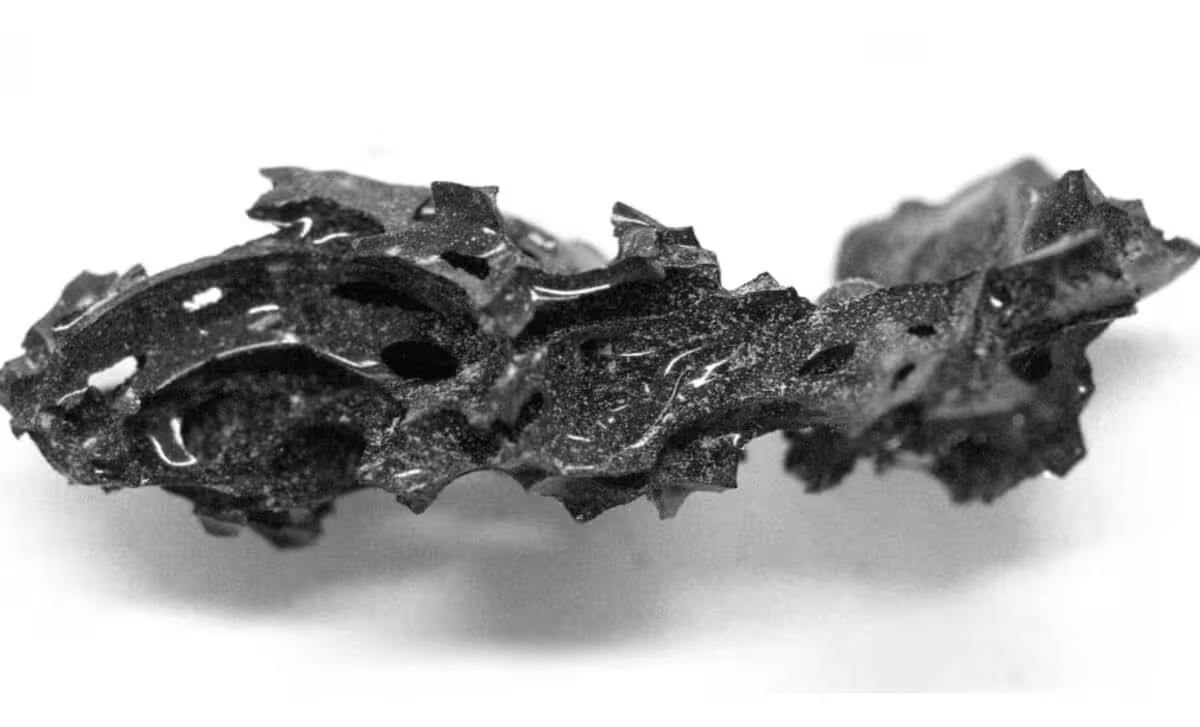
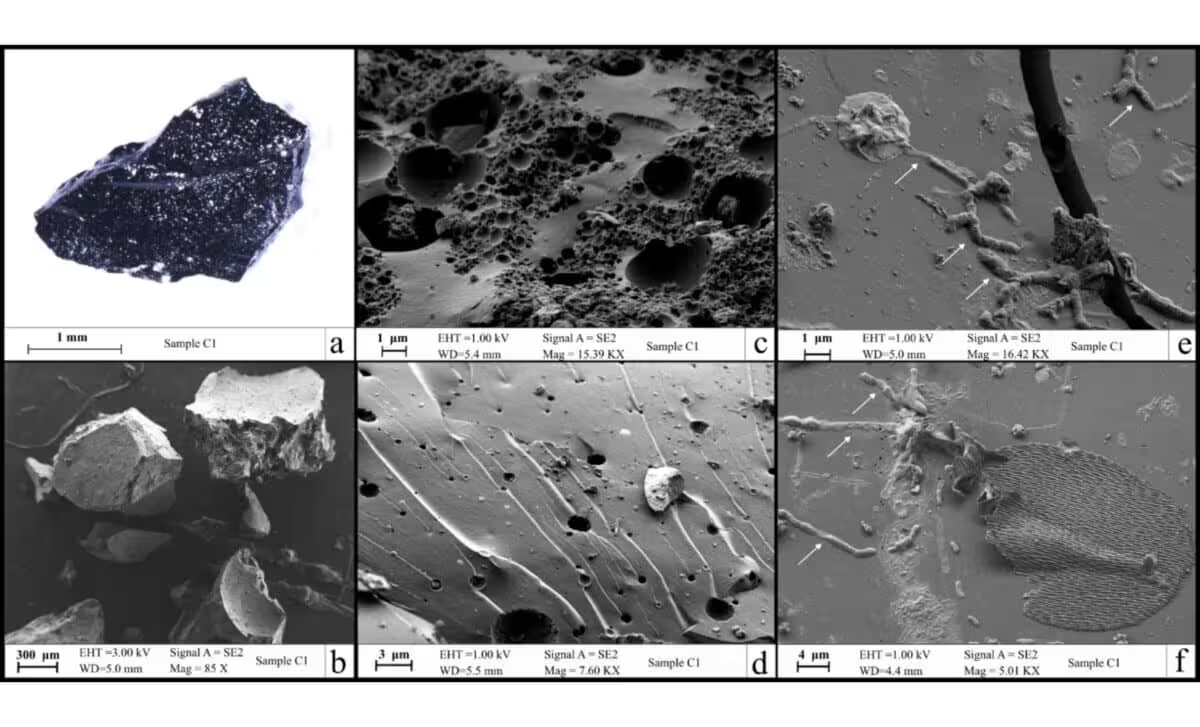
Giordano counters the criticism by citing earlier work that detected preserved neurons and protein signatures within the glass shards, arguing that these biomarkers unequivocally confirm a biological origin. “There was no doubt that the glass was organic in origin,” he affirmed, maintaining that the material represents the remnants of a human brain.
Whether universally accepted or still debated, the find offers an extraordinarily detailed glimpse of Vesuvius’s instantaneous lethality, capturing the precise moment when heat transformed flesh into glass and sealed the fate of those trapped within Herculaneum.
This article has been fact checked for accuracy, with information verified against reputable sources. Learn more about us and our editorial process.
Last reviewed on .
Article history
- Latest version
Reference(s)
- Giordano, Guido. “Unique formation of organic glass from a human brain in the Vesuvius eruption of 79 CE - Scientific Reports.”, vol. 15, no. 1, February 27, 2025, pp. 5955 Nature, doi: 10.1038/s41598-025-88894-5. <https://www.nature.com/articles/s41598-025-88894-5>.
- Hunt, Katie. “A young man’s brain turned to glass during the eruption of Mount Vesuvius. Scientists say they have figured out how.”, February 27, 2025 CNN <https://edition.cnn.com/2025/02/27/science/vesuvius-brain-glass-study/index.html>.
Cite this page:
- Posted by Vikram Desai