Webb Telescope Finds First Black Hole Star: Giant Black Hole Cloaked in Gas
James Webb may have spotted a new early‑universe object—a massive black hole cloaked in gas, appearing like a star.
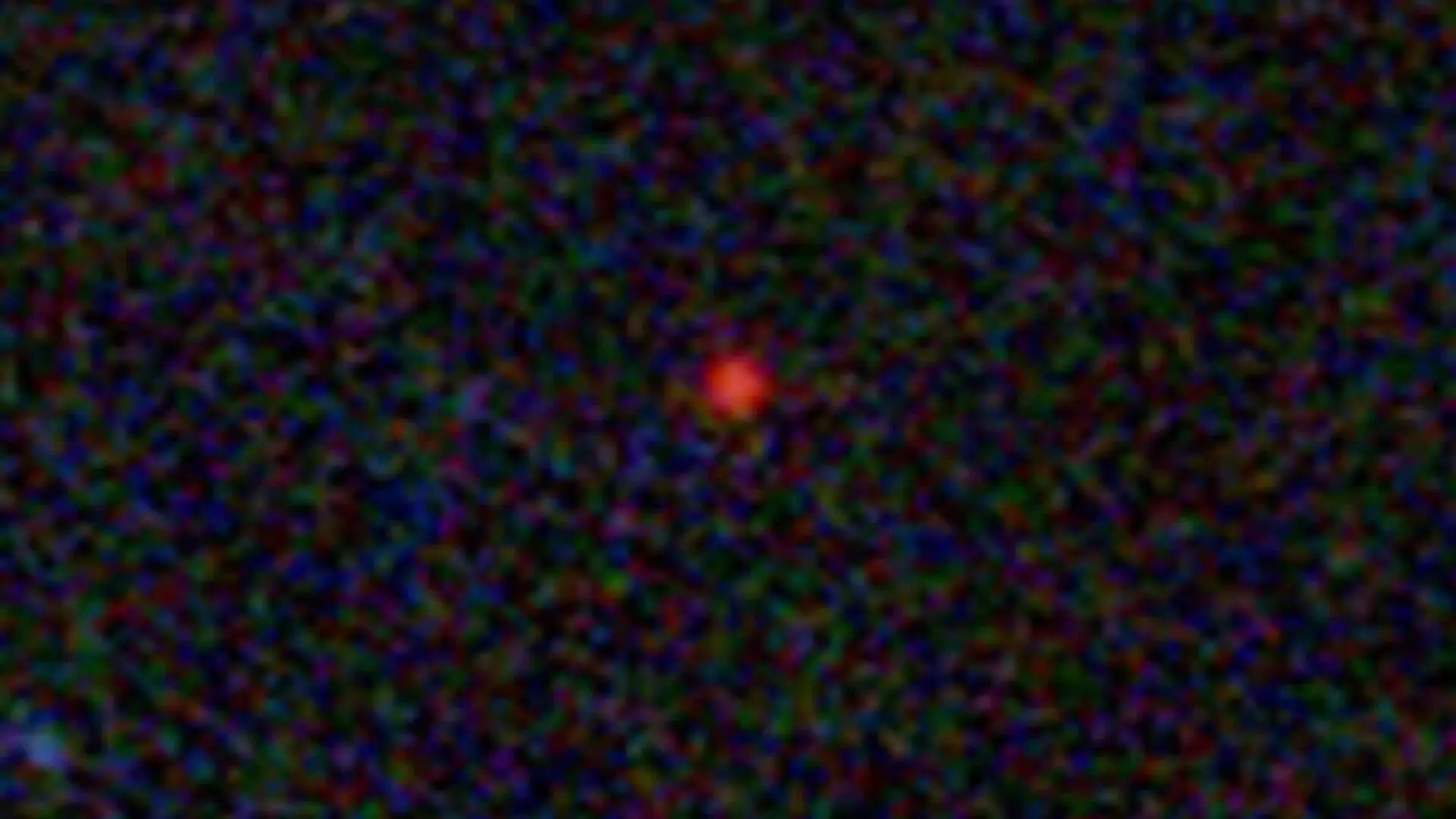
A team of astronomers from MIT has reported the detection of an extremely distant source that may represent the inaugural member of a hypothesized class called “black‑hole stars.” The object, observed by the James Webb Space Telescope, dates to roughly 660 million years after the Big Bang and exhibits characteristics that cannot be reconciled with ordinary stellar physics.
The find emerged from the Mirage (also known as Miracle) survey, which targets the universe’s earliest galaxies. Designated MoM‑BH*‑1, the source was uncovered in one of JWST’s deepest fields and has quickly become a focal point for studies of exotic early‑cosmic phenomena.
Red Glow That Defies Standard Star Models
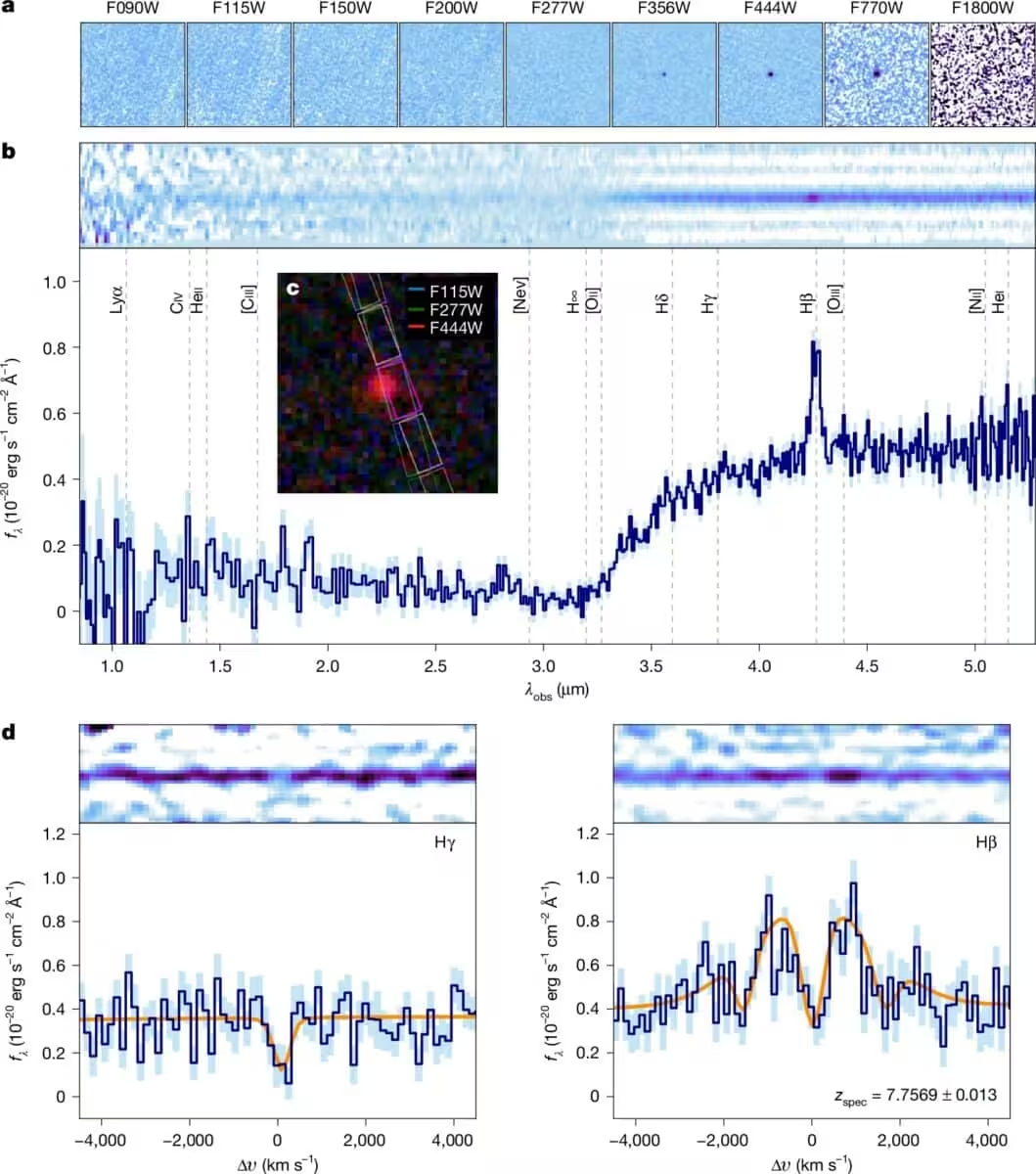
In JWST images the object appears as a bright, crimson point that is almost invisible in the telescope’s bluer filters but shines strongly at longer wavelengths, making it one of the reddest distant detections on record.
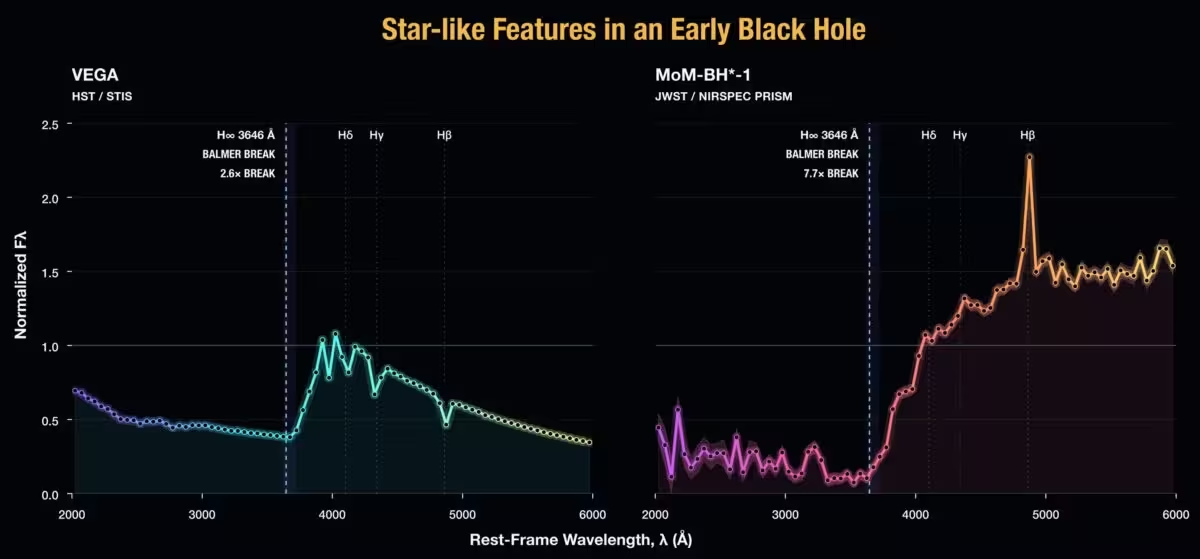
Spectroscopic measurements revealed an unprecedented Balmer break—the strongest ever measured at any redshift—signaling an abundance of dense hydrogen gas. The break’s intensity far exceeds that of the reddest known stellar populations, which typically show a break only a third as deep.
The spectrum also displays broad hydrogen emission lines combined with deep absorption features, indicating an environment saturated with gas. Moreover, the chemical signature is dominated by hydrogen and helium, with virtually no trace of heavier elements.
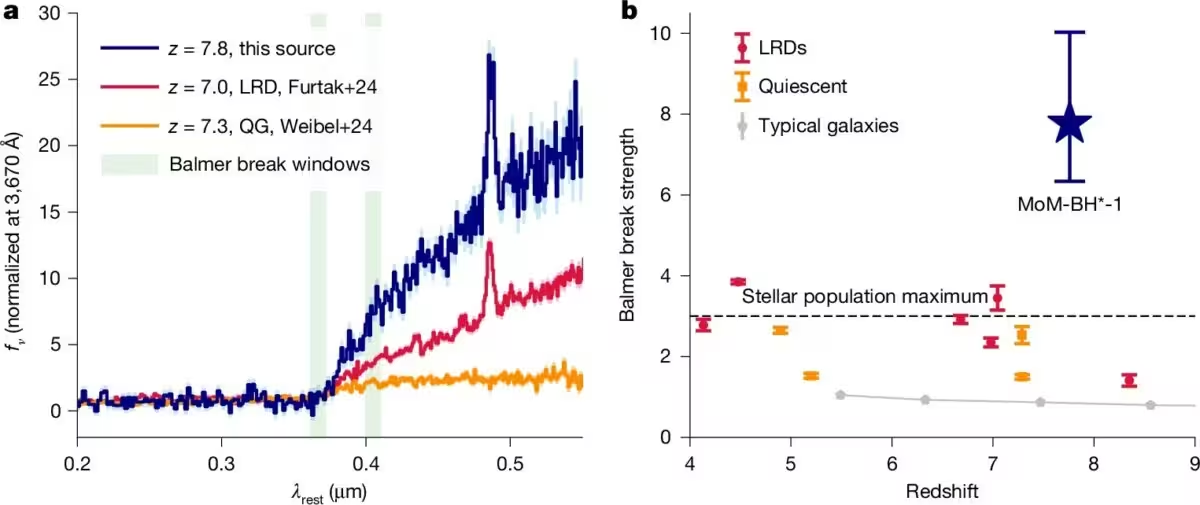
Initial speculation entertained the possibility of a novel stellar atmosphere, but the measured radiation output—referenced in a separate study of cosmic radiation—exceeds what nuclear fusion in a star of comparable size could sustain.
Enshrouded Black Hole Model
The researchers propose that MoM‑BH*‑1 harbors a massive black hole, estimated at 100 000 to 10 million solar masses, enveloped by a turbulent shell of hydrogen gas extending 10 to 100 astronomical units—roughly the dimensions of our Solar System. Light emitted from the black hole’s accretion disk would traverse this gas, which absorbs and scatters the radiation, imparting the observed deep red hue and distinctive spectral break.
The model does not invoke dust to explain the source’s appearance; instead, the dense hydrogen envelope alone can account for the observed properties. The Nature paper (link) also notes a possible 30 % increase in brightness over a two‑month interval, a variability pattern consistent with an actively accreting black hole.
Link to the “Little Red Dots” Phenomenon
MoM‑BH*‑1 may belong to a broader class of enigmatic objects dubbed “little red dots,” which have been identified in abundance at early epochs but vanish from later cosmic surveys. The black‑hole‑plus‑gas‑envelope scenario offers a plausible explanation for many of these red, star‑like sources detected by JWST.
“We think there is a central black hole that is 100,000 times as massive as the Sun,” Naidu said. “And around this black hole, there would be this very extended envelope of gas that looks like a star the size of the Solar System. It’s huge.”
This article has been fact checked for accuracy, with information verified against reputable sources. Learn more about us and our editorial process.
Last reviewed on .
Article history
- Latest version
Reference(s)
- Naidu, Rohan. “A gas-enshrouded and gas-reddened black hole at cosmic dawn - Nature.”, vol. 656, no. 8127, pp. 329-333. Nature, doi: 10.1038/s41586-026-10846-4. <https://www.nature.com/articles/s41586-026-10846-4>.
Cite this page:
- Posted by Aisha Ahmed