Webb Uncovers Hidden Black Hole Cloaked in Dense Gas, Explaining Mysterious Red Dots
Astronomers discover a black hole wrapped in dense hydrogen 660 Myr after the Big Bang, shedding light on JWST’s red dots and rapid black‑hole growth.
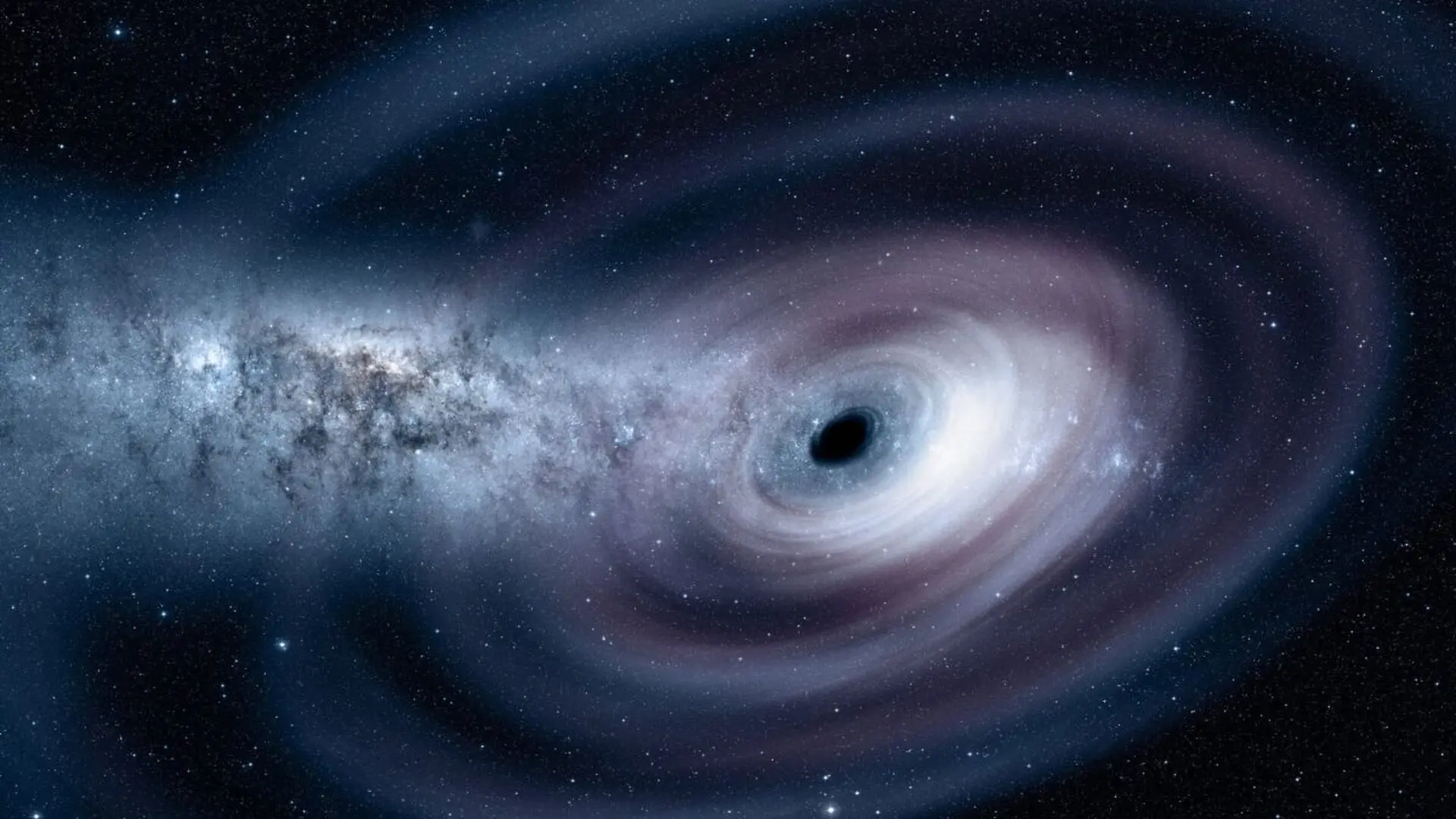
Observations with the James Webb Space Telescope have turned a faint point of light known as MoM‑BH*‑1 into a compelling case for a black hole enshrouded by ultra‑dense gas. Spectroscopic analysis published in Nature places the object at a redshift of 7.7569 and reveals an extreme Balmer‑break together with broad hydrogen emission lines and deep absorption features.
These spectral signatures are inconsistent with a purely stellar origin. Detailed modelling suggests that the majority of the detected radiation is processed by gas surrounding an actively accreting black hole, with the dense medium reshaping the emitted light before it reaches us.
The discovery is significant because Webb has identified hundreds of compact, red sources in the early universe, sparking debate over whether they represent tiny, dust‑rich galaxies, obscured active galactic nuclei, or hybrid systems containing stars, dust, and black‑hole activity. MoM‑BH*‑1 offers a concrete example where stars alone cannot account for the observed properties.
Unusual Balmer Break Signals Gas‑Rich Black Hole Environment
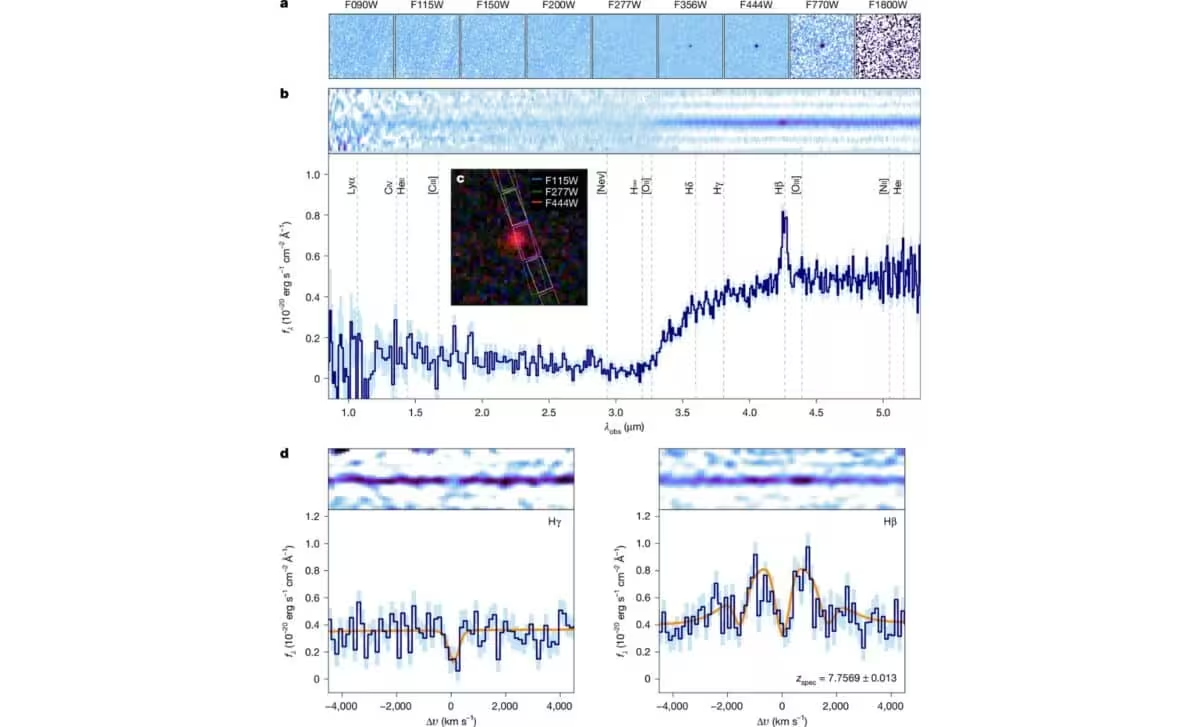
The object first attracted attention due to its strikingly red color in JWST images, appearing bright in the F356W and F444W infrared filters while vanishing at shorter wavelengths. Spectroscopy later linked this behavior to a pronounced Balmer discontinuity, where flux drops sharply across the Balmer limit.
Researchers led by Naidu measured a Balmer‑break amplitude of 7.7 (‑1.4, +2.3). By comparison, dust‑free stellar populations rarely exceed a value of about 3, and even a collection dominated by A‑type stars stays below 5, placing MoM‑BH*‑1 well outside typical stellar limits.
The spectrum also displays broad Hβ emission with a full‑width at half‑maximum of roughly 3,036 km s⁻¹, alongside strong Hβ and Hγ absorption. The Nature paper notes that reproducing such absorption requires hydrogen densities of at least 10⁹ cm⁻³.
Morphologically, the source remains unresolved in the relevant infrared bands, allowing the team to set a 99 percent upper limit of 117 parsecs on its effective radius. A tentative 30 percent brightening over 56 days and a faint narrow‑line oxygen emission further support an active black‑hole scenario.
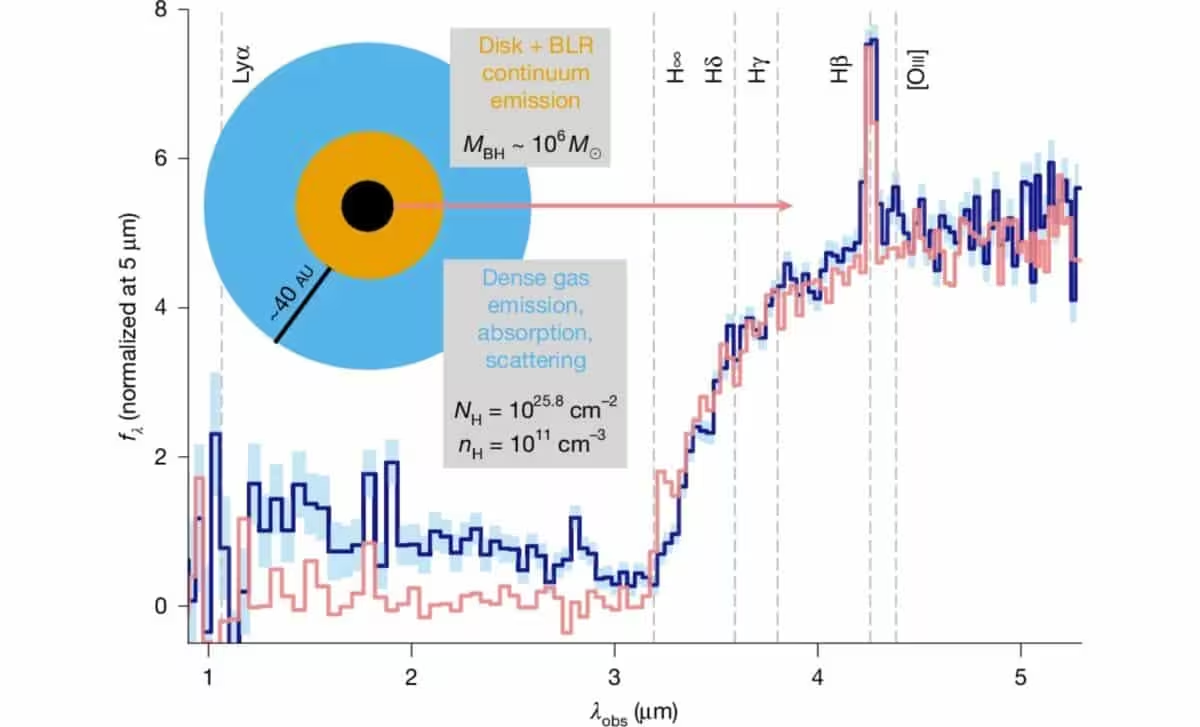
To explore this hypothesis, the authors generated close to one million synthetic spectra using the Cloudy simulation suite. Their preferred model embeds an active galactic nucleus within gas at a density of 10¹¹ cm⁻³, a column density of 10²⁵·⁸ cm⁻², and a turbulent velocity of 500 km s⁻¹.
Only modest dust attenuation (AV ≈ 0.15 mag) is required in this scenario. In such an environment, hydrogen atoms repeatedly absorb and re‑emit radiation, shaping the red‑dominated spectrum observed by JWST.
Implications for the Nature of JWST’s “Red Dots”
The team estimates the central black hole to have a mass between 10⁶ and 10⁷ M☉, surrounded by gas extending across roughly 10–100 astronomical units. This configuration blends characteristics of both traditional active black holes and dense stellar atmospheres, as discussed in related research on black‑hole growth mechanisms.
According to the Nature analysis, such a compact, high‑density envelope could accelerate black‑hole accretion by trapping radiation that would otherwise impede inflowing material. Similar models have been proposed to explain the existence of billion‑solar‑mass black holes observed at redshifts beyond 7.5.
MoM‑BH*‑1 appears to reside within a faint dwarf galaxy whose stellar mass is below 10⁸·⁵ M☉. A more massive neighbor, with a stellar mass near 10⁹·⁵ M☉, lies about 60 proper kiloparsecs away at a comparable redshift.
When the spectral contributions of the dwarf galaxy and the embedded black hole are combined, they reproduce the characteristic V‑shaped spectral energy distribution that defines many of JWST’s compact red sources. In this composite view, the galaxy dominates the ultraviolet output, while the black‑hole component governs the rest‑frame optical regime.
The authors caution that not all red dots will share this exact architecture; their gas‑envelope model is a simplified representation and several physical parameters remain uncertain. Nonetheless, MoM‑BH*‑1 serves as a directly observed instance where a dense, gas‑wrapped black hole generates spectral features that cannot be mimicked by ordinary stellar populations alone.
This article has been fact checked for accuracy, with information verified against reputable sources. Learn more about us and our editorial process.
Last reviewed on .
Article history
- Latest version
Reference(s)
- Naidu, Rohan. “A gas-enshrouded and gas-reddened black hole at cosmic dawn - Nature.”, vol. 656, no. 8127, pp. 329-333. Nature, doi: 10.1038/s41586-026-10846-4. <https://www.nature.com/articles/s41586-026-10846-4>.
Cite this page:
- Posted by Aisha Ahmed