Astronomers Capture The Most Detailed View Ever Of The Sombrero Galaxy
Gigantic halo and ancient galactic collision discovered around iconic Sombrero Galaxy via DECam
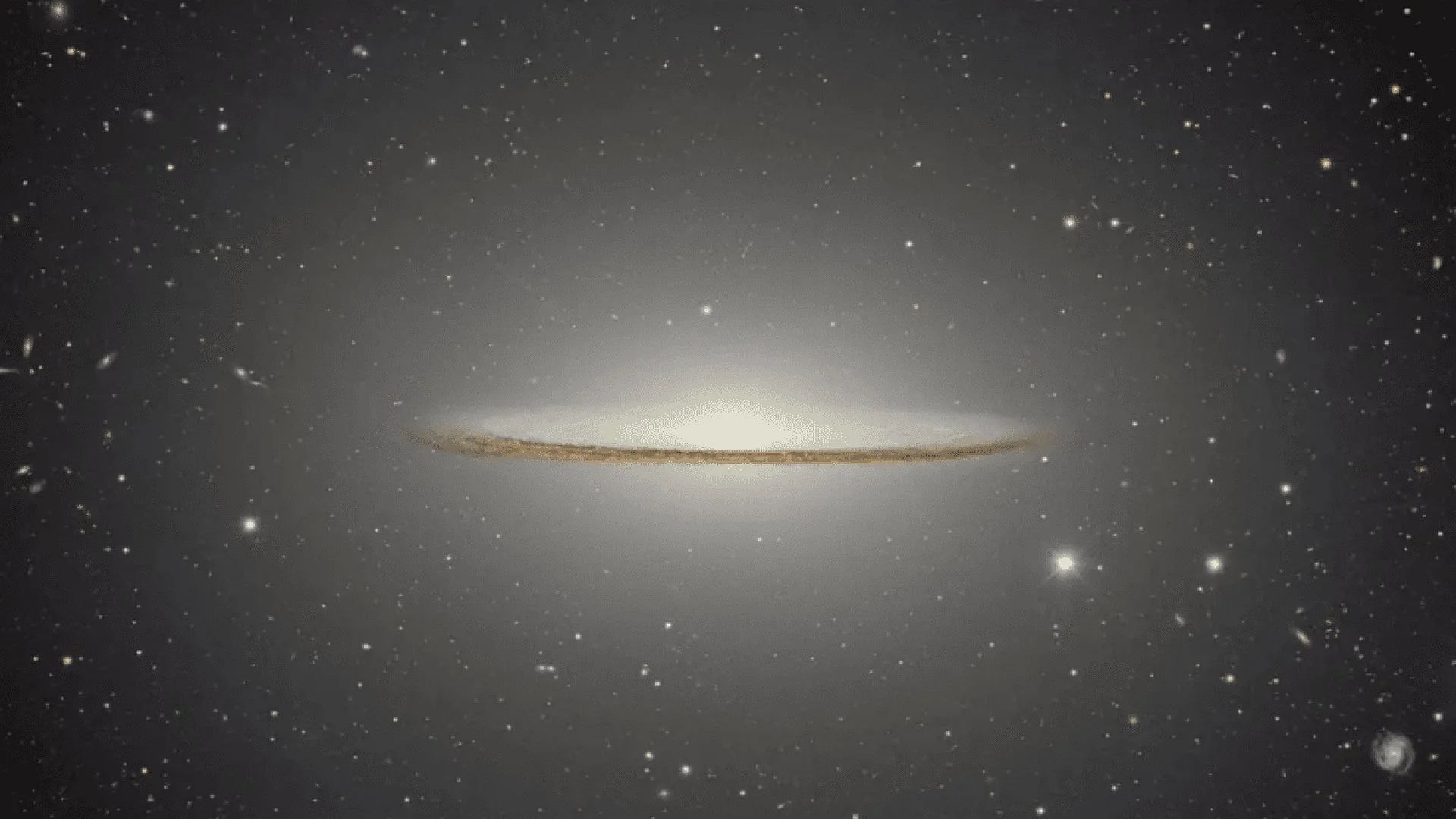
A fresh set of observations taken with the Dark Energy Camera (DECam) is reshaping astronomers’ perception of the iconic Sombrero Galaxy. The ultra‑deep exposure uncovers a sprawling luminous envelope and a faint stellar stream that had eluded earlier surveys, offering new insight into the galaxy’s long‑term development.
Extended Halo Redefines a Classic Target
Situated about 30 million light‑years away in the Virgo constellation, Messier 104—commonly called the Sombrero Galaxy—has long captivated both professionals and amateurs with its bright central bulge and a dark dust lane that resembles a wide‑brimmed hat. The object has been imaged repeatedly by facilities ranging from the Hubble Space Telescope to the James Webb Space Telescope, yet its outermost structure remained largely unknown.
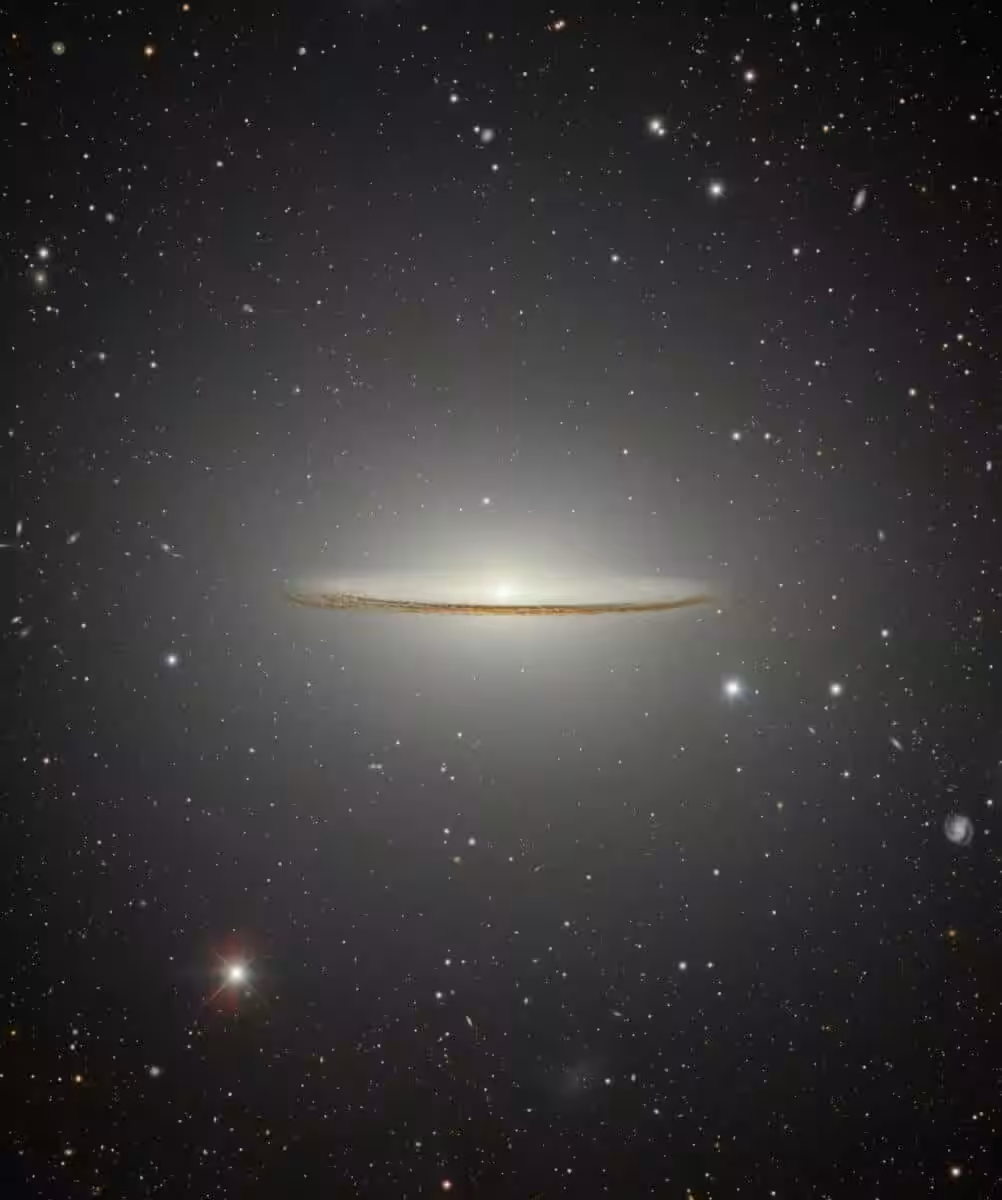
Credit:CTIO/NOIRLab/DOE/NSF/AURA
Image Processing: T.A. Rector (University of Alaska Anchorage/NSF NOIRLab), D. de Martin & M. Zamani (NSF NOIRLab)
The DECam instrument, attached to the 4‑meter Víctor M. Blanco telescope at Cerro Tololo, captured light from regions far beyond the bright disk that is typically visible. The camera’s exceptional sensitivity revealed a faint, extensive stellar population that surrounds the galaxy, expanding its apparent size by a factor of three and hinting at a more tumultuous past than previously inferred.
NOIRLab Highlights an Unseen Stellar Halo
The image was released by NOIRLab (National Optical‑Infrared Astronomy Research Laboratory), the U.S. agency that manages several major observatories. Researchers emphasized that the new view offers one of the clearest looks at the Sombrero’s outer regions ever achieved.
In the lab’s own words:
“This image also reveals the galaxy’s immense luminous halo, which appears to extend more than three times the width of the Sombrero itself. This may be the first time this halo has been captured with such detail and on such a scale. DECam’s incredible sensitivity has also made it possible to detect a vast stellar stream stretching from the southern side of the galaxy. Both the halo and the stellar stream are composed of stars torn from their galaxies of origin, suggesting a past galactic merger between the Sombrero and a smaller satellite galaxy.”
Signs of a Turbulent Merger History
Galaxies grow through a series of encounters, collisions, and accretion events that redistribute their stars. The newly identified halo and the faint stream likely record the remnants of a smaller companion that was ripped apart and absorbed by the Sombrero. Such tidal debris is notoriously difficult to detect, which makes DECam’s discovery especially valuable.
The observations also shed light on why the Sombrero hosts an unusually rich system of globular clusters. Estimates place the number of clusters at roughly 2,000, starkly contrasting with the Milky Way’s ~150. The influx of clusters during past mergers is a plausible explanation, and the newly mapped outer structures bolster that scenario.
This article has been fact checked for accuracy, with information verified against reputable sources. Learn more about us and our editorial process.
Last reviewed on .
Article history
- Latest version
Reference(s)
- “Close-up of the central parts of the Sombrero Galaxy.” www.noirlab.edu <https://noirlab.edu/public/images/noirlab2612b/>.
Cite this page:
- Posted by Aisha Ahmed