Scientists Reveal the Hidden System That Helped the Great Pyramid Survive More Than 4,500 Years of Earthquakes
Ancient earthquake resilience secrets may explain why the Great Pyramid still stands
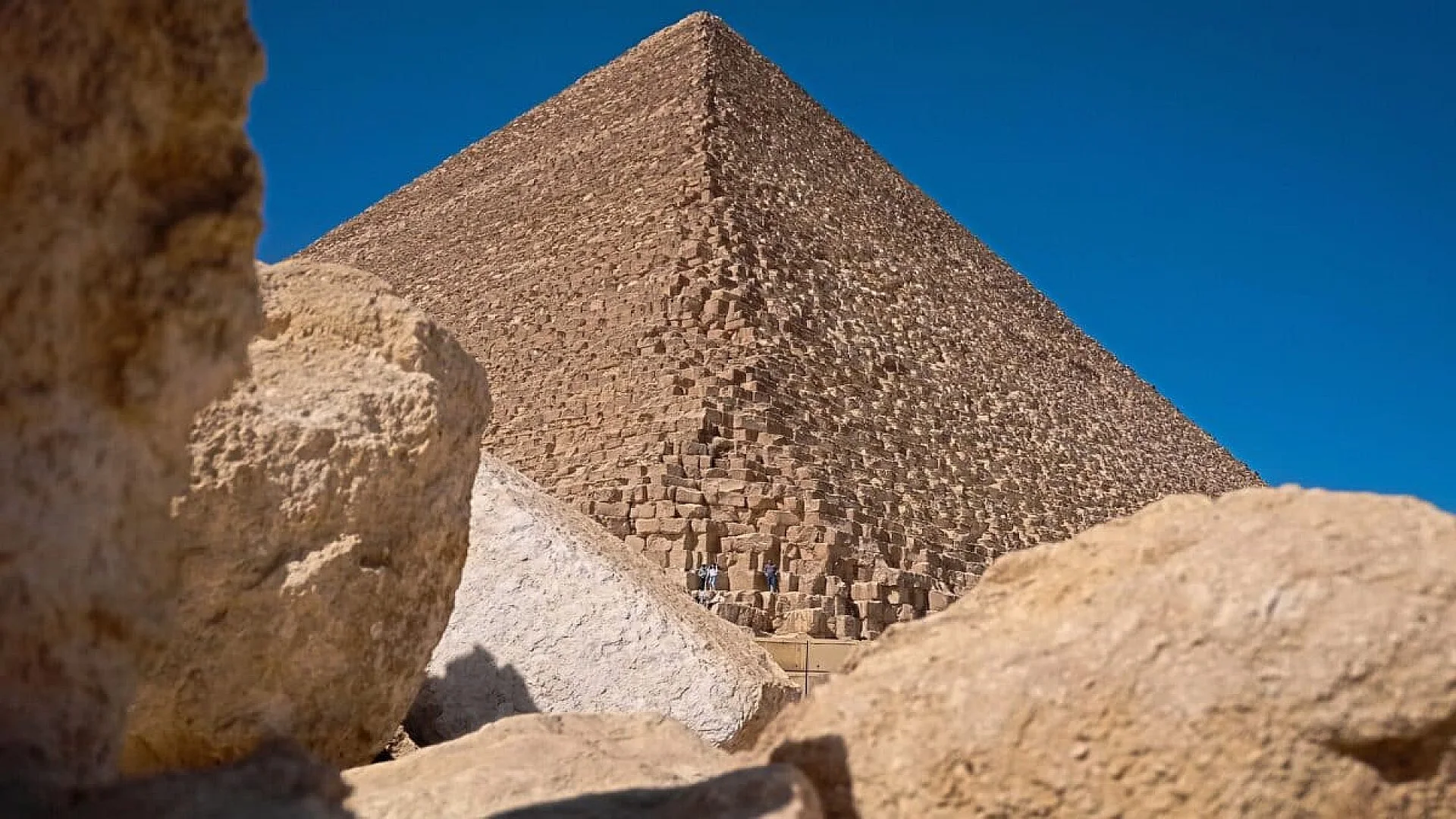
Despite millennia of sandstorms, tremors and weathering, the Great Pyramid of Khufu remains upright. Recent research suggests that part of its durability may stem from a subtle physical advantage: the monument’s own vibration pattern does not line up with the seismic motion of the ground beneath it.
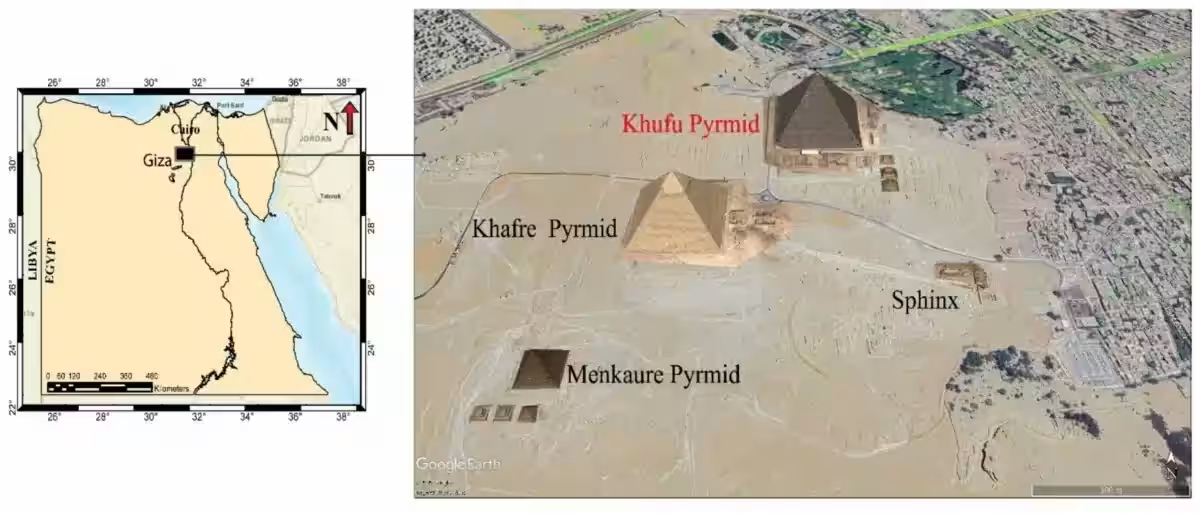
Constructed in Egypt’s Old Kingdom from limestone blocks that each tip the scales at roughly 2.5 tons, the pyramid has long fascinated scholars trying to decode ancient building techniques. Beyond the logistics of moving such massive stones, scientists are now probing how the structure has managed to stay intact through countless seismic episodes.
A team led by seismologist Asem Salema of the National Research Institute of Astronomy and Geophysics (NRIAG) set out to map the way vibrations travel through the edifice. Their investigation, detailed in Scientific Reports, aimed to determine whether the pyramid’s architecture offers any innate resistance to earthquake forces.
Why the Pyramid’s Frequency Differs From Its Foundation
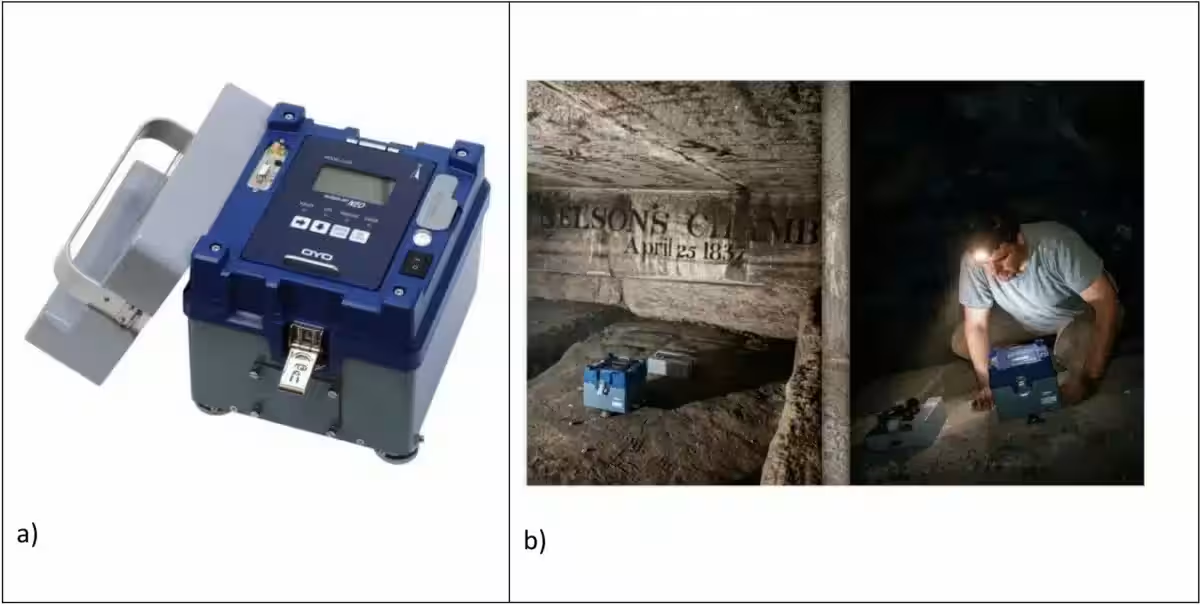
The study focused on the phenomenon of resonance, which occurs when a structure’s natural oscillation matches the frequency of external shaking, amplifying stress. To test this, the researchers deployed 37 miniature sensors inside the monument and around its perimeter, employing a method known as horizontal‑to‑vertical spectral ratio (HVSR) analysis to capture minute vibrational signals from both the stonework and the underlying earth.
Analysis revealed that the pyramid’s dominant vibrational frequency sits apart from that of the surrounding soil, meaning the structure is less likely to absorb large amounts of seismic energy through resonant amplification.
Historical Quakes Test the Theory
The researchers noted that the pyramid has already endured several notable seismic events, including the 1992 Cairo earthquake, which registered a magnitude of 5.9. Although the tremor rattled the area, the monument emerged with only minor surface wear, suggesting that the frequency mismatch may have helped mitigate damage.
The study does not claim that resonance avoidance alone explains the pyramid’s survival, but it does point to the frequency separation as a contributing factor in the structure’s resilience.
Resonance has been implicated in the collapse of many modern structures, yet the data suggest that Khufu’s pyramid behaves differently from the ground it rests on, providing a natural safeguard against such destructive amplification.
Architectural Details That May Dampen Seismic Energy
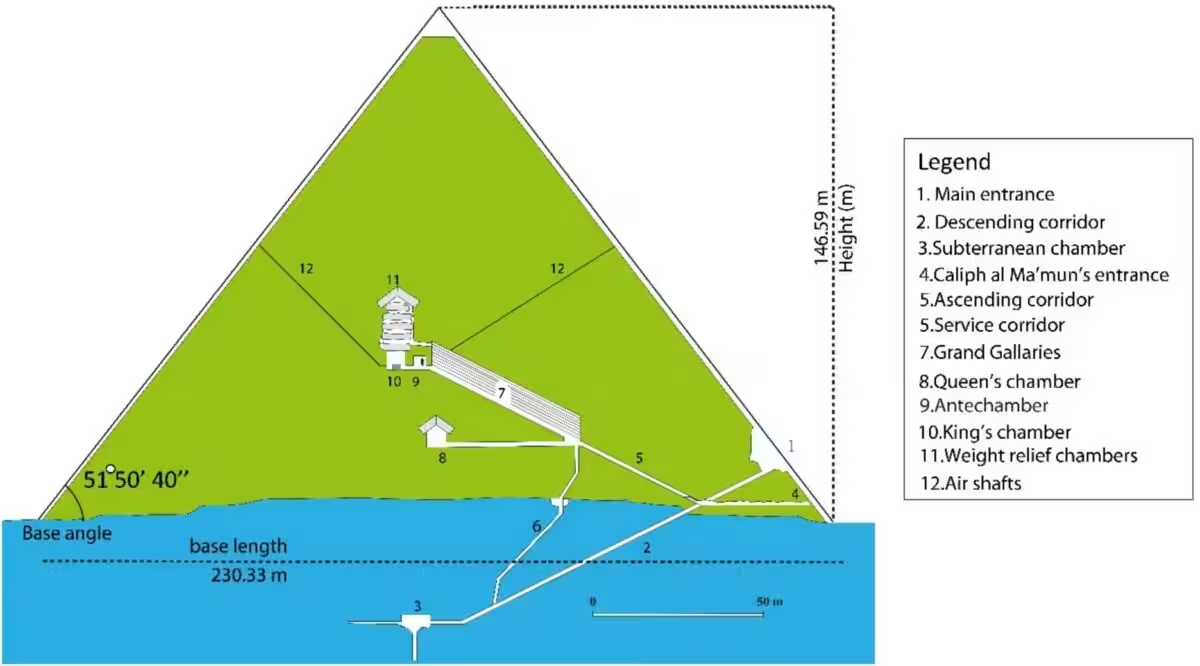
Beyond its overall shape, the pyramid concentrates most of its mass near the base and benefits from a highly symmetrical geometry, both of which help distribute loads evenly. The researchers also highlighted the network of chambers situated above the King’s Chamber, proposing that these voids could relieve stress generated by upward‑traveling seismic waves.
The limestone blocks themselves, together with the underlying bedrock, appear to act as a damping medium, gradually dissipating vibrational energy as it moves through the structure.
While the findings hint that ancient builders may have intuitively leveraged these features to enhance stability, Salema cautions that attributing deliberate seismic engineering to the architects remains speculative without direct historical evidence.
“These findings present compelling quantitative evidence that ancient Egyptian architects possessed profound geotechnical understanding, optimizing structure design and site characterization to assure millennial-scale stability against seismic hazards,” as the authors said.
Also ReadA Nearly Invisible Energy From Dark Matter Could Explain How the First Black Holes Formed So Fast
This article has been fact checked for accuracy, with information verified against reputable sources. Learn more about us and our editorial process.
Last reviewed on .
Article history
- Latest version
Cite this page:
- Posted by Aisha Ahmed