NOAA Forecasts Northern Lights Over 12 U.S. States Tonight
New geomagnetic storm forecast may light up parts of the US with the aurora this week, giving you a chance to see the northern lights.
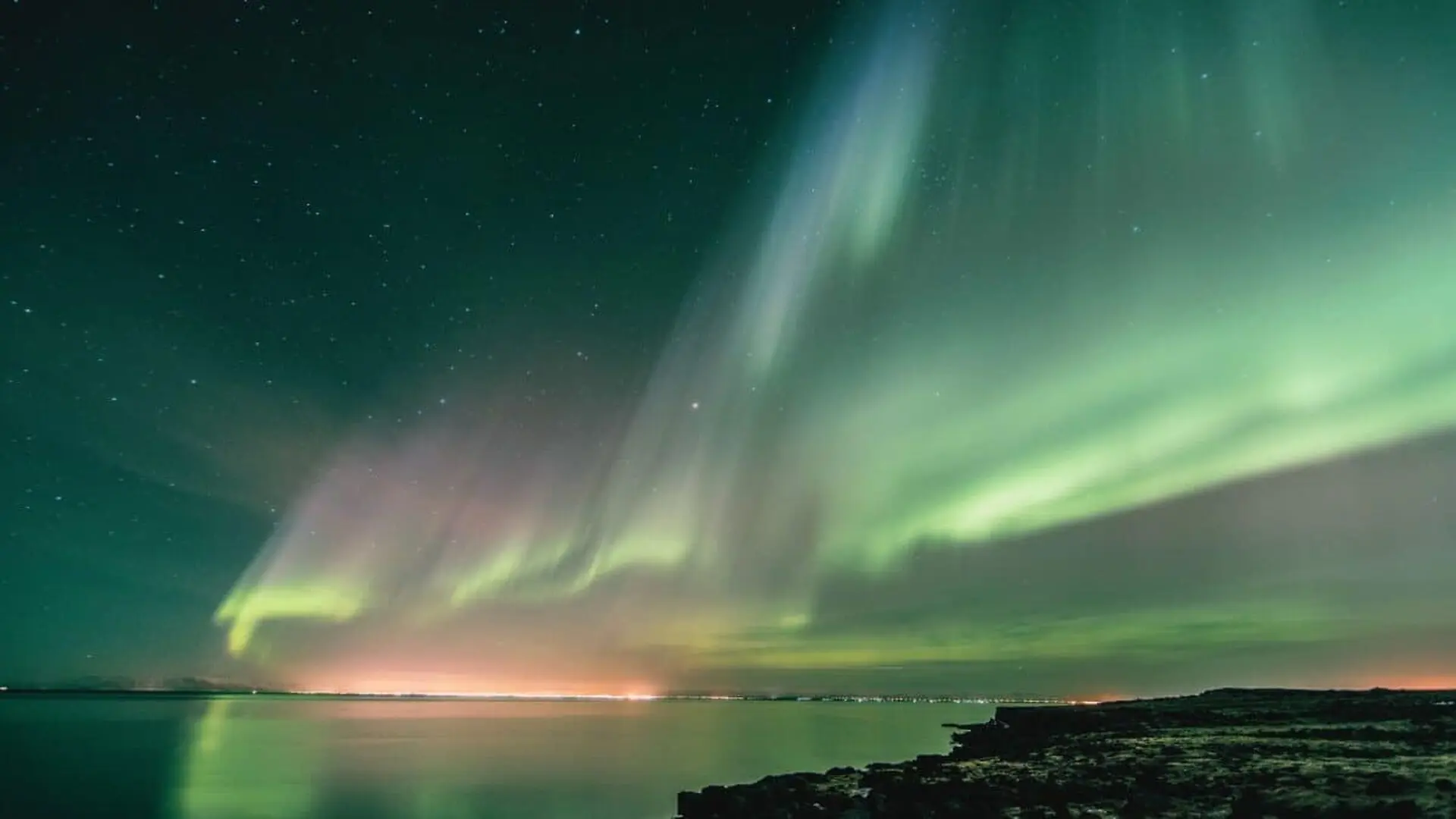
A modest geomagnetic disturbance generated by solar wind is set to bring the northern lights to portions of the United States, according to a forecast released by NOAA. Charged particles from the Sun will interact with Earth’s magnetic field, offering residents in a dozen states a chance to see the aurora far south of its usual latitude.
The disturbance originates from a fast‑flowing stream of solar wind emitted by a coronal hole on the Sun’s surface. As these particles journey toward Earth and merge with the planet’s magnetic environment, they can spark the luminous displays known as the aurora borealis.
This activity follows a recent uptick in auroral sightings across the country, coinciding with the Sun’s approach to the peak of its present 11‑year cycle. Near solar maximum, heightened solar output can launch more energetic bursts toward Earth, widening the area where the lights become visible.
NOAA’s Forecast Highlights Expanded Aurora Possibility
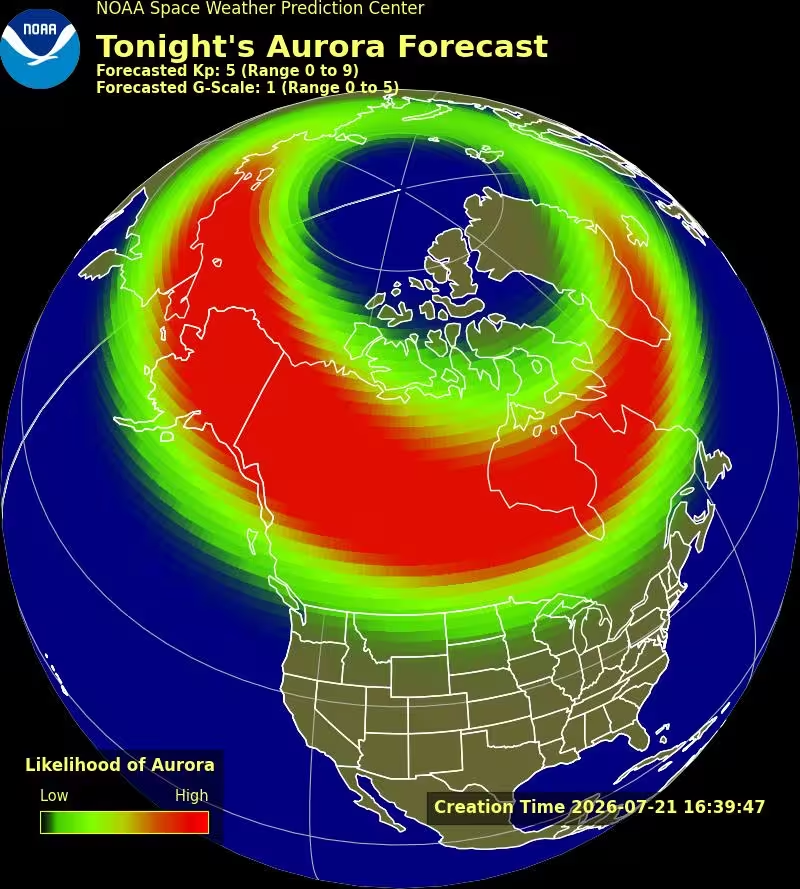
NOAA indicates that the incoming solar wind stream will likely generate a geomagnetic event capable of enhancing auroral visibility from Tuesday night into Wednesday morning. The agency projects the planetary Kp index to climb to roughly four on Tuesday and reach five on Wednesday, levels that can allow the auroral oval to extend toward lower‑latitude locations.
The Kp index quantifies global geomagnetic activity on a scale ranging from zero to nine; higher numbers reflect stronger disturbances and a greater likelihood that the aurora will be seen farther from the Arctic circle.
According to the forecast, the potential viewing corridor includes Alaska, Montana, North Dakota, Minnesota and Maine, as well as the northern portions of Washington, Idaho, Wisconsin, Michigan, New York, Vermont and New Hampshire.
Visibility will still depend on local factors such as cloud cover, light pollution and the precise intensity of the storm when it arrives. Even within the predicted zone, observers may need dark skies and patience to catch the shifting colors.
Regions Where the Lights May Appear
The newest outlook points to a broad swath of the northern United States as a likely zone for auroral sightings. Locations nearer the Canadian border typically enjoy the highest probabilities, given their proximity to the usual path of the auroral oval.
Alaska, a regular host of the phenomenon, could see another clear night of dancing greens. In states such as Minnesota, Michigan and Maine, residents stand a chance of catching the display if geomagnetic conditions intensify after midnight.
NOAA advises that the optimal viewing window generally falls between 10 p.m. and 2 a.m. local time. To improve odds, observers should seek out dark sites away from city lights, select open areas with an unobstructed northern horizon, and allow their eyes to adapt to the darkness.
Auroras often start as faint green glows before evolving into brighter waves and curtains. The most vivid shows occur when solar activity drives stronger interactions between charged particles and Earth’s magnetic field.
Solar Maximum’s Ongoing Impact on Aurora Frequency
The surge in auroral visibility across the United States aligns with the current phase of heightened solar activity known as solar maximum. Researchers anticipated that this segment of the Sun’s cycle would generate more frequent eruptions, and recent observations have surpassed several early forecasts.
Since 2024, a series of notable geomagnetic storms have pushed the northern lights into unusually large portions of the country, drawing the attention of skywatchers, photographers and scientists alike who study the interplay between solar events and Earth’s atmosphere.
While the Sun’s activity is expected to taper off later in the decade as the cycle moves past its peak, each new bout of solar wind offers another opportunity to witness one of the most striking connections between space weather and life on our planet.
For residents of the northern United States, the latest NOAA forecast presents a rare chance to observe a celestial light show generated millions of miles away by activity on the Sun’s surface.
This article has been fact checked for accuracy, with information verified against reputable sources. Learn more about us and our editorial process.
Last reviewed on .
Article history
- Latest version
Cite this page:
- Posted by Zara Tariq