Roman Guardian Spirit Face Uncovered Beneath 4th‑Century Floor At Vindolanda Fort
A sandstone carving found under a Roman barracks floor at Vindolanda reveals a rare Genius spirit, a protective deity for Roman homes, communities and places.
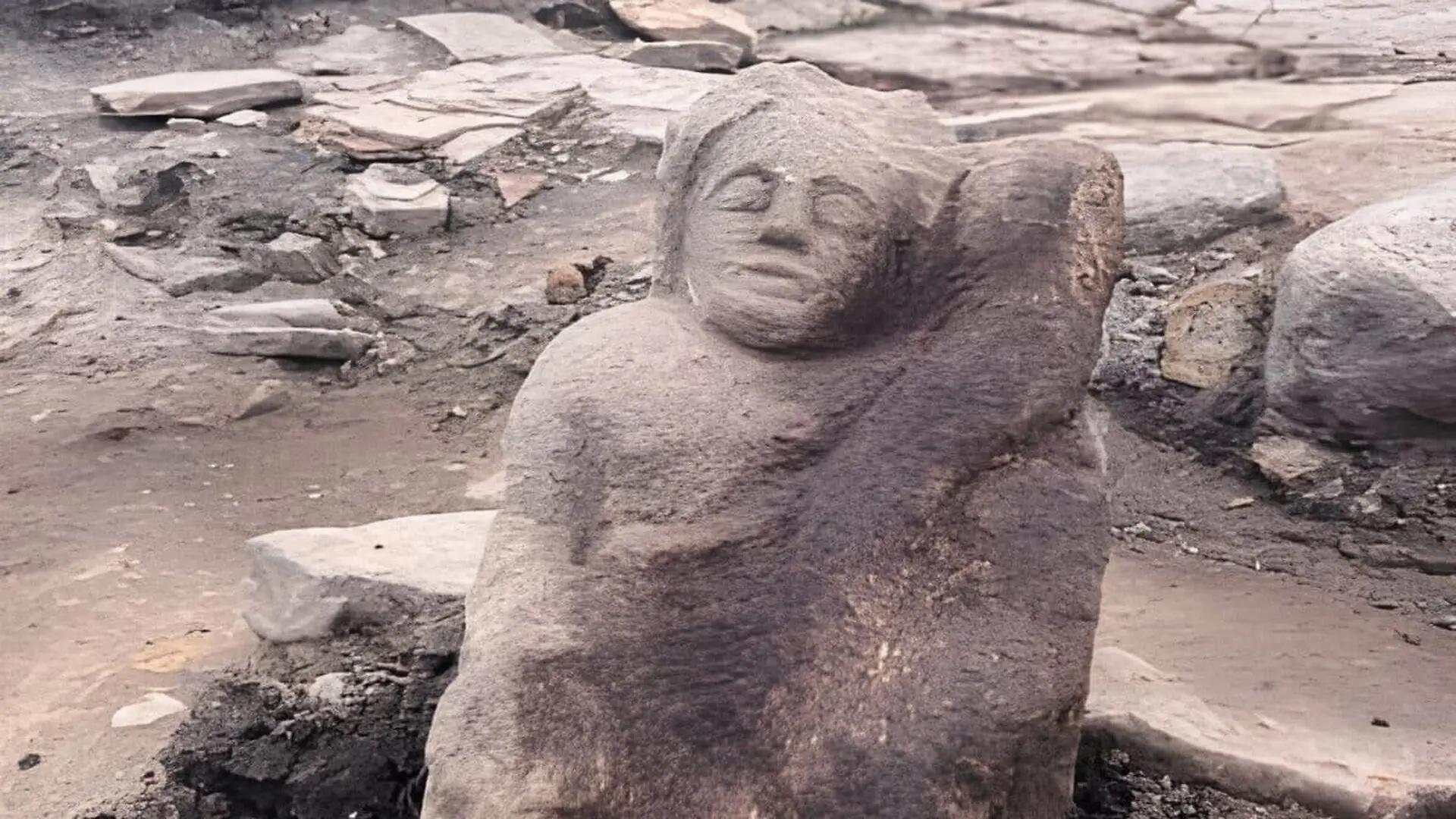
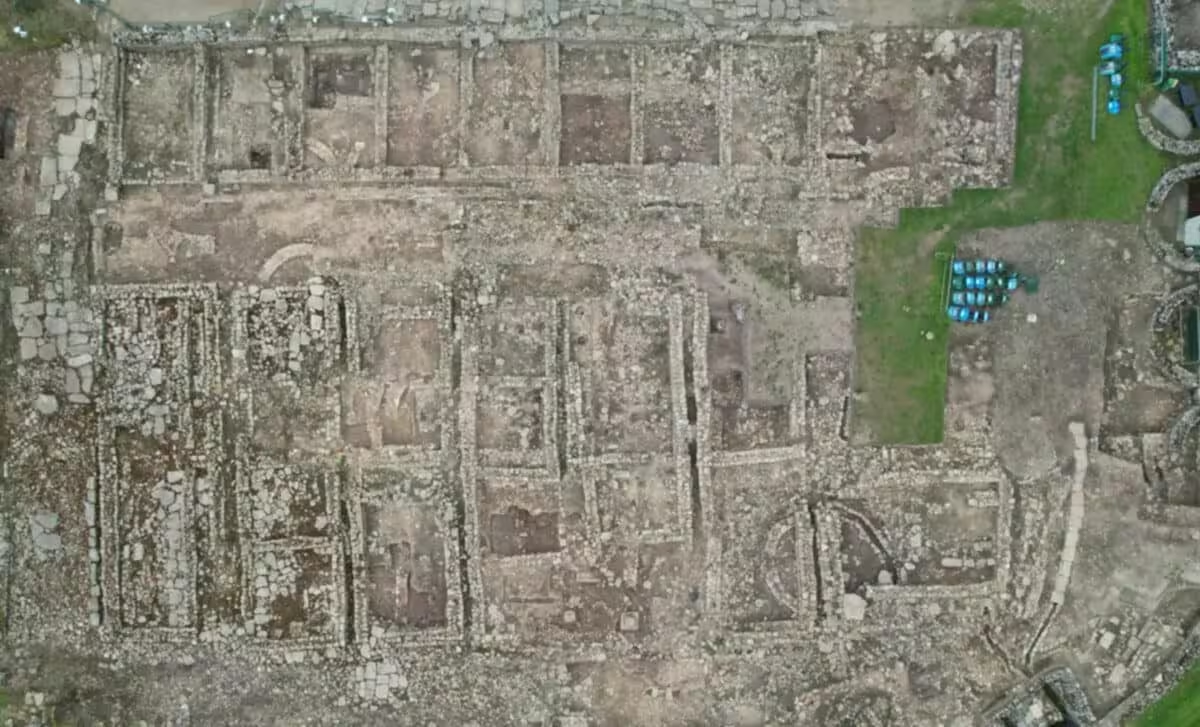
While excavating a Roman barracks at the Vindolanda fort in northern England, archaeologist Andrew Birley brushed aside a rounded flagstone and uncovered a carved sandstone face that had lain hidden for more than sixteen centuries. The unexpected discovery, made on 16 June, offers a rare glimpse into the private religious practices that accompanied daily life on the empire’s frontier.
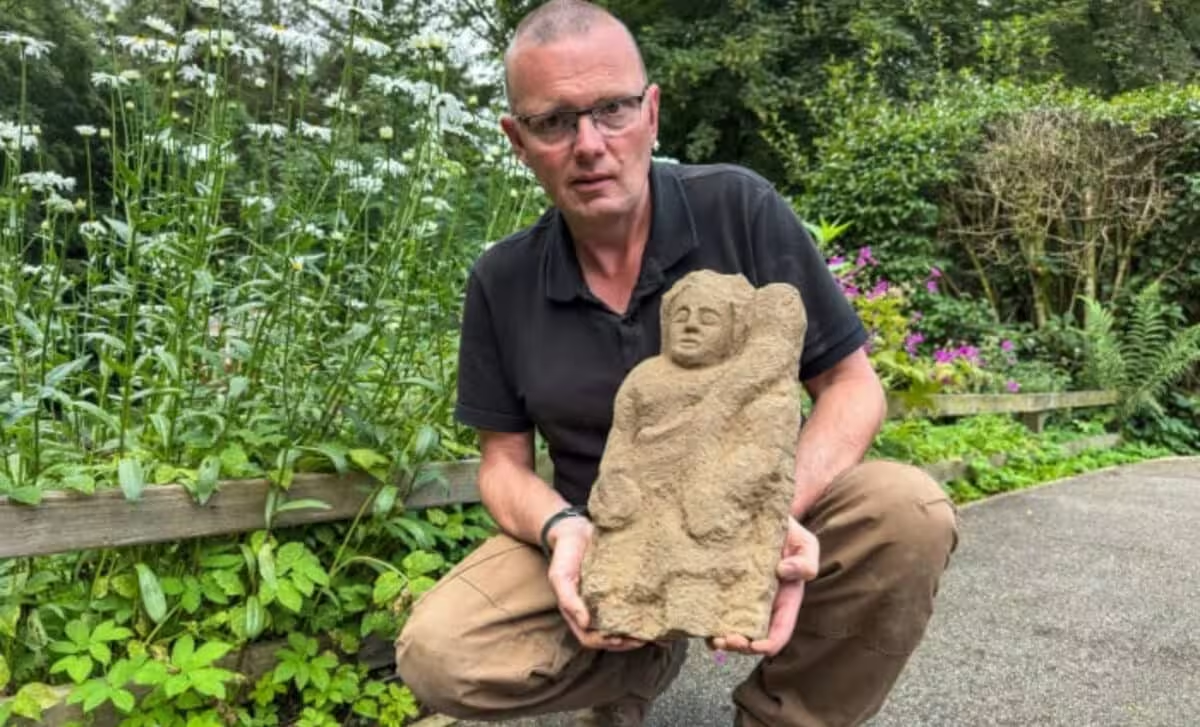
The object measures roughly 44 centimetres in height and eight centimetres thick, depicting a figure clutching a cornucopia—an emblem of plenty—and a shallow ritual dish known as a patera used for libations. Specialists recognised these attributes as hallmarks of a Roman Genius, a protective spirit tied to a specific household or locale.
Birley forwarded photographs of the relief to three leading scholars of Roman Britain—Lindsay Allason‑Jones, Fraser Hunter and Alex Rome‑Griffin. According to the Vindolanda Trust, each expert independently confirmed within hours that the carving represented a Genius.
Archaeologists argue that the relief originally formed part of a domestic shrine—a modest altar where occupants might have offered prayers for safety or prosperity—rather than belonging to any formal military or civic structure.
From Sacred Icon to Building Block
At an undetermined moment, the shrine fell out of use and the stone was repurposed as ordinary construction material. Workers laid the slab face‑down as part of a fourth‑century barracks floor, a decision that unintentionally shielded the carving from the elements.
Buried beneath a floor, the relief escaped centuries of wind, rain and foot traffic that typically erode exposed sandstone. This accidental preservation explains why the figure remains so well‑defined after more than a millennium.
The carving’s style suggests a local origin, possibly produced on‑site at Vindolanda or within the regional stone‑working tradition associated with the nearby Roman fort at Lanchester in County Durham, which exhibits comparable artistic features.
Vindolanda’s Treasure Trove of Everyday Life
The fort, situated just south of Hadrian’s Wall and active from the late first to the early fifth century, is renowned for its water‑logged soils that preserve delicate artifacts. To date, excavations have yielded more than 1,700 wooden tablets—military orders, shopping lists, personal letters—including a birthday invitation exchanged between officers’ spouses.
The newly uncovered Genius adds a visual dimension to this documentary record, illustrating the hopes and anxieties that shaped the daily rituals of Vindolanda’s inhabitants. It follows a 2025 find of a sandstone relief of the winged goddess Victory, which highlighted the public, triumphal aspect of Roman faith. In contrast, the Genius embodies a more intimate, household‑focused devotion.
For Andrew Birley, the discovery carries a personal resonance. His grandfather, Eric Birley, initiated work at Vindolanda in the 1930s, and his father, Robin Birley, led the team that uncovered the famous writing tablets in 1973. Birley described the moment as feeling as though the site itself were silently affirming, “We approve of what you are doing.”
Conservators are now cleaning the relief, and plans are underway to exhibit the sculpture at the Vindolanda museum, where it will join the fort’s growing collection of intimate Roman artifacts.
This article has been fact checked for accuracy, with information verified against reputable sources. Learn more about us and our editorial process.
Last reviewed on .
Article history
- Latest version
Cite this page:
- Posted by Zara Tariq