Astronomers Finally Solve the Mystery of the Treble Clef Structure Hidden Behind the Milky Way
NASA has revealed the mysterious origins of a hidden structure located behind the Milky Way, shedding new light on its turbulent cosmic history.
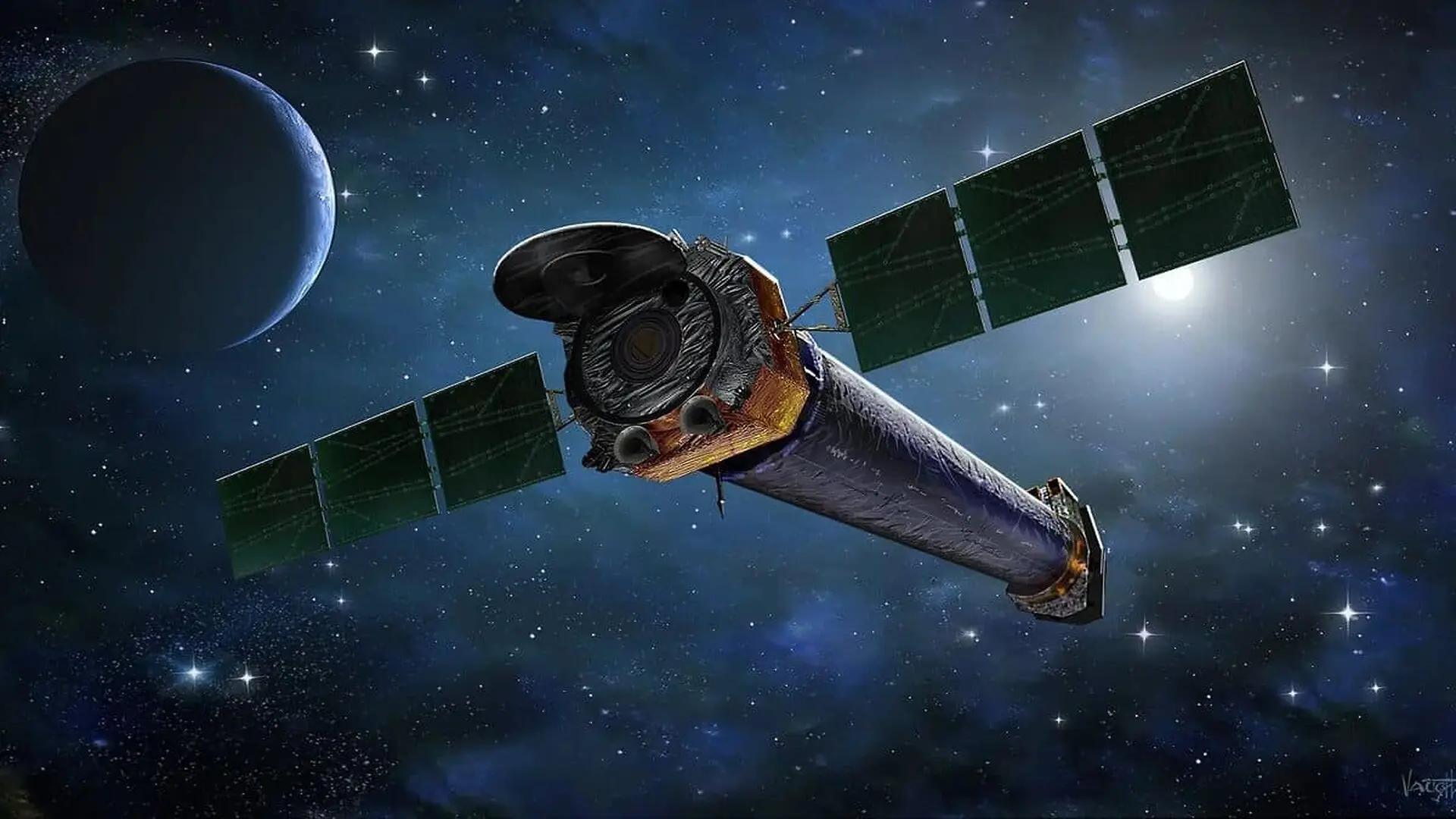
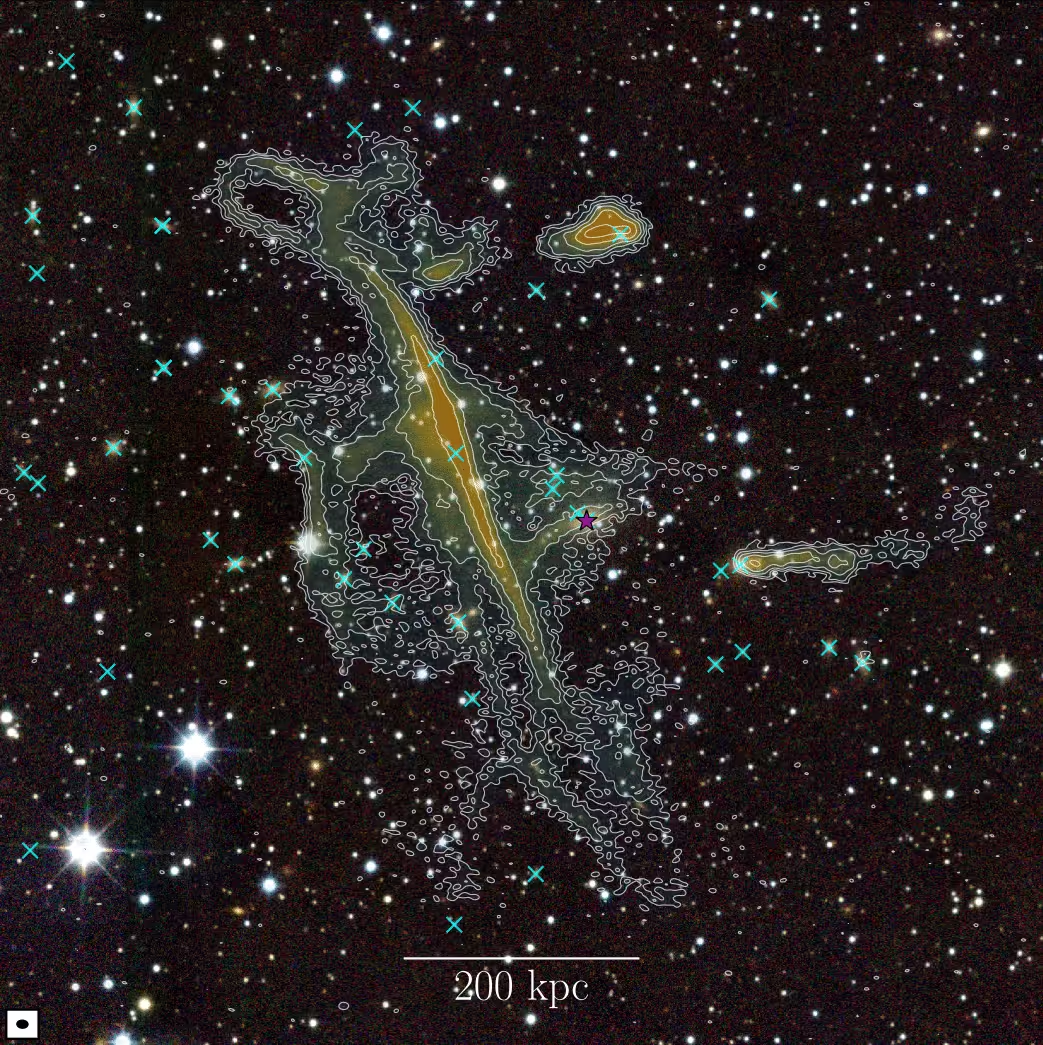
Astronomers using NASA’s Chandra X-ray Observatory have finally decoded the origin of a mysterious, musical-looking radio structure deep in the cosmos. Known as the “Treble Clef” due to its striking resemblance to the iconic musical symbol, this cosmic anomaly is the result of a violent, multi-stage history involving a supermassive black hole and a cataclysmic collision between two massive galaxy clusters.
The formation has long eluded researchers, largely because of its location hidden behind the dense shroud of the Milky Way’s own stars, gas, and dust. A new study, led by Andrea Botteon of Italy’s National Institute for Astrophysics (INAF) and published on October 14, 2026, in Astronomy & Astrophysics, cuts through this observational barrier to reveal a turbulent past.
Piercing the Veil of the Milky Way
To view the Treble Clef, researchers could not rely on traditional optical telescopes. Instead, they utilized the penetrating power of X-ray data from the Chandra and eROSITA observatories. These observations revealed vast reservoirs of superheated gas, confirming that the radio structure is not an isolated phenomenon but is firmly embedded within a galaxy cluster. Subsequent analysis indicated that this system is actually the site of two galaxy clusters in the process of merging.
By layering radio data from the Low Frequency Array (LOFAR) and infrared insights from the United Kingdom Infrared Telescope (UKIRT), the team created a comprehensive map. In this composite, the searing hot gas appears in blue, the distinctive Treble Clef radio emission glows in red, and the infrared features emerge in white.
A Two-Act Cosmic Drama
The study suggests the Treble Clef formed in two distinct acts. First, a supermassive black hole near the cluster’s core erupted, ejecting high-energy charged particles and magnetic fields into space at nearly the speed of light. Over time, these emissions naturally began to fade.
The second act occurred when the two galaxy clusters collided. This massive kinetic event acted as a cosmic re-energizer, compressing the older particle clouds and causing the radio emission to brighten significantly. Scientists liken this process to the creation of sonic booms, as shock waves rippling through the cluster medium forced the dormant particles to flare up once again.
Unmasking the Collision
To confirm this violent history, the research team employed a clever image-processing technique on the Chandra data. By subtracting the cluster’s general, symmetrical gas distribution from the observations, they revealed subtle irregularities in the X-ray light that had been previously masked. This highlighted enhanced emission on the cluster’s flanks, consistent with a collision trajectory moving horizontally across the field of view.
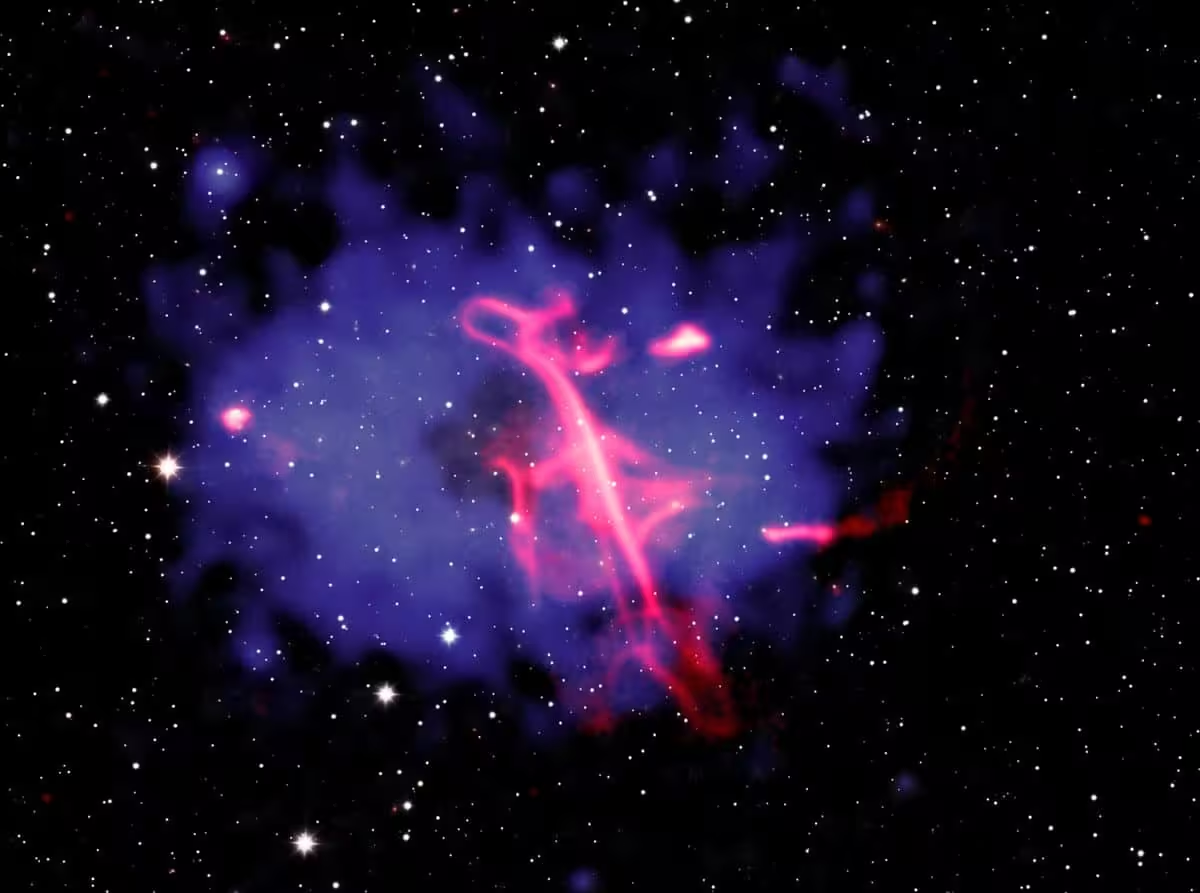
Researchers estimate that this dramatic encounter took place several hundred million years ago. Today, the two clusters are drifting apart, leaving behind the lingering, ghostly radio signature of the Treble Clef as a testament to the immense forces that shape the largest structures in our universe.
This article has been fact checked for accuracy, with information verified against reputable sources. Learn more about us and our editorial process.
Last reviewed on .
Article history
- Latest version
Reference(s)
- “eROSITA.” <https://www.mpe.mpg.de/eROSITA>.
- “An Introduction to the Treble Clef.” ROLI <https://roli.com/blog/introduction-to-the-treble-clef?srsltid=AU7gw4V0iSLSliJWoj1hUgCpQvc_n4vYKlYkPMW49LgqmdDTk0NbCoF9>.
- Botteon, A.. “The Treble Clef radio phoenix and its old nonthermal filaments.” arXiv.org <https://arxiv.org/abs/2607.06659>.
Cite this page:
- Posted by Farah Siddiqui