Scientists Find Massive Hidden Volcano on Mars That Could Conceal Ancient Glacier Ice
Astronomers have discovered a massive, long-hidden volcano on Mars that could potentially conceal ancient glacial ice beneath its surface.
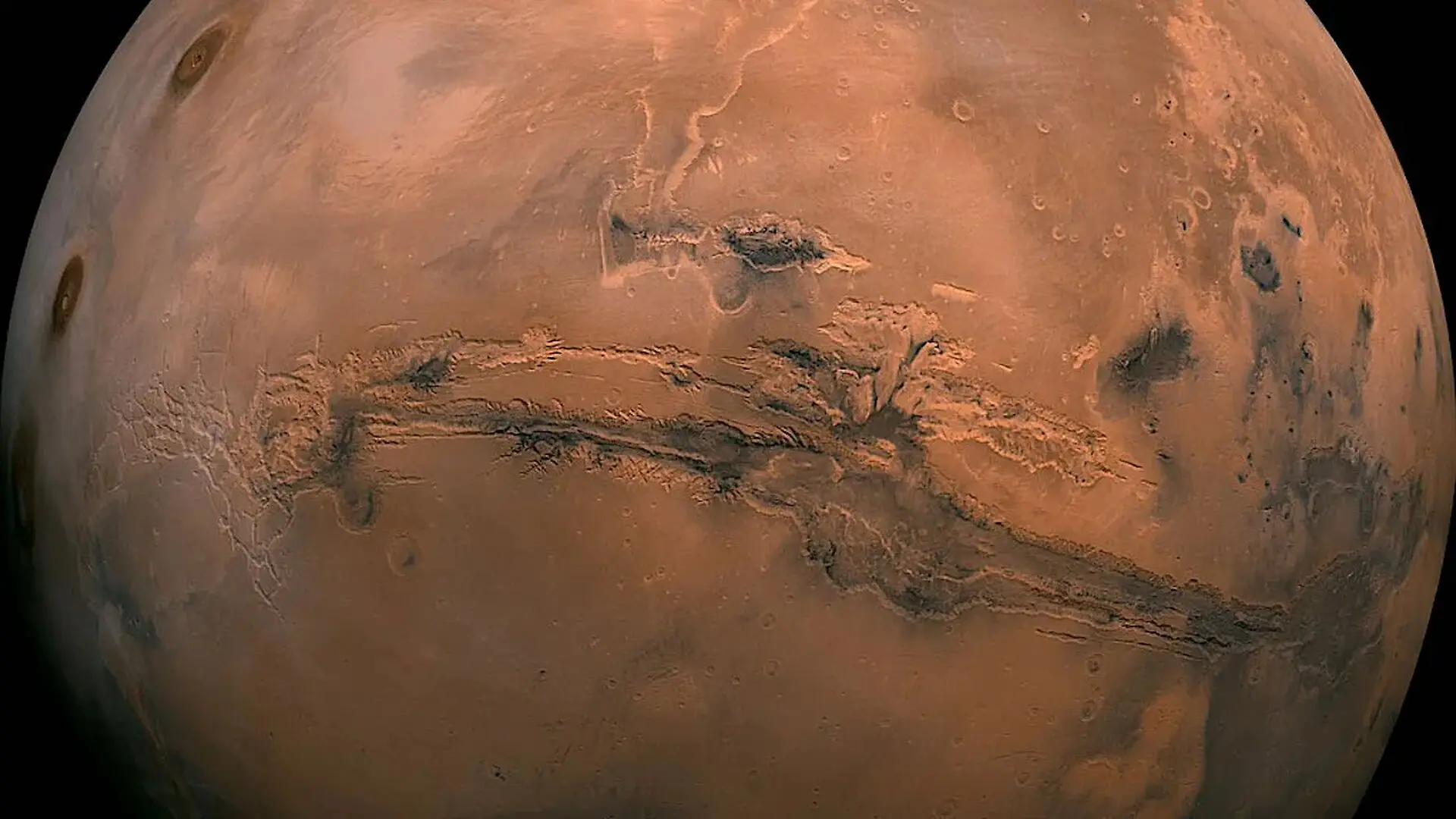
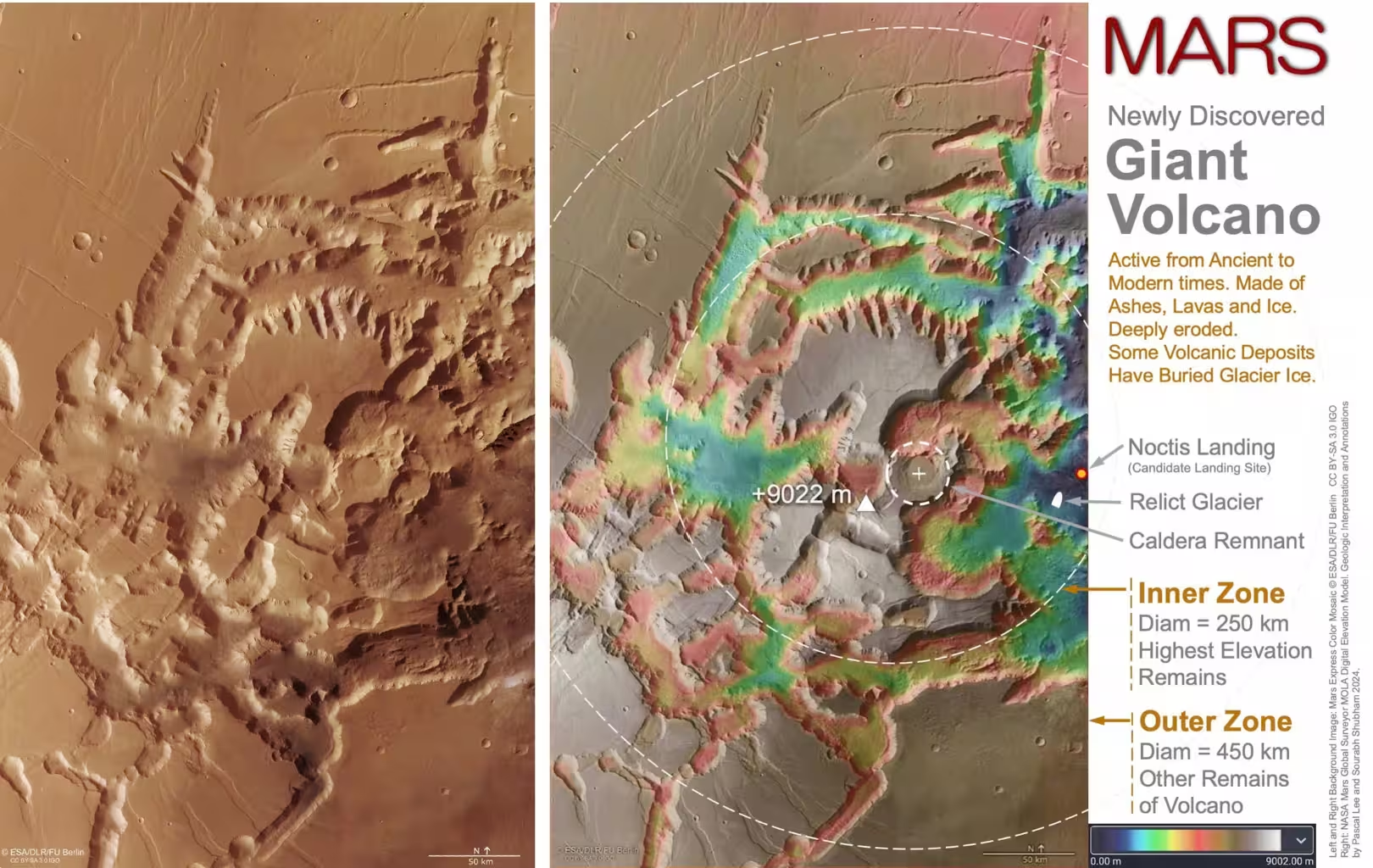
A labyrinthine landscape of fractured plateaus and deep canyons near the Martian equator may hide a geological titan. Scientists have identified evidence suggesting that a sprawling, heavily eroded region in eastern Noctis Labyrinthus is actually the remains of an ancient, massive volcano. Beyond its volcanic past, the site holds tantalizing clues that pockets of glacier ice might remain entombed beneath layers of volcanic debris, making it a primary candidate for future exploration of the Red Planet’s environmental history.
The interpretation was detailed in a Lunar and Planetary Science Conference abstract by Pascal Lee of the SETI Institute and the Mars Institute, alongside Sourabh Shubham of the University of Maryland. Dubbed Noctis Mons, this potential volcanic complex has been captured in orbital imagery for decades, yet its true identity as a collapsed edifice remained hidden in plain sight.
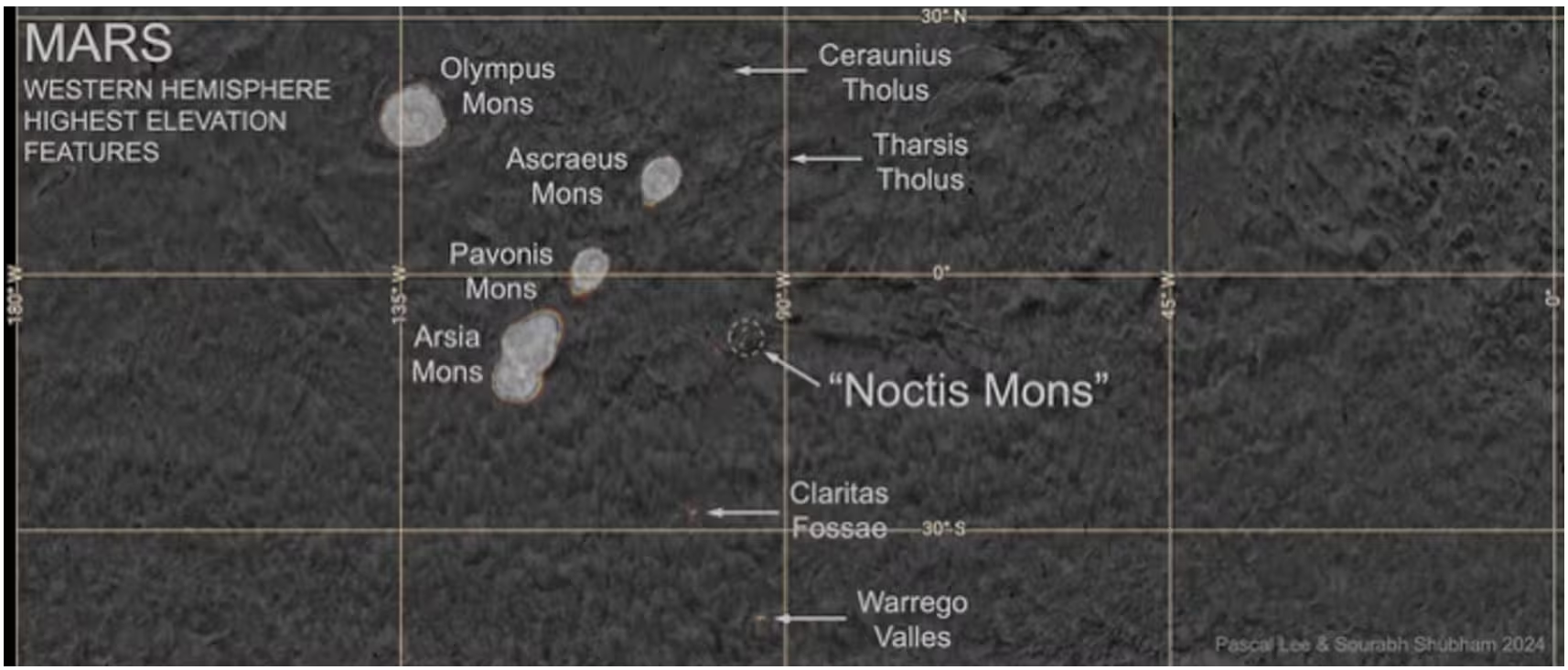
Uncovering a Shield Volcano in the Martian Crust
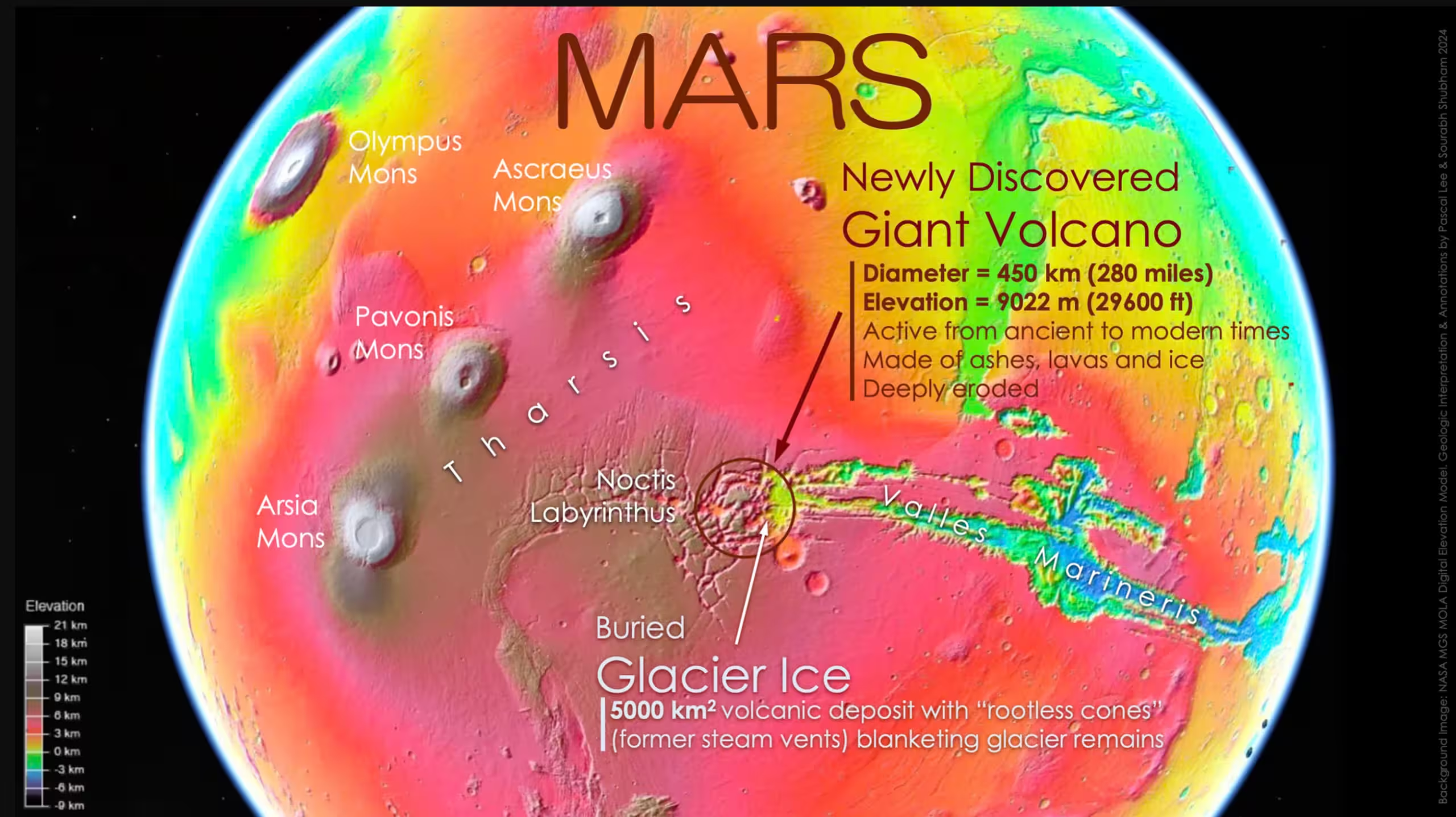
Situated between the Noctis Labyrinthus maze and the vast Valles Marineris canyon system, the suspected structure resides on the eastern fringe of the Tharsis rise—a volcanic plateau home to some of the largest volcanoes in the solar system. “We were examining the geology of an area where we had found the remains of a glacier last year when we realized we were inside a huge and deeply eroded volcano,” Lee explained.
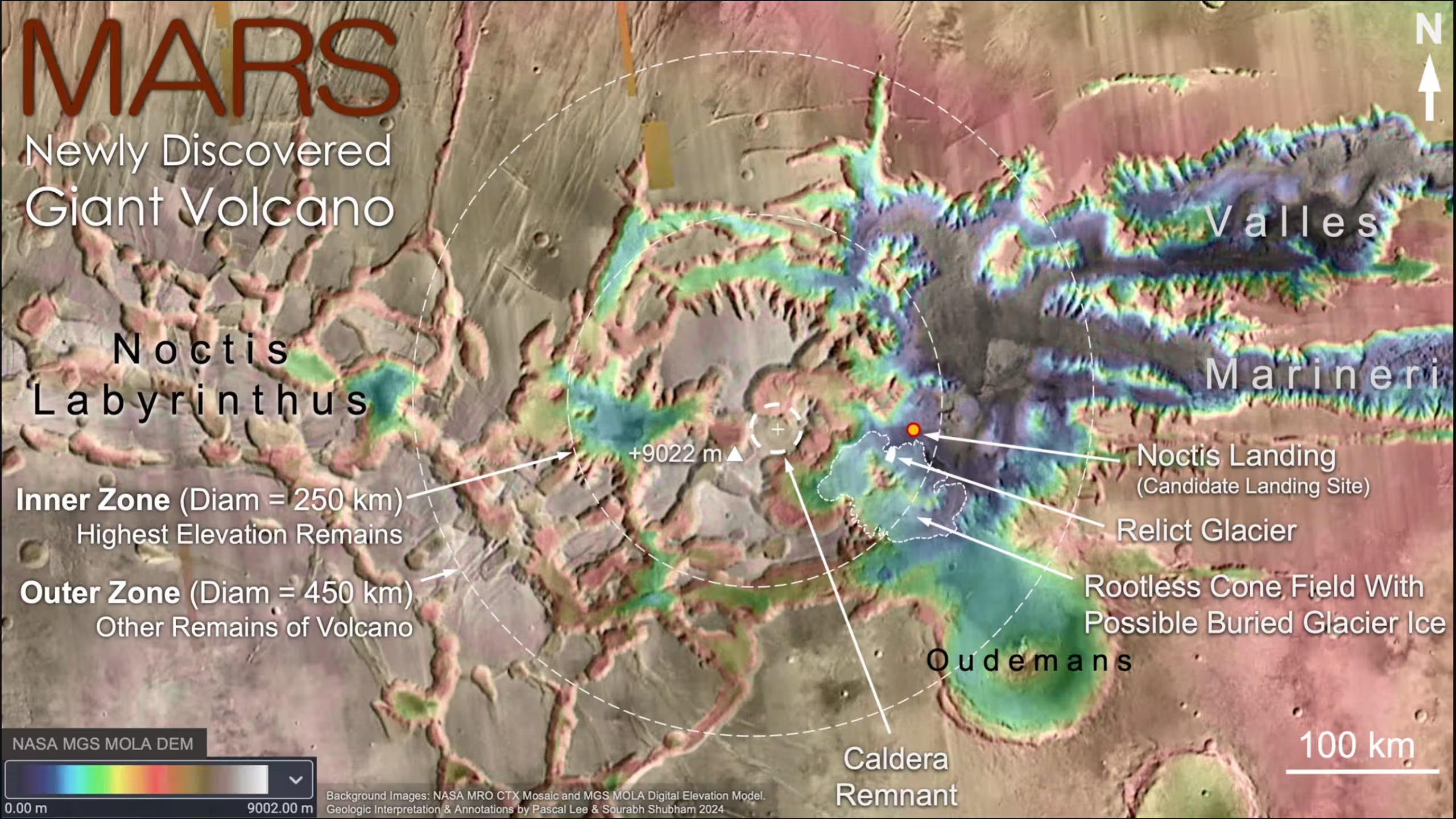
The researchers mapped the site using data from the Mars Reconnaissance Orbiter’s HiRISE camera and CRISM spectrometer, as well as the Mars Global Surveyor laser altimeter. The architectural evidence includes an arc of elevated mesas and terraced depressions that appear consistent with ancient, collapsed calderas. The complex is estimated to be roughly 250 kilometers wide at its core, with a broader outer influence zone spanning approximately 450 kilometers. Its highest points reach over 9,000 meters above the Martian reference elevation, though researchers emphasize that centuries of faulting and erosion have left behind only a dismantled skeleton of the original mountain.
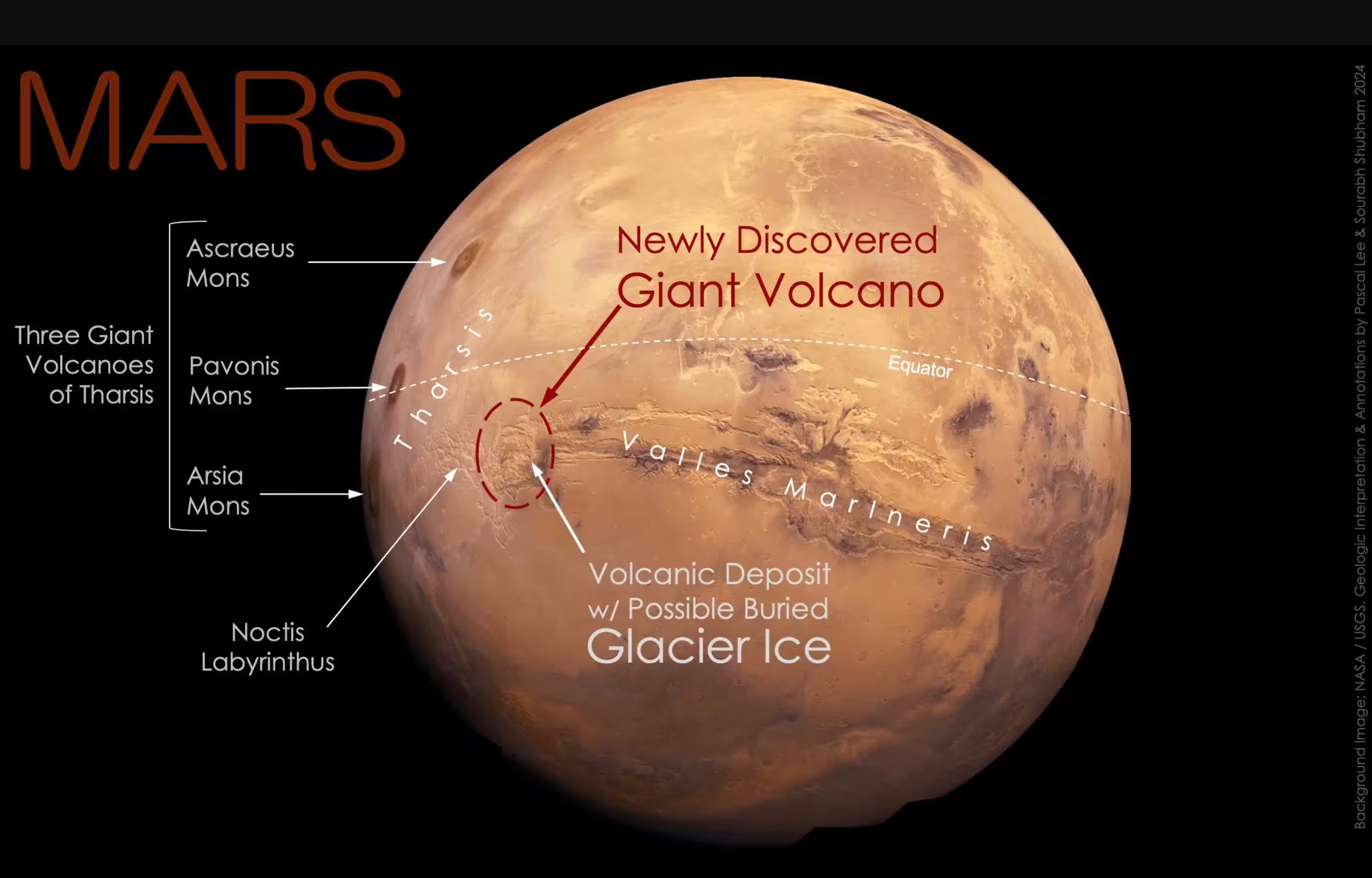
The Mystery of Buried Martian Ice
The possibility of surviving ice is a core component of the team’s ongoing research. Initial observations in 2023 identified light-toned deposits displaying features typical of glacial activity, such as moraines and crevasses. While spectroscopy has confirmed the presence of hydrated sulfates—minerals that often form in the presence of water—the question of whether actual water ice remains protected beneath the surface remains unresolved. It is possible that the ice has long since sublimated, leaving behind only a mineral shell that mimics its previous form.
However, the discovery of small, blister-like mounds—interpreted as “rootless cones”—provides a compelling clue. These structures typically occur when molten volcanic material interacts with wet or icy ground, causing steam to build up and rupture the surface. The presence of jarosite, a mineral associated with acidic, water-rich environments, further bolsters the theory that this region was once a site of intense volcanic-ice interaction.
Future Exploration and Scientific Potential
To move beyond orbital interpretation, researchers have proposed a mission concept called Nighthawk, which would utilize a robotic helicopter to survey the region at a much finer scale. The proposed suite of instruments, including a near-infrared spectrometer and a neutron detector, aims to map surface composition and search for subsurface hydrogen, which would serve as a proxy for buried ice.
While the mission is currently in the conceptual phase, it highlights the region’s status as a top-tier target for understanding how Mars shifted from a volcanically and hydrologically active world to the desert planet seen today. As researchers continue to analyze mineralogical data, such as the diverse array of clays and silica reported at the Tenth International Conference on Mars, they hope to establish a clearer timeline of the geological forces that shaped this unique equatorial complex.
Key Research and References
- A Relict Glacier Near Mars’ Equator: An analysis of glacial landforms and the possibility of buried ice in Noctis Labyrinthus.
- Noctis Volcano: Mineralogic Evidence: A breakdown of the volcanic and alteration minerals discovered at the site.
- Mapping of Western Valles Marineris: A study on the volcanic deposits surrounding the region.
- Nighthawk Mission Concept: A proposal for robotic helicopter exploration of the Noctis region.
- Geophysical Investigation of Noctis Volcano: A graduate-level thesis on the structure’s geophysical properties.
This article has been fact checked for accuracy, with information verified against reputable sources. Learn more about us and our editorial process.
Last reviewed on .
Article history
- Latest version
Reference(s)
- “2745.” <https://www.hou.usra.edu/meetings/lpsc2024/pdf/2745.pdf?utm_source=chatgpt.com>.
- “Home.” <https://www.seti.org/>.
- “Mars Institute.” Mars Institute <https://www.marsinstitute.no/>.
- “University of Maryland.” University of Maryland <https://umd.edu/>.
- “2998.” <https://www.hou.usra.edu/meetings/lpsc2023/pdf/2998.pdf>.
- “3551.” <https://www.hou.usra.edu/meetings/tenthmars2024/pdf/3551.pdf>.
- Mishev, Ivan G.., et al. “Mapping of Western Valles Marineris Light‐Toned Layered Deposits and Newly Classified Rim Deposits.” Journal of Geophysical Research: Planets, vol. 129, no. 12, December 19, 2024 American Geophysical Union (AGU), doi: 10.1029/2024JE008425. <https://doi.org/10.1029/2024JE008425>.
- “1662.” <https://www.hou.usra.edu/meetings/lpsc2025/pdf/1662.pdf>.
- “electronic library - Geophysical Investigation of Noctis Volcano on (equatorial) Mars using MOLA, MARSIS, and Numerical Plume Modelling..”, November 1, 2025 <https://elib.dlr.de/222060/>.
Cite this page:
- Posted by Aisha Ahmed