15,000 Year Old Fingerprints on Ancient Clay Beads Reveal Who Really Made Them
A tiny, ancient clay artifact offers a rare, intimate connection to a human hand from long before the dawn of agriculture or pottery.
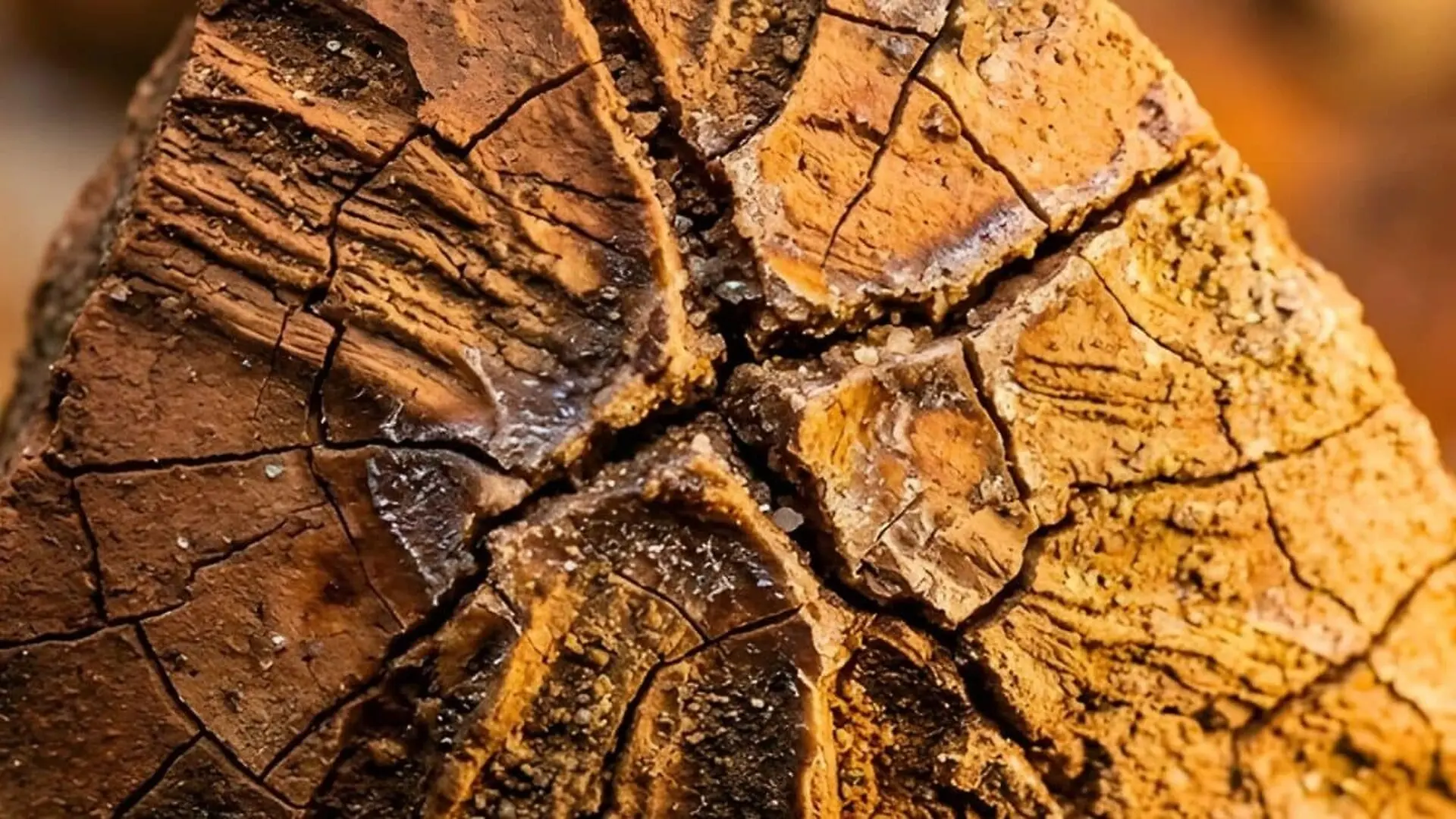
A cache of 142 unbaked clay beads unearthed at Natufian archaeological sites in Israel is challenging long-held timelines regarding the origins of personal ornamentation. Dated to approximately 15,000 years ago, these artifacts suggest that the human impulse to craft symbolic objects appeared thousands of years earlier than previously assumed, predating the widespread use of pottery or agricultural tools.
The discovery, detailed in the journal Science Advances, provides an intimate look at the lives of Natufian hunter-gatherers, who were among the earliest societies to transition toward sedentary lifestyles. These small, hand-molded objects represent the oldest known instance of unbaked clay being used for non-functional, ornamental purposes, effectively serving as an ancient precursor to jewelry.
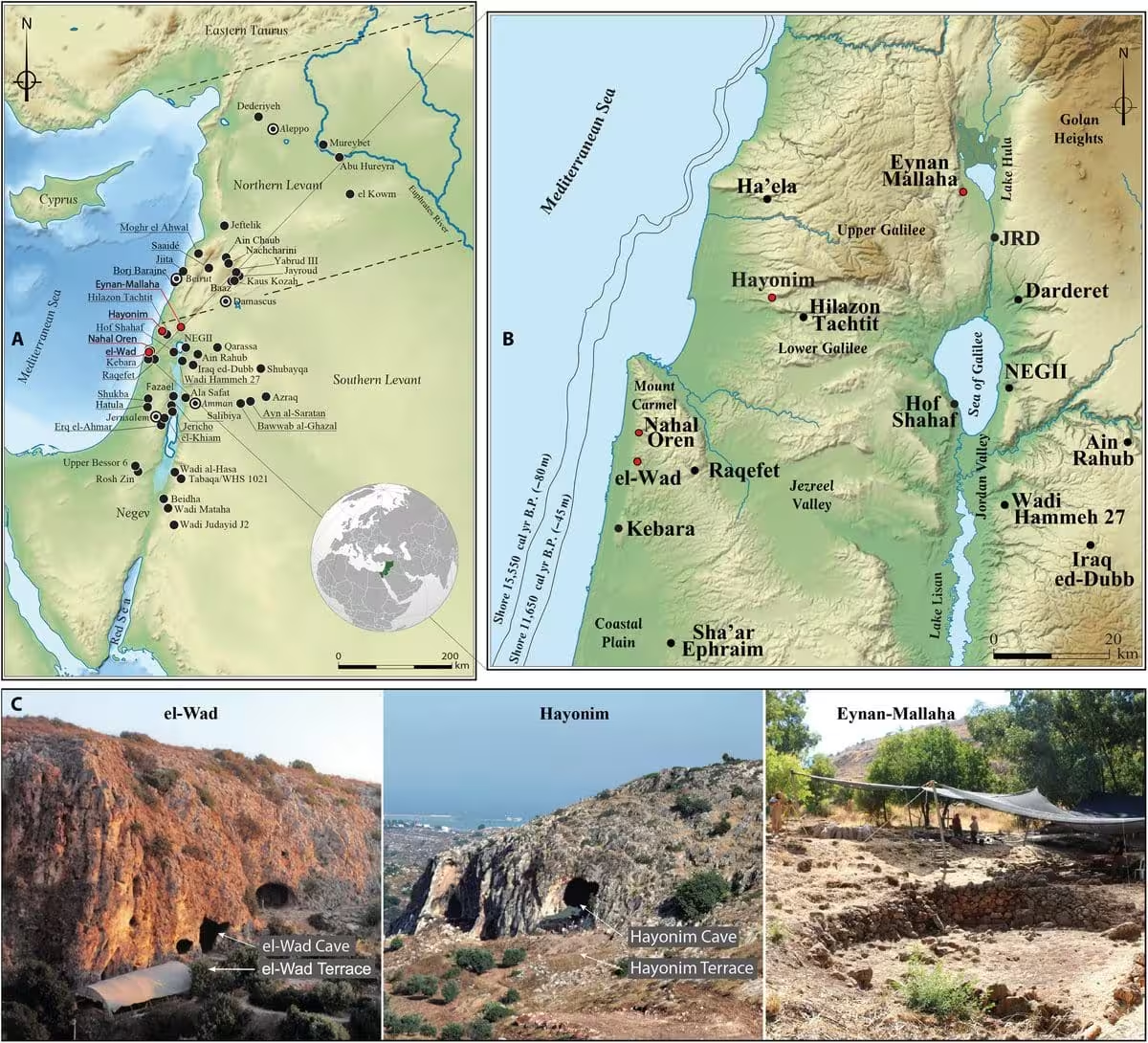
Evidence of Intergenerational Craftsmanship
Perhaps the most compelling evidence found within the collection is the presence of 50 distinct fingerprints preserved in the clay. Analysis reveals that these prints belonged to a mix of children, adolescents, and adults, indicating that the creation of these beads was a communal, intergenerational activity. This discovery offers rare, direct insight into the social dynamics of the period, suggesting that crafting was an essential practice for transmitting social values and symbolic expression.
“The findings suggest that making ornaments was a shared, everyday activity, one that played a role in learning, imitation, and the transmission of social values from one generation to the next,” the study authors noted. Some of the artifacts, including a diminutive clay ring, appear sized specifically for children, highlighting the integration of the youngest members into the cultural life of the community.
Advanced Techniques and Botanical Symbolism
The craftsmanship displayed in these beads indicates a surprising level of technical sophistication. The artisans shaped the clay into 19 distinct forms—including cylinders, discs, and ellipses—and frequently coated them in red ochre using a technique known as engobe. This represents the earliest known instance of applying a liquid clay slip for color, predating such practices in other parts of the world.
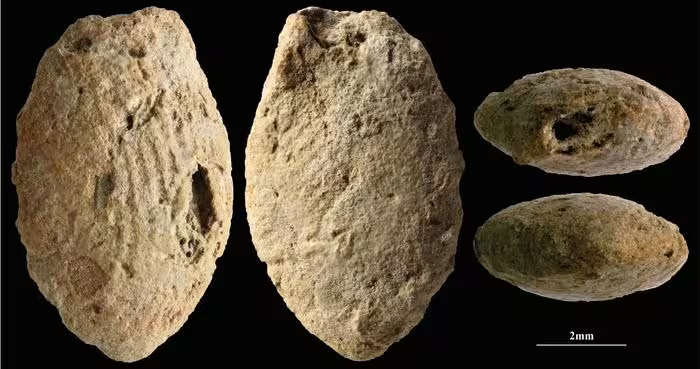
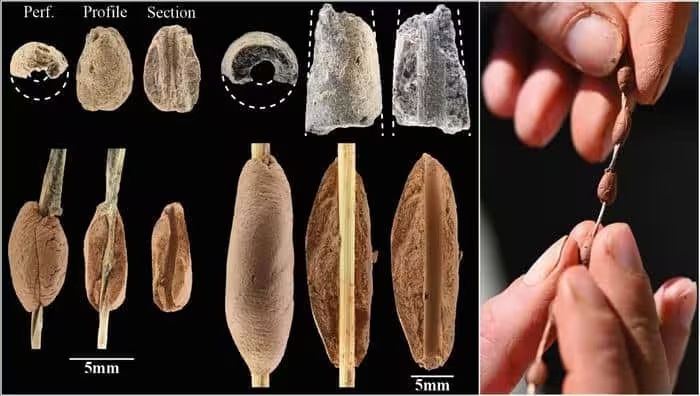
Researchers also discovered that many of the beads appear to mimic plants central to the Natufian diet, such as wild barley, einkorn wheat, lentils, and peas. Traces of plant fibers found on the artifacts suggest that these beads were likely strung together and worn, reinforcing the idea that the local flora held significant cultural and symbolic meaning. According to Professor Leore Grosman, this evidence suggests that complex cognitive shifts were occurring long before the widespread adoption of agriculture. “The roots of the Neolithic lie deeper than we once thought,” she said.
Rewriting the Symbolic Revolution
The research team argues that these beads are indicative of a “symbolic revolution” that occurred during the transition from nomadic foraging to permanent settlement. By demonstrating how craft production was socially organized, the discovery provides a new framework for understanding how symbolic practices helped shape the Neolithic era in Southwest Asia. As noted by Laurent Davin, a postdoctoral researcher at the Hebrew University of Jerusalem, the find fundamentally alters the archaeological understanding of the connection between clay, symbolic behavior, and the rise of stable human societies.
This article has been fact checked for accuracy, with information verified against reputable sources. Learn more about us and our editorial process.
Last reviewed on .
Article history
- Latest version
Reference(s)
- Davin, Laurent., et al. “Modeling identities among the first-sedentary communities: Emergence of clay personal ornaments in Epipaleolithic Southwest Asia.” Science Advances, vol. 12, no. 12, March 20, 2026 American Association for the Advancement of Science (AAAS), doi: 10.1126/sciadv.aea2158. <http://dx.doi.org/10.1126/sciadv.aea2158>.
- “Leore Grosman.” <https://leoregrosman.huji.ac.il/>.
- “האקדמיה הלאומית הישראלית למדעים The Israel Academy of Sciences and Humanities - Dr. Laurent Davin.” <https://www.academy.ac.il/RichText/GeneralPage.aspx?nodeId=1671>.
Cite this page:
- Posted by Vikram Desai