NASA Is Launching an Ambitious Mission to Uncover the Secrets of the Cosmic Dawn
NASA’s upcoming Roman Space Telescope mission aims to reveal the origins of the universe’s first galaxies, massive black holes, and cosmic structures.
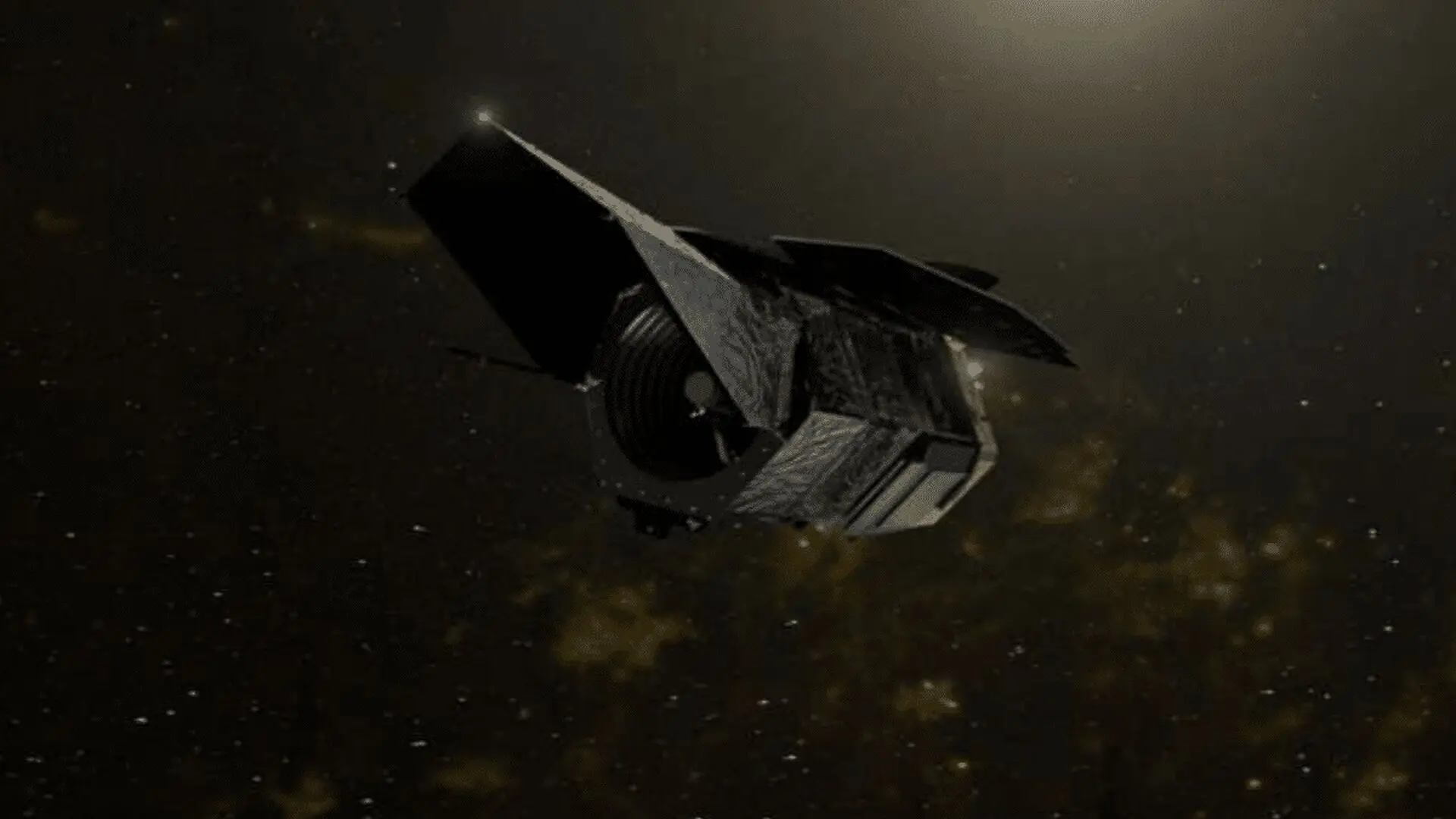
NASA has greenlit a massive 386-hour observation campaign aimed at peering into the genesis of the cosmos. By leveraging the immense capabilities of the Nancy Grace Roman Space Telescope, an international coalition of 130 scientists will embark on a quest to map the formation of the universe’s earliest stars, galaxies, and supermassive black holes.
A Collaborative Effort to Map the Cosmic Dawn
The ambitious endeavor, officially titled the Roman eXtreme Deep Field (RXDF), represents a partnership between 62 institutions, including NASA, Harvard, Princeton, and the California Institute of Technology. Spearheaded by University of Missouri physicist Haojing Yan, the project seeks to construct one of the most comprehensive surveys of the early universe in astronomical history. The team’s scientific roadmap, recently published via the arXiv preprint server, outlines plans to track thousands of distant galaxies and ancient stellar cataclysms while probing the enigmatic growth of the first massive black holes.
By capturing data from what is believed to be the universe’s first 100 million years, the RXDF aims to go beyond the limitations of previous, more confined deep-field studies. The goal is to determine whether the peculiar cosmic phenomena observed in recent years are outliers or standard features of the burgeoning universe. According to Yan, the project’s greatest potential may lie in the unknown. Historically, the most transformative insights from deep-field surveys have been the results that researchers never anticipated, making this large-scale dataset a potential goldmine for unexpected discovery.
Utilizing Time as a Cosmic Lens
Astronomy operates on the fundamental principle that light requires time to traverse the vacuum of space. As a result, observing deep into the cosmos is functionally equivalent to looking backward through time. By capturing light that has been traveling for billions of years, the RXDF team can study the architecture of the infant universe in a state closer to its inception. This temporal perspective allows scientists to witness the transition from primordial matter to the first complex structures.
The primary hurdle remains the sheer distance of these objects. As the universe expands, the light from these remote, ancient sources is stretched into infrared wavelengths, requiring high-sensitivity equipment with a broad field of view to capture meaningful data. The Roman Space Telescope is uniquely suited for this task, as it balances the sensitivity required for deep imaging with the survey speed necessary to scan massive swaths of the sky.
Broadening the Horizon Beyond Webb
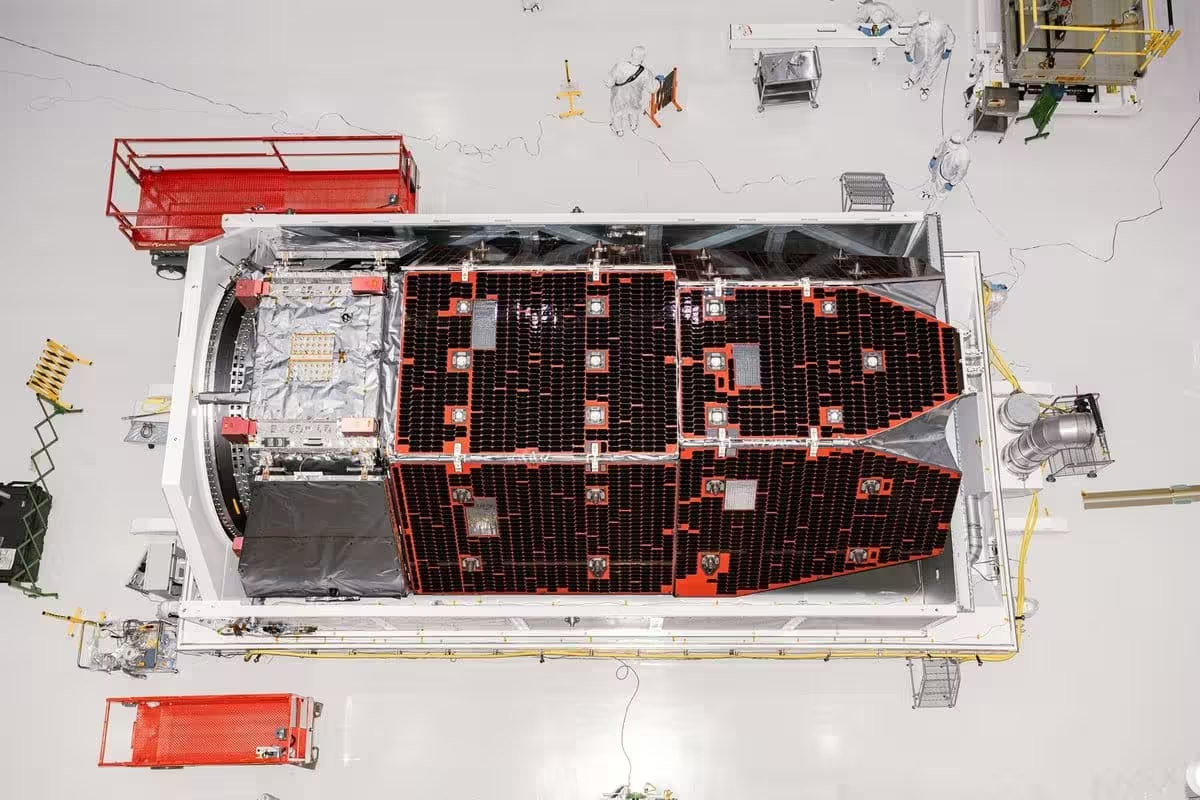
While the James Webb Space Telescope (JWST) has revolutionized our understanding by revealing surprisingly mature galaxies in the early universe, its narrow field of view leaves questions regarding the statistical prevalence of such objects. The Roman Space Telescope is designed to bridge this gap. Equipped with a 300-megapixel Wide Field Instrument, the telescope can image significantly larger regions of the sky in a single frame than its predecessors.
Positioned near the Sun-Earth L2 Lagrange point, approximately 930,000 miles from Earth, the observatory will help researchers move from studying isolated “cosmic snapshots” to developing a broader statistical map. This will allow the team to investigate the “little red dots” and rapidly growing black holes identified by Webb, providing context on whether these objects represent a common phase in early galactic evolution.
An Uncharted Future for Observational Cosmology
The legacy of the RXDF will likely be measured by its ability to serve as a foundational dataset for future generations of astronomers. By pushing existing technology to its operational ceiling, the team hopes to provide a clearer narrative of how the universe matured. As Yan noted, the ultimate value lies in the ongoing cycle of exploration; by stretching today’s limits, scientists pave the way for future observatories to probe even further. For now, the scientific community waits to see what long-hidden secrets of the early universe will finally come into focus through the lens of the Roman telescope.
This article has been fact checked for accuracy, with information verified against reputable sources. Learn more about us and our editorial process.
Last reviewed on .
Article history
- Latest version
Reference(s)
- Yan, Haojing. “The Roman eXtreme Deep Field (RXDF).” arXiv.org <https://arxiv.org/abs/2609.08145>.
Cite this page:
- Posted by Farah Siddiqui