Scientists Design Egg-Inspired Spacecraft Shield That Outperforms Traditional Armor
Inspired by the structure of eggshells, researchers have developed a new shield that slows simulated space debris by 65% to better protect spacecraft.
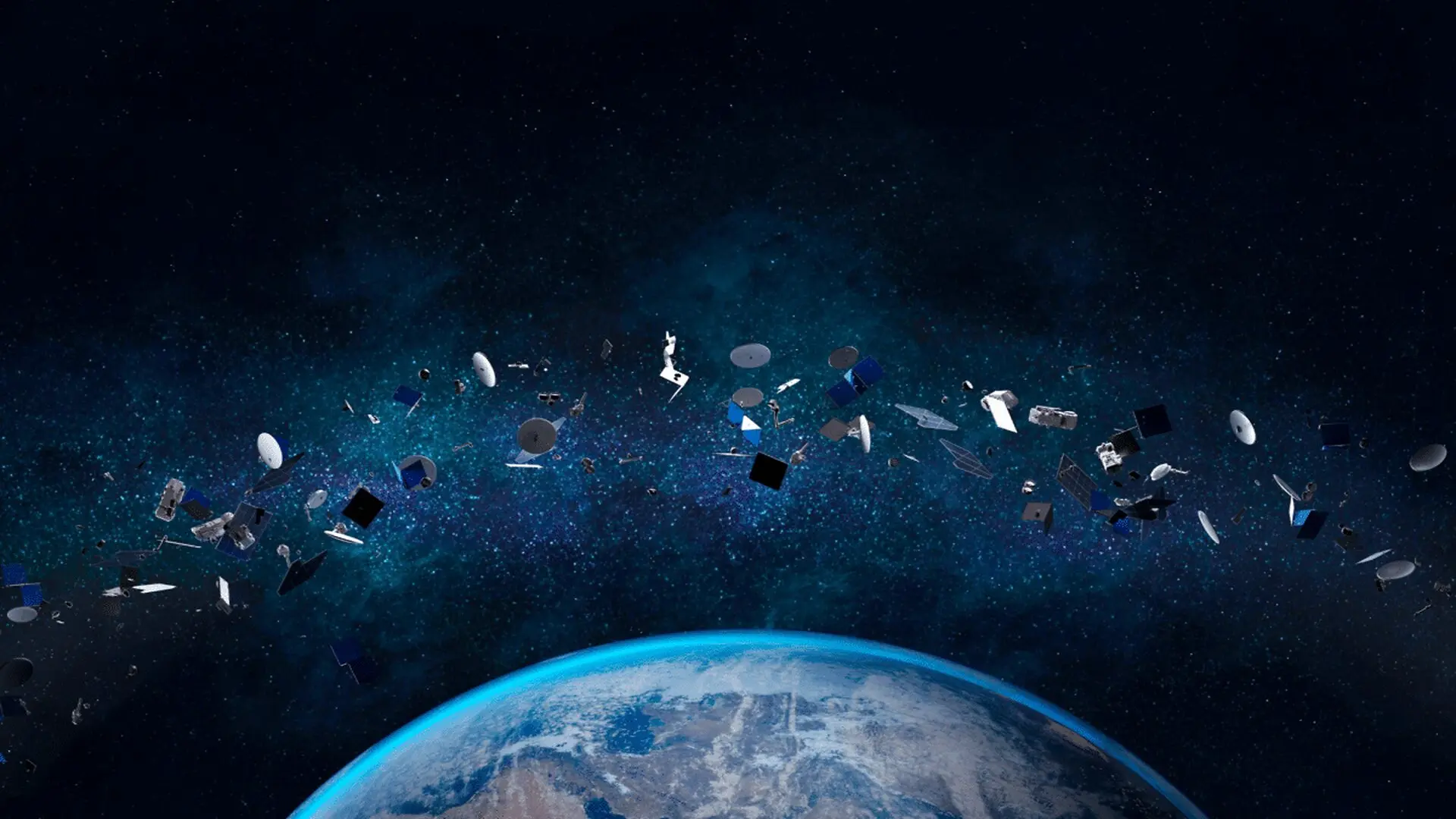
Engineers are looking toward the delicate geometry of an eggshell to solve one of the most pressing challenges in aerospace: shielding spacecraft from the relentless barrage of orbital debris. A team from the Dalian University of Technology has successfully demonstrated a new protective barrier that significantly outperformed traditional aluminum plating in high-velocity impact simulations.
The Growing Peril in Low Earth Orbit
The space surrounding our planet has become increasingly hazardous as it fills with the remnants of past missions, ranging from discarded rocket stages to fragmented satellites. In Earth’s orbit, objects travel at staggering velocities, often reaching 17,500 miles per hour. At these speeds, even a minuscule fragment can act like a high-powered bullet, posing a critical threat to both crewed and uncrewed vessels.
Since the late 1940s, the industry standard has been the Whipple shield, which uses a sacrificial outer layer to shatter incoming debris before it reaches the main craft. While effective against smaller particles, it struggles with larger debris and adds significant weight—a major disadvantage for any mission where launch costs are tied to mass.
Bio-Inspired Engineering at Work
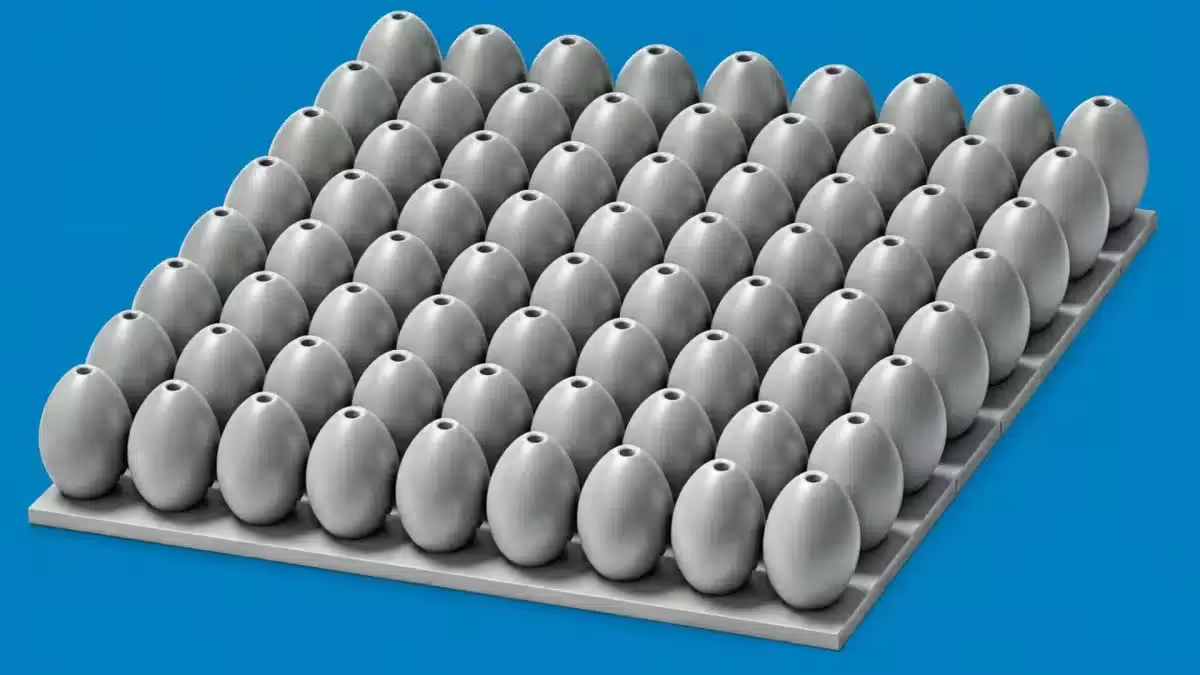
To overcome these limitations, researchers led by Yuxin Wang turned to nature. While an individual eggshell might seem fragile, its curved structure is remarkably efficient at distributing compressive loads. The team theorized that by mimicking this geometry in a dense array of aluminum shells, they could create a more resilient defensive system.
In their study, published in the Journal of Applied Physics, the researchers detailed an assembly of 12-millimeter hollow aluminum structures, each filled with water and sandwiched between metal plates. According to Wang, the protection mechanism relies on a dynamic response: the shells collapse sequentially, absorbing massive amounts of kinetic energy while utilizing the internal fluid to alter shock wave propagation.
“A single eggshell breaks easily under local force, but the protection mechanism of the eggshell array is completely different,” said Wang.
Superior Performance in High-Velocity Simulations
The team put their design to the test by simulating an 11-millimeter projectile striking the shield at roughly 16,800 miles per hour. By orienting the narrow ends of the egg-shaped shells toward the incoming threat, they achieved a remarkable 64.9% reduction in the projectile’s speed. In comparison, a standard aluminum plate—the current industry baseline—achieved only a 51% reduction under the same conditions.
Notably, the damage patterns on the egg-inspired panels were wider and more irregular than those on conventional plates. Researchers suggest this is a positive indicator: rather than punching a neat hole through the structure, the egg-inspired array forces the impact energy to dissipate laterally, effectively diverting the force away from the spacecraft’s primary hull.
By moving beyond solid plates toward these complex, liquid-filled metastructures, engineers may have found a path toward safer and lighter shielding for the next generation of space exploration.
This article has been fact checked for accuracy, with information verified against reputable sources. Learn more about us and our editorial process.
Last reviewed on .
Article history
- Latest version
Reference(s)
- Wang, Yuxin., et al. “Dynamics analysis on the water-filled aluminum eggshell array metastructure under hypervelocity impact.” Journal of Applied Physics, vol. 140, no. 10, September 8, 2026 AIP Publishing, doi: 10.1063/5.0324502. <https://doi.org/10.1063/5.0324502>.
Cite this page:
- Posted by Farah Siddiqui