Astronomers Just Tracked a 10 Billion Year Old Radio Signal to an Unexpected Galaxy
Astronomers have traced a fleeting radio signal to a distant galaxy, unlocking a powerful new method to investigate the history of the early universe.
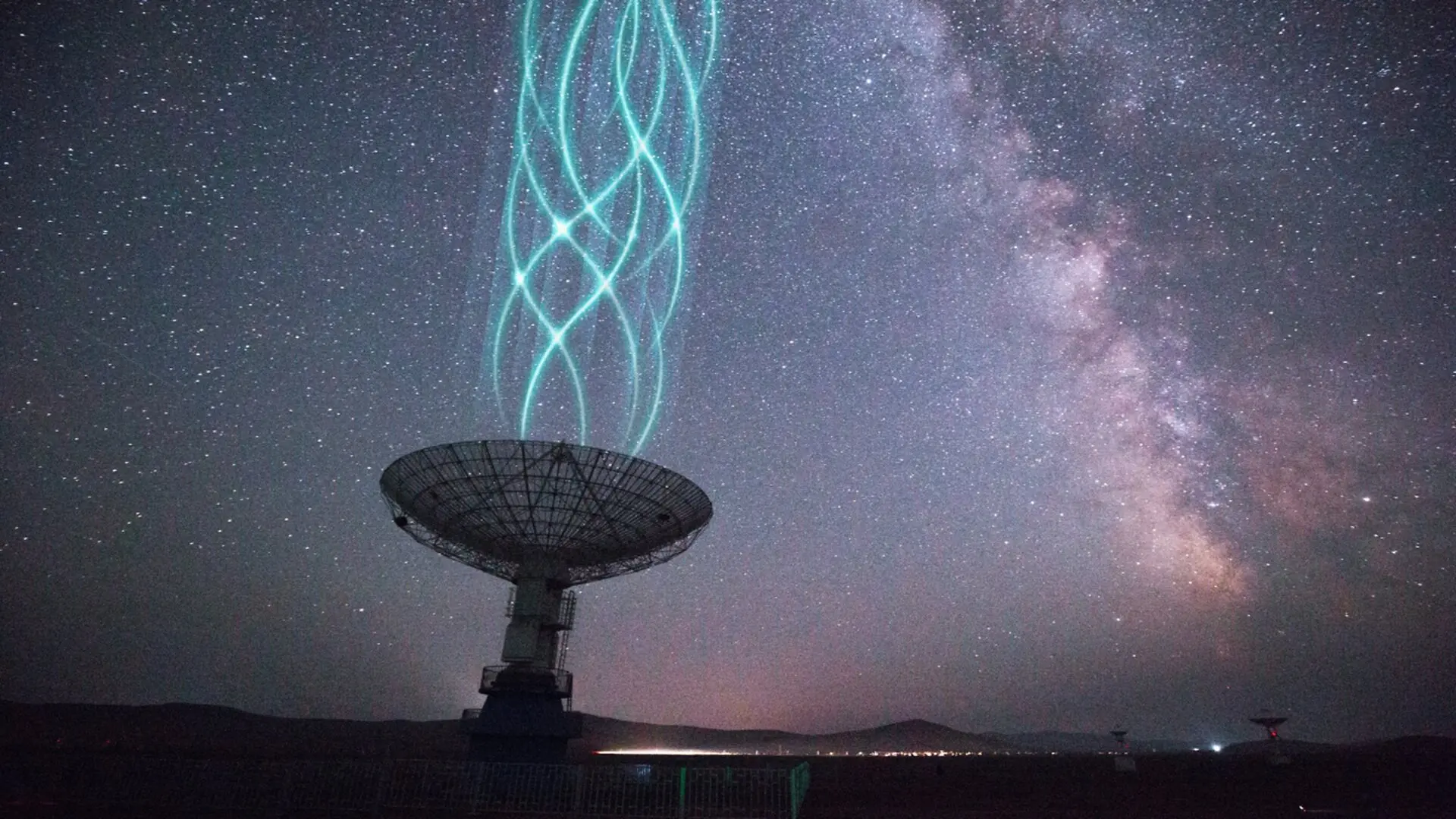
Astronomers have captured a fleeting radio pulse that originated more than 10 billion years ago, setting a definitive new distance record for a fast radio burst (FRB). The discovery, detailed in the journal Science, provides an unprecedented window into the early universe and serves as a powerful new diagnostic tool for probing the diffuse matter distributed between galaxies.
A Deep-Space Echo from the Early Universe
Designated FRB 20240304B, the signal belongs to the enigmatic category of fast radio bursts—intense, millisecond-long explosions of energy whose underlying drivers remain a subject of intense scientific debate. While these bursts are common, pinpointing their exact cosmic origins has historically been a significant challenge because they vanish almost as quickly as they appear.
This particular event is exceptional due to its immense journey through space and time. Researchers calculated that the burst occurred when the universe was roughly 3 billion years old, less than a quarter of its current 13.8-billion-year age. By more than doubling the previous distance record for an FRB, the discovery allows scientists to analyze cosmic conditions during a period of rapid galactic maturation.
The research team, led by Dr. Manisha Caleb and Dr. Themiya Nanayakkara from the University of Sydney, identified the signal using the MeerKAT radio telescope in South Africa via the MeerTRAP project. To confirm the source of the radio flash, the team turned to the sensitive infrared eyes of NASA’s James Webb Space Telescope (JWST).

“This is an extraordinary glimpse into the distant universe,” said Dr. Caleb, based at the Sydney Institute for Astronomy. “We have caught a fast radio burst from a time when the universe was only about 3 billion years old, and we have used that brief flash of radio light to learn about the matter it has traveled through over billions of years.”
Pinpointing the Source with James Webb
Identifying the host galaxy of a signal that originated across such vast distances is a feat of precision engineering. The faint radio signal provided the initial coordinates, but resolving the host required the unique infrared capabilities of the JWST to distinguish the galaxy from the surrounding cosmic background.
The analysis revealed a surprising host: a small, metal-poor galaxy characterized by intense star-forming activity. In astrophysical terms, a “metal-poor” designation indicates a lack of heavier elements, suggesting that the galaxy had not yet undergone significant chemical enrichment from previous generations of stellar evolution.
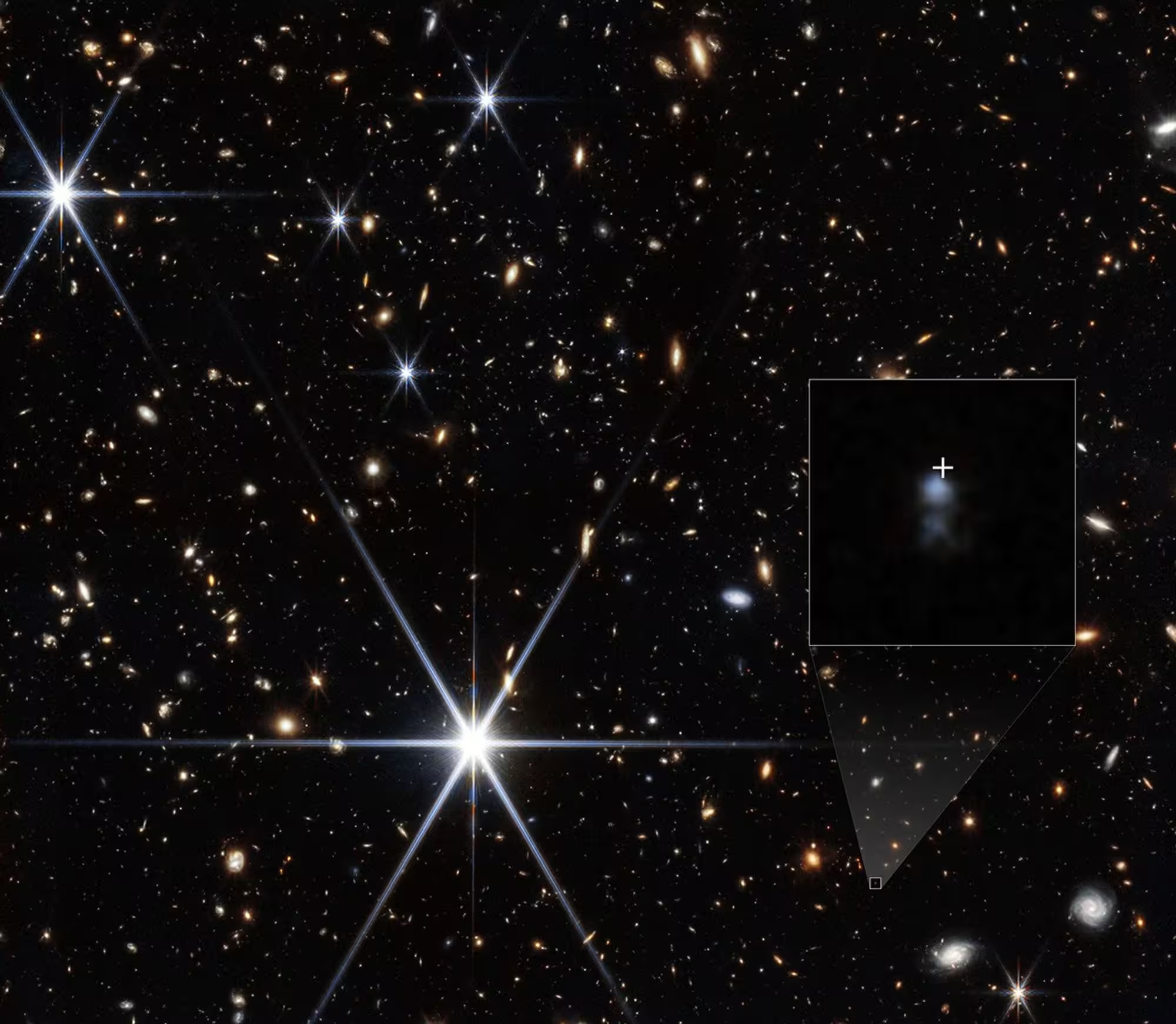
“The galaxy hosting this burst is surprisingly small, metal-poor and undergoing a very active episode of star formation,” noted co-author Dr. Laura Driessen. “That gives us an important clue about the environments in which FRBs are born and shows that these brief radio flashes can tell us not only about the distant universe but also about how galaxies and their stellar populations evolve.”
Pushing the Boundaries of Observational Astronomy
The collaboration between the MeerKAT radio array and the JWST highlights a growing trend in modern astrophysics: leveraging multi-wavelength observations to overcome the limitations of single-instrument studies. While radio telescopes are adept at discovery, the integration of infrared spectroscopy is essential for verifying the host environment.
“Our results further show the amazing capability of the Webb space telescope where we can push boundaries beyond what was previously possible,” said Dr. Nanayakkara. By building on previous discoveries of distant bursts, the team is now moving toward a more comprehensive statistical model of these phenomena.
The ultimate goal for researchers is to move beyond individual record-breaking detections toward a systematic survey. By studying a larger sample of these distant signals, astronomers hope to map the distribution of hidden matter across the cosmos and determine if the physical mechanisms producing FRBs have remained consistent throughout the history of the universe.
This article has been fact checked for accuracy, with information verified against reputable sources. Learn more about us and our editorial process.
Last reviewed on .
Article history
- Latest version
Reference(s)
- Caleb, Manisha., et al. “A fast radio burst at redshift 2, three billion years after the Big Bang.” Science, October 8, 2026 American Association for the Advancement of Science (AAAS), doi: 10.1126/science.adz2675. <https://www.science.org/doi/10.1126/science.adz2675>.
Cite this page:
- Posted by Farah Siddiqui