Hong Kong Scientists Just Deployed a Powerful New Climate-Monitoring Camera Into Orbit
A Hong Kong-built camera aboard China’s Tiangong space station has captured its first images of the city while tracking global greenhouse gas emissions.
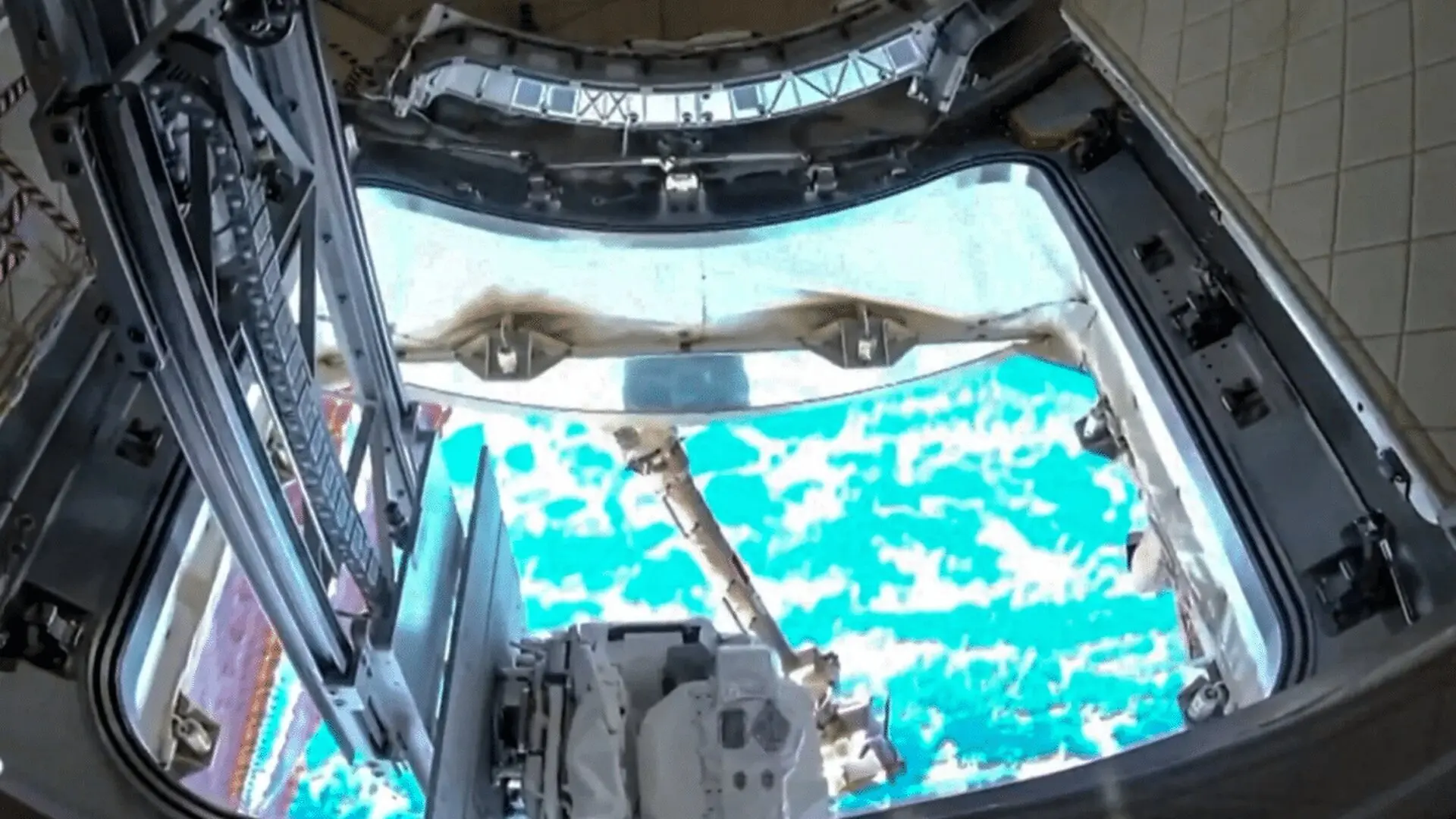
A sophisticated climate-monitoring instrument designed by researchers in Hong Kong has successfully transmitted its first high-resolution images of the city from the Tiangong space station. This achievement signals a significant step forward for the region’s contribution to China’s burgeoning orbital research program, marking the transition of the hardware from testing to routine scientific operations.
Advanced Environmental Monitoring from Orbit
The device, known as the Multi-Spectral Imaging Carbon Observatory (Musico), was spearheaded by the Hong Kong University of Science and Technology (HKUST). Unlike standard cameras, Musico functions as a precision laboratory in space, equipped with four distinct optical sensors tuned to detect atmospheric components including carbon dioxide, methane, oxygen, and aerosols.
By capturing data across these specific spectral bands, the instrument allows scientists to move beyond mere topography, offering a window into both surface features and the composition of the air above them. Its developers note that Musico holds the distinction of being the world’s first lightweight, high-precision observatory capable of simultaneously pinpointing emission sources of both carbon dioxide and methane. This capability is expected to refine the accuracy of greenhouse gas monitoring by allowing researchers to isolate localized pollution sources rather than relying on broader regional estimates.
“It not only marks the successful deployment of a Hong Kong-developed scientific payload aboard the Tiangong space station, but also demonstrates Hong Kong’s growing contribution to the nation’s space endeavours,” said Professor Zhang Limin, a project leader and head of the university’s department of civil and environmental engineering.
HKUST Releases First Batch of Hong Kong Images Captured by “MUSICO” in Celebration of 77th Anniversary of Founding of the People’s Republic of China HKUST released the first batch of Hong Kong remote sensing images captured by the Multi‑Spectral Imaging Carbon Observatory (MUSICO), showcasing a major achievement by Hong Kong researchers participating in the nation’s space program while celebrating the 77th anniversary of the founding of the People’s Republic of China. Led by HKUST, MUSICO is the world’s first lightweight, high‑resolution, high‑precision synergistic observatory for carbon dioxide and methane emission point sources. The instrument has been carrying out scientific missions aboard the Tiangong Space Station for more than three months, during which it successfully completed a series of system tests, calibrations, and on-orbit validation activities. The Hong Kong images and videos released today were acquired through MUSICO’s four optical sensors, including gas-detection spectrometers for carbon dioxide, methane, and oxygen, as well as an aerosol observation radiometer. The data clearly reveal the geographical features of Hong Kong and its surrounding areas. Despite travelling at approximately 7.7 kilometers per second in orbit aboard the space station, MUSICO has consistently acquired high-quality remote sensing data with a spatial resolution of approximately 100 meters, demonstrating its outstanding imaging capability. The project team has now completed the instrument’s major on-orbit testing and calibration work, allowing MUSICO to enter its routine scientific operation phase. The MUSICO project is jointly led by Prof. Su Hui, Prof. Zhang Limin and Prof. Zhai Chengxing. Since MUSICO was deployed aboard the Tiangong Space Station, the team has been working closely with the Changchun Institute of Optics, Fine Mechanics and Physics, Chinese Academy of Sciences, and the Technology and Engineering Center for Space Utilization of the Chinese Academy of Sciences, to perform on-orbit operations, instrument calibration, and data processing activities. Discover more about the Multi‑Spectral Imaging Carbon Observatory (MUSICO): https://t.co/fWRFViesLH #HKUST #HKUST35 #MUSICO #ResearchInnovations #SpaceProgram
— HKUST (@hkust) October 2, 2026Navigating Atmospheric Hurdles
Although the instrument has been active in orbit for over three months, the path to obtaining a clear photograph of Hong Kong was complicated by meteorological factors. Cloud cover and rainy conditions across southern China throughout the summer created a persistent barrier for the optical sensors, which require clear skies to accurately record surface data.
Professor Su Hui, another lead investigator on the project, noted that the team had been waiting for the right window of opportunity. The breakthrough occurred just before the recent National Day celebrations, when favorable weather finally provided an unobstructed view. The resulting imagery demonstrates the instrument’s ability to maintain high-quality resolution while traveling at orbital speeds of roughly 7.7 kilometers per second.
Scaling Up Scientific Operations
The mission has already surpassed its initial proof-of-concept phase. Prior to the release of the Hong Kong images, Musico had scanned more than 450 locations across the globe, accumulating approximately 4.3 terabytes of scientific data. This vast repository suggests that the observatory is playing an integral role in global environmental monitoring.
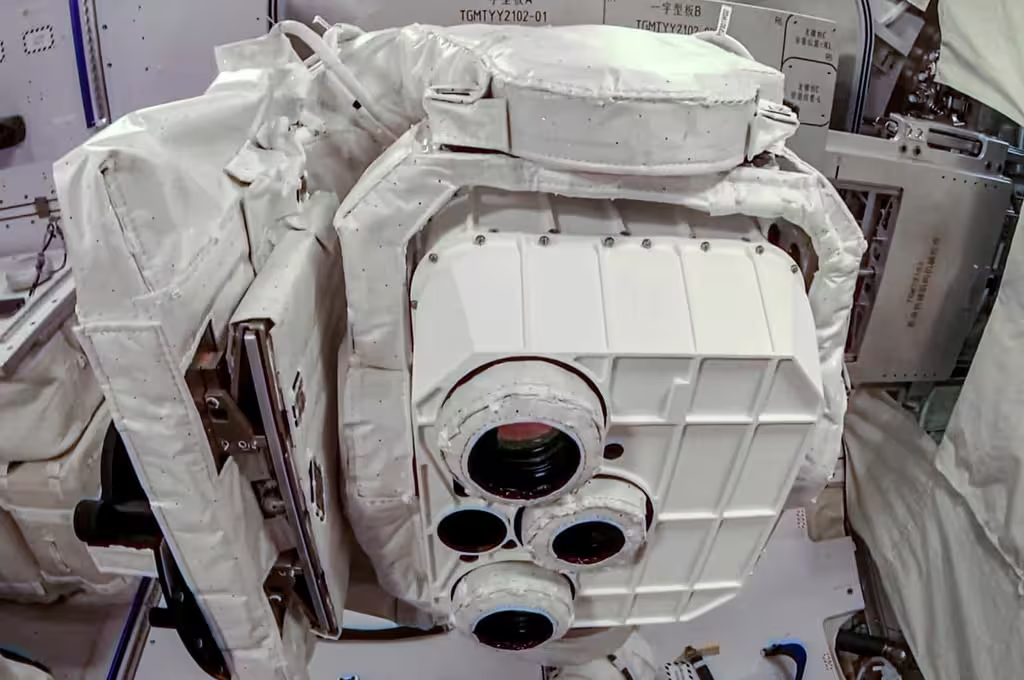
By consolidating complex sensing capabilities into a compact, lightweight unit, the project team is providing a template for future missions that seek to gather granular environmental data without the prohibitive costs associated with larger, dedicated satellite hardware. For the researchers at HKUST, the successful monitoring of their home city is only the beginning of a larger campaign to leverage orbital data in the service of global climate research.
This article has been fact checked for accuracy, with information verified against reputable sources. Learn more about us and our editorial process.
Last reviewed on .
Article history
- Latest version
Cite this page:
- Posted by Farah Siddiqui