Webb Reveals Four Stellar Generations in Terzan 5, a Milky Way Bulge Fossil
A hidden Milky Way object preserving ancient galactic traces is finally revealed as an unusually rare relic, shedding light on the galaxy’s early history.
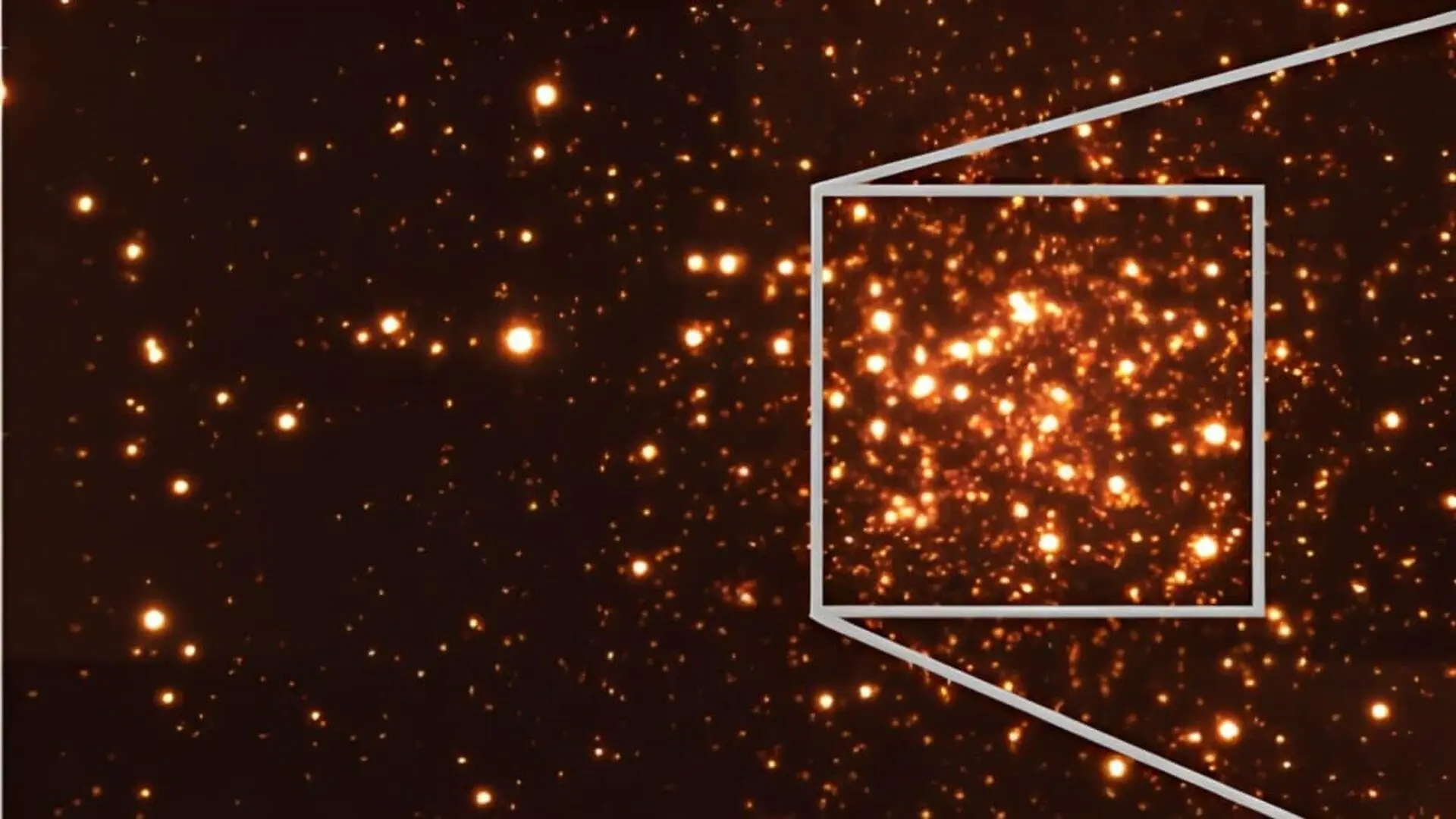
New infrared observations from the James Webb Space Telescope, combined with a decade‑plus of Hubble data, have revealed that the Milky Way’s inner‑bulge system Terzan 5 hosts four separate stellar generations. The discovery points to a far richer evolutionary path than a simple globular cluster would suggest.
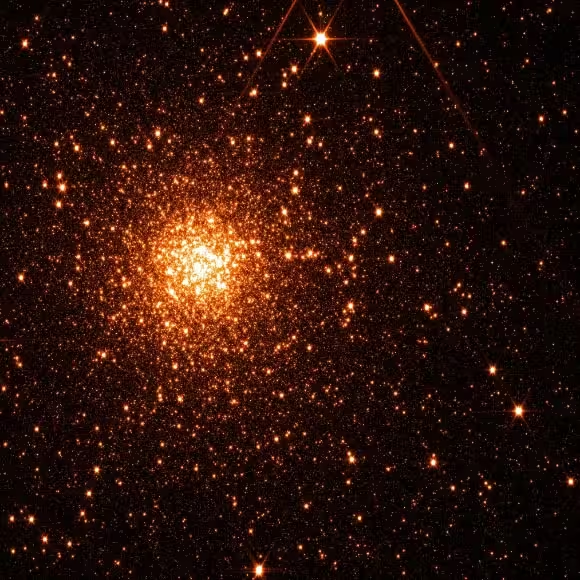
Situated only about 19,000 light‑years from Earth in the direction of Sagittarius, Terzan 5 has long intrigued astronomers because it straddles the line between a classic globular cluster and a more complex stellar system.
First catalogued in 1968 by the late Agop Terzan, the dense agglomeration contains several hundred thousand stars and exhibits some of the structural hallmarks of globular clusters, yet its detailed makeup has always been anomalous.
In 2009 researchers identified two distinct groups of stars within the cluster, and subsequent Hubble imaging demonstrated that those groups formed at markedly different epochs, hinting at a tumultuous past that defies the expectations for an ordinary globular cluster.
Infrared Vision Pierces the Galactic Dust
The inner bulge of the Milky Way is riddled with dense dust clouds that absorb most visible light, making it extremely challenging to study objects like Terzan 5 with traditional telescopes.
Observations from the James Webb Space Telescope in the near‑infrared band cut through this veil, revealing numerous faint stars that had eluded earlier surveys. By analysing their brightness and colour, astronomers could infer both ages and elemental abundances.
“Webb’s new near‑infrared observations, cross‑referenced with Hubble’s archival observations, have given us a much clearer picture of the history of Terzan 5,” said Giorgia Zullo, a Ph.D. student at the University of Bologna.
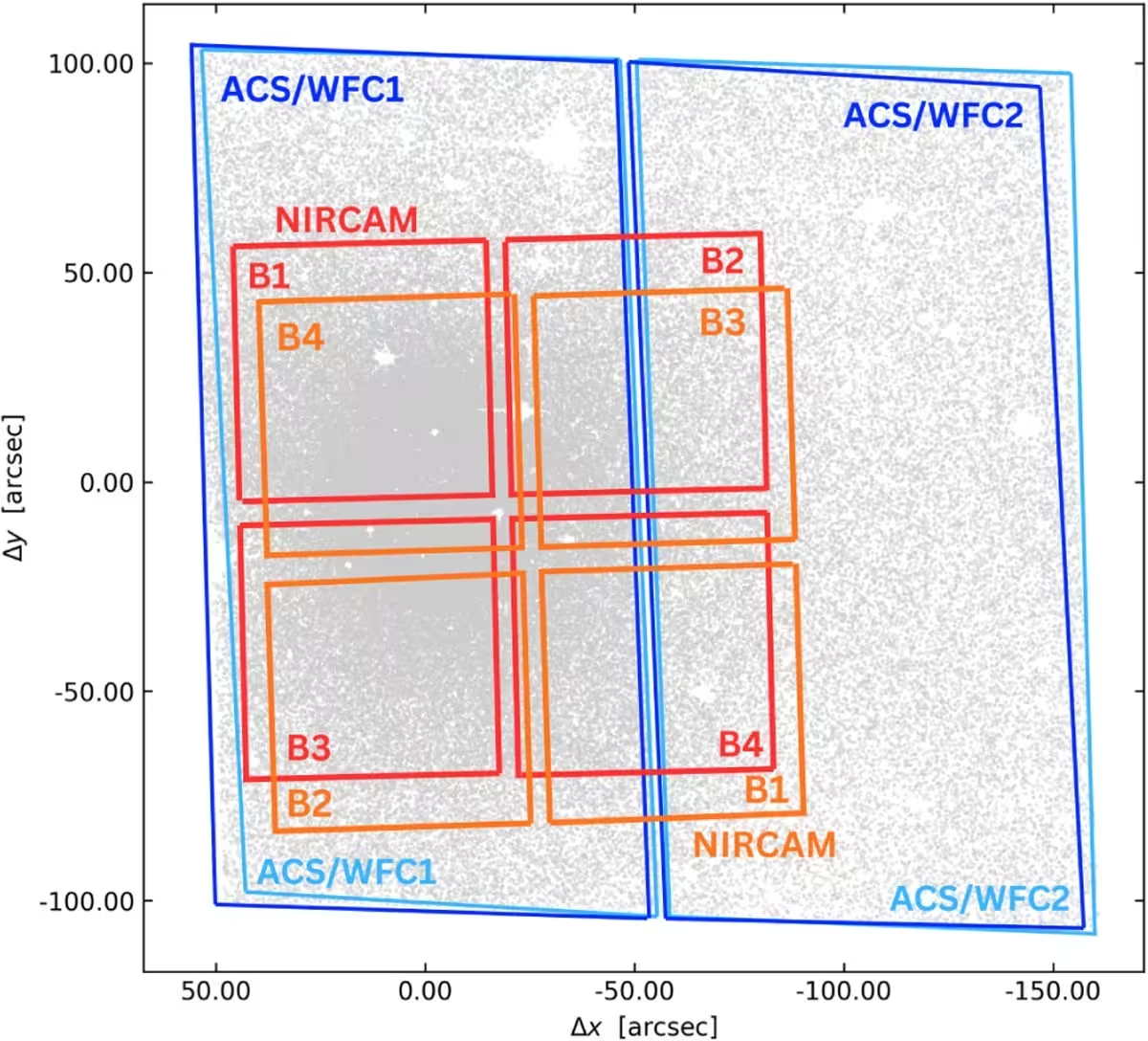
The deeper view allowed the team to assemble a more complete inventory of stars both inside and around the cluster, including many low‑luminosity members that previous surveys missed.
Four Starbursts Spanning Billions of Years Identified
To separate genuine Terzan 5 members from unrelated bulge stars, the investigators turned to a pair of Hubble images taken twelve years apart. The time baseline enabled precise proper‑motion measurements, which the study shows were crucial for isolating the cluster’s own population.
Merging the proper‑motion data with Webb’s infrared catalogue revealed four discrete stellar groups. The earliest generation dates back roughly 12.5 billion years, a second burst occurred around 4.7 billion years ago, and two more episodes followed at approximately 3.8 billion and 2.5 billion years ago.
Earlier hypotheses that a collision with another cluster or a massive molecular cloud sparked a later wave of star formation are now less plausible, given the clear separation of the four age groups.
A Surviving Fragment of the Milky Way’s Youth
Spectroscopic follow‑up with the W. M. Keck Observatory and ESO’s Very Large Telescope exposed distinct chemical signatures among the four populations, confirming that each burst incorporated material enriched by earlier supernovae.
“Along with the ages of these populations, the cluster preserves a fossil record of progressive enrichment of heavy elements by supernovae,” said R. Michael Rich of the University of California.
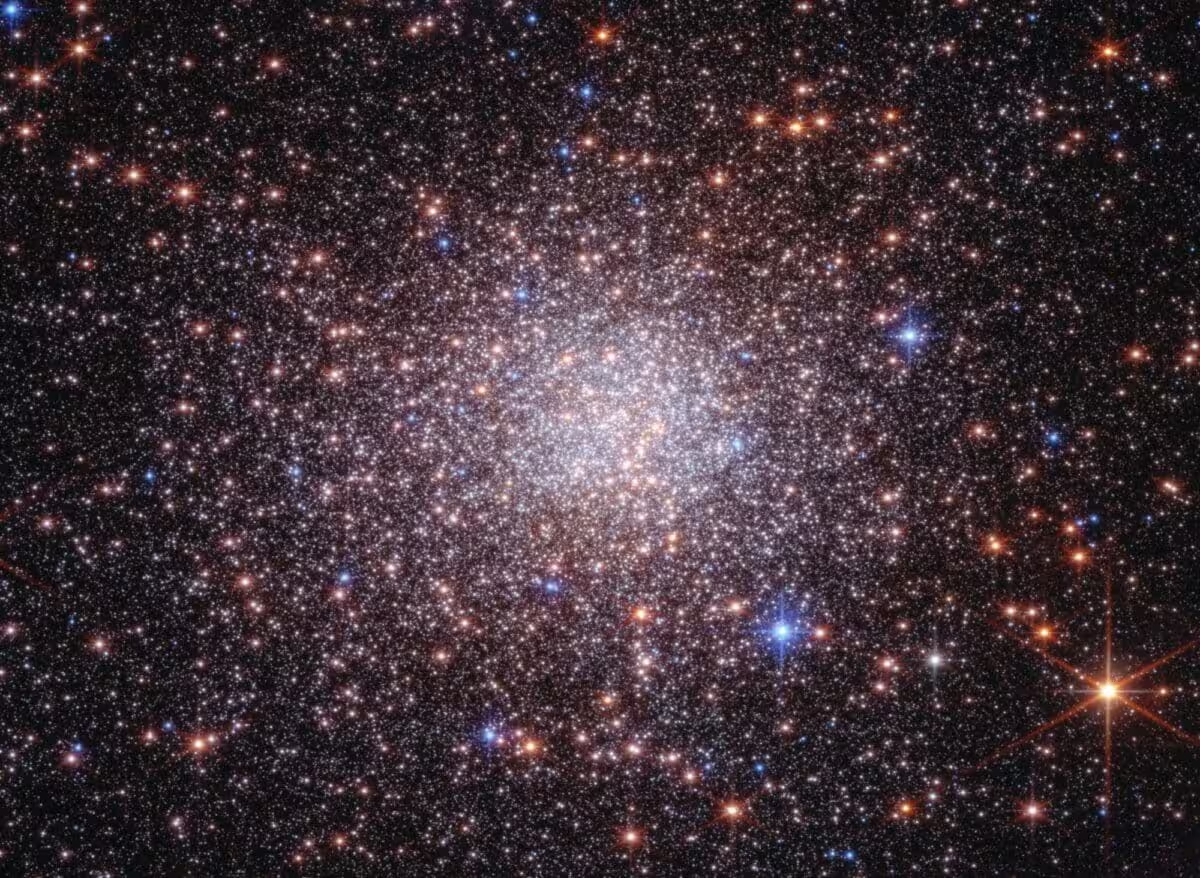
The evidence suggests that Terzan 5’s progenitor was massive enough to retain the gas and heavy elements expelled by exploding stars, allowing successive generations to form over billions of years. In contrast, smaller systems would have lost this material to interstellar space.
“For some reason, this peculiar clump of stars formed separately from the bulge and was not destroyed as the bulge itself formed,” noted Francesco Ferraro of the University of Bologna.
This article has been fact checked for accuracy, with information verified against reputable sources. Learn more about us and our editorial process.
Last reviewed on .
Article history
- Latest version
Reference(s)
- Sabia, Stephen. “James Webb Space Telescope - NASA Science.”, May 25, 2023 NASA <https://science.nasa.gov/mission/webb/>.
- “Giorgia Zullo — University of Bologna — News.” <https://www.unibo.it/sitoweb/giorgia.zullo2/news>.
- Zullo, G.. “The multi-age stellar populations of Terzan 5 as revealed by JWST.”, vol. 709, May 1, 2026, pp. A212, doi: 10.1051/0004-6361/202659349. <https://www.aanda.org/articles/aa/full_html/2026/05/aa59349-26/aa59349-26.html>.
- “W. M. Keck Observatory.”, June 16, 2026 <https://keckobservatory.org/>.
- “Very Large Telescope.” <https://www.eso.org/public/teles-instr/paranal-observatory/vlt/>.
- “Michael Rich.” <https://astro.ucla.edu/michael-rich.html>.
- “Francesco Rosario Ferraro — University of Bologna — Home Page.” <https://www.unibo.it/sitoweb/francesco.ferraro3/en>.
Cite this page:
- Posted by Farah Siddiqui