Researchers Scanned Beneath Egypt’s Nile Delta and Discovered a Massive 2,600-Year-Old Structure Hidden Under Centuries of Mud
Unearthed beneath ancient sediment layers in Egypt: clues hint at a hidden structure from long ago
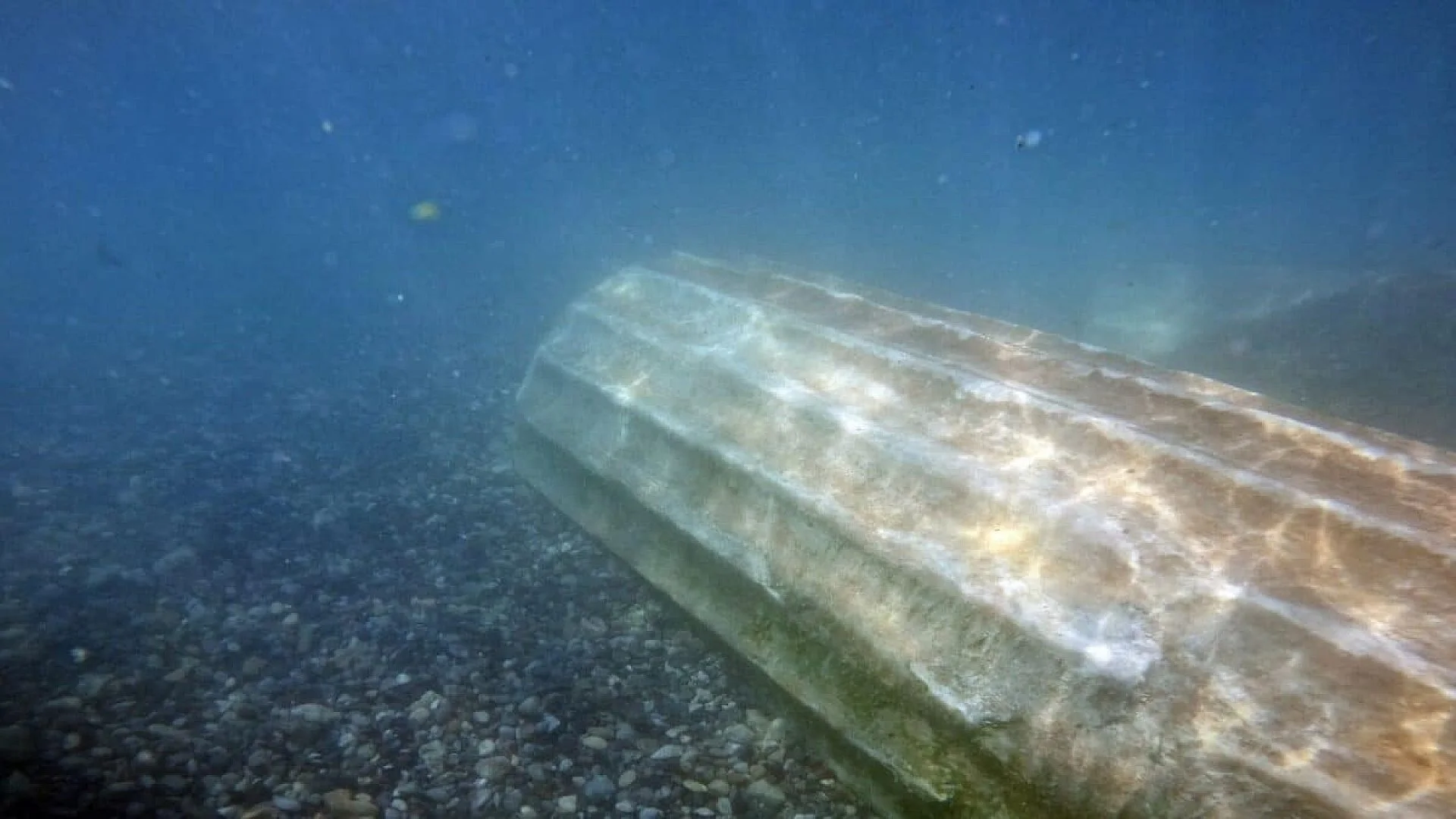
Archaeologists working beneath the historic settlement of Buto in Egypt’s Nile Delta have uncovered a substantial underground feature that may represent a temple dating to roughly 2,600 years ago. The discovery emerged from a combination of satellite‑derived radar data and ground‑based geophysical surveys that highlighted concealed archaeological elements.
Spaceborne Radar Pinpoints Subterranean Target
Researchers first examined radar images gathered by the Sentinel‑1 satellite, focusing on data captured on May 5 2018. By filtering for irregular patterns that could indicate hidden constructions, the team generated a shortlist of promising zones.
These priority areas were then probed with electrical resistivity tomography (ERT), a technique that maps how electrical currents travel through the soil to reveal concealed walls, foundations and other cultural layers without disturbing the ground.
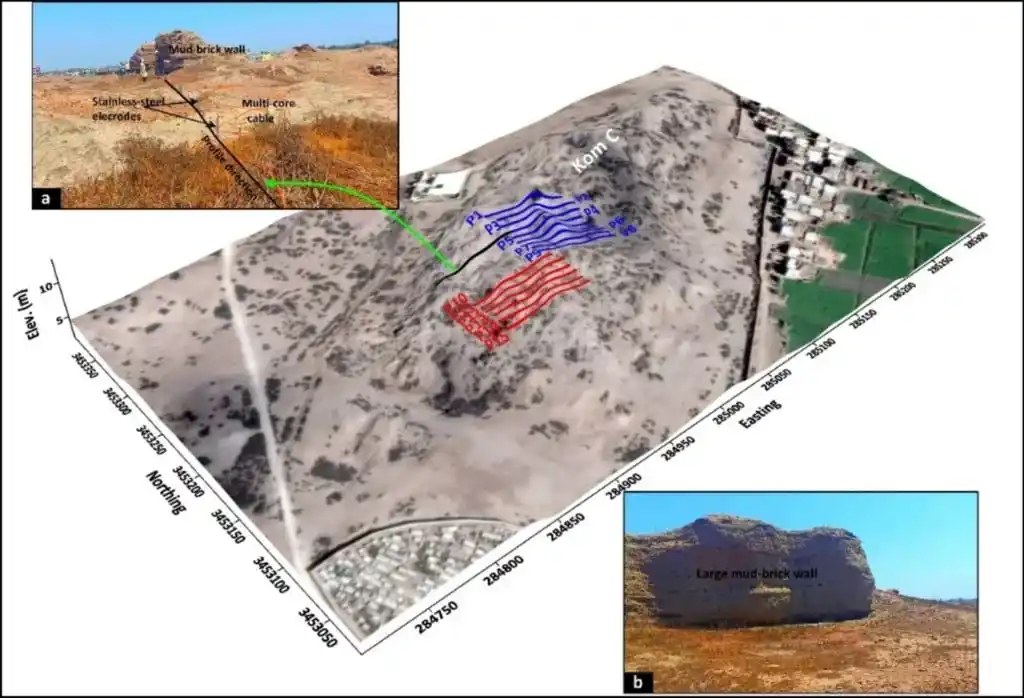
According to the authors, the ERT grid was positioned over anomalies flagged in earlier satellite imagery, allowing the investigators to concentrate their efforts on zones most likely to contain buried remains. The approach yielded a series of subsurface irregularities that offered a detailed glimpse of the hidden architecture.
Six‑Metre Deep Anomaly Reveals Large Mud‑Brick Complex
The geophysical campaign distinguished several occupational strata. The upper three metres were interpreted as a layer of fragmented pottery and debris linked to Roman‑period activity. Beneath that, at approximately six metres depth, the instruments identified a sizeable structural footprint.
The authors of a March 2026 article in Applied Geophysics argue that the depth of the feature points to the Saite era, roughly 2,600 years ago. While the exact purpose of the building remains uncertain, possibilities such as a shrine or tomb were considered.
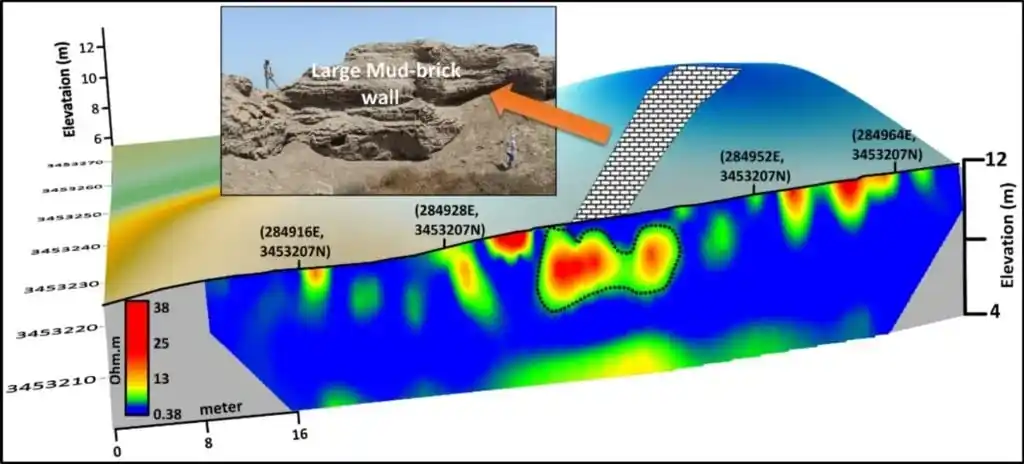
A limited excavation covering a 10‑by‑10‑metre square confirmed the presence of mud‑brick walls that aligned closely with the geophysical anomalies, providing on‑site verification of the remote‑sensing results.
Religious Objects Suggest Temple Function
Among the recovered materials were items typically associated with cultic practices. A small offering basin and a suite of amulets portraying deities such as Isis, Horus, Taweret and Wadjet were highlighted as key indicators of a sacred setting.
“The presence of a small offering basin along with numerous religious amulets depicting Egyptian deities such as Isis, Horus, Taweret, and Wadjet further supports the temple hypothesis,” said the authors.
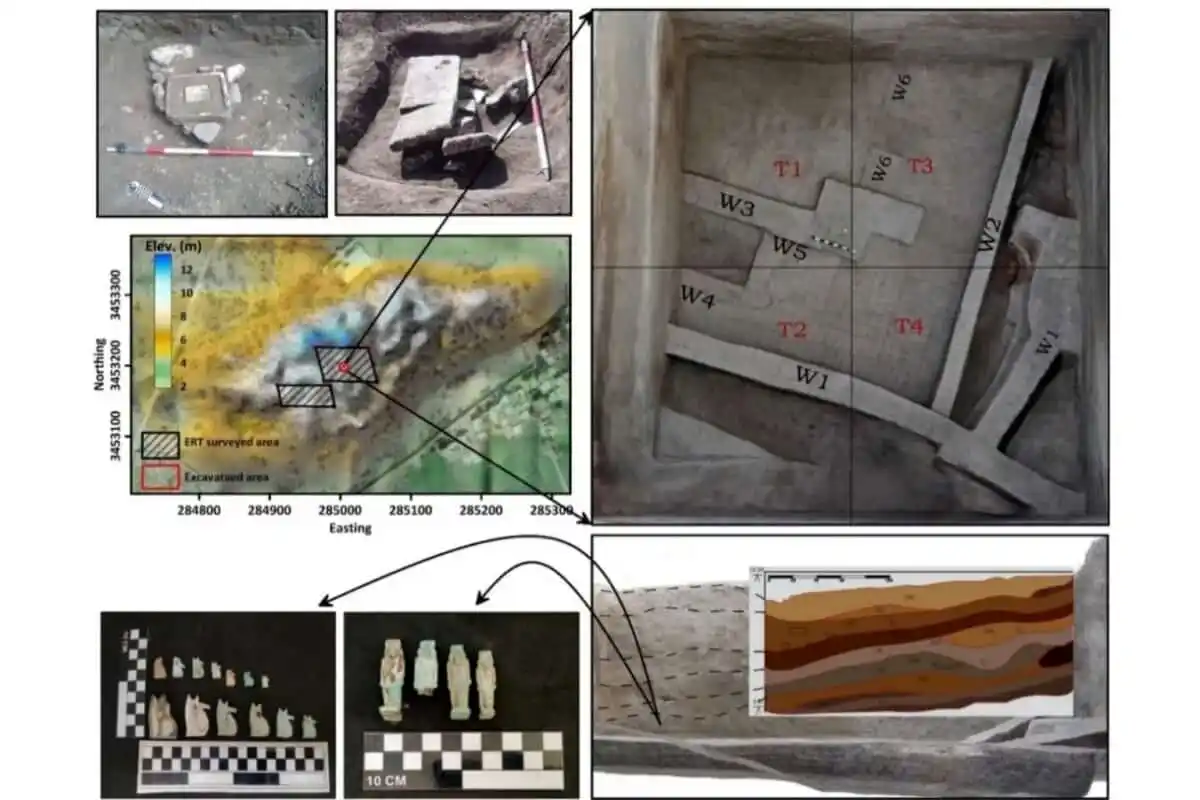
Additional finds included a bronze amulet of Horus the Child, a lion‑shaped amulet, an Anubis representation, fragments of limestone statuary, a faience plaque bearing twin images of Hathor, and a steatite scarab inscribed with the name of King Thutmose III, likely used as an amulet or seal.
“Collectively, these artefacts indicate the presence of a religious site with strong cultic and ceremonial associations, further reinforcing the interpretation of the structure as a temple from the 26th Dynasty,” they noted.
The team also mentioned that another possible temple may lie beneath a deep clay deposit elsewhere in the Buto complex, a hypothesis that future remote‑sensing campaigns aim to explore.
This article has been fact checked for accuracy, with information verified against reputable sources. Learn more about us and our editorial process.
Last reviewed on .
Article history
- Latest version
Reference(s)
- “Sentinel-1 - Sentinel Online.” Sentinel Online <https://sentinels.copernicus.eu/copernicus/sentinel-1>.
- Abouarab, Mohamed A. R.., et al. “Multi-scale detection of buried archaeological elements across different occupation phases: an integrated approach using radar satellite imagery and electric resistivity tomography at Buto, northwestern Nile Delta of Egypt.” Acta Geophysica, vol. 74, no. 2, March 10, 2026 Springer Science and Business Media LLC, doi: 10.1007/s11600-026-01809-4. <https://link.springer.com/article/10.1007/s11600-026-01809-4>.
Cite this page:
- Posted by Farah Siddiqui