Deep Mantle Water Reservoir Equivalent to
Scientists discover a massive water reservoir 700 km deep in Earth’s mantle, locked in rock and unlike any known ocean.
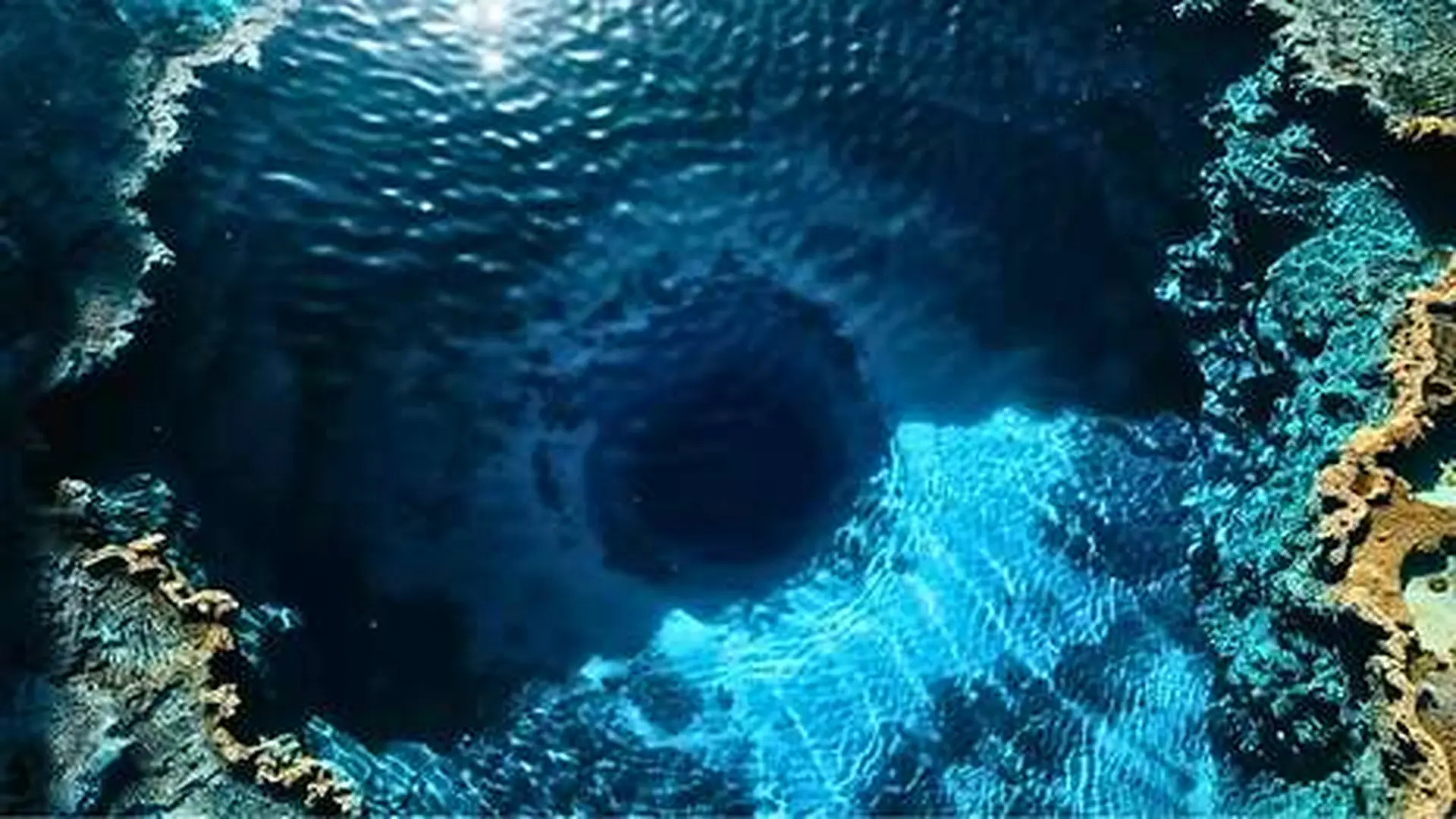
At a depth of roughly 700 km beneath the planet’s crust, a massive slab of rock stores water bound within its mineral crystals under extreme pressure and temperature. This water is not a free‑flowing ocean; instead, hydrogen and oxygen atoms are locked into the crystal lattices of mantle minerals, forming an extensive hidden reservoir.
The existence of this deep‑Earth water pool is supported by a combination of seismic observations, high‑pressure experiments, and a minute mineral fragment retrieved from a diamond that reached the surface. A paper in Science linked anomalous melting at the top of the lower mantle to water released from ringwoodite, a mineral occupying the mantle transition zone.
Mineral Ringwoodite Encapsulates Water in Solid Rock
Ringwoodite is a high‑pressure variant of olivine, one of the dominant minerals in Earth’s upper mantle. It forms between about 410 km and 660 km depth, where intense pressure forces atoms into a tighter arrangement. Its crystal lattice can incorporate hydroxyl groups—hydrogen‑oxygen bonds—into the solid structure.
Steven Jacobsen, a geophysicist at Northwestern University, likened the mineral to a sponge because of its capacity to absorb hydrogen. “Ringwoodite behaves like a sponge, taking in water,” he explained in a Northwestern news release. “Its crystal framework is uniquely suited to attract hydrogen and retain water.”
Calling the content “water” can be misleading, because the reservoir lacks a shoreline or free‑moving sea. Under mantle conditions, water molecules dissociate, and hydroxyl groups become chemically bound to the mineral. The rock stays solid until shifts in pressure or temperature cause some of the bound water to be released.
Laboratory analyses indicate that ringwoodite can retain more than 1 % water by weight. If the entire transition zone held water at that concentration, the total would approach three times the volume of Earth’s surface oceans—a theoretical storage capacity, not a single liquid cavity beneath the crust.
Seismic Data Capture Partial Melting Beneath the Transition Zone
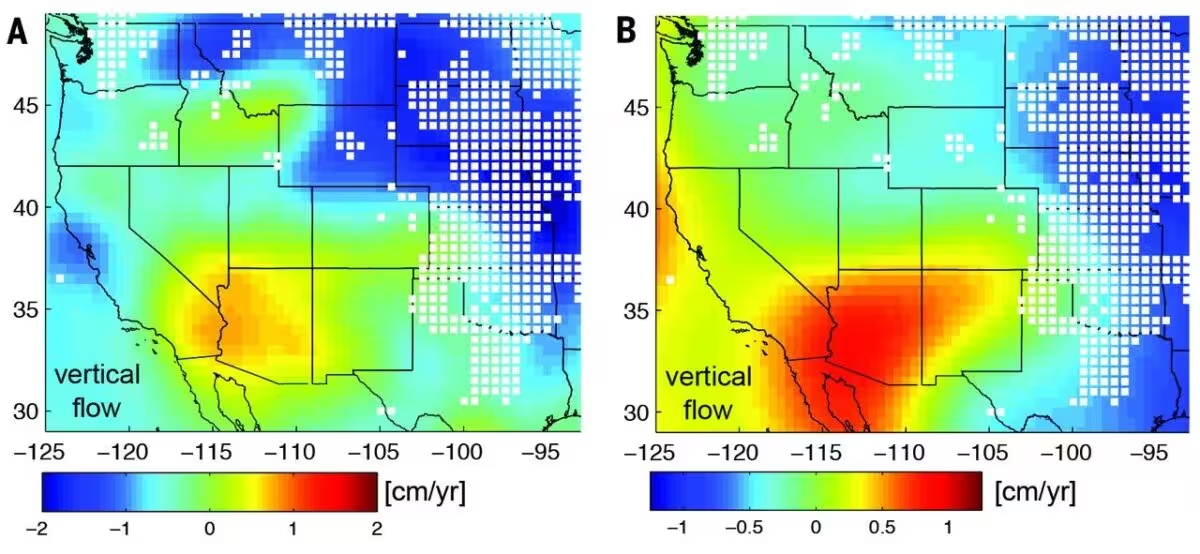
The Science study merged laboratory work with seismic recordings from the USArray, a network of over 2,000 sensors across the United States. Researchers tracked how earthquake‑generated waves traveled through Earth’s interior.
When seismic waves encounter rock of varying temperature, density, or melt fraction, their speed changes. The team identified signatures of limited melting close to the boundary separating the transition zone from the lower mantle, especially in regions where mantle material was descending.
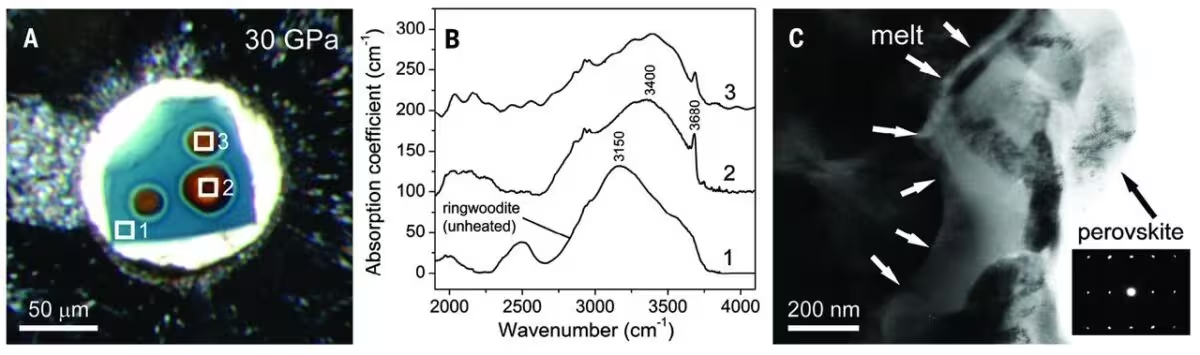
Jacobsen reproduced those conditions by compressing synthetic ringwoodite between tiny diamonds and heating it to temperatures expected at those depths. The experiment generated small amounts of melt at pressures matching the lower edge of the transition zone, mirroring the seismic anomalies observed beneath North America.
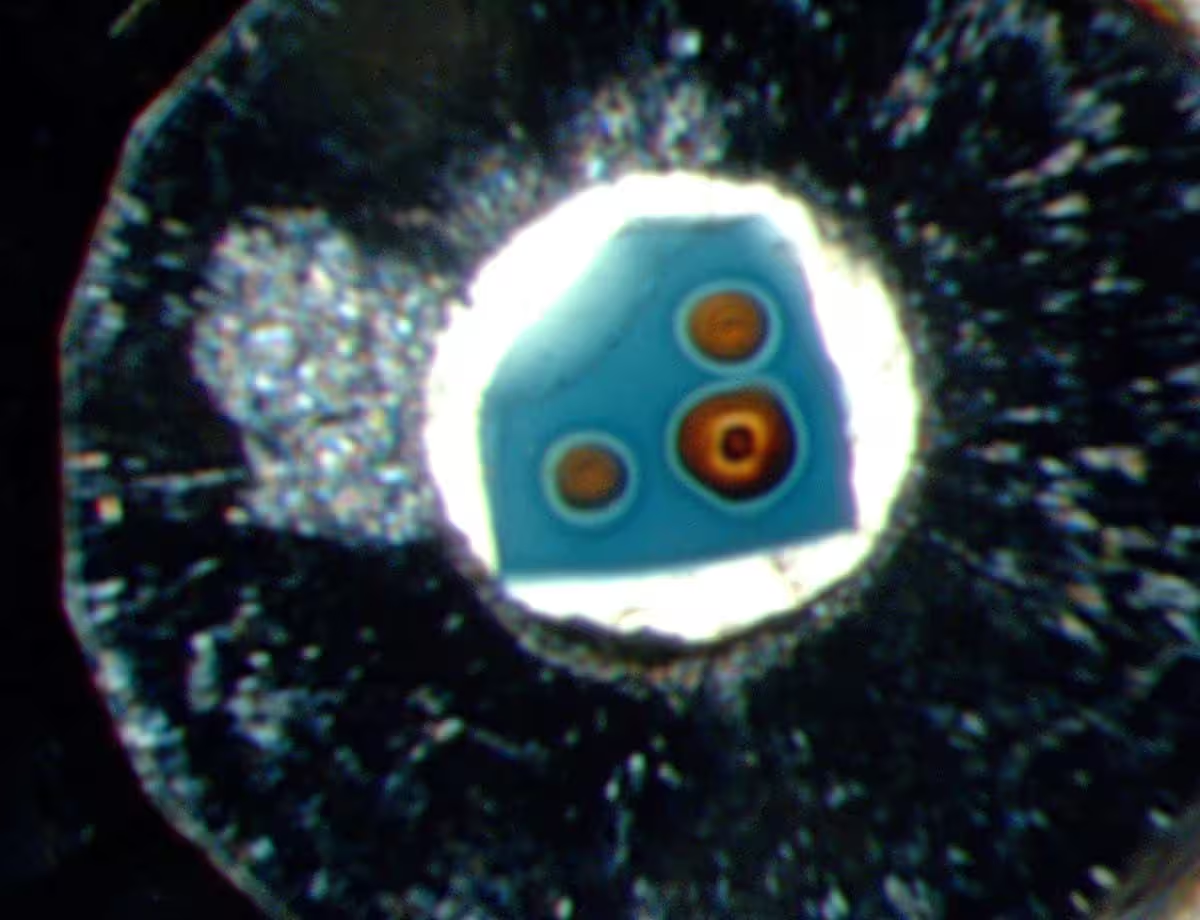
The mechanism is known as dehydration melting. As ringwoodite descends, it transforms into denser minerals that cannot hold as much water. The surplus water exits the crystal lattice, lowering the melting point of surrounding rock.
“When a hydrated rock moves from the transition zone into the lower mantle it must release its water, which induces a small amount of melting,” explained University of New Mexico seismologist Brandon Schmandt in the Northwestern report. “This process is called dehydration melting.”
Only a tiny proportion of the rock needs to melt for seismic instruments to record the effect. The authors estimate that about one percent melt is sufficient to slow seismic waves enough to produce a detectable signal. The observations spanned a broad area beneath the United States and pinpointed melting at depths where water‑rich ringwoodite would convert to lower‑mantle minerals.
Diamond Inclusion Offers Direct Evidence of Hydrous Ringwoodite
A separate investigation delivered a physical sample of water‑bearing ringwoodite extracted from the mantle. Led by Graham Pearson of the University of Alberta, researchers examined a minute diamond from Juína, Brazil, that contained a microscopic inclusion of ringwoodite.
The diamond formed at great depth and later ascended to the surface within volcanic material. Its robust crystal lattice shielded the inclusion during the upward journey; without this protection, ringwoodite would normally transform into another mineral as pressure decreased, erasing any direct evidence.
Chemical analysis revealed that the inclusion held roughly 1.5 % water by weight, providing concrete proof that natural ringwoodite in the transition zone can store water. The findings were reported in Nature shortly before the seismic and laboratory results appeared in Science.
Pearson later noted that a second water‑bearing ringwoodite crystal had been identified. “Since our first report of hydrous ringwoodite, we have discovered another crystal containing water, strengthening the evidence,” he said.
Frank Brenker, a geoscientist at Goethe University Frankfurt, participated in the diamond research. Studies of mineral inclusions trapped in diamonds enable scientists to investigate materials formed at depths far beyond the reach of conventional drilling, preserving clues about Earth’s deep chemistry and structure.
Together, seismic imaging, laboratory replication, and the diamond‑borne sample converge on the conclusion that the mantle transition zone hosts a substantial water reservoir. Partial melting detected near its lower boundary, experimental dehydration melting of ringwoodite, and direct mineral evidence from a deep‑origin diamond all point to water being locked within solid rock at great depths.
This article has been fact checked for accuracy, with information verified against reputable sources. Learn more about us and our editorial process.
Last reviewed on .
Article history
- Latest version
Reference(s)
- Schmandt, Brandon., et al. “Dehydration melting at the top of the lower mantle.” Science, vol. 344, no. 6189, June 13, 2014, pp. 1265-1268. American Association for the Advancement of Science (AAAS), doi: 10.1126/science.1253358. <https://dx.doi.org/10.1126/science.1253358>.
- “Jacobsen.” <https://sites.northwestern.edu/jacobsen/>.
- “New Evidence for Oceans of Water Deep in the Earth.” <https://news.northwestern.edu/stories/2014/06/new-evidence-for-oceans-of-water-deep-in-the-earth>.
- “Graham Pearson | DERTS Faculty.” <https://www.ualberta.ca/en/science/programs/create/diamond-exploration/our-team/faculty/graham-pearson.html>.
- “Goethe-Universität — Frank Brenker.” <https://www.uni-frankfurt.de/68385432/Frank_Brenker>.
Cite this page:
- Posted by Bilal Abbasi