Ancient ‘Bathtub Ring’ Discovered On Mars Reveals The Timeline Of A Vast Lost Ocean
Ancient Martian ocean’s lifespan revealed by newly discovered mineral shoreline, reshaping the hunt for extraterrestrial life
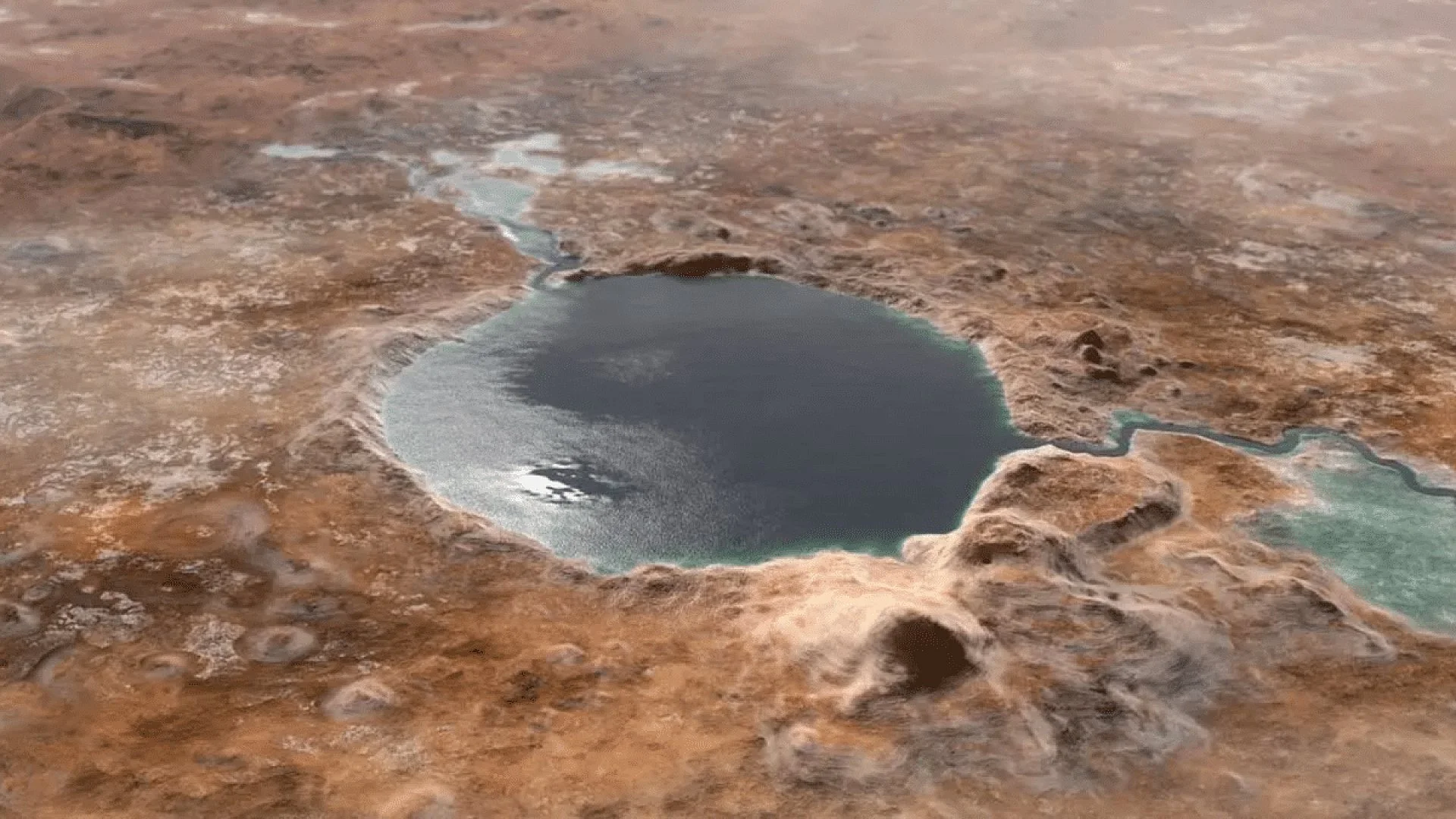
New analysis of the Utopia Planitia basin in Mars’ northern hemisphere has uncovered a broad, mineral‑rich “bathtub ring” that offers one of the most detailed chronologies yet for an ancient Martian ocean. The study, appearing in Nature Communications, indicates that stable surface water may have lingered for as long as 1.5 million years, bolstering arguments that the Red Planet once supported environments conducive to life‑related chemistry.
Manganese Deposits Trace a Forgotten Shoreline
Researchers focused on manganese (hydr)oxides—minerals that crystallise when water and oxygen interact under specific conditions. On Earth, comparable layers line former lake and sea margins, creating “bathtub rings” that preserve former water levels long after the basins dry out. In Utopia Planitia, a pronounced concentration of these minerals aligns at particular elevations, outlining a pattern that matches an ancient coast.
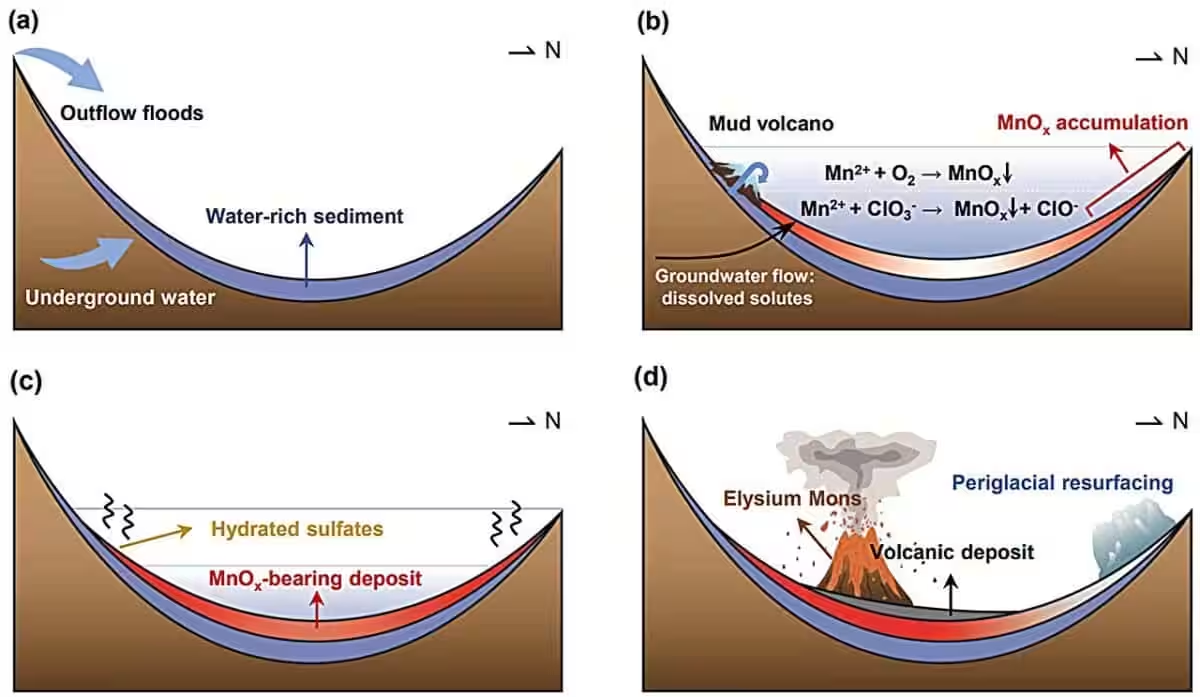
Credit: Nature Communications (2026). DOI: 10.1038/s41467-026-72858-y
AI‑Driven Spectral Survey Maps Water‑Rich Zones
The discovery emerged from a synthesis of short‑wave infrared observations gathered by China’s Zhurong rover, the European Space Agency’s OMEGA instrument, and NASA’s CRISM spectrometer. To sift through the massive dataset, the team deployed a deep‑learning framework called the Spectral Contrastive‑Aware Network (SCANet), which examined more than 5.7 million Martian spectra for the subtle signatures of manganese minerals. The resulting distribution map shows a steady rise in Mn concentration with altitude, followed by an abrupt drop that the authors interpret as the former ocean’s edge.
Reconstructing the Ocean’s Longevity
The spatial pattern of the minerals allows scientists to pinpoint not only the ancient sea’s footprint but also the duration of its stability. The deposits date to the Hesperian epoch, a transitional interval spanning roughly 3.7 to 3.0 billion years ago when Mars shifted from a relatively warm, wetter world toward the cold, arid planet we see today. The authors estimate that the aqueous conditions persisted for 0.8–1.5 million years, a span that far exceeds the brief wet episodes typically inferred for Mars. As they wrote, “This yields a final estimated duration of 0.8–1.5 million years for the presence of stable aqueous conditions in Utopia Planitia. This timescale significantly exceeds what is typically expected for transient surface water activity on Mars, suggesting that Utopia Planitia hosted a long‑lived and evolving aquatic system during the Hesperian epoch, rather than a short‑lived or rapidly evaporating water body.”
Volcanic Surge May Have Triggered the Decline
The same paper links the eventual disappearance of the water‑rich environment to intensified volcanic activity marking the transition from the Hesperian to the Amazonian period. According to the researchers, rising volcanic emissions likely altered the atmosphere, destabilised surface water, and hastened the loss of habitability across the basin. They note, “Overall, the spatiotemporal distribution of MnOx offers a reliable indicator of critical transitions in the evolution of surface aqueous environments over time on Mars. It reveals that the Hesperian–Amazonian transition (~3.0 billion years ago) likely disrupted habitable surface water environments due to increased volcanic activity in Utopia Planitia, marking a critical point in Mars’s geological history when the potential for further prebiotic evolution on the surface was significantly reduced.”
Implications for Martian Habitability
While the study does not present direct evidence of past life, it does suggest that Mars once maintained a stable, water‑rich setting capable of supporting prebiotic chemistry. The inferred timeframe overlaps with the earliest signs of life on Earth, dated to around 3.4 billion years ago, prompting speculation that analogous chemical pathways could have been active on both planets concurrently. Moreover, the authors leave open the possibility that isolated pockets of liquid water may have persisted into the subsequent Amazonian period, extending Mars’ habitability window beyond conventional estimates. If future missions confirm such niches, they could become prime targets in the ongoing quest for ancient biosignatures and preserved organics.
This article has been fact checked for accuracy, with information verified against reputable sources. Learn more about us and our editorial process.
Last reviewed on .
Article history
- Latest version
Cite this page:
- Posted by Bilal Abbasi