A 42,000-Year-Old Asteroid Crater in South Korea Created a Hidden Lake Where Ancient Life May Have Later Emerged
Vestigios bajo cráter revelan existencia de un lago ancestral poco explorado
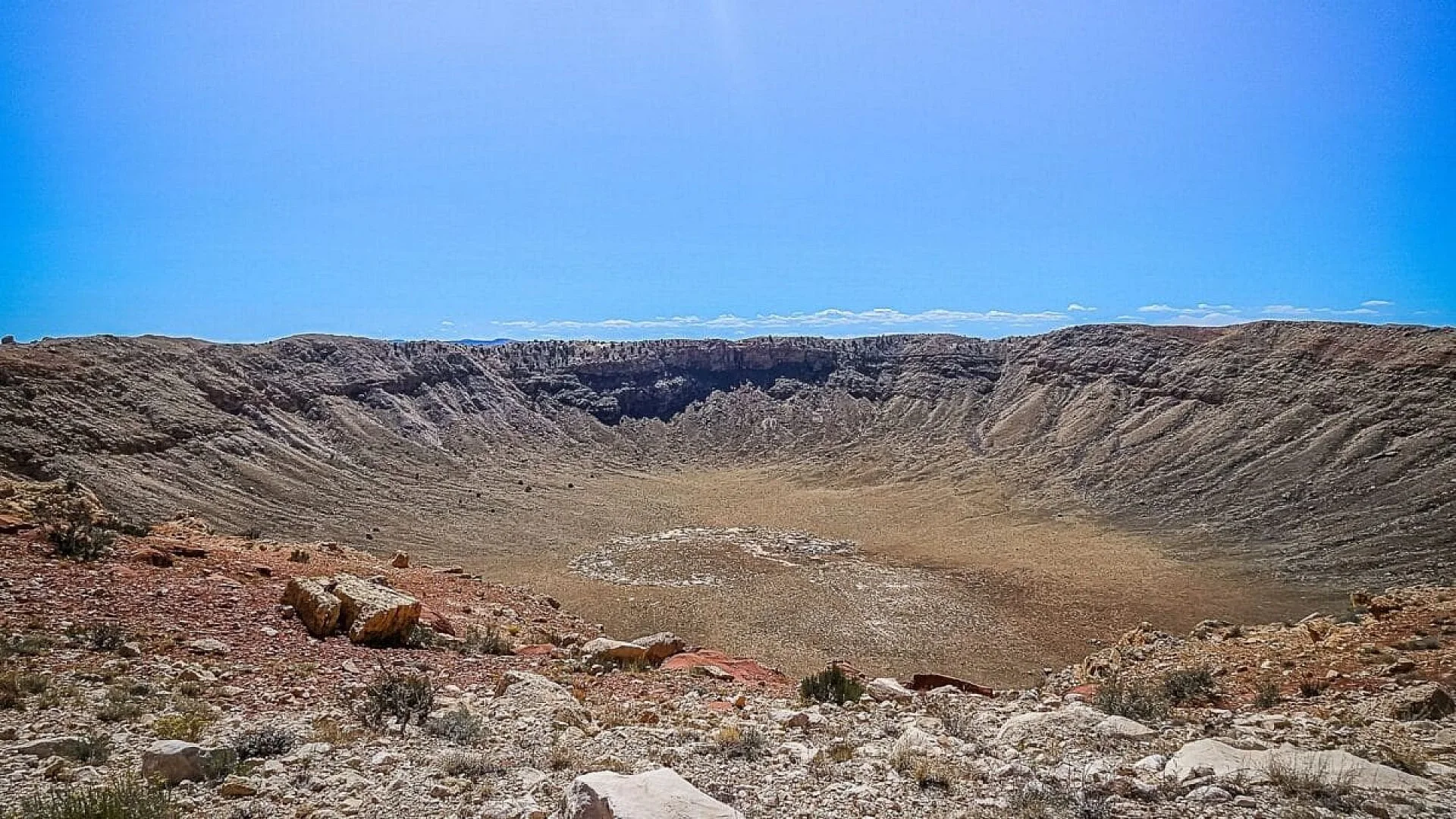
Researchers have uncovered layered mineral formations within a South Korean impact basin that record microbial life thriving in a hydrothermal lake created by an asteroid strike.
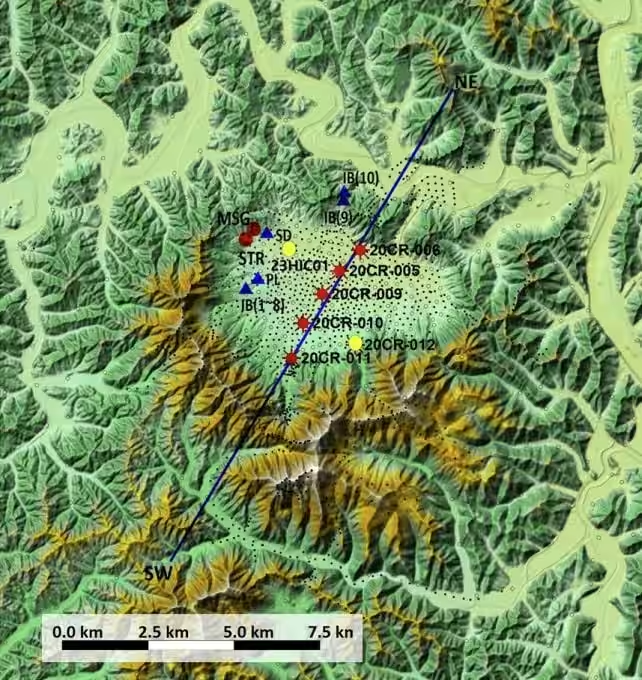
The Jeokjung‑Chogye Basin in Hapcheon, a distinct bowl‑shaped depression that escaped identification as an impact site until recent surveys, was formed when an asteroid collided with the region roughly 42,000 years ago. Earlier work had already documented meteoritic fragments mixed with local rocks, and geomorphic analysis confirmed that the basin once held a sizeable lake.
Impact‑Created Lake Harbors Ancient Microbial Structures
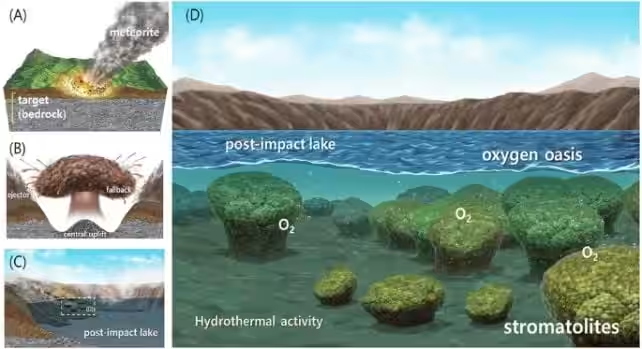
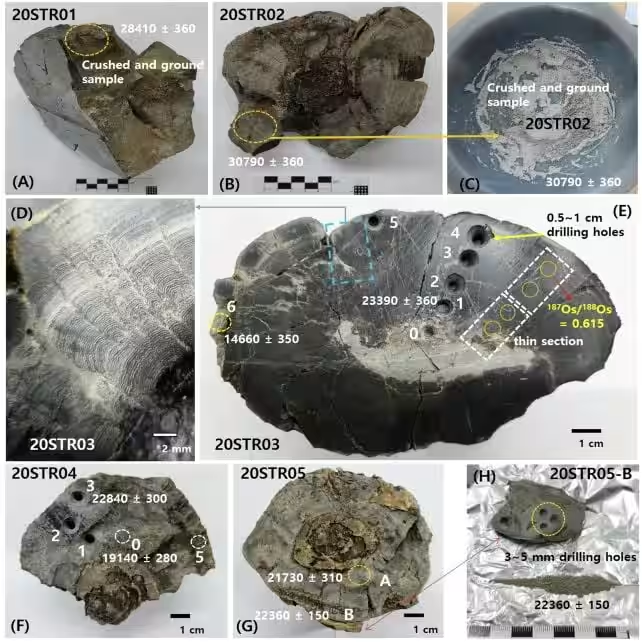
A team led by geologist Jaesoo Lim of the Korea Institute of Geoscience and Mineral Resources (KIGAM) examined sediments beneath the north‑western rim and identified a series of stromatolites—layered mineral bodies produced by microbial mats—measuring between 10 and 20 centimeters in diameter. These structures are not foreign debris transported into the crater; the authors argue they grew in situ under post‑impact conditions.
Geochemical Signatures Reveal Hydrothermal Conditions
Chemical profiling of the stromatolites and surrounding sediments showed elevated levels of europium, an element that becomes markedly more soluble in hot hydrothermal fluids, alongside increased concentrations of calcium, calcite and sulfur. These markers collectively point to a hydrothermal impact lake that persisted long after the crater formed.
Radiocarbon dating of a representative stromatolite placed its formation between about 23,400 and 14,600 years ago, indicating that the hydrothermal environment remained stable for several tens of thousands of years after the initial impact.
“This is the first comprehensive evidence suggesting that stromatolites could form in hydrothermal lakes created by asteroid impacts,” said Jaesoo Lim. “Such environments may have provided favorable conditions for early microbial ecosystems.”
Implications for Early Life and Planetary Exploration
While the authors caution that their results do not establish a direct link between these stromatolites and the rise of atmospheric oxygen, the discovery adds a new dimension to the debate over whether impact events can create habitable niches. The study suggests that other terrestrial craters—and perhaps impact structures on Mars—might also preserve similar biosignatures waiting to be uncovered.
This article has been fact checked for accuracy, with information verified against reputable sources. Learn more about us and our editorial process.
Last reviewed on .
Article history
- Latest version
Cite this page:
- Posted by Bilal Abbasi