NASA’s Perseverance Rover Finds Water Left a Surprising Mark on Mars Rocks
Recent findings from NASA’s Perseverance rover hint that Mars, now a barren and desolate world, once hosted a far more active and intriguing history than previously believed.

NASA’s Perseverance rover has made a groundbreaking discovery on Mars, revealing a watery past that shaped the planet’s Jezero Crater. After nearly four years of exploring the Martian surface, the rover found that diverse rock formations share the same mineral signatures, pointing to a significant role of water in the crater’s formation.
The findings, published in the Journal of Geophysical Research: Planets, were led by Elise Clavé at the Institute of Space Research in Berlin. The research team discovered that three main rock formations exhibit a surprisingly similar mix of minerals, indicating that water played a crucial part in shaping various parts of Mars, not just isolated regions.
Water’s Lasting Impact on Mars
While exploring the Jezero Crater, Perseverance mapped three primary rock formations. Elise Clavé and her colleagues noted that igneous rocks are found on the crater floor and edges, while sedimentary rocks in the western parts were likely carried and deposited by water long ago.
“Three of these units are dominated by mafic to ultramafic rocks: the igneous rocks of Séítah (olivine cumulate on the crater floor), the sedimentary rocks of the Upper Fan (Western delta) and the Margin Unit, of likely igneous origin,” the authors said.
Also ReadQuantum Spin Flips Seen in Real Time
Even though these rock formations have different origins, they all contain the same water-linked minerals, demonstrating the widespread impact of water on Mars.
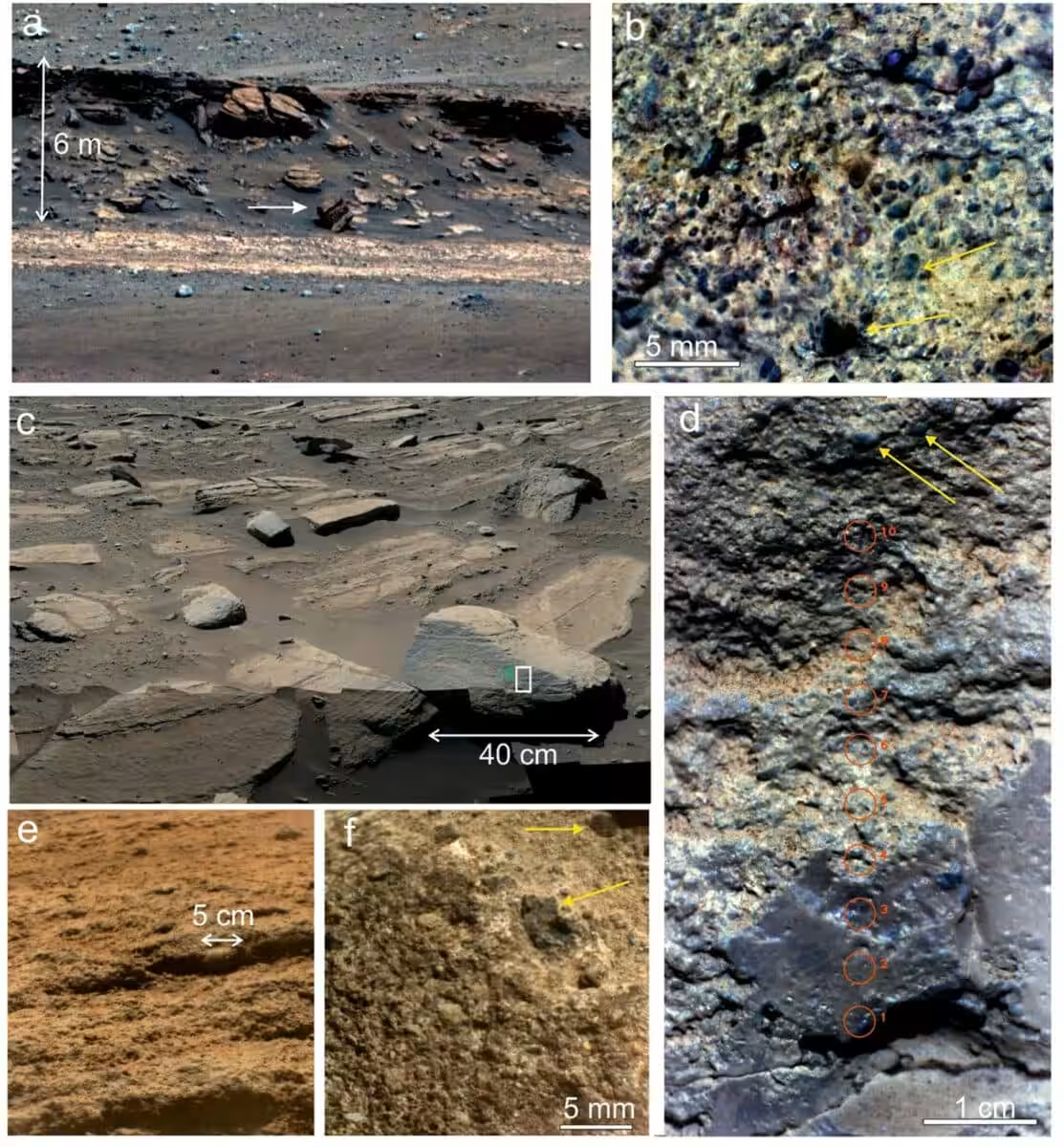
Carbonates are particularly significant in this discovery. The study found that they can make up as much as 16 percent of some rocks, likely formed through chemical reactions between rocks and carbon dioxide, facilitated by liquid water, possibly in the lake that once filled Jezero Crater or in hot water circulating underground.
SuperCam Analysis Reveals the Secrets of Martian Rocks
The discoveries were made possible by SuperCam, a sophisticated instrument on Perseverance that employs multiple laser techniques to analyze rocks from several meters away. This tool allows scientists to determine both the elemental composition and the specific minerals present in a rock without ever physically touching it.
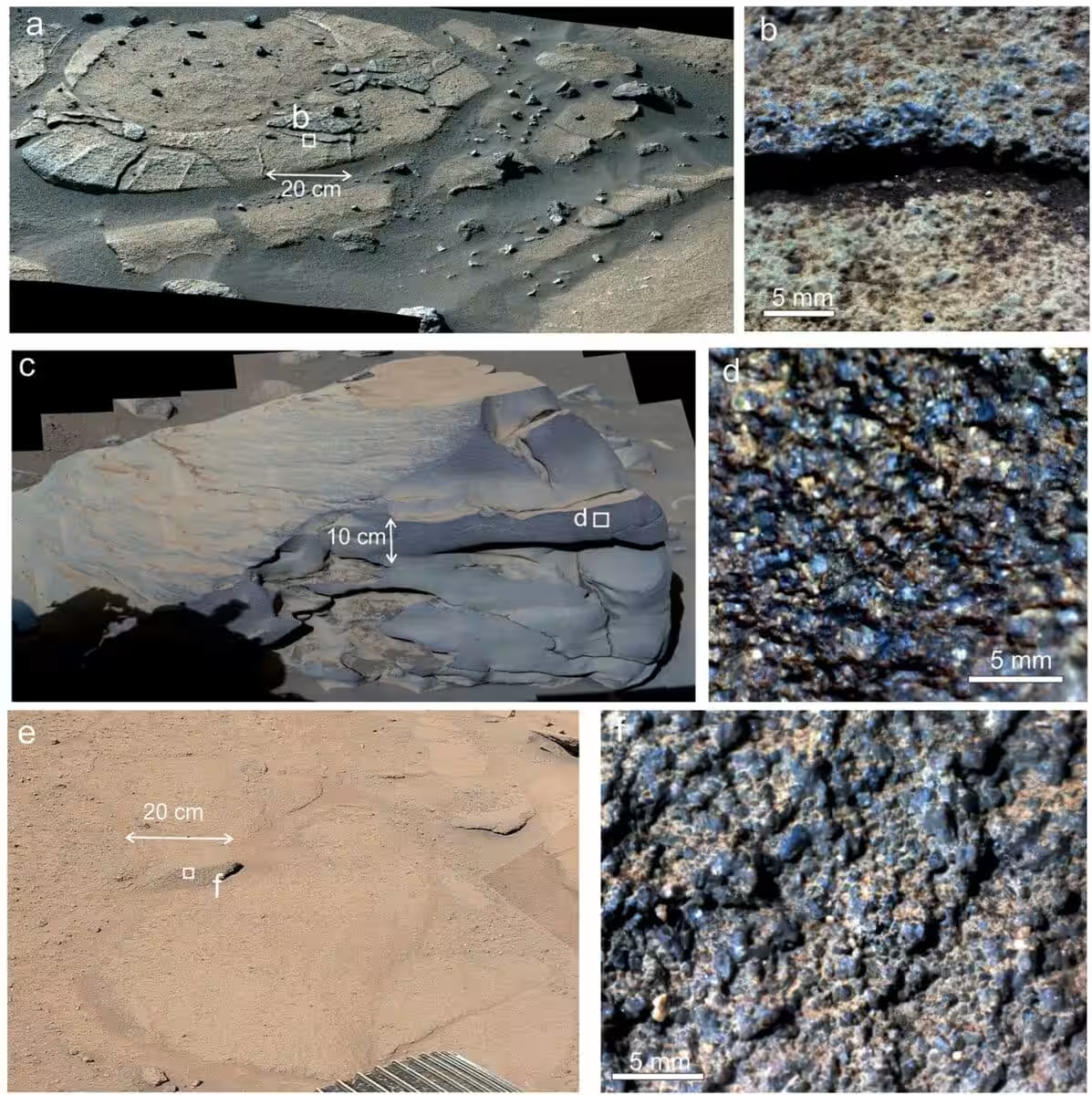
The study also found that minerals such as iron- and magnesium-rich carbonates,hydrated silica, and phyllosilicates are present across all three rock formations. These minerals typically form in the presence of water, indicating that liquid water likely played a role in shaping a variety of rock types across the Jezero Crater, leaving a consistent mineral fingerprint throughout the region.
Was Mars Once a Warmer, Wetter World?
Clavé and her team suggest that the carbonation seen in Jezero rocks could have affected Mars’s climate. By trapping carbon dioxide in rocks, these processes may have gradually cooled the planet, changing it from a wetter, potentially habitable world into the cold, dry Mars observed today.
“These in situ observations may be extrapolated to other carbonate-bearing rocks on Mars and would make the amount of carbon potentially stored in Martian ultramafic rocks overall significant,” stated the study team.
The shifts in Martian minerals caused by water weren’t just local phenomena. They are part of a vast geological narrative that helps scientists trace the Red Planet’s evolution over billions of years.
This article has been fact checked for accuracy, with information verified against reputable sources. Learn more about us and our editorial process.
Last reviewed on .
Article history
- Latest version
Cite this page:
- Posted by Bilal Abbasi