Archaeologists Have Just Identified a Rusted Object Buried in Ancient Ruins Forged From a Meteorite
Excavations at one of China’s most enigmatic ancient locations have revealed a corroded item whose true purpose was only recently uncovered.
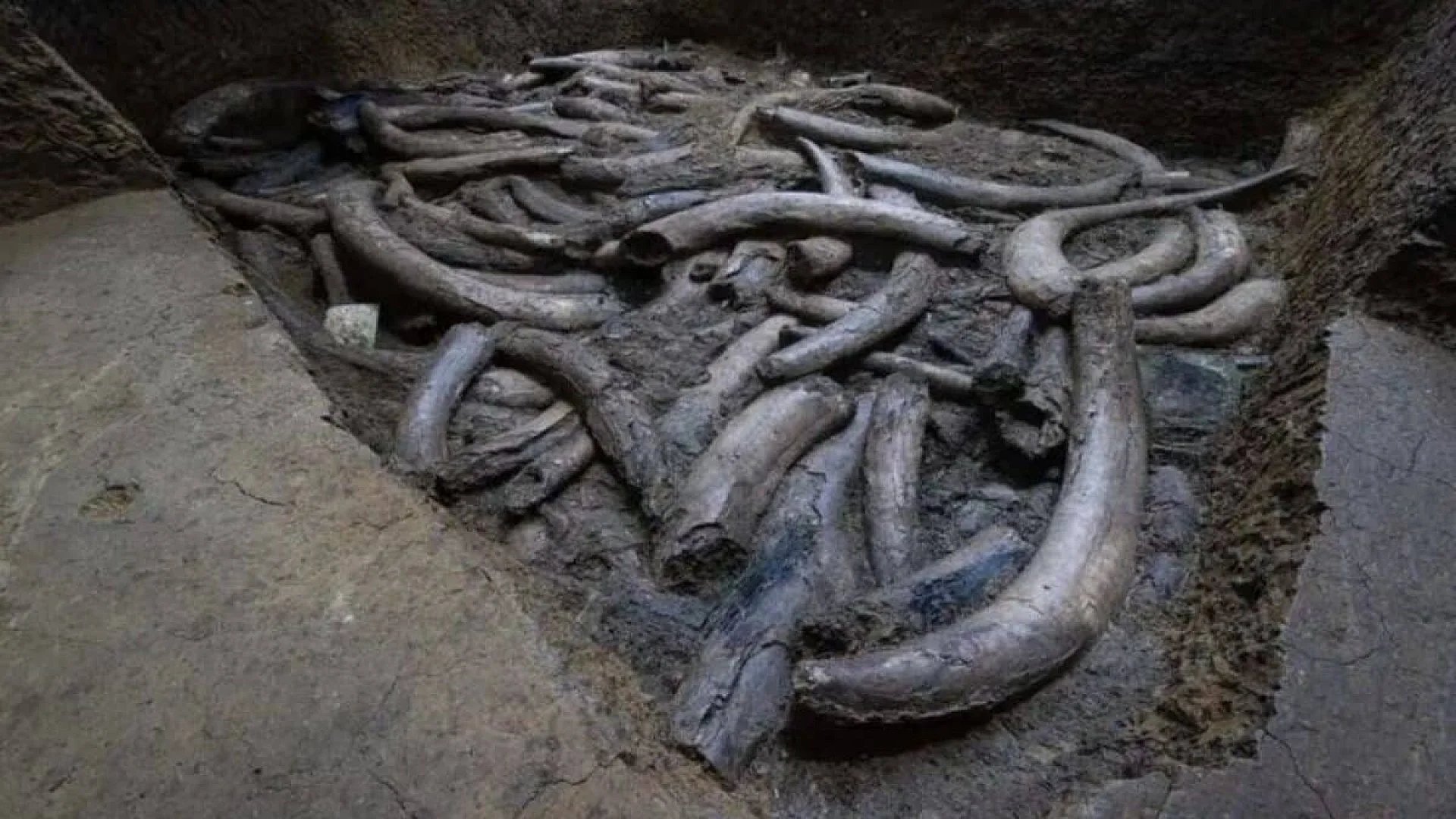
A groundbreaking discovery at China’s renowned Sanxingdui archaeological site has unveiled an extraordinary iron object crafted from meteoritic iron, a finding that has left researchers in awe. The object, unearthed inside a pit, is now recognized as the largest Bronze Age meteoritic iron artifact ever identified in China, according to a new study published in Archaeological Research in Asia.
The research, led by Dr. Haichao Li, focuses on an axe-like object discovered in Pit No. 7 at Sanxingdui. This remarkable artifact not only boasts an unusual composition but also sheds light on a potentially distinct metalworking tradition from that of northern China during the Bronze Age.
Sanxingdui, situated in Guanghan within China’s Sichuan Province, dates back to the Shang Dynasty period between 2800 to 600 BCE. This site is particularly famous for its striking bronze masks, bronze trees, and ceremonial sculptures, which set it apart from other ancient Chinese sites.
The meteoritic iron object was excavated alongside other ceremonial artifacts in one of those pits. Researchers describe it as an axe-like tool or weapon measuring approximately 20 centimeters in length. Unfortunately, the object is fragile and survives today in three fragments.
The Iron Was Traced Back to Meteorites
To determine the nature of the metal, researchers employed metallographic analysis along with SEM-EDS testing, a method used to examine metallic composition at a microscopic scale.
The study reveals that the artifact contains highly homogeneous nickel-iron and shows little evidence of heavy cold-working after shaping. The researchers noted that producing metal with such uniform chemistry would have been extremely challenging using known Late Shang Dynasty smelting technologies.
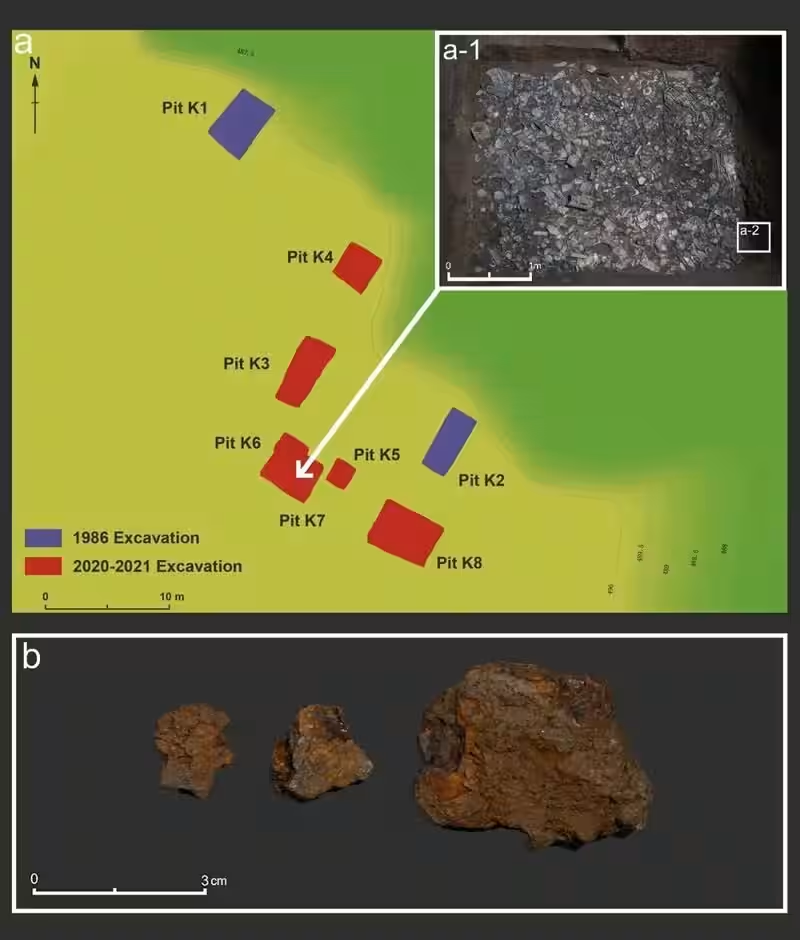
This finding led the team to conclude that the material most likely originated from a meteorite. Co-author Dr. Zishu Yang explained that the current analysis still cannot determine the exact type of meteorite used to forge the object.
“While the SEM-EDS results provide preliminary insights, they are insufficient to definitively classify the specific type of meteorite,” Yang said in comments included in the study.
Also ReadQuantum Spin Flips Seen in Real Time
Only A Few Meteoritic Iron Artifacts Are Known In China
Meteoritic iron artifacts remain extremely rare across China. Researchers identified only 13 confirmed examples so far. Most of these discoveries come from northern regions such as Henan, Hebei, and Beijing, while a smaller number were uncovered in Hubei and Sichuan. The oldest known example is a knife from the Narensu cemetery in Xinjiang dated to around 3000 BCE.
The researchers also pointed out that the Xinjiang knife and the Sanxingdui object are currently the only two monometallic artifacts made entirely from meteoritic iron in China. Other known examples from the Central Plains combine bronze with meteoritic iron inserts in toolsor weaponsoften associated with elite burials.
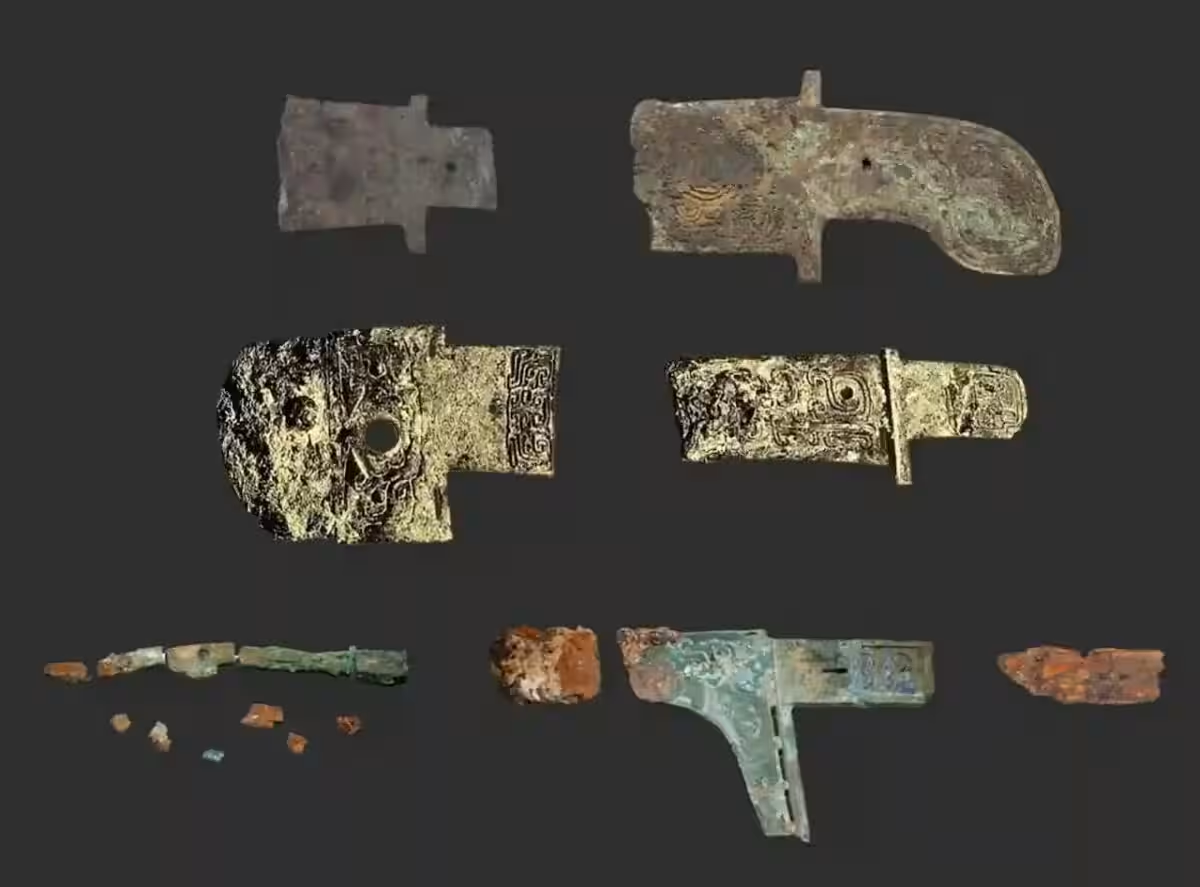
For the authors of the study, this difference suggests that southwestern China may have followed metallurgical practices distinct from those of the Central Plains during the Bronze Age.
A Possible Ritual Object
Even though the artifact resembles a weapon or practical tool, archaeologists believe it may have carried stronger symbolic value. That interpretation comes largely from its discovery inside the Sanxingdui sacrificial area, where most excavated objects are linked to ritual activities rather than everyday use.
Dr. Yang noted that rare metals in ancient China likely held both practical and ceremonial significance because metal objects themselves were scarce at the time. As he added:
“In the broader context of ancient China, we believe cultural and practical considerations likely coexisted. Early metal was scarce and imbued with sacred significance; after large-scale production, its use became increasingly pragmatic. Due to the extreme rarity of meteoritic iron artifacts, it remains difficult to determine which factor predominated nationwide.”
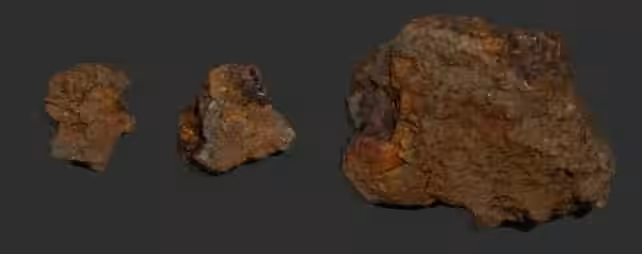
Researchers say the artifact may have served a ceremonial role rather than a practical one. Ongoing excavations at Sanxingdui could reveal how it was used within the ritual complex.
This article has been fact checked for accuracy, with information verified against reputable sources. Learn more about us and our editorial process.
Last reviewed on .
Article history
- Latest version
Reference(s)
- “Detail.” <https://www.scopus.com/authid/detail.uri?authorId=58315705700>.
Cite this page:
- Posted by Bilal Abbasi