Astronomers Reveal That Giant Milky Way Lobe Is Actually a Nearby Stellar Bubble
Astronomers finally solve the decades‑old mystery of the giant structure once thought to erupt from the Milky Way’s core.
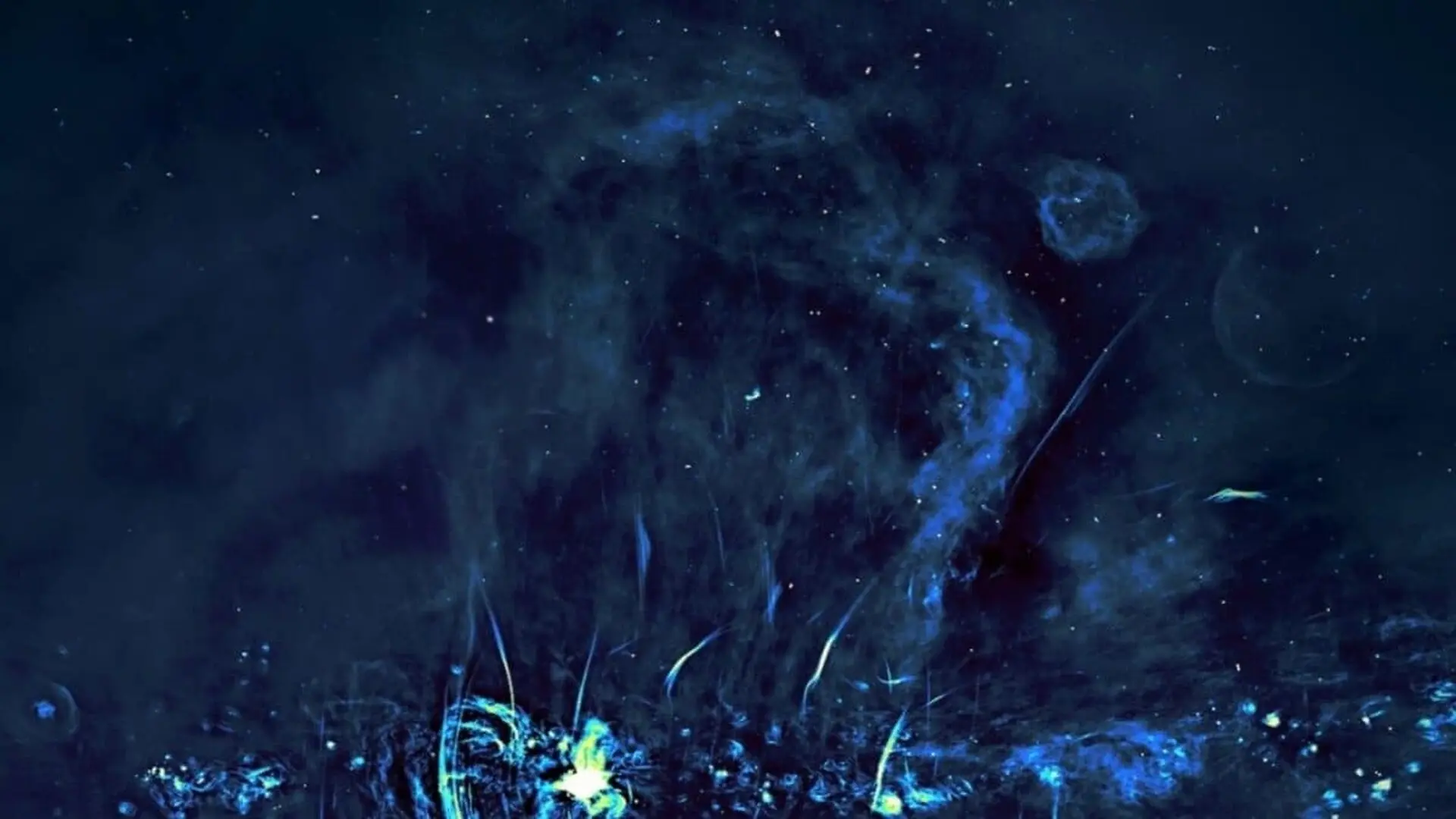
A team of astronomers has finally clarified the nature of a luminous bubble that for four decades was thought to be a colossal outflow originating from the Milky Way’s core. The new study, appearing in Astronomy & Astrophysics, shows that the feature is a relatively nearby cloud of ionized gas shaped by the activity of massive stars, not a massive eruption from the galactic centre.
Revisiting a Misunderstood Galactic Feature
The structure, historically called the Galactic center lobe, seemed to rise thousands of light‑years above the dense, dusty region surrounding the Milky Way’s nucleus. Early radio maps suggested a towering plume extending outward from the centre, prompting a range of theories from supernova remnants to energetic outbursts linked to the supermassive black hole Sagittarius A* the Milky Way.
Because the galactic centre is shrouded in thick dust and crowded with overlapping clouds, distinguishing separate structures is notoriously difficult. The lower segment of the lobe blended into the bright galactic plane, reinforcing the illusion of a single, giant extension.
How New Spectroscopic Maps Changed the Picture
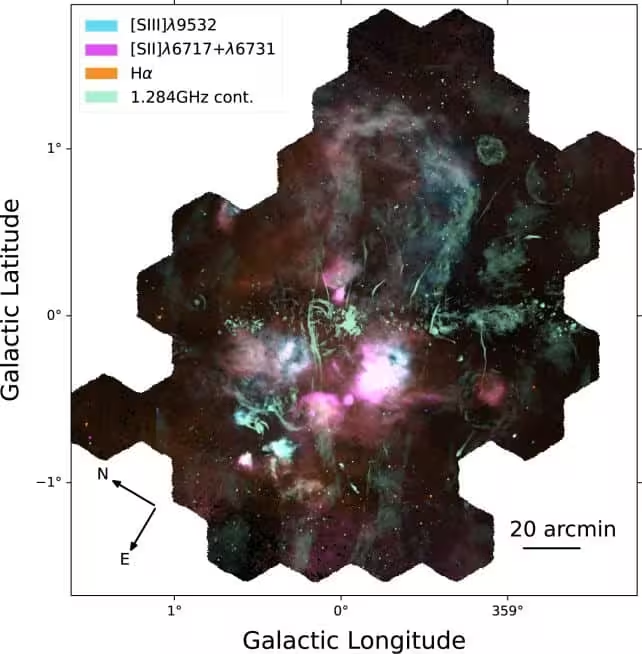
Researchers turned to the SDSS‑V Local Volume Mapper, a survey that charts emission from ionized gases across the Milky Way. By focusing on sulfur‑ion lines—radiation that can pierce dust more effectively than shorter wavelengths—they were able to trace the elusive lower portion of the structure.
Combining these emission maps with three‑dimensional dust reconstructions revealed that the apparent “missing” segment was simply obscured by the complex foreground. The analysis placed the bubble at roughly 6,500 light‑years from Earth, a stark contrast to the earlier assumption that it lay near the galactic centre some 26,000 light‑years away.
Stellar Winds and Supernovae Carve a Local Bubble
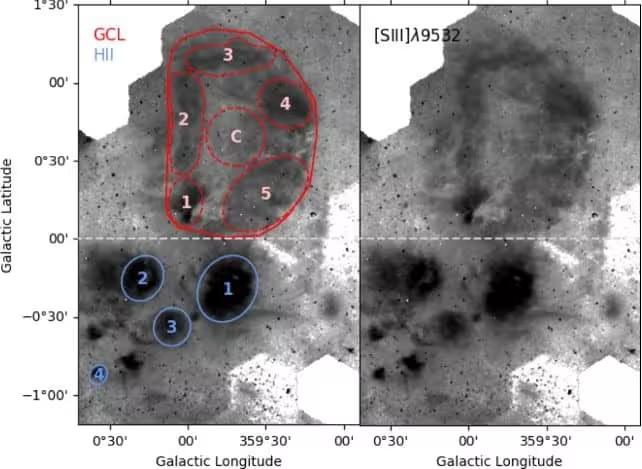
The revised interpretation identifies the feature as a large hydrogen cloud illuminated by ultraviolet radiation from massive stars. The authors propose that a previous generation of such stars excavated a cavity in the surrounding interstellar medium, and that subsequent supernova explosions injected additional energy, inflating the bubble.
Radiation from surviving massive stars now highlights the bubble’s rim, producing the bright arc that appears as a loop when viewed from Earth. The structure spans about 115 light‑years across, placing it in the same size class as well‑known phenomena like Barnard’s Loop near Orion.
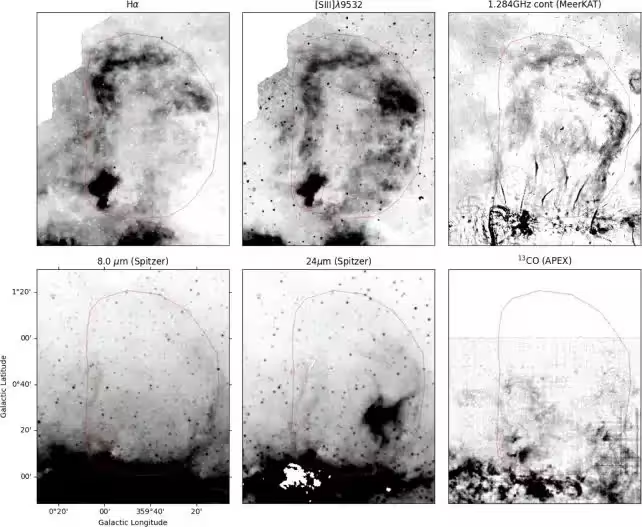
The findings, published in Astronomy & Astrophysics, illustrate how modern spectroscopic surveys can overturn long‑standing assumptions about familiar Galactic landmarks, refining our picture of the Milky Way’s inner regions.
This article has been fact checked for accuracy, with information verified against reputable sources. Learn more about us and our editorial process.
Last reviewed on .
Article history
- Latest version
Reference(s)
- Kreckel, K.., et al. “SDSS-V LVM: Verifying what, and where, the “Galactic center lobe” is.” Astronomy & Astrophysics, vol. 710, June 12, 2026, pp. A205 EDP Sciences, doi: 10.1051/0004-6361/202659505. <https://doi.org/10.1051/0004-6361/202659505>.
Cite this page:
- Posted by Farah Siddiqui