NASA Opens Media Access to Roman Telescope Launch Ahead of Groundbreaking Cosmic Survey
NASA readies its next space science era, with the Roman Space Telescope and crewed missions approaching key launch milestones.
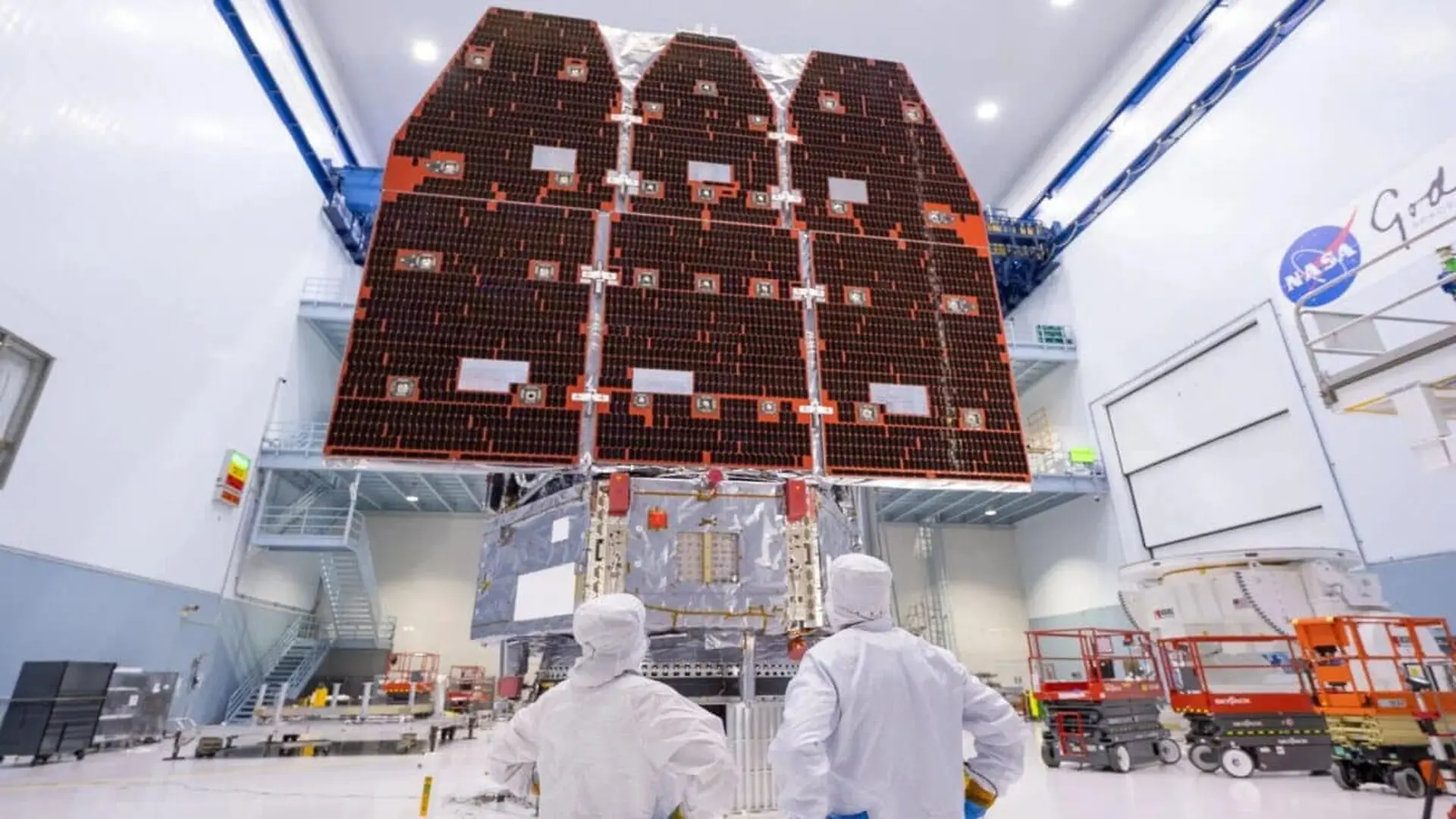
NASA is gearing up for a pivotal stretch of exploration as the Nancy Grace Roman Space Telescope advances toward its launch sequence, coinciding with preparations for SpaceX’s Crew‑13 mission. The agency disclosed media‑access information for these initiatives, signaling a fresh era for both observational astronomy and crewed spaceflight.
Media Opportunities Announced for Roman Telescope and Crew‑13 Launches
In a release posted by NASA, journalists were invited to engage with coverage surrounding the Roman Space Telescope and the upcoming Crew‑13 launch. The notice outlines how reporters can follow the missions and underscores NASA’s commitment to transparency as key milestones approach.
The telescope bears the name of NASA’s inaugural chief astronomer, honoring her legacy in establishing space‑based observational science. Its primary mirror rivals the size of the Hubble Space Telescope, yet its instruments deliver a substantially broader field of view.
Positioned within a schedule of forthcoming operations, the Roman mission will undergo rigorous verification, transport logistics, and launch preparations. Engineers, technicians, and scientists collaborate at each step to ready the observatory for the harsh conditions of orbit.
The agency’s outreach reflects growing enthusiasm for next‑generation telescopes. As new platforms prepare for deployment beyond Earth, the scientific community anticipates large‑scale surveys that will complement the detailed studies performed by existing observatories.

Roman Telescope Set to Map Unseen Cosmic Structures
Equipped to conduct wide‑field infrared surveys, the Roman Space Telescope will enable astronomers to probe objects that elude visible‑light detectors. Its scientific agenda tackles some of the most profound questions in cosmology, such as the properties of dark energy and the historical distribution of matter.
A central objective is to generate expansive maps of galaxies and stars, helping researchers trace the formation and evolution of large‑scale structures over billions of years. The resulting datasets may shed new light on how the universe has transformed since its earliest epochs.
Beyond cosmology, Roman will also pursue the detection of exoplanets. By applying specialized observational techniques, the telescope aims to broaden our understanding of planetary systems beyond the Solar System.
Unlike many prior missions that focused on single targets, Roman’s design emphasizes comprehensive sky coverage, producing a rich archive that scientists worldwide can mine for future investigations.
Crew‑13 Reinforces NASA’s Ongoing Human Spaceflight Program
In parallel with robotic missions, NASA is advancing crewed flights through its collaboration with commercial launch providers. The upcoming SpaceX Crew‑13 flight forms part of the agency’s sustained effort to ferry astronauts to and from the International Space Station.
These crewed expeditions support a range of scientific experiments, station upkeep, and technology demonstrations essential for longer‑duration exploration. The ISS remains a pivotal laboratory for studying human physiology and equipment performance in microgravity.
Partnering with companies like SpaceX has reshaped access to low‑Earth orbit, establishing a model where privately built spacecraft complement government‑driven objectives.
The interplay between the Roman telescope and Crew‑13 highlights two complementary pathways in space exploration: robotic observatories expand our cosmic knowledge, while crewed missions refine the capabilities required for deeper ventures beyond Earth’s orbit.
A Transformative Phase for Astronomy and Exploration
The activation of the Roman Space Telescope will represent a milestone for contemporary astrophysics, delivering an unprecedented volume of observations that could influence research trajectories for years to come.
NASA’s continued commitment to scientific missions underscores the drive to address lingering mysteries—from the universe’s accelerating expansion to the diversity of worlds orbiting distant stars. Each endeavor adds a vital piece to humanity’s expanding cosmic narrative.
As launch preparations accelerate, engineers and scientists edge closer to a venture poised to reshape large‑scale astronomical surveys. The forthcoming data may prompt fresh insights into galaxy formation, planetary demographics, and the forces steering cosmic evolution.
This article has been fact checked for accuracy, with information verified against reputable sources. Learn more about us and our editorial process.
Last reviewed on .
Article history
- Latest version
Reference(s)
- “NASA Invites Media to Roman Space Telescope, Crew-13 Launches - NASA.” NASA <https://www.nasa.gov/news-release/nasa-invites-media-to-roman-space-telescope-crew-13-launches/>.
Cite this page:
- Posted by Karan Das