NASA’s Roman Telescope Goes Vertical at Kennedy Center, Paving Way for 100‑Fold Hubble View
NASA’s Nancy Grace Roman Space Telescope hits a key milestone, edging nearer to launch and its groundbreaking scientific mission.
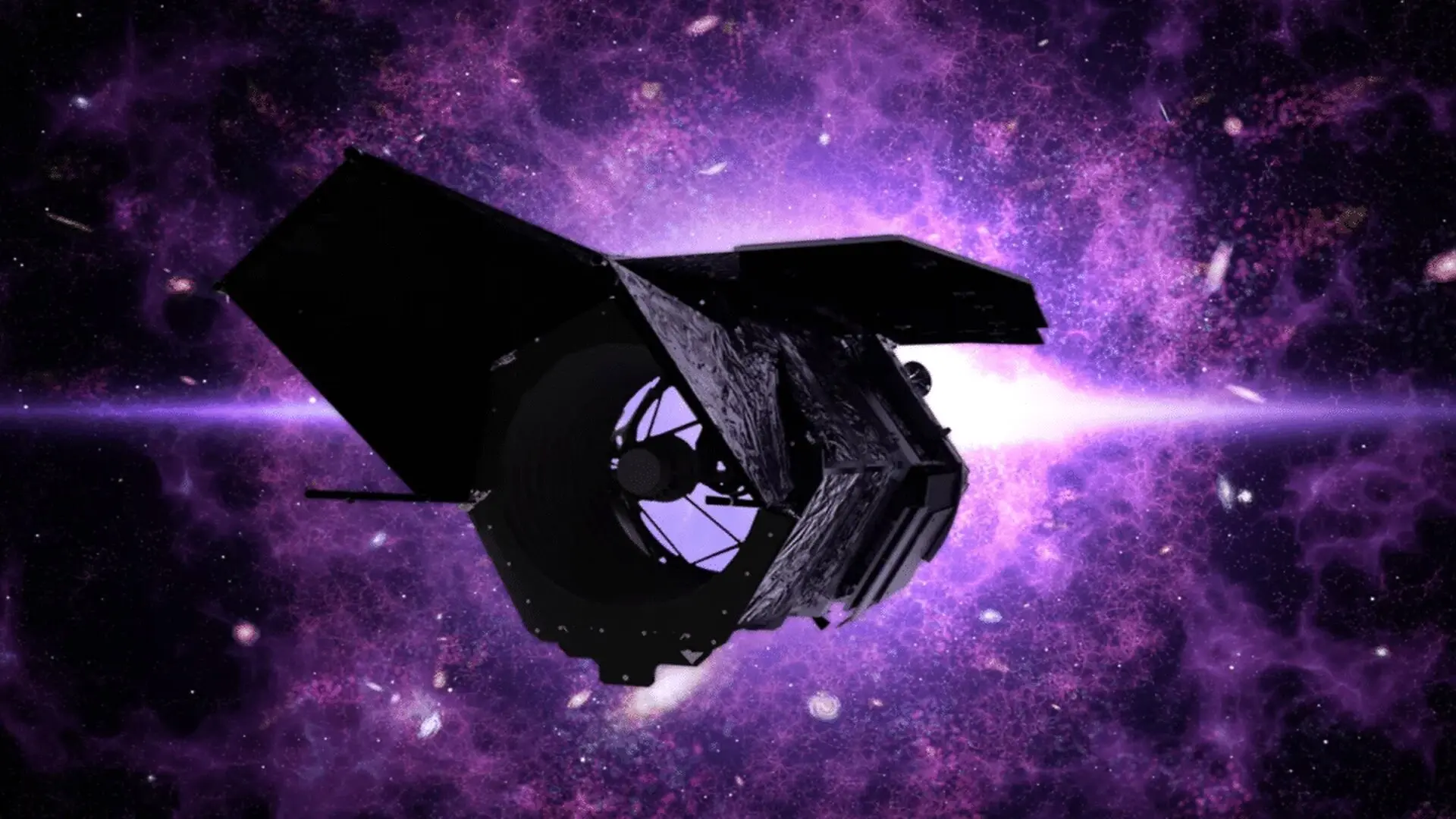
NASA has advanced the Nancy Grace Roman Space Telescope to a critical phase of pre‑launch processing, moving the observatory a step closer to delivering unprecedented views of the cosmos.
Kennedy Facility Readies Roman for Final Checks
A recent update from NASA details how the telescope was shifted from NASA’s Goddard Space Flight Center in Maryland to the Kennedy Space Center in Florida, traveling inside a climate‑controlled container that shielded its delicate instruments throughout the journey.
Upon reaching the Florida launch site, the spacecraft was positioned within the Payload Hazardous Servicing Facility, a clean‑room environment designed for handling sophisticated observatories before they depart Earth.
In preparation for the next processing steps, technicians performed a thorough decontamination of the airlock zone, a precautionary measure aimed at preserving the telescope’s performance once it reaches orbit.
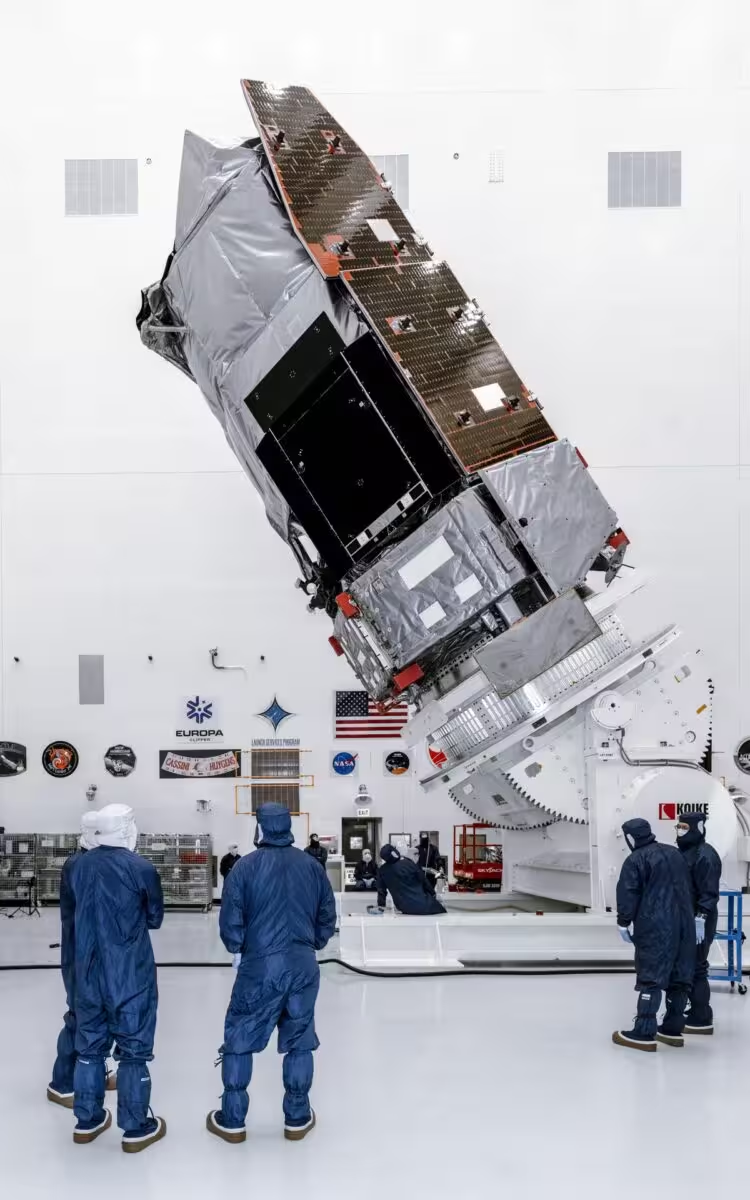
After the cleaning cycle, engineers extracted the Roman telescope from its protective housing and elevated it into the high bay. The maneuver required synchronized efforts from several engineering groups responsible for safety, handling protocols, and launch readiness.
Positioned vertically, the observatory can now undergo a series of inspections and tests, each designed to verify that its subsystems can endure the rigors of space travel.
Roman Telescope Set to Expand Astronomical Survey Capabilities
The observatory carries the name of Nancy Grace Roman, NASA’s pioneering chief astronomer whose advocacy helped launch the Hubble Space Telescope, and is built to conduct wide‑field studies of the universe.
With a field of view projected to be at least one hundred times broader than Hubble’s, Roman will capture expansive sky regions in a single exposure, accelerating the creation of comprehensive cosmic maps.
This expansive surveying approach is expected to complement data from other flagship missions, delivering large‑scale datasets that reveal structures and phenomena that smaller‑field observations might miss.
Key scientific objectives include probing the enigmatic force of dark energy that drives cosmic acceleration, as well as detecting and characterizing exoplanets through high‑precision surveys.
By providing unprecedented coverage of distant galaxies and planetary systems, Roman aims to deepen our understanding of galaxy formation, planetary evolution, and the broader dynamics of the universe.
Approaching Launch: Integration and Mission Deployment
The recent shift to a vertical orientation marks a significant milestone as the telescope moves through a series of integration and testing phases at Kennedy Space Center.
In the forthcoming launch campaign, NASA engineers will collaborate with SpaceX to attach Roman to a Falcon Heavy launch vehicle, preparing the payload for its journey beyond Earth’s atmosphere.
Once released into a solar orbit, the telescope will commence its primary science operations, conducting wide‑field observations that promise to enrich modern astronomy with a wealth of new data.
Each step forward brings the mission nearer to the moment when Roman’s instruments transition from ground‑based verification to active exploration of the universe.
This article has been fact checked for accuracy, with information verified against reputable sources. Learn more about us and our editorial process.
Last reviewed on .
Article history
- Latest version
Reference(s)
- Niles-Carnes, Elyna. “Telescope Milestone: NASA’s Roman Moves Vertical Ahead of Processing.”, July 6, 2026 NASA <https://science.nasa.gov/blogs/roman/2026/07/06/telescope-milestone-nasas-roman-moves-vertical-ahead-of-processing/>.
Cite this page:
- Posted by Karan Das