NASA’s Opportunity Rover Sent Haunting Final Message After 15 Years On Mars
NASA’s Opportunity rover’s 15-year Mars mission ended after a dust storm blocked sunlight
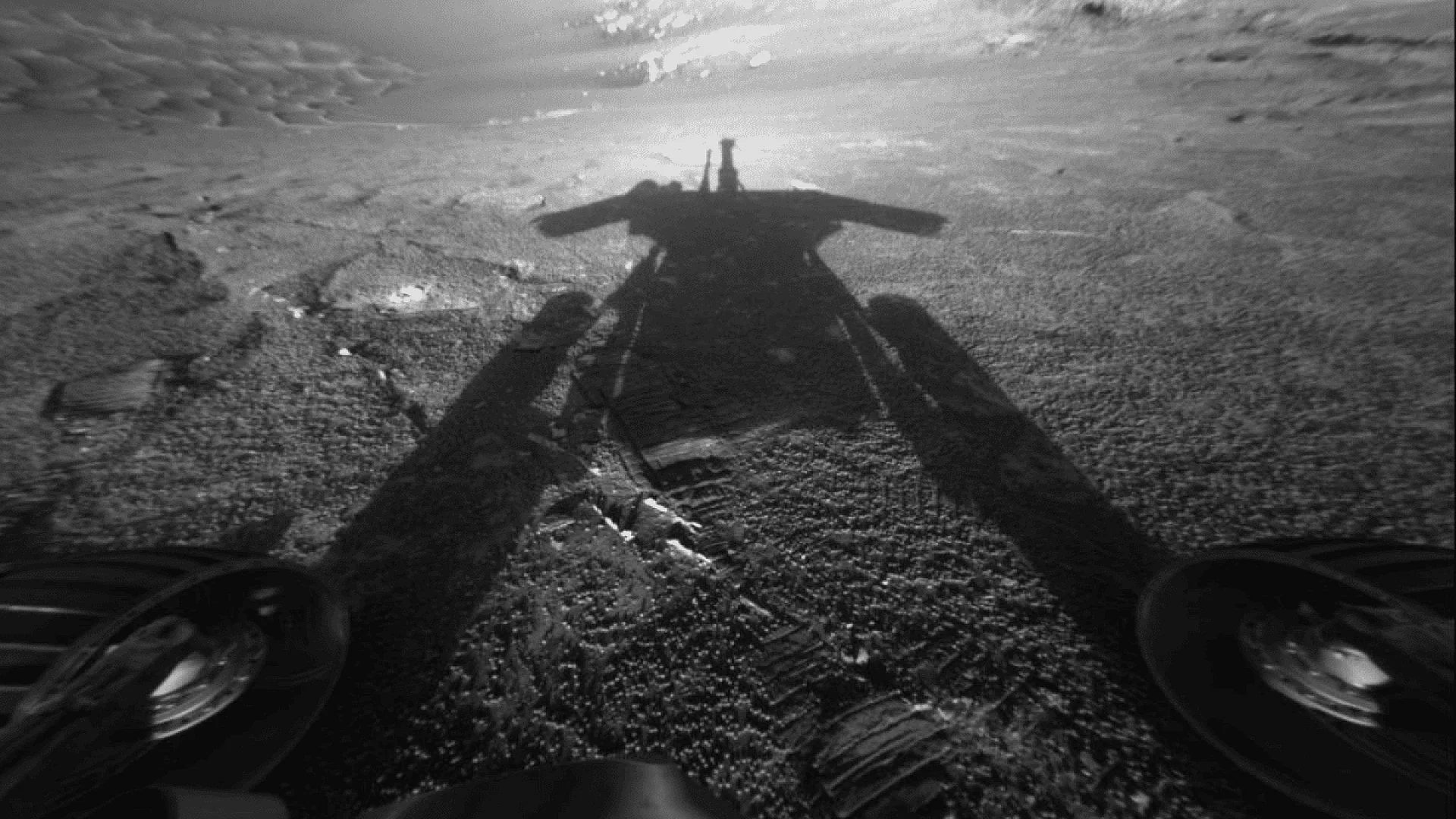
NASA’s Opportunity rover spent nearly 15 years roaming Mars, reshaping expectations for robotic explorers and gathering clues that the planet may once have harboured microbial life. In June 2018 a planet‑wide dust storm cut off its power, and the rover’s final signal, later described by NASA, became one of the most moving moments in recent space history, marking the silence of a machine that far outlasted every forecast.
A Robotic Journey Far Beyond Its Design Life
When Opportunity touched down in January 2004 alongside its twin Spirit, NASA planned for roughly 90 Martian sols of activity. The vehicle was built to trek modest distances, examine rocks, and hunt for evidence of ancient liquid water. Yet the rover kept moving for almost 15 years, covering more than 28 miles of the red terrain and becoming the first rover to log a marathon‑length journey on another world.
Across its extended tenure the rover surveyed craters, scaled rugged slopes, and returned thousands of images that reshaped scientific thinking about the planet. Its findings pointed to minerals that form in the presence of water, bolstering the case that early Mars may have hosted environments suitable for microbial life. For the many people who followed the mission from Earth, Opportunity grew into a symbol of perseverance as well as a scientific instrument.
Credit: Image credit: NASA/JPL-Caltech/Cornell/ASU
NASA later summed up the mission’s conclusion in stark language:
“One of the most successful and enduring feats of interplanetary exploration, NASA’s Opportunity rover mission is at an end after almost 15 years exploring the surface of Mars and helping lay the groundwork for NASA’s return to the Red Planet,” NASA said at the time.
By its final years the rover had outlived its original schedule by more than 50 times. Dust storms, freezing nights and mechanical wear constantly threatened its health, yet the craft repeatedly recovered and kept operating. That tenacity made the 2018 storm all the more heartbreaking for the engineers who had spent years maintaining contact with a robot millions of miles away.
Mars’ 2018 Global Dust Storm Dims the Sun
In June 2018 a colossal dust storm swelled across the planet until it shrouded almost the entire surface. The haze blocked sunlight, creating catastrophic conditions for Opportunity, which relied solely on solar panels to recharge its batteries. As the sky grew dark, the rover slipped into a low‑power sleep mode intended to preserve what little energy remained until the Sun re‑emerged.
NASA engineers described the situation as almost apocalyptic. “The Opportunity rover stopped communicating with Earth when a severe Mars‑wide dust storm blanketed its location in June 2018. After more than a thousand commands to restore contact, engineers in the Space Flight Operations Facility at NASA’s Jet Propulsion Laboratory (JPL) made their last attempt to revive Opportunity Tuesday, to no avail. The solar‑powered rover’s final communication was received June 10,” a NASA statement read.
Project manager John Callas later illustrated how deep the darkness had become. “It also told us the skies were incredibly dark, to the point where no sunlight gets through. It’s night time during the day,” Callas told journalist Jacob Margolis while discussing the rover’s final data packet.
At first, JPL teams hoped the rover might survive the ordeal. Opportunity had weathered major storms before and often bounced back from conditions that once seemed fatal. Engineers spent months beaming recovery commands toward Mars, waiting for the storm to lift so the rover could recharge and re‑establish contact. The signal never returned.
“We were hopeful that the rover could ride it out. That the rover would hunker down, and then when the storm cleared, the rover would charge back up. That didn’t happen. At least it didn’t tell us that it happened. So, we don’t know,” a JPL spokesperson explained.
The Last Frame Sent From Perseverance Valley
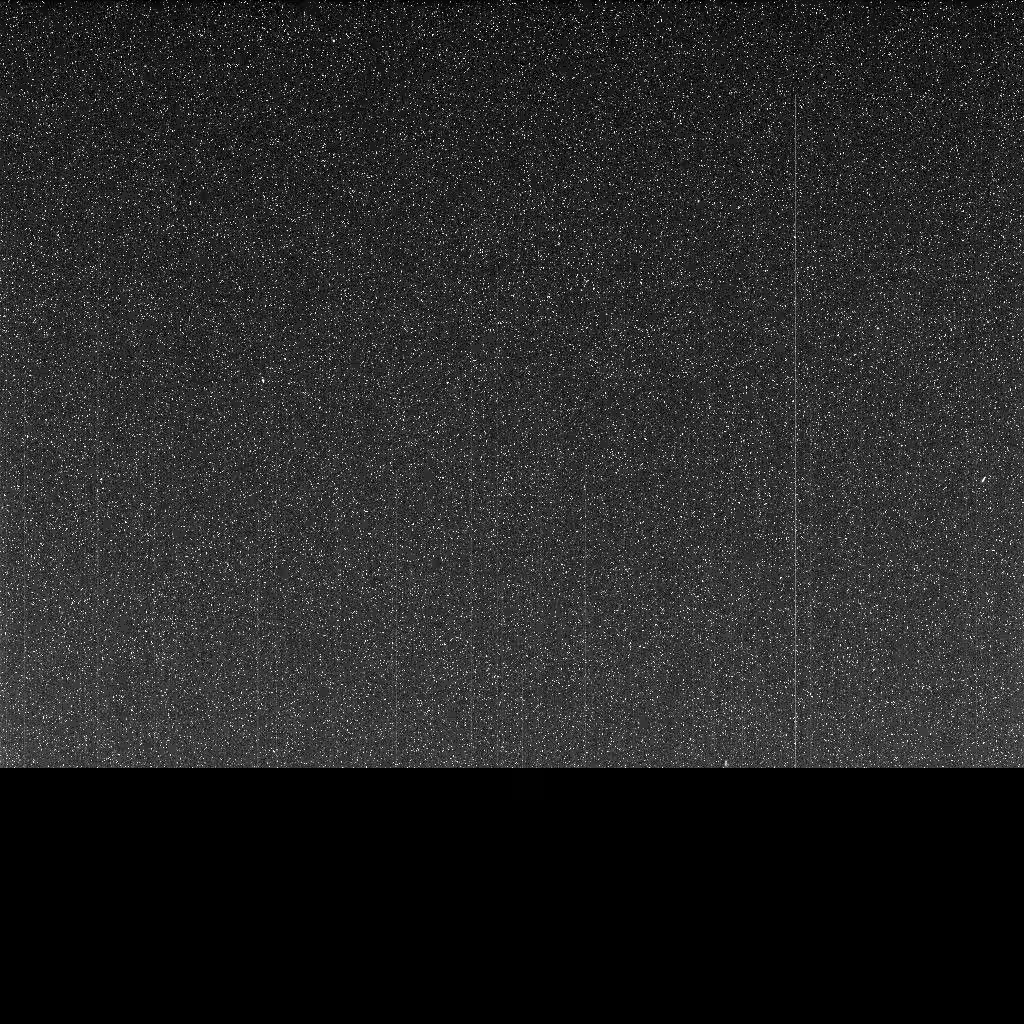
Opportunity’s final transmission arrived not as text but as a fragmented image from the rim of Perseverance Valley. NASA released the picture, which showed only faint specks of white against a black background, the result of camera noise rather than a clear view of the landscape. The transmission cut off before the full frame could be sent, leaving large sections completely dark.
According to NASA, the rover had angled its Pancam toward the Sun using a solar filter in an attempt to gauge atmospheric conditions during the storm. The dust was so thick that virtually no sunlight reached the surface. The incomplete image captured both the technical failure of the mission and the violent environment sweeping across Mars at that moment.
Public reaction was fueled by reports that Opportunity’s “last words” were “my battery is low and it’s getting dark.” That phrase was not a literal transmission but a simplified interpretation offered by journalist Jacob Margolis after speaking with NASA engineers. The wording resonated because it distilled the rover’s precarious state with striking emotional clarity.
The partial frame stands as one of the most powerful artifacts from a robotic mission. Unlike dramatic shots of galaxies or planets, this dark silhouette represents silence itself, the final glimpse from a machine that spent nearly a decade and a half exploring another world on humanity’s behalf.
This article has been fact checked for accuracy, with information verified against reputable sources. Learn more about us and our editorial process.
Last reviewed on .
Article history
- Latest version
Reference(s)
- Cermak, Alicia. “Opportunity's Last Message - NASA Science.”, March 12, 2019 NASA <https://science.nasa.gov/resource/opportunitys-last-message/>.
Cite this page:
- Posted by Karan Das