Blue Origin’s New Glenn Cleared To Fly Again After Major Launch Failure
Blue Origin gets FAA green light to restart New Glenn launches after hydraulic line freeze identified as root cause
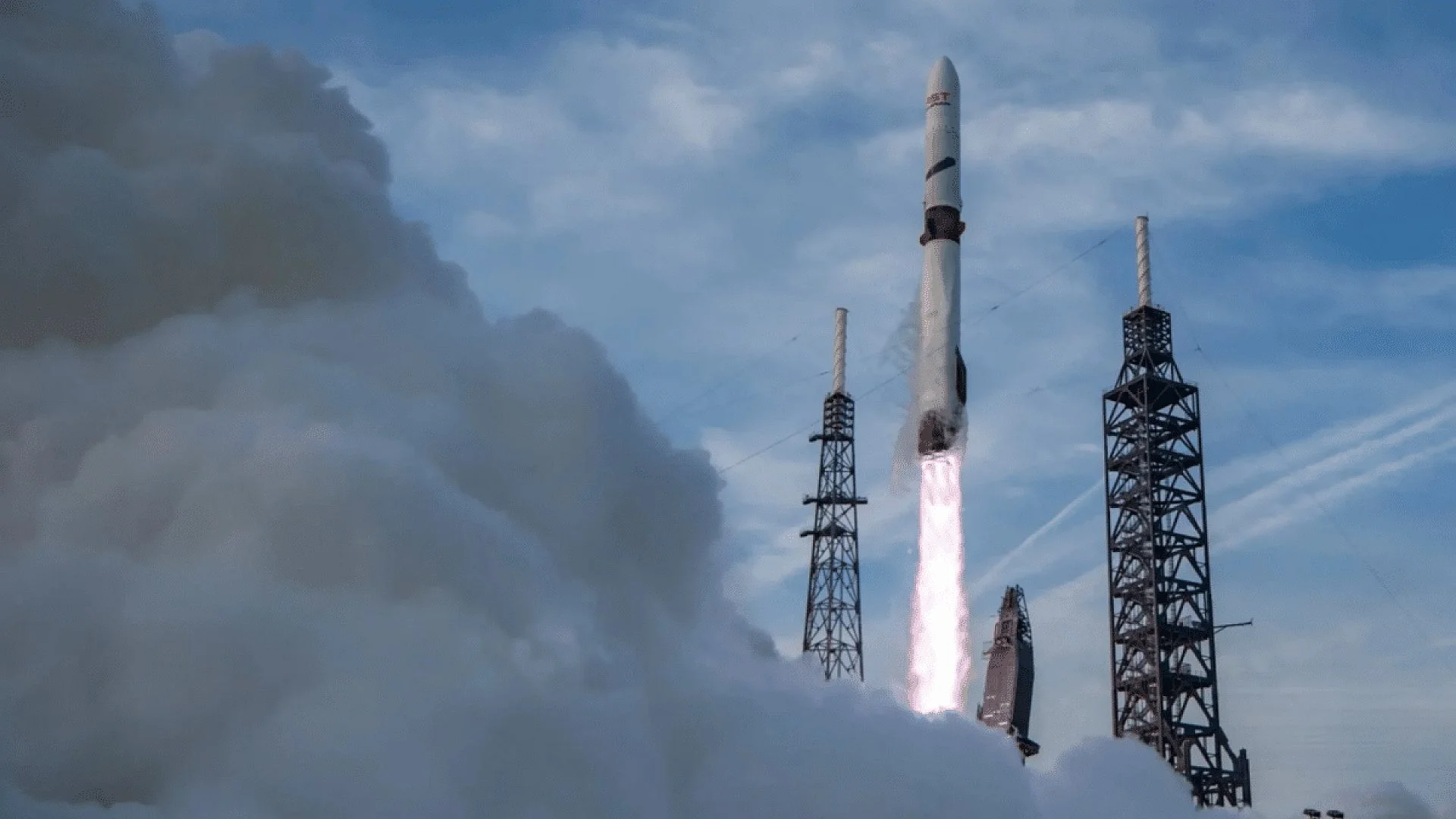
The Federal Aviation Administration has cleared Blue Origin to resume flights of its heavy‑lift New Glenn vehicle, ending a temporary grounding that followed a problematic third launch. After an extensive review of the April 19 anomaly, the agency accepted the company’s corrective plan, allowing the firm to move forward with its next steps in a market dominated by rivals.
April 19 Mission Turns Into a High‑Profile Failure
The launch was intended to showcase New Glenn’s capabilities, reusing the same booster that had delivered NASA’s ESCAPADE Mars probes in late 2025. Branded “Never Tell Me The Odds,” the first stage performed as expected, touching down on Blue Origin’s Atlantic recovery platform Jacklyn. However, the mission’s focus quickly shifted to the upper stage when trajectory data indicated a deviation from the planned flight path.
Carrying AST SpaceMobile’s BlueBird 7 satellite, the rocket was supposed to execute two engine burns to place the payload in a roughly 285‑mile circular orbit. Instead, the satellite was released into a lower, “off‑nominal” orbit, rendering it unusable for its intended purpose. Although the spacecraft powered up after separation, its propulsion system could not raise the orbit, leading AST SpaceMobile to announce a controlled de‑orbit.
Root Cause Traced to a Frozen Hydraulic Line
The FAA’s investigation prompted Blue Origin to issue a detailed technical statement. Engineers identified a cryogenic leak that caused a hydraulic line to freeze during the second‑stage burn, limiting thrust from one of the BE‑3U engines and preventing the upper stage from reaching the target orbit. The company says it has already implemented design changes to eliminate the fault, and the FAA has accepted the corrective actions as sufficient to lift the launch ban.
The FAA has approved our NG-3 report, and corrective measures have been implemented. Prior to our second GS2 burn, we experienced an off‑nominal thermal condition, and, as a result, one of the BE-3U engines didn’t achieve full thrust to reach our target orbit.
— Blue Origin (@blueorigin) May 22, 2026
NG-4 preparations…
New Glenn Central to Jeff Bezos’ Long‑Term Space Strategy
Despite the setback, Blue Origin is pushing ahead with an ambitious production schedule, targeting up to 60 New Glenn upper stages by late 2028. The goal reflects confidence that demand for heavy‑lift services will rise as satellite constellations, lunar exploration missions, and defense contracts expand.
The company still trails SpaceX, whose reusable Falcon 9 fleet and Starship development dominate the market. New Glenn’s success hinges on demonstrating reliable payload delivery and routine booster recovery. The April landing on Jacklyn offered a glimpse of that future, showing that the reusable first stage can be refurbished and relaunched after supporting a high‑profile NASA mission.
This article has been fact checked for accuracy, with information verified against reputable sources. Learn more about us and our editorial process.
Last reviewed on .
Article history
- Latest version
Cite this page:
- Posted by Karan Das