Golden Deep‑Sea Orb Unveiled: Shed Skin of Giant Anemone Identified After 3‑Year Quest
Scientists finally identify NOAA’s mysterious golden orb, uncovering a bizarre deep‑sea secret hidden beneath the waves.
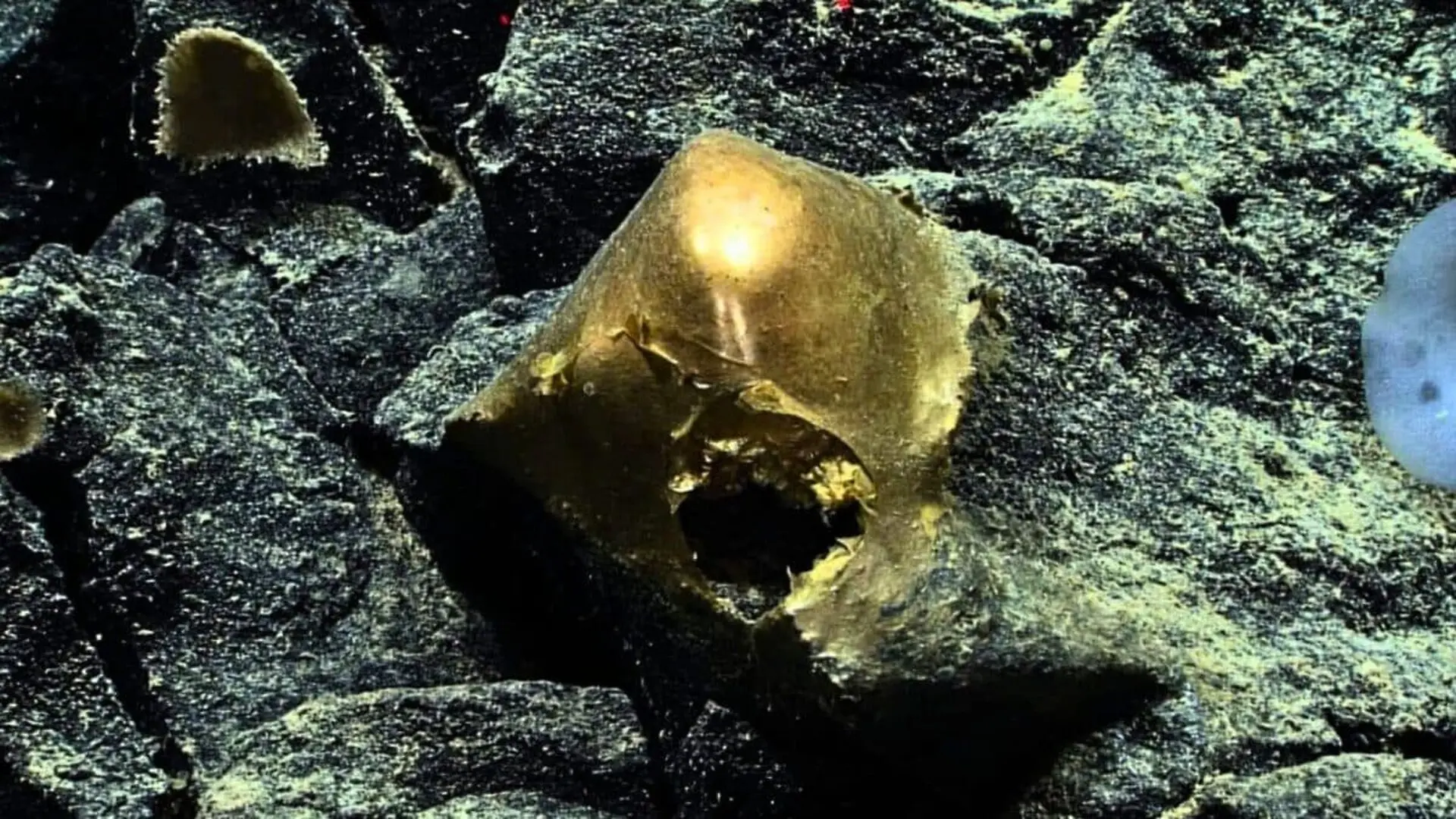
During a NOAA expedition on August 30 2023, the remotely operated vehicle Deep Discoverer illuminated a strange, dome‑shaped, pale‑gold object at roughly 3,300 m depth in the Gulf of Alaska. The smooth mass, about 10 cm across and perforated by a single aperture near its base, was firmly attached to the seafloor, prompting a startled researcher to remark on live video, “I don’t know what to make of that… it feels like the opening scene of a horror film.”
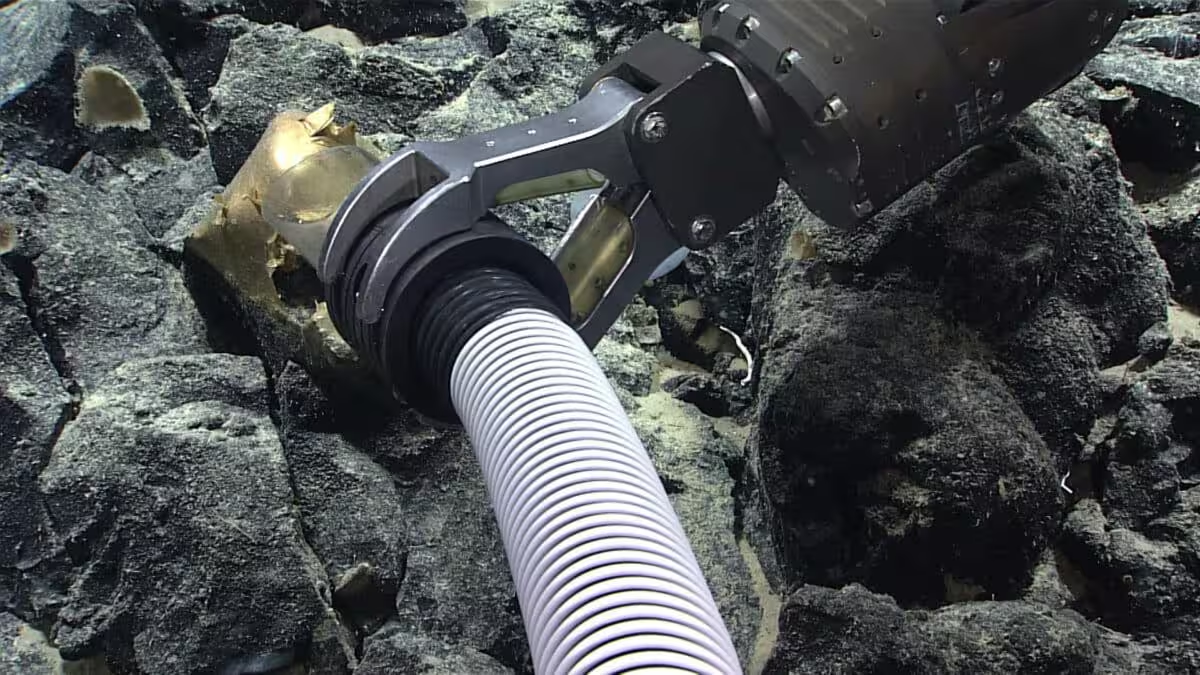
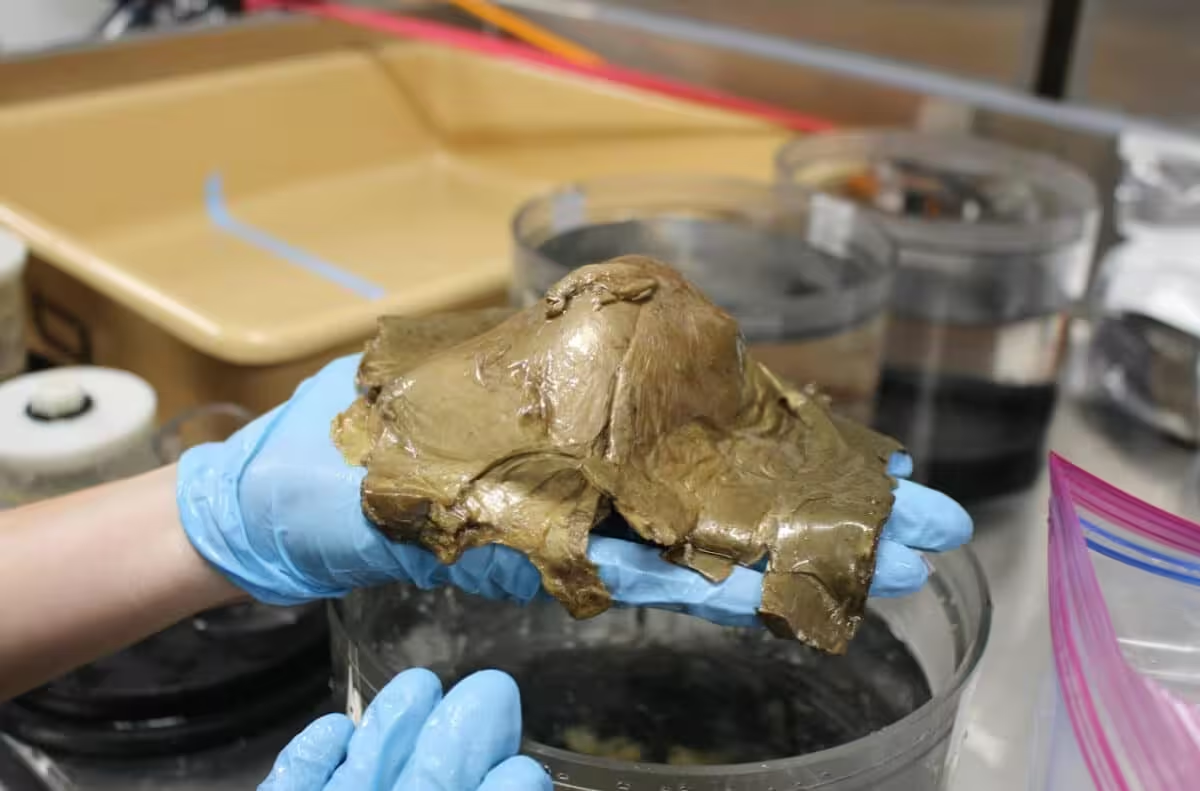
The orb was retrieved with the ROV’s manipulator arm and delivered to the Smithsonian Institution’s National Museum of Natural History. After three years of analysis, NOAA announced that the object is the shed cuticle of Relicanthus daphneae, a giant deep‑sea anemone whose tentacles can exceed two metres in length. Whole‑genome sequencing, rather than standard DNA barcoding, finally matched the specimen to a reference mitochondrial genome for the species, a result now available as a bioRxiv preprint.
Why Conventional DNA Barcoding Fell Short
Allen Collins, zoologist and director of NOAA Fisheries’ National Systematics Laboratory, expected a routine identification. “We process hundreds of samples every year,” he noted, recalling the initial microscopic view that revealed a multilayered fibrous mass lacking obvious anatomical features. The first barcoding attempt returned ambiguous results because the orb was heavily colonized by a consortium of microscopic organisms, whose DNA overwhelmed the signal from the anemone itself.
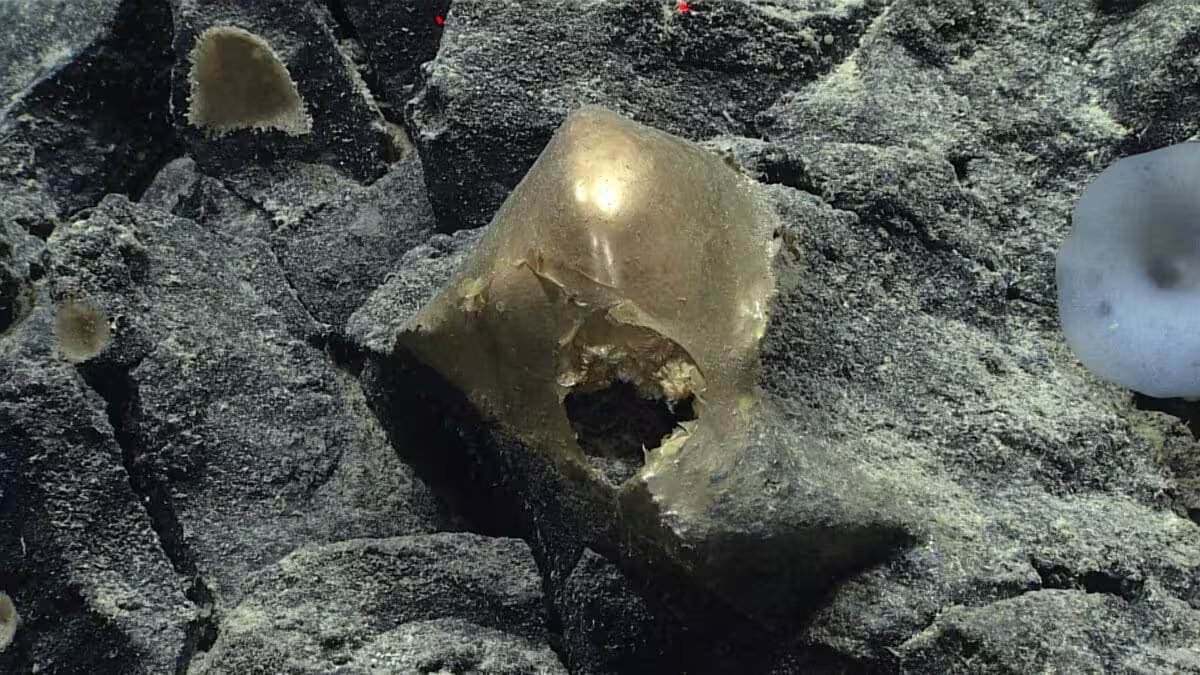
Faced with the contamination issue, the team turned to whole‑genome sequencing, meticulously filtering out non‑target DNA until a single species profile emerged. Comparative analysis of the mitochondrial genome confirmed a near‑perfect match with the existing R. daphneae reference.
Spirocysts Reveal a Cnidarian Identity
While the genetic work progressed, laboratory scientist Abigail Reft identified abundant spirocysts—specialized stinging cells unique to the Hexacorallia subclass that includes sea anemones and stony corals. Their presence immediately signaled a cnidarian origin. Moreover, the spirocysts measured among the largest recorded for deep‑sea cnidarians, a trait consistent with the known biology of R. daphneae, which relies on unusually large adhesive spirocysts to capture sizeable prey.
What the Living Anemone Looks Like
The cuticle bears little resemblance to its source animal. Relicanthus daphneae itself displays a pale pink to purplish‑red column that can reach up to a metre in diameter, with slender, tapering tentacles extending roughly two metres. The species inhabits basaltic substrates near hydrothermal vents, manganese‑nodule fields, and cold‑seeps at depths between 2,400 and 4,400 m. First described from the East Pacific Rise in 2006 and reassigned to its own genus in 2014, the anemone’s range was later expanded to the Indian Ocean in a 2025 study published in the Journal of the Marine Biological Association, which also captured footage of a tentacle ensnaring a shrimp.
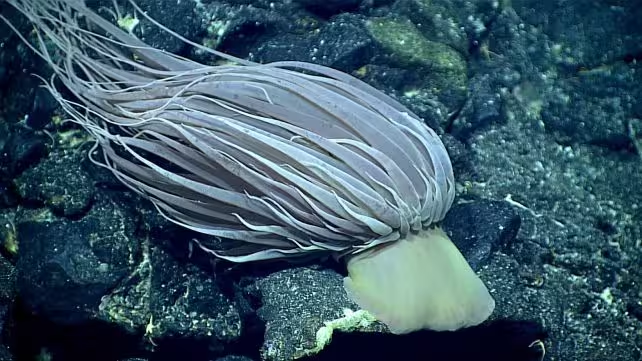
The Sheath: Molted Skin or Reproductive Remnant?
The golden cuticle is a thin, multilayered sheath composed primarily of chitin—the same durable polysaccharide found in insect exoskeletons and fungal walls. Because intact cuticles are rarely observed on R. daphneae, researchers suspect the animal sheds the layer as it moves across the seafloor, leaving the empty shell behind.
An alternative hypothesis considers pedal laceration, an asexual reproduction method where an anemone discards its lower body segment, which later regenerates into a new polyp. The orb’s central aperture and internal fibrous matrix could represent a partially formed laceration fragment, though direct evidence of pedal laceration in this species remains lacking.
Ecological Role of the Shed Cuticle
Even after detachment, the cuticle supports a micro‑ecosystem. The dense colonization of bacteria and other microorganisms observed on the specimen suggests that such chitin‑rich debris serves as localized nutrient hotspots, contributing to nitrogen cycling and sustaining deep‑sea microbial communities where organic input is otherwise scarce.
This article has been fact checked for accuracy, with information verified against reputable sources. Learn more about us and our editorial process.
Last reviewed on .
Article history
- Latest version
Reference(s)
- Starr, Michelle. “Mysterious Golden Orb at The Bottom of The Ocean Finally Identified.”, April 23, 2026 ScienceAlert <https://www.sciencealert.com/mysterious-golden-orb-at-the-bottom-of-the-ocean-finally-identified>.
- Neufeld, Monika., et al. “First record of the giant anemone, Relicanthus daphneae, at active hydrothermal vent fields in the Indian Ocean.” Journal of the Marine Biological Association of the United Kingdom, vol. 104, January 7, 2025 Cambridge University Press (CUP), doi: 10.1017/S0025315424001127. <https://doi.org/10.1017/S0025315424001127>.
Cite this page:
- Posted by Hassan Raza