Hubble Detects First Escaping Ultraviolet Light From Earliest Known Reionization Era Galaxy
Astronomers spot UV radiation from galaxy MXDFz4.4, just 1.4 billion years after the Big Bang, reshaping ideas about the early universe.
Astronomers have captured the first clear signature of ionizing radiation leaking from a galaxy that lived at the very end of the cosmic Era of Reionization, offering a rare glimpse into how the early universe transitioned from opaque to transparent.
In the first few hundred million years after the Big Bang, the cosmos was suffused with neutral hydrogen that soaked up high‑energy ultraviolet photons, preventing them from traveling far. As successive generations of stars ignited, they gradually stripped electrons from the hydrogen atoms, turning the intergalactic medium into an ionized, light‑permeable state. Pinpointing which galaxies powered this transformation has been a central challenge for astronomers.
The distant system designated MXDFz4.4 now adds a critical data point. Detailed in a paper appearing in The Astrophysical Journal and highlighted by NASA, the galaxy resides at a time when the reionization process was winding down, and it represents the earliest known object from that epoch whose escaping ionizing photons have been directly measured.
Intense Star‑Forming Clumps Carved Channels for UV Radiation
Lead author Ilias Goovaerts, a postdoctoral researcher at the Space Telescope Science Institute, noted that earlier models predicted such a detection to be virtually impossible because the surrounding “hydrogen fog” should have absorbed all ionizing photons.
“Seeing a galaxy like this was considered unattainable,” Goovaerts explained. “We expected the pervasive neutral gas to block any high‑energy light, yet Hubble not only captured the signal but also revealed key characteristics of the galaxy itself.”
The ultraviolet photons embarked on a journey of more than 12 billion years before reaching Earth. Cosmic expansion stretched the radiation into the visible spectrum, enabling the Hubble Space Telescope to record it from orbit.
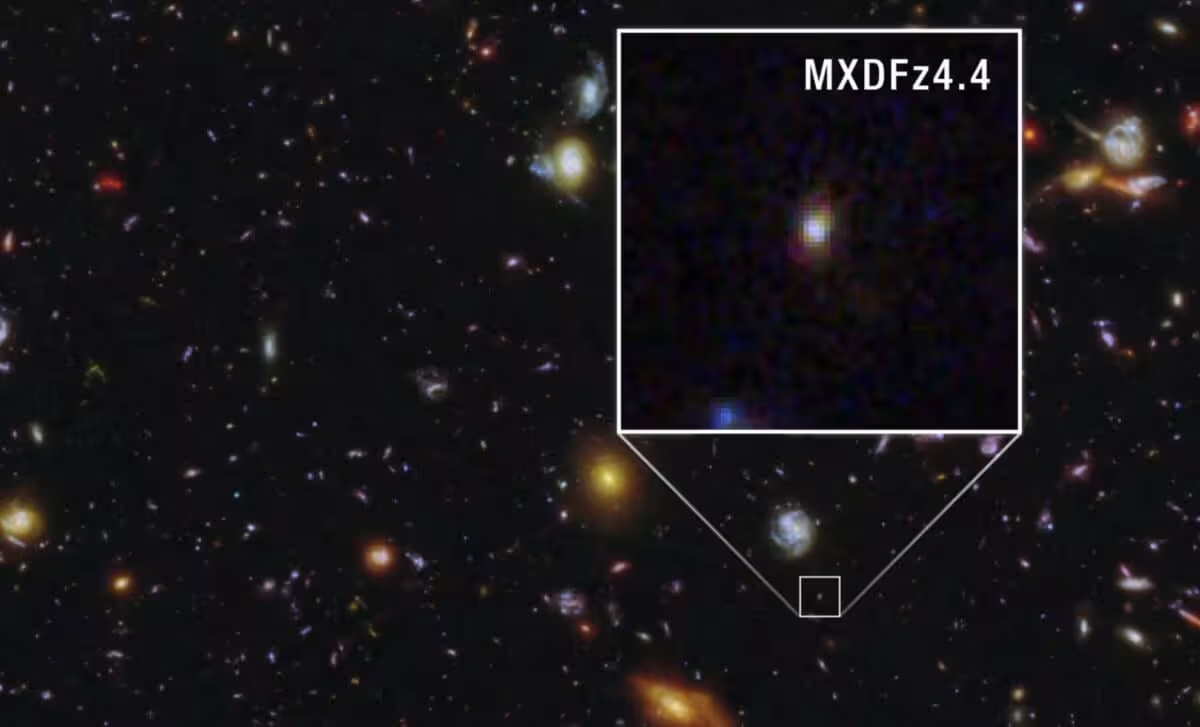
Deep imaging shows that MXDFz4.4 hosts densely packed clusters of massive, newly formed stars that ignited in rapid bursts during the final few million years of the galaxy’s evolution. These hot stars generate copious ionizing ultraviolet radiation capable of carving pathways through the surrounding gas.
Although its physical size is roughly one‑hundredth that of the Milky Way, the galaxy’s star‑formation rate outpaces our own by a factor of ten. NASA estimates that between half and the entirety of the ionizing photons produced by these stars manage to break free from the local interstellar medium.
The authors also point out that massive stars have lifespans of only a few million years before ending as supernovae. The resulting explosions inject vast energy into their surroundings, further enlarging the channels through which ionizing radiation can escape into intergalactic space.
Multi‑Observatory Campaign Unveils the Galaxy’s Secrets
The breakthrough relied on a coordinated effort across several flagship facilities. While Hubble captured the escaping ultraviolet photons, NASA’s James Webb Space Telescope contributed near‑infrared data that helped determine the galaxy’s total mass, assess its older stellar component, and reconstruct its star‑formation timeline.
Webb’s observations revealed that the pre‑existing stellar population is cooler and less massive than the newly formed clusters, confirming that the older stars are not responsible for the observed ionization. By cross‑matching space‑based datasets, the team identified a pattern of repeated star‑formation bursts.
“Without Webb’s insight, we could not have interpreted Hubble’s images the way we did,” said co‑author Marc Rafelski, deputy mission lead for Hubble at the Space Telescope Science Institute.
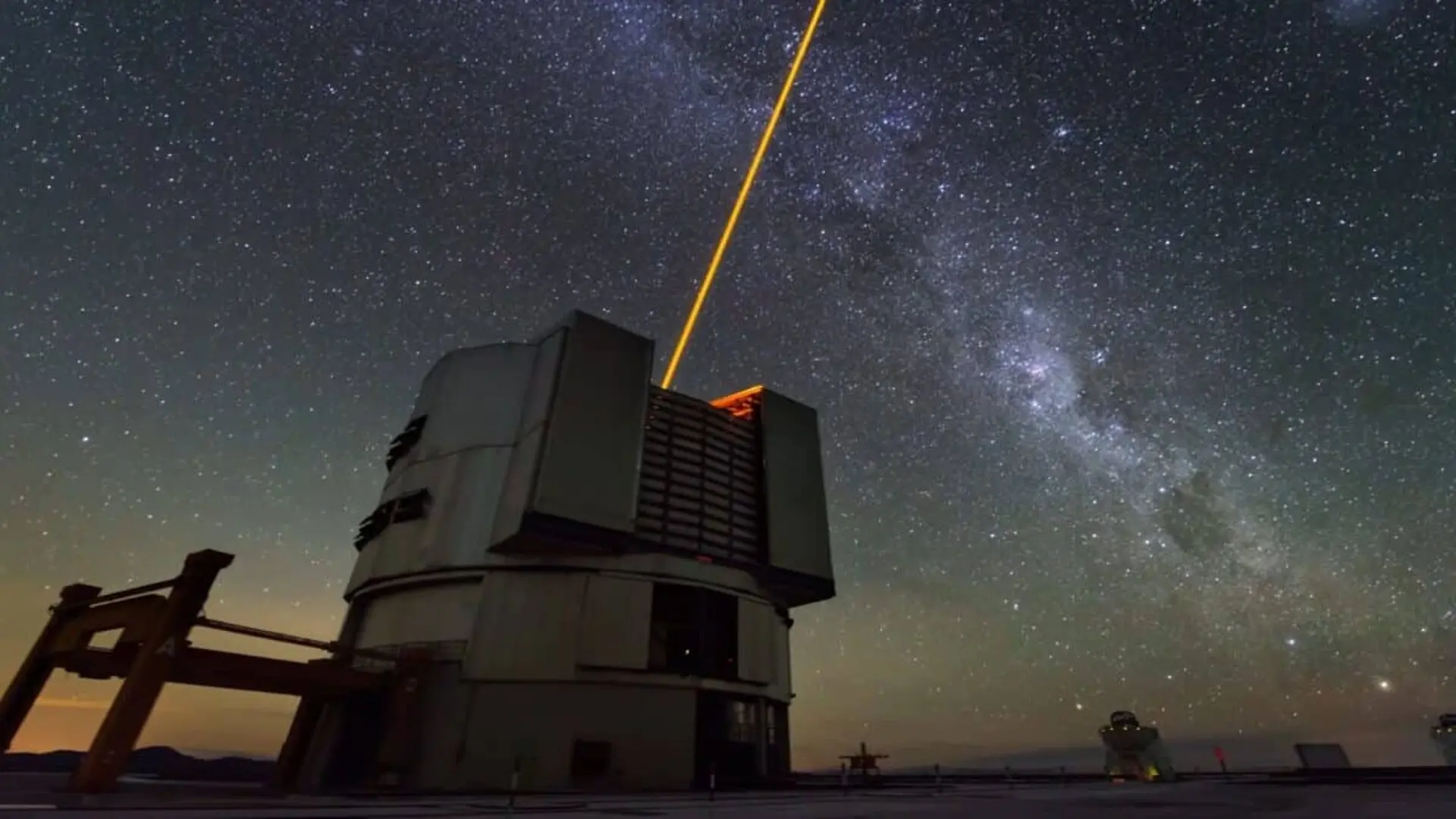
Complementary spectroscopy from the European Southern Observatory’s Very Large Telescope confirmed the galaxy’s redshift, placing MXDFz4.4 at a time roughly 1.4 billion years after the Big Bang.
Prior to this discovery, only a single galaxy from an epoch 1.6 billion years after the Big Bang had been shown to emit ionizing photons, with a handful of later examples dating to around two billion years post‑Big Bang. The new detection narrows the gap in our observational record and provides a concrete test for models describing how the neutral hydrogen fog dissipated.
Future surveys that uncover additional galaxies akin to MXDFz4.4—especially those from slightly later stages of reionization where larger samples are accessible—will sharpen quantitative estimates of the ionizing photon budget and deepen our understanding of the processes that cleared the early universe’s opacity.
This article has been fact checked for accuracy, with information verified against reputable sources. Learn more about us and our editorial process.
Last reviewed on .
Article history
- Latest version
Reference(s)
- <https://www.researchgate.net/profile/Ilias-Goovaerts>.
- Gianopoulos, Andrea. “Hubble Details Early Galaxy Transforming Neighborhood - NASA Science.”, June 23, 2026 NASA <https://science.nasa.gov/missions/hubble/hubble-details-early-galaxy-transforming-neighborhood/>.
- “Marc Rafelski.” STScI <https://www.stsci.edu/stsci-research/research-directory/marc-rafelski>.
Cite this page:
- Posted by Aisha Ahmed